Phone:
(701)814-6992
Physical address:
6296 Donnelly Plaza
Ratkeville, Bahamas.

Phone:
(701)814-6992
Physical address:
6296 Donnelly Plaza
Ratkeville, Bahamas.

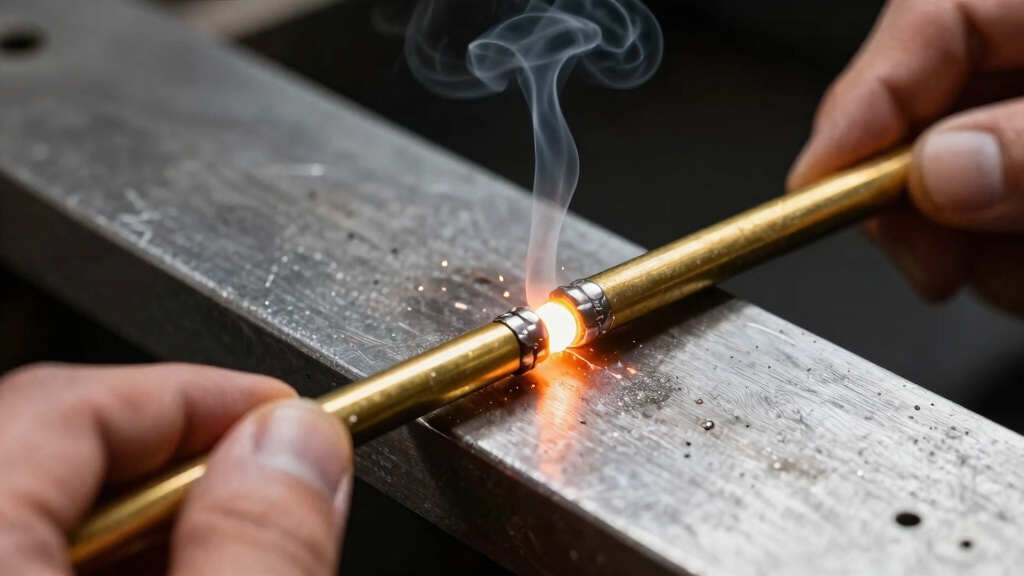
You can’t effectively weld brass to steel because their melting points differ too much. Brass melts around 900°F while steel requires over 2500°F, causing distortion or weak bonds.
Instead, silver solder brazing offers precise control below brass’s melting point. This method creates strong, leak-tight, corrosion-resistant joints via capillary action with fillers like SSF-6.
It also manages thermal stress and guarantees electrical conductivity. To understand the best techniques and materials for these reliable joints, keep exploring the specifics.
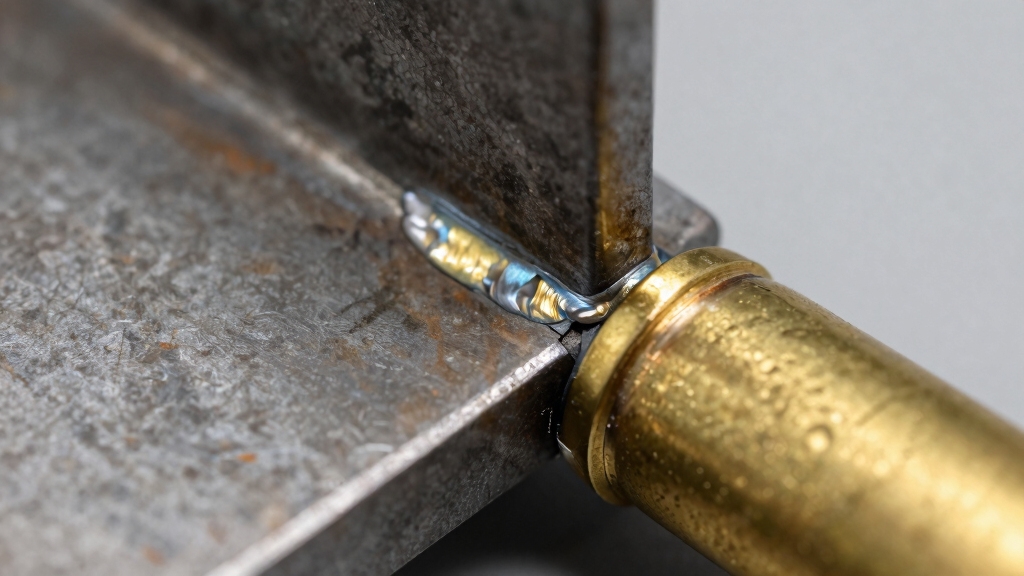
Brazing often outperforms welding when joining brass to steel because it minimizes thermal stress and distortion by operating below the brass melting point.
You’ll use silver-based fillers, like SSF-6, which melt around 1150°F, well below brass’s 900°F melting point, preserving the integrity of both metals.
This controlled heating prevents brass from melting or deforming, unlike welding’s intense heat that risks alloy damage and cracking.
You also benefit from capillary action drawing molten filler into the joint, creating strong, leak-tight bonds with tensile strengths up to 70,000 psi.
Brazing’s lower temperature reduces oxidation and thermal expansion mismatch, enhancing corrosion resistance and electrical conductivity.
Ultimately, brazing delivers precise, reliable joints under manageable heat, making it technically superior for joining brass to steel in maintenance and plumbing applications.
Proper surface preparation, including thorough cleaning and flux application, is essential to ensure strong brazed joints and prevent oxidation during the process.
Welding brass to steel can be quite a task! You really have to navigate some significant challenges because they’ve different melting temperatures. This difference makes it tricky to control the heat properly, which can affect the integrity of the joint.
Another thing to consider is oxidation and contamination. Brass is pretty sensitive to overheating and can easily be affected by flux residue. So, you need to be extra cautious during the process.
Plus, there’s the issue of thermal expansion rates. Since brass and steel expand and contract at different rates, this can create stress and even lead to cracking as the materials cool down. All of this can really undermine the quality of your weld.
Using inert gas shielding can help reduce oxidation and improve weld quality when joining brass to steel.
Although steel and brass are often joined in maintenance and plumbing applications, their different melting temperatures present significant challenges during welding. Brass melts around 900°F, while steel requires temperatures exceeding 2500°F. This discrepancy makes direct fusion difficult without damaging one metal.
Consider these key temperature-related issues:
To overcome this, brazing with silver-based filler metals that melt below brass’s melting point offers a controlled, reliable method. You must carefully manage heat input to avoid brass melting while ensuring filler flow.
This maintains joint integrity despite the metals’ vastly different melting points. Additionally, the coefficient of thermal expansion differences between brass and steel can cause residual stresses that require careful joint design and heat control to prevent cracking.
Managing heat alone won’t guarantee a strong brass-to-steel joint. Controlling oxidation and contamination is equally important. Brass oxidizes rapidly at elevated temperatures, creating refractory oxides that prevent wetting. Steel surfaces also form scale, reducing filler metal adhesion.
To mitigate this, you’ll need effective flux and meticulous cleaning to maintain surface integrity and promote capillary action.
| Issue | Cause | Impact on Joint |
|---|---|---|
| Brass Oxidation | High heat exposure | Oxide layer inhibits bonding |
| Steel Scale | Surface iron oxidation | Poor filler wetting |
| Contaminants | Oils, dirt, residues | Porosity and weak areas |
| Flux Degradation | Overheating or improper flux | Loss of oxidation protection |
| Incomplete Cleaning | Residual oxides or debris | Inconsistent capillary flow |
You must ensure flux activation and surface cleanliness to achieve a defect-free bond.
Because brass and steel expand at different rates when heated, thermal expansion mismatch poses a significant challenge in welding these metals.
You must carefully manage this disparity to avoid joint failure due to stress buildup during cooling. Consider these key points:
To mitigate these issues, control heat input precisely, preheat parts uniformly, and use filler metals with compatible expansion characteristics.
Additionally, using welding methods with low heat input can minimize distortion and residual stress, enhancing joint integrity in dissimilar metal welds.
Understanding thermal mismatch helps you produce strong, durable joints while minimizing distortion and stress-related defects in brass-to-steel welds.
Selecting the right filler metal is essential for achieving a strong, corrosion-resistant joint when welding brass to steel. Silver-based alloys, such as SSF-6 flux-coated silver brazing rods with 56% silver content, provide excellent compatibility and flow characteristics at around 1150°F.
Choosing silver-based filler metals like SSF-6 ensures strong, corrosion-resistant brass-to-steel joints at 1150°F.
These alloys produce tensile strengths up to 70,000 psi and maintain electrical conductivity and corrosion resistance. You can also consider phosphorus-copper alloys like BCuP-2 or nickel-silver alloys such as RBCuZn-2, which offer good wetting on both metals.
Silver solder, melting below brass’s melting point at roughly 700°F, prevents base metal distortion. Flux application and precise temperature control help maintain joint integrity.
Avoid filler metals with melting points too close to brass to minimize thermal damage and guarantee a reliable, leak-tight bond. Proper heat input control is critical to minimize thermal stresses and avoid joint failure when joining dissimilar metals.
While silver-based filler metals offer excellent flow and strength for most brass-to-steel joints, certain applications call for the controlled heat input and precision that TIG brazing with silicone bronze rods provides.
You’ll want to choose this method when:
TIG brazing also excels when working with steel tubing. This allows you to feed the silicone bronze rod steadily while applying focused arc heat.
This approach reduces oxidation and guarantees clean, strong bonds without overheating the brass.
Proper surface cleaning and shielding gas control are essential to minimize oxidation and ensure strong metallurgical bonding in the joint.
Silver solder brazing achieves strong brass-to-steel bonds by utilizing a high-silver-content filler metal, such as SSF-6, which melts at approximately 1150°F. This is well below the brass melting point.
Silver solder brazing forms strong brass-to-steel joints using high-silver filler metals melting below brass temperatures.
This temperature control prevents base metal distortion while enabling the silver alloy to flow via capillary action into the joint. The result is a mechanically robust and electrically conductive bond.
SSF-6’s flux coating activates during heating, preventing oxidation and ensuring wetting of both brass and steel surfaces. The resulting joint can reach tensile strengths near 70,000 psi, suitable for demanding maintenance applications.
You’ll appreciate that this cadmium-free alloy also resists corrosion, making it ideal for sanitary environments. By focusing heat primarily on the steel and allowing the molten silver solder to flow evenly, you achieve consistent, leak-tight, and durable brass-steel assemblies.
This process benefits from the capillary flow mechanism that draws molten filler metal into tight gaps without melting the base metals.
Achieving strong, leak-tight brass-to-steel joints depends heavily on meticulous surface preparation before brazing.
You need to make certain both metals are clean, free from oxides, oils, and contaminants that inhibit filler flow and adhesion.
Follow these critical steps to prepare your workpieces:
Proper preparation guarantees consistent, high-strength joints with peak corrosion resistance. It is also essential to implement surface preparation best practices to reduce contamination and ensure joint integrity.
To begin, you’ll want to make sure that both the brass and steel components are thoroughly cleaned. This is super important to avoid any contamination in your joint.
Once they’re clean, securely clamp them together. This will help keep everything in place while you work.
After that, it’s time to apply the flux. Make sure to spread it evenly over the surfaces.
Now, let’s focus on preheating the thicker steel piece. You want to aim for a dull red color; keep an eye out for those bubbles that indicate the flux is activating.
Finally, it’s all about controlling that capillary action. Carefully flow the silver-based filler metal into the joint. This step is crucial for ensuring you get a strong bond that’s also resistant to corrosion.
Preheating is especially important on thicker steel to reduce thermal stress and avoid cracking, a key factor when working with thick plates.
And there you have it—you’re on your way to a solid brazed joint!
Before brazing brass to steel, you must thoroughly prepare both metals to guarantee a strong, contamination-free joint. Proper preparation minimizes oxidation and ensures capillary action draws the molten filler metal evenly.
Focus on these three critical steps:
Meticulous adherence to these steps prevents joint defects and enhances tensile strength. Neglecting preparation compromises brazing integrity, leading to weak, porous, or incomplete joints. Additionally, ensure immediate welding or brazing after cleaning to avoid rapid re-oxidation that can degrade joint quality.
Begin by evenly applying a suitable flux to the joint area to prevent oxidation and promote filler metal flow. Use a silver-based flux like SSF-6, which activates at brazing temperatures around 1150°F.
Next, preheat the joint carefully, focusing the torch flame primarily on the thicker steel component until it reaches a dull red glow. This guarantees the steel’s temperature adequately melts the silver solder without overheating the brass.
Maintain steady, even heating to allow the flux to bubble and liquefy, signaling readiness for filler application. Avoid direct flame contact on the brazing rod initially; instead, let the molten filler flow into the joint by capillary action.
Proper flux and controlled heat application are critical to achieving a strong, corrosion-resistant bond between brass and steel.
Mastering capillary action is essential for achieving a reliable brazed joint between brass and steel. Capillary action draws the molten silver solder into the narrow joint space, ensuring strong adhesion and electrical conductivity.
To control this precisely, you need to:
Controlling temperature precisely is critical when brazing brass to steel to ensure strong, reliable joints without damaging the base metals.
You need to maintain the filler’s working temperature around 1150°F, guaranteeing the silver solder flows properly without overheating brass, which melts at ~900°F.
Preheating steel to a dull red (~1200°F) activates flux and improves filler adhesion. Avoid exceeding these limits to prevent base metal distortion or weak joints.
| Material | Temperature Range (°F) | Purpose |
|---|---|---|
| Brass | 1100 – 1300 | Avoid melting, guaranteeing bonding |
| Steel | 1200 – 1400 | Flux activation, preheating |
| Silver Solder | 1100 – 1150 | Prime flow, capillary action |
| Flux Activation | ~1150 | Protect against oxidation |
| Joint Cooling | < 900 | Solidify filler, preserve metals |
Stick to this range for precision brazing results.
When you braze brass to steel for plumbing and repair, you create leak-tight, corrosion-resistant joints essential for reliable system performance.
Brazing brass to steel ensures leak-proof, corrosion-resistant connections vital for dependable plumbing repairs.
This method leverages silver-based filler metals like SSF-6, which flow efficiently at around 1150°F.
This ensures strong adhesion without melting the brass.
You’ll find brazing ideal for maintaining system integrity in diverse environments, including hospitals and restaurants, thanks to cadmium-free alloys.
Key applications include:
You can’t reliably weld brass to steel using standard arc welding because their melting points and thermal conductivities differ markedly. This causes weak, brittle joints or cracking.
Instead, brazing with silver-based alloys is preferred for strong, corrosion-resistant bonds.
Arc welding often leads to alloy segregation and deformation in brass. For durable connections, focus on controlled brazing techniques rather than conventional arc welding methods.
When brazing brass to steel, you need proper ventilation because flux fumes can be toxic. Use heat-resistant gloves and eye protection to handle the SSF-6 silver solder flowing at 1150°F safely.
Avoid overheating brass to prevent toxic zinc vapor release. Always clamp securely to avoid joint shifting, and clean surfaces thoroughly to make certain strong, corrosion-resistant bonds.
Following these precautions helps you achieve 70,000 psi tensile strength safely and efficiently.
You’ll find brazed brass-steel joints maintain excellent electrical conductivity due to the silver-based filler metals used, like SSF-6.
These produce corrosion-resistant, conductive bonds. The silver solder’s inherent conductivity bridges the dissimilar metals effectively, minimizing resistance at the joint.
This makes the connection suitable for applications requiring reliable electrical flow. It outperforms typical mechanical fasteners that can introduce contact resistance or corrosion over time.
Worried about environmental impact when disposing of flux residues?
You should be cautious because flux often contains chemicals that can harm water and soil ecosystems if not handled properly.
You’ll need to collect residues and avoid rinsing them into drains.
Using cadmium-free, environmentally safer fluxes like SSF-6 helps reduce toxicity.
Always follow local hazardous waste disposal regulations to minimize environmental risks and ensure safe, compliant flux residue management.
Yes, brass-to-steel brazed joints can withstand high vibration environments if properly executed.
You’ll need to use silver-based solders like SSF-6, which achieve tensile strengths around 70,000 psi.
Make certain thorough cleaning, precise flux application, and controlled heating promote peak capillary action and bond integrity.
Properly brazed joints provide corrosion resistance and mechanical strength, making them reliable under vibrational stress commonly found in maintenance and plumbing applications.
When you try welding brass to steel, you’ll likely face challenges like cracking and weak joints due to their different melting points and thermal expansion.
Coincidentally, brazing not welding offers a precise, reliable solution by using filler metals like silicone bronze or silver solder to create strong bonds without melting the base metals.
So, if you want durable, clean joints, brazing is the technically superior choice. It combines preparation, temperature control, and filler selection for peak performance.
[…] brazing operates below the melting point of the base metals, it minimizes thermal stress and distortion compared to […]