Phone:
(701)814-6992
Physical address:
6296 Donnelly Plaza
Ratkeville, Bahamas.

Phone:
(701)814-6992
Physical address:
6296 Donnelly Plaza
Ratkeville, Bahamas.

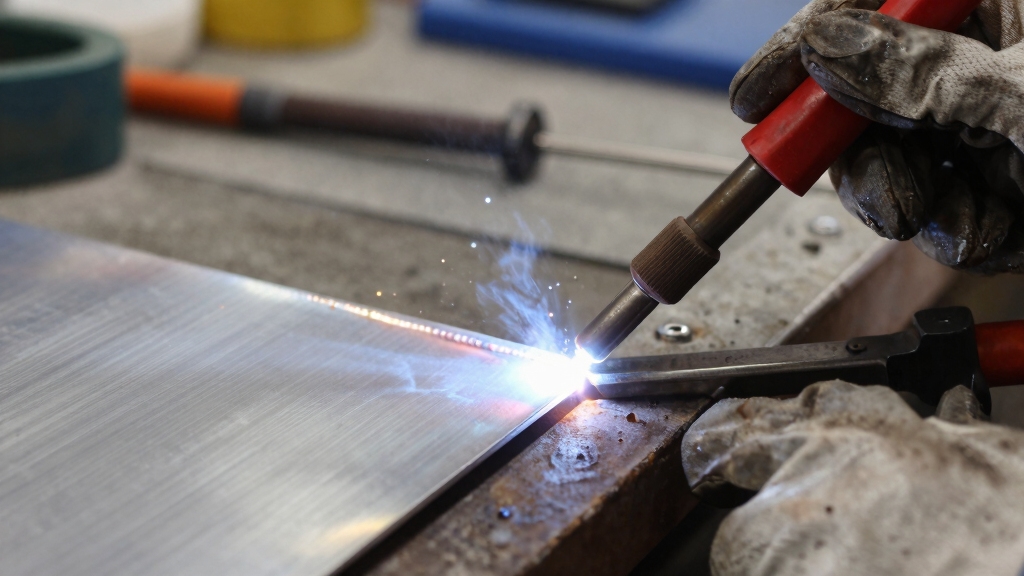
You’ll generally rely on TIG welding for thin metals because it offers precise amperage control that prevents overheating and burn-through.
Its foot pedal and pulsed current features let you finely adjust heat input, minimizing the heat-affected zone and thermal stress.
TIG’s non-consumable tungsten electrode and hand-fed filler enable exact arc and filler placement, ideal for delicate gauges.
If you want to successfully manage heat and select ideal electrodes, you can explore approaches that further refine thin metal welding.
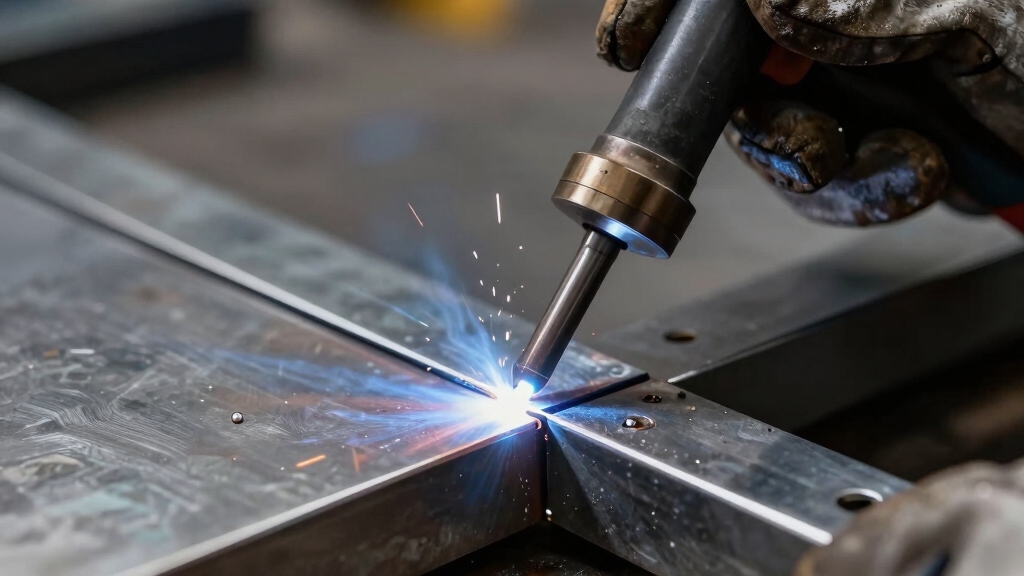
When welding thin metals, you need to carefully select a method that balances heat input and control to prevent burn-through and warping.
You’ll find TIG welding offers precise amperage control and excellent heat regulation, making it ideal for delicate materials.
MIG welding, while faster and more straightforward, requires skill to avoid excessive heat that can damage thin gauges.
Heat-conduction welding techniques, such as laser welding, precisely melt only the surface, minimizing thermal distortion and ensuring clean joins.
Your electrode selection plays a critical role; thinner electrodes and appropriate filler rods reduce excess heat and improve arc stability.
Effective heat management, including pulsed current and steady hand movements, further protects thin metals.
Ultimately, you must weigh speed, control, and heat distribution to choose the most suitable method for your specific application.
MIG welding is often favored for beginners due to its ease of use and suitability for thin to medium-thickness metals.
When you’re working with thin metals, getting that amperage control just right is super important. You definitely want to avoid overheating or burning through the material. That’s where TIG welding comes in handy! It allows you to fine-tune the heat, which is a game changer.
With features like foot pedals and pulsed current, you can really minimize distortion. It’s pretty neat how this level of control not only helps you avoid mistakes but also ensures that your welds are clean and strong. Plus, it keeps any unwanted impact on the surrounding material to a minimum. Overall, TIG welding is a fantastic choice when you’re dealing with thin metals! Using the foot pedal or fingertip control lets you adjust amperage precisely during welding to optimize heat input.
Although thin metals demand meticulous heat input, TIG welding gives you precise amperage control that prevents overheating and burn-through.
You can start as low as 5 amps, enabling welds on extremely thin gauges without damaging the base metal.
The foot pedal and pulse features allow you to adjust amperage dynamically during welding, providing excellent heat regulation and consistent penetration.
This control minimizes thermal stress and avoids excessive melting, which is critical for maintaining the integrity of thin materials.
By using a non-consumable tungsten electrode and hand-fed filler, you can fine-tune the arc and filler addition to suit the metal thickness precisely.
This level of amperage control guarantees high-quality, clean welds ideal for precision parts, making TIG the superior choice when working with thin metals.
Precise management of torch angle and arc length further enhances weld quality and consistency when working with thin materials.
Precise amperage control directly contributes to minimizing heat distortion in thin metals during TIG welding. You can regulate heat input by adjusting amperage with a foot pedal or pulsed current, allowing you to maintain the weld pool without overheating the base metal.
This fine control reduces the heat-affected zone, limiting warping and residual stresses. Starting at low amperages, sometimes as low as 5 amps, helps prevent burn-through on delicate gauges. Additionally, steady hand movements and proper joint fit-up promote even heat distribution, further reducing distortion.
Compared to other methods like MIG welding, TIG’s ability to deliver focused, low heat input makes it ideal for thin metals requiring precision and minimal thermal deformation. By controlling heat effectively, you guarantee stronger, cleaner welds with less post-weld correction. Using AC/DC TIG welders with inverter technology enhances this control by providing precise arc stability and adjustable heat input.
You’ll want to choose MIG welding for thin sheets when you need a straightforward method that’s perfect for beginners.
It works really well with materials up to 14 gauge carbon steel.
Plus, it’s fast and adaptable, making it ideal for applications like auto body panels.
Just keep in mind that you need to be careful to prevent burn-through.
Mastering the wire feed speed and maintaining the right distance is key.
This way, you can achieve strong, clean welds without overheating the metal.
Using a 92% Argon / 8% CO2 mix helps minimize spatter and ensures smoother arcs on thin carbon steel.
Happy welding!
When working with thin metal sheets, choosing MIG welding can simplify your learning curve due to its straightforward process and rapid technique.
MIG welding uses a continuous wire electrode, making it easier for beginners to maintain a steady arc and consistent weld bead. You’ll appreciate its speed, especially on projects like auto body panels.
Consider these points when opting for MIG welding:
The semi-automatic nature of MIG welding provides consistent welds with minimal spatter, reducing cleanup time and making it ideal for beginners.
MIG welding excels with certain materials and thicknesses, making it a practical choice for thin metal projects.
You’ll find it most effective on plain carbon steel up to 14 gauge, especially when working with automotive body panels or similar applications requiring speed and moderate precision.
The .023-inch wire diameter strikes a balance between penetration and control, helping you avoid excessive heat input. While it produces strong welds quickly, you must maintain steady hand speed and proper settings to prevent burn-through.
MIG’s straightforward setup suits beginners, but its effectiveness diminishes on materials thinner than 18 gauge or on metals needing precise heat management.
In those cases, alternative methods like TIG welding provide superior control and cleaner results.
Use MIG welding when speed and adequate strength outweigh the need for ultra-fine heat control.
Selecting the correct wire feed speed and voltage is crucial to avoid defects and ensure consistent weld quality.
Although welding thin sheets can be challenging, you can prevent burn-through by carefully controlling heat input and travel speed.
When choosing MIG welding for thin metals, apply precise techniques to maintain weld quality without damaging the material. You should:
Also, maintain a 10–15° travel angle and keep the nozzle 1/4–1/2 inch from the workpiece to ensure optimal gas shielding and weld quality.
By focusing heat exclusively on the surface, heat-conduction welding allows you to achieve controlled, precise welds on thin metals without risking warping or burn-through.
Heat-conduction welding delivers precise, controlled surface welds on thin metals without warping or burn-through risks.
This method melts only the surface layer, minimizing heat penetration and preserving the metal’s structural integrity. You’ll find this technique especially effective when working with delicate gauges where excess heat quickly causes distortion.
The balance of heat input and control guarantees clean, consistent welds, ideal for applications demanding high precision. Since heat conduction limits the heat-affected zone, it markedly reduces residual stresses and metallurgical changes compared to conventional welding.
When you apply this approach, you maintain dimensional accuracy while producing strong joins. This precision makes heat-conduction welding the preferred laser-based technique for thin metal fabrication, where minimal thermal impact is critical.
Precise focusing controls the thermal profile, ensuring melt pool stability and minimizing the heat-affected zones to protect thin metals during welding.
Selecting the right electrode is critical when welding thin metals, as it directly influences arc stability, heat input, and weld quality. You need electrodes that offer precise control and minimize heat to prevent damage.
Thin electrodes create a finer arc, allowing for accurate work on delicate materials. Here’s what to take into account:
Employing high-frequency start methods in TIG welding further enhances precise heat application and arc stability.
This selection guarantees clean, strong welds tailored to thin sheet requirements.
Once you’ve chosen the appropriate electrode for thin metal welding, managing heat during the weld becomes the next critical factor to control distortion and burn-through.
You’ll want to use pulsed TIG welding to alternate current, lowering heat input and reducing warping risks. Lower amperage and shorter weld times help maintain metal integrity.
Employ heat sinks like aluminum chunks to absorb excess heat and maintain steady hand movements for even heat distribution.
TIG welding’s smaller heat-affected zone offers superior control compared to MIG.
| Heat Management Technique | Benefit |
|---|---|
| Pulsed TIG | Prevents overheating, distortion |
| Heat sinks | Absorbs excess heat |
| Low amperage & steady moves | Reduces burn-through risk |
When preparing thin metal for welding, ensuring clean edges and tightly fitted joints is essential for achieving smooth penetration and consistent weld quality. Contaminants like oil, rust, and paint can cause defects or porosity, so you must clean the surface thoroughly.
Precise edge preparation minimizes gaps, reducing excess filler and burn-through risk. You should also select filler material that matches the base metal to maintain uniform bead properties.
Focus on these four key preparation steps:
These steps optimize weld integrity and reduce defects in thin metal applications.
Although welding thin metals demands meticulous technique, understanding the common challenges such as burn-through, warping, and insufficient penetration enables you to apply targeted solutions effectively.
Burn-through occurs when excessive heat melts through the metal. You can prevent this by using low amperage settings, pulsed TIG welding, or smaller electrodes.
Warping stems from uneven heat distribution. Controlling heat input with steady movements and heat sinks helps maintain dimensional stability.
Insufficient penetration results from inadequate heat or poor surface preparation. Ensuring clean edges, tight joint fit-up, and appropriate filler materials guarantees full fusion.
Selecting TIG welding with precise amperage control and employing heat-conduction methods further mitigate these issues.
You need essential safety gear when welding thin metals to protect yourself from burns, UV radiation, and fumes.
Always wear a flame-resistant welding helmet with a proper shade lens. Use safety goggles beneath for added eye protection, along with flame-resistant gloves and a long-sleeve jacket.
Respiratory protection is vital, especially in confined spaces, to avoid inhaling hazardous fumes.
Also, use ear protection to prevent noise damage and ensure proper ventilation throughout your work area.
Humidity increases the risk of weld defects when you’re working with thin metals.
Moisture on the metal surface can cause porosity, leading to weak welds and potential cracking.
You’ll find that higher humidity also promotes oxidation, compromising weld quality and appearance.
To maintain precision, you should store metals in dry conditions, preheat if necessary, and use proper shielding gases to reduce contamination during welding.
Yes, you can automate thin metal welding effectively, especially with processes like laser conduction or pulsed TIG welding.
Automation guarantees precise heat control, consistent weld quality, and minimal distortion. You’ll benefit from reduced human error and repeatability in delicate joints.
However, you must carefully program parameters to manage heat input and avoid burn-through, considering thin metals’ sensitivity.
Proper surface preparation and monitoring remain essential for reliable automated results.
You’ll want to keep welding electrodes in their “comfort zone” by storing them in a dry, controlled environment. This prevents moisture absorption that causes weld defects.
Use airtight containers or electrode ovens set between 100°F and 300°F depending on electrode type. Always reseal packaging promptly and avoid exposure to humidity or contaminants.
These precise steps guarantee consistent arc stability and strong, clean welds every time you work.
Welding fumes pose serious health risks when you work with thin metals. They contain toxic metals and gases that can irritate your respiratory system, causing coughing, wheezing, or long-term lung damage.
You’ll want to use proper ventilation and respiratory protection to minimize exposure. Since thin metal welding often requires low amperage, fumes might be less intense.
However, consistent safety measures are critical to prevent chronic health issues like metal fume fever or pneumonitis.
When welding thin metals, you’ll find TIG welding generally offers the best control and precision. This reduces risks of warping and burn-through.
While MIG welding can work, it’s less forgiving on thin sheets. Managing heat and choosing the right electrode are critical to success.
Contrary to the myth that thin metals are too delicate to weld effectively, with the right technique and preparation, you can achieve strong, clean welds every time.