Phone:
(701)814-6992
Physical address:
6296 Donnelly Plaza
Ratkeville, Bahamas.

Phone:
(701)814-6992
Physical address:
6296 Donnelly Plaza
Ratkeville, Bahamas.

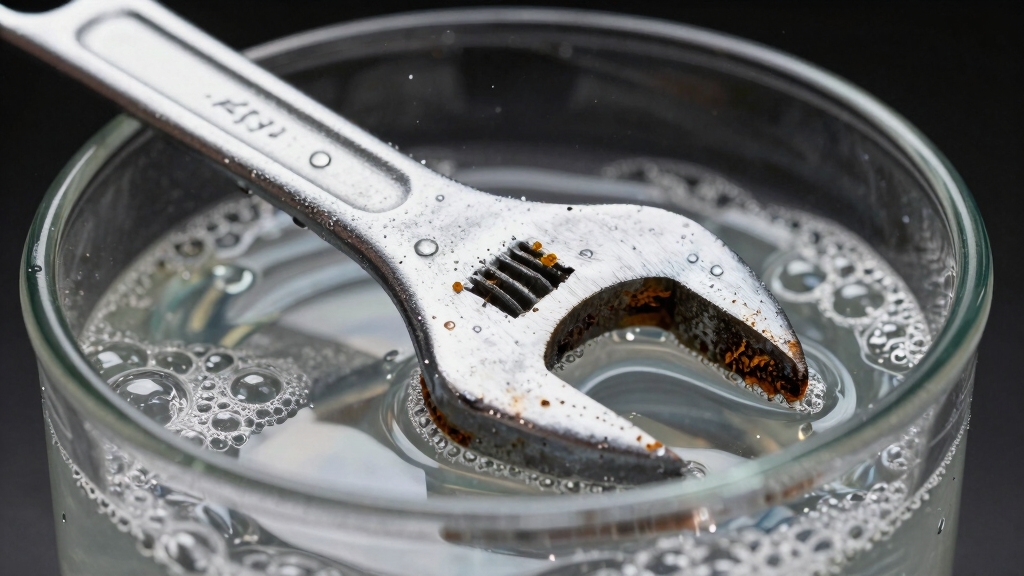
You can remove rust with an ultrasonic cleaner, but it works best when paired with the right rust-dissolving solutions like Evapo-Rust or citric acid.
The ultrasonic waves generate cavitation bubbles that dislodge rust particles even in microscopic crevices. This accelerates chemical breakdown without abrasive scrubbing.
For heavily rusted parts, pre-soaking and multiple cleaning cycles improve results. Proper solution concentration, temperature control, and cycle durations are critical for efficiency.
Exploring these factors will clarify how to optimize ultrasonic rust removal.
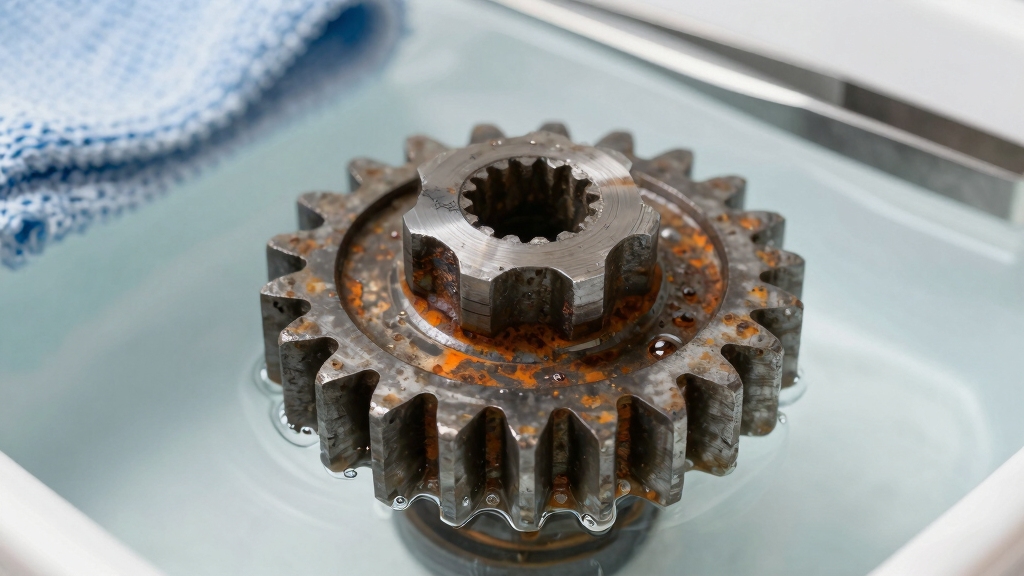
Although traditional rust removal methods rely on manual scrubbing or chemical soaking, ultrasonic rust removal uses high-frequency sound waves to generate microscopic cavitation bubbles that implode and dislodge rust particles from surfaces, even in hard-to-reach crevices.
You’ll find this method highly efficient because it uniformly treats complex geometries without abrasion, preserving delicate surfaces. The process works best when combined with rust-dissolving solutions, enhancing corrosion breakdown and reducing treatment time.
Operating at frequencies around 37 kHz, ultrasonic cleaners produce billions of imploding bubbles per second, penetrating grooves inaccessible to manual tools. This non-mechanical approach enables thorough rust removal while maintaining part integrity, making it ideal for intricate or fragile components.
Unlike some chemical stripping methods, ultrasonic cleaning minimizes hazardous waste and reduces the need for harsh chemicals, contributing to a safer and more environmentally friendly process.
Ultrasonic cleaners break down rust by generating high-frequency sound waves that create microscopic cavitation bubbles in the cleaning solution.
Ultrasonic cleaners use high-frequency sound waves to create cavitation bubbles that effectively break down rust.
These bubbles implode violently, releasing energy that dislodges rust particles from metal surfaces.
You’ll notice how this process reaches microscopic crevices and grooves that manual cleaning can’t access.
The ultrasonic vibrations agitate the solution, accelerating rust breakdown without abrasive scrubbing.
This precise mechanical and chemical synergy enables efficient rust removal while maintaining part integrity. The process’s efficiency is comparable to how plasma cutters generate extreme temperatures to break down metals rapidly.
Choose rust-specific cleaning solutions designed to optimize cavitation effects and chemical reactions within the ultrasonic tank.
You’ll want agents like Solvit 4 at a 10% concentration to dissolve corrosion effectively while degreasing simultaneously.
Mildly acidic, biodegradable solutions such as Elma Tec Clean S1 diluted between 1-5% offer balanced rust removal with environmental safety.
For aggressive rust, Evapo-Rust enhances ultrasonic action, significantly reducing soak times.
Combining vinegar with OxiClean also tackles heavy surface rust efficiently.
Citric acid is ideal for overnight pre-soaks before ultrasonic cycles targeting embedded rust.
Avoid plain water alone, as it lacks chemical activity to break down rust.
Proper solution concentration, temperature, and degassing guarantee maximal cavitation and chemical synergy.
This yields thorough cleaning without damaging delicate surfaces or compromising part integrity.
Always test cleaning solutions on a small area first to ensure compatibility and avoid damage to the galvanized finish.
Before starting rust removal, you need to prepare your ultrasonic cleaner carefully to guarantee peak cavitation and chemical action.
Begin by filling the tank with the appropriate rust-removal solution diluted per manufacturer guidelines to assure ideal chemical reactivity.
Next, degas the solution for about 10 minutes to eliminate air bubbles, which can impair ultrasonic energy transmission.
Set the heater to the recommended temperature—usually around 40°C for rust-specific agents—to enhance cleaning efficiency.
Choose the correct frequency mode (sweep or pulse) to maximize cavitation impact.
Finally, position your rusted items securely in the basket to expose all surfaces evenly.
For best results, ensure thorough rinsing after ultrasonic cleaning to remove residues and prevent flash corrosion.
When it comes to ultrasonic cleaning cycles, most people find that running them for about 10 to 20 minutes does the trick for removing light surface rust.
It’s a pretty straightforward process!
However, if you’re dealing with heavier or more embedded rust, you might want to extend those cycles.
Going up to 50 minutes can really help break down that stubborn rust without harming your parts.
Don’t forget, the cycle length can also depend on how bad the rust is and the kind of cleaning solution you’re using.
Proper cleaning cycles and solution choice are crucial to ensure effective rust removal without damaging the material’s integrity.
When determining the ideal cycle duration for ultrasonic rust removal, you must balance cleaning effectiveness with material safety and operational efficiency.
Too short a cycle won’t eliminate rust adequately, while excessive durations risk surface degradation or operational delays. Generally, 10 to 20 minutes suffices for light surface rust when using proper solutions like Solvit 4 at 40°C.
For heavier corrosion, initial pre-soaking reduces ultrasonic exposure time.
Consider these factors:
Rust severity dictates cleaning time; heavier rust requires longer cycles or pre-treatment. Solution chemistry influences cavitation efficiency and cycle length. Temperature control (30–80°C) accelerates rust dissolution. Pulse mode can shorten required cycle duration for stubborn deposits.
Avoid prolonged cycles exceeding 20 minutes to protect delicate parts and maximize throughput.
Adjust cycle times precisely based on part condition and solution properties for most favorable results. Proper pretreatment and surface preparation also improve rust removal efficiency and help prevent corrosion initiation.
Frequently, ultrasonic cleaning cycles require extension beyond standard durations to effectively tackle heavy or embedded rust deposits. While typical cycles last 10-20 minutes, stubborn rust often demands 30-50 minutes or multiple runs, especially when pre-soaking isn’t feasible.
Extending cleaning times boosts cavitation action, enhancing rust dissolution without damaging parts. However, prolonged cycles increase noise and energy use, so balance is key.
Understanding the thermal management aspects of cleaning processes can help optimize cycle durations and prevent damage to sensitive materials.
| Rust Severity | Pre-Soak Needed | Cycle Duration | Notes |
|---|---|---|---|
| Light surface rust | No | 10-15 minutes | Quick removal, minimal soak |
| Moderate rust | Optional | 20-30 minutes | Use pulse mode for efficiency |
| Heavy rust | Yes | 30-50 minutes | Combine with citric acid soak |
| Embedded rust | Yes | Multiple cycles | Alternate soak and ultrasonic |
Adjust cycles based on rust type and solution concentration for best results.
Tackling heavy rust with ultrasonic cleaners demands a strategic approach that combines ultrasonic cavitation with targeted chemical pre-treatment.
You’ll first soak the heavily rusted item in an acidic solution like citric acid overnight to loosen embedded corrosion.
Then, place it in the ultrasonic cleaner filled with an appropriate rust-removal solution such as Evapo-Rust or Solvit 4 at recommended concentrations.
Utilize pulse mode and maintain a temperature around 40°C to maximize cavitation energy.
Typical cycle times extend to 20-50 minutes depending on rust severity.
Key steps include:
To ensure the best results and avoid coating failures after cleaning, it is crucial to perform thorough surface cleaning to remove all oils, contaminants, and residues before any further processing.
After you’ve finished using the ultrasonic cleaner to remove rust, it’s super important to dry your tools really well. You don’t want them to start rusting again right away! Using compressed air or applying some heat can help get rid of any leftover moisture.
Once your tools are nice and dry, the next step is to protect them. A good idea is to apply a rust inhibitor like ElmaKS, following the recommended concentrations. This will create a protective barrier that helps keep corrosion at bay. For optimal long-term protection, consider applying a corrosion-resistant primer formulated to prevent rust and enhance durability.
Apply rust inhibitors promptly once ultrasonic cleaning removes corrosion to prevent immediate reoxidation.
After rinsing and drying, coat your tools with inhibitors like ElmaKS at concentrations between 0.05-0.5%. These create a molecular barrier, minimizing oxygen and moisture contact.
Choose inhibitors compatible with the tool’s material to avoid surface degradation or residue buildup.
Apply evenly using spray, dip, or wipe methods to guarantee all-encompassing coverage, especially in crevices.
Regular reapplication is critical for long-term protection.
Prompt inhibitor application is essential to maintain ultrasonic cleaning benefits. Additionally, using rust inhibitors that provide cathodic protection can further prevent corrosion by acting as a sacrificial barrier to protect the underlying metal.
Although ultrasonic cleaning effectively removes rust, proper drying techniques are essential to prevent immediate reoxidation and corrosion.
After rinsing your tools, you should promptly remove residual moisture using compressed air, ensuring water doesn’t collect in crevices or cavities where rust can rapidly reform.
Avoid air-drying at ambient conditions, as this prolongs exposure to humidity.
Following compressed air, apply a controlled heat source, around 40-50°C, to accelerate evaporation without damaging sensitive components.
Use clean, lint-free cloths for delicate surfaces to absorb any remaining moisture.
Finally, coat the tools with a rust inhibitor to create a protective barrier against oxidation.
When you use ultrasonic rust cleaning, you benefit from a non-abrasive process that preserves the integrity of delicate or intricate parts while efficiently removing rust.
This method employs high-frequency sound waves to create microscopic cavitation bubbles that dislodge corrosion without mechanical abrasion.
You’ll find it faster and more thorough than manual scrubbing or soaking alone, especially when paired with targeted cleaning solutions.
Preserves surface details by avoiding harsh scrubbing or sanding.
Penetrates complex geometries, reaching crevices inaccessible to brushes.
Accelerates rust removal, reducing soak times from hours to minutes.
Uses eco-friendly, biodegradable solutions minimizing environmental impact.
Restores tool functionality and appearance without altering dimensions.
Ultrasonic rust cleaning offers you a precise, reliable restoration method ideal for sensitive or intricate components.
If you’re dealing with heavily rusted items, it’s a good idea to pre-treat them with acidic soaks before jumping into ultrasonic cleaning. This step can really boost your results.
Now, let’s talk about the ultrasonic process itself. It does have some limitations when it comes to cycle times. For those stubborn rust spots, you might find yourself running the machine multiple times or even extending the cycles up to 50 minutes.
Since ultrasonic cleaning relies on cavitation and chemical action, it can’t fully remove deeply embedded or heavily corroded rust without prior treatment. You need to prepare the item to optimize ultrasonic effectiveness. Pre-treatment softens and loosens rust layers, enabling cavitation bubbles and solutions to penetrate more efficiently.
Consider these essential steps:
Soak in citric acid overnight to dissolve dense corrosion.
Apply rust-specific agents like Evapo-Rust for aggressive deposits.
Use mildly acidic solutions (e.g., Solvit 4) to break down rust compounds.
Remove loose debris with manual brushing before ultrasonic cycles.
Control temperature and degassing to maximize cavitation impact.
Skipping pre-treatment risks incomplete rust removal and prolonged cleaning cycles, limiting ultrasonic cleaning’s ability to restore heavily rusted components fully.
Proper pre-treatment sets the stage for effective ultrasonic cleaning, but cycle time still plays a significant role in rust removal efficiency.
You’ll find that standard cycles typically last 10-20 minutes, which suffices for light surface rust. However, heavily rusted items demand longer exposure, up to 50 minutes or more, to achieve meaningful results.
Extending cycle time beyond optimal limits risks diminishing returns due to solution saturation and cavitation weakening. Additionally, prolonged ultrasonic exposure can generate heat, potentially affecting delicate components.
To maximize efficiency, you should monitor rust levels and adjust cycle duration accordingly, combining ultrasonic cleaning with appropriate chemical pre-soaks when necessary.
Understanding these cycle time limitations helps you avoid inefficient cleaning runs and guarantees consistent rust removal without compromising part integrity.
Selecting the best ultrasonic cleaner for rust removal at home involves evaluating factors such as frequency range, tank capacity, and compatibility with rust-dissolving solutions.
Choosing an ultrasonic cleaner for rust requires considering frequency, tank size, and solution compatibility.
You want a unit operating around 37 kHz to maximize cavitation efficiency for rust dislodgement.
The tank should be large enough to accommodate your parts but not excessively big to reduce cleaning intensity.
Make certain the cleaner supports temperature control up to 80°C, as heat accelerates rust dissolution. Compatibility with acidic or specialized rust-removal solutions like Evapo-Rust is critical for peak results.
Consider these features when choosing:
Ultrasonic cleaners can remove rust from painted surfaces, but you need to be cautious.
The cavitation process targets rust without abrasive action, so it preserves the paint if it’s intact.
However, if the paint is already compromised or thin, the cleaning solution combined with ultrasonic vibrations might cause damage or discoloration.
Always test a small area first, use mild rust-removing solutions, and avoid prolonged cycles to protect the painted finish effectively.
You can safely use ultrasonic cleaners on antique or fragile metal items, thanks to their non-abrasive cavitation process.
Imagine billions of tiny bubbles gently imploding, dislodging contaminants without scratching delicate surfaces.
However, you must pair the cleaner with appropriate mild, pH-neutral solutions and avoid harsh chemicals to prevent damage.
Always control temperature and cycle duration carefully to preserve integrity.
Ultrasonic cleaning offers a precise, effective method without compromising fragile metals.
You’ll notice ultrasonic cleaners produce a consistent high-frequency buzzing or humming sound during operation.
While not excessively loud, prolonged use can generate noticeable noise levels, especially in quieter environments.
Noise varies with model quality and power settings; industrial units tend to be louder than small benchtop versions.
If noise is a concern, consider placing the cleaner in a sound-dampened area or using pulse mode, which can reduce continuous noise by cycling power.
You’ll find ultrasonic cleaning removes rust primarily from metal surfaces because cavitation targets corrosion on conductive materials.
While the bubbles penetrate crevices, non-metal substrates don’t generate rust, so ultrasonic cleaners can’t remove rust from them.
Curiously, ultrasonic waves create billions of imploding bubbles per second at 37 kHz.
However, without rust on non-metals, the process won’t affect such materials’ contamination or discoloration.
You’ll need alternative cleaning methods for non-metal rust issues.
After rust removal, you should drain and clean the ultrasonic tank to prevent residue buildup.
Rinse the tank with distilled water and wipe it dry.
Regularly check and replace the cleaning solution, especially if it’s acidic or rust-specific, to maintain effectiveness.
Degas the solution before use to avoid cavitation loss.
Inspect the transducers and electrical connections periodically to guarantee peak performance.
Following these steps extends your cleaner’s lifespan and guarantees consistent rust removal.
Think of ultrasonic rust removal like a miniature army of tiny hammers, each striking rust particles away with precision.
Just as a craftsman trusts a fine chisel to restore a sculpture’s detail, you can rely on ultrasonic cleaners to tackle rust efficiently—removing up to 99% of corrosion in minutes.
While it’s not a magic fix for heavy rust, using the right solution and cycle time guarantees your tools get a thorough, controlled restoration every time.