Phone:
(701)814-6992
Physical address:
6296 Donnelly Plaza
Ratkeville, Bahamas.

Phone:
(701)814-6992
Physical address:
6296 Donnelly Plaza
Ratkeville, Bahamas.

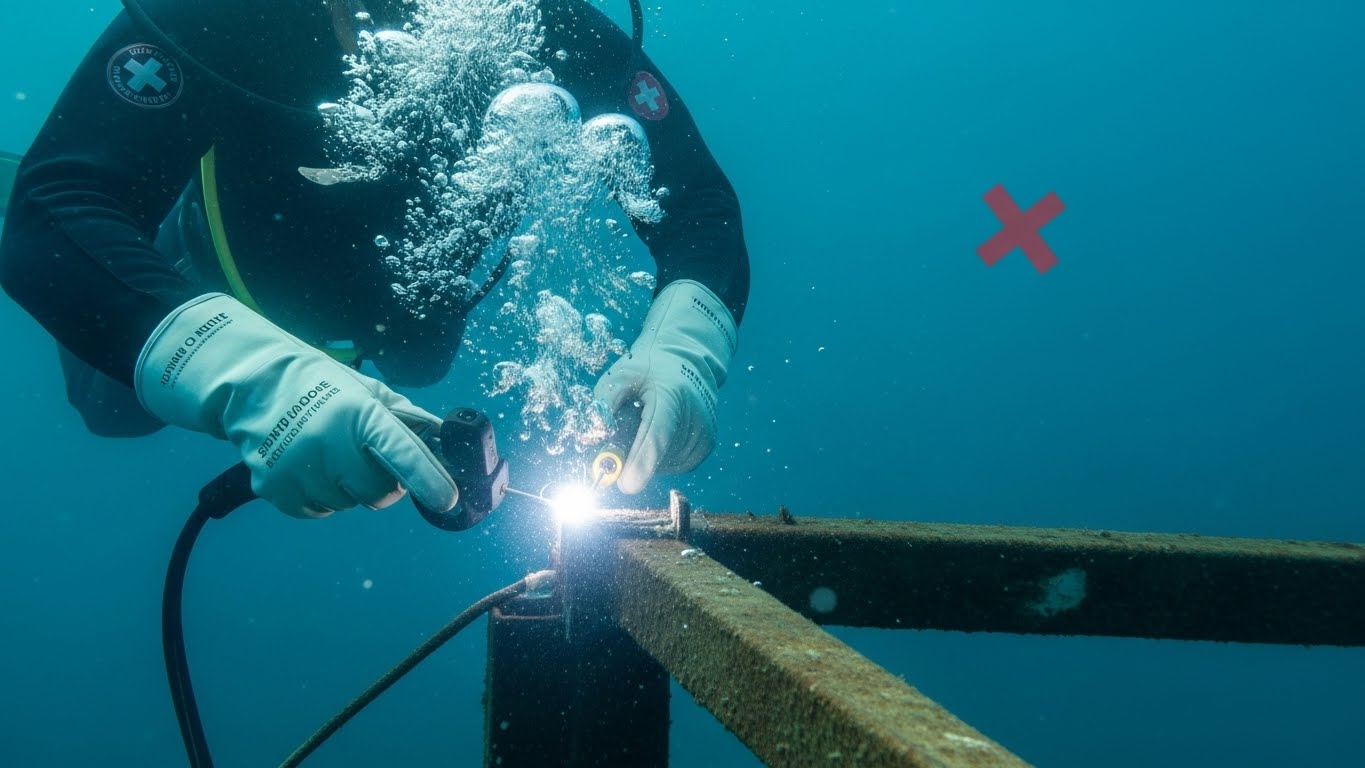
Underwater welding is dangerous because you’re exposed to powerful electrical currents in highly conductive saltwater, increasing electrocution risks. You also face drowning hazards from equipment failures and strong currents.
Explosive gas mixtures form near the arc, risking detonation in confined spaces. Decompression sickness and pressure injuries threaten your health during deep or repetitive dives.
Environmental factors like toxic fumes and unpredictable conditions add to the danger. Understanding these complexities is key to mastering safety in this profession.
Because saltwater conducts electricity much better than freshwater, underwater welding poses significant electrocution risks that demand your strict attention.
Saltwater’s high conductivity greatly increases electrocution hazards in underwater welding, requiring vigilant safety measures.
The high ionic content allows current to spread beyond the welding arc, creating unintended pathways through your body.
Even low currents can induce ventricular fibrillation or cardiac arrest if electrical leakage occurs via damaged insulation on leads, helmets, or connectors.
Faulty bonding and earthing on structures or vessels may energize metal surfaces, exposing you to shock upon contact.
Additionally, stray currents from nearby systems can increase local voltages, compounding the hazard.
Underwater arcs generate ionized channels and transient surges that may concentrate current toward you. Experience improves judgment about conditions and equipment quirks but does not eliminate acute risks throughout a career.
Maintaining equipment integrity, performing thorough insulation and continuity tests, and strictly following lockout/tagout procedures are essential to minimize electrocution risks during underwater welding operations.
Specialized equipment such as insulated welding gear and waterproof electrodes is critical to reduce these electrical hazards during wet welding procedures.
Steering the risks of drowning and entrapment requires your full attention and adherence to strict safety protocols in underwater welding. Using proper decompression schedules and following OSHA guidelines are vital to safe operations.
Drowning causes about 70% of fatalities, often linked to equipment failures like malfunctioning air supplies or communication systems. You must maintain all gear meticulously to prevent asphyxiation.
Environmental factors, such as strong currents, low visibility, and confined spaces, compound drowning risks by increasing chances of entrapment and pinning. Being trapped by welding equipment or underwater debris can block your escape, especially in overhead environments.
Operationally, solo dives and inadequate training elevate danger; continuous monitoring and teamwork are essential. Understanding that underwater welding is considered among the most dangerous jobs, with a mortality rate of around 15%, underscores the critical need for vigilance.
Recognizing distress signals promptly and following established safety standards drastically reduce drowning and entrapment incidents, helping you avoid life-threatening situations beneath the surface.
When performing underwater welding, you must remain vigilant about the risk of explosions caused by accumulated gases like hydrogen and oxygen. These gases form combustible mixtures in confined spaces.
These gases originate from water decomposition at the arc and can collect in voids or structural cavities with poor ventilation. The welding arc and sparks serve as ignition sources, capable of detonating trapped pockets. Effective local exhaust ventilation is critical to prevent dangerous gas accumulation.
This produces rapid pressure waves that cause fatal shock injuries. Depth affects explosion dynamics, altering pressure profiles and failure modes. Additionally, hydrocarbons present on rigs or wrecks amplify explosion severity.
Underwater welding is known to have the highest fatality rate among occupations, underscoring the extreme danger of these hazards.
Thermal hazards also pose serious risks: arc temperatures cause burns, and rapid steam generation can result in scalding or lung injury. Heated metalwork remains a contact hazard post-weld, while thermal cycling may weaken structures, increasing collapse risk.
Always enforce strict gas monitoring and space purging protocols.
Explosions and thermal hazards pose immediate threats during underwater welding. However, the dangers don’t end once you stop welding.
You face significant risks from decompression sickness (DCS) and barotrauma due to pressure changes. As you descend, inert gases like nitrogen dissolve into your tissues. Rapid ascent causes these gases to form bubbles, obstructing blood flow and triggering inflammation.
This can result in joint pain, neurological deficits, or even fatal organ dysfunction. Failure to equalize pressure in air spaces may cause ear, sinus, or lung injuries.
Pulmonary barotrauma can lead to arterial gas embolism, causing strokes or cardiac events. Your risk increases with deep, repetitive dives, improper decompression schedules, or heavy exertion during ascent.
Strict adherence to decompression protocols is critical to prevent these life-threatening injuries. The work environment often requires entering murky waters with low visibility and strong currents, which significantly heightens the overall drowning risk.
Although underwater welding demands technical skill, environmental and human factors often pose unpredictable hazards that can compromise safety and performance. You must be vigilant about these risks, as they can escalate quickly underwater.
Underwater welding requires skill and vigilance to manage unpredictable, rapidly escalating environmental and human hazards.
Understanding and mitigating these hazards requires strict adherence to safety protocols and constant environmental monitoring to protect both you and your team.
You need land-based welding certifications like AWS-accredited courses and code qualifications (AWS D3.6) before underwater specialty training.
You must complete commercial diver certification from an accredited school (ADCI or CDCI) and pass medical fitness exams.
Safety courses like first aid, CPR, and hazardous materials training are essential.
Additionally, certifications in nondestructive testing, breathing-gas management, and underwater cutting may be required depending on your work scope and employer demands.
You can expect underwater welding training to take anywhere from 6 months to 3 years, depending on your prior welding experience and program structure.
If you’re already a certified welder, completing integrated commercial diving and underwater welding courses typically requires about 6 months to 2 years.
Without prior experience, factoring in foundational welding, diving certification, and on-the-job training, the timeline often extends to 2–3 years to guarantee safety and competence.
You prevent underwater welding accidents by rigorously maintaining electrical equipment.
Use waterproof electrodes, DC power only, and waterproof connectors.
You guarantee gas and ventilation systems vent hydrogen properly and monitor oxygen pockets.
You keep protective gear like insulated wetsuits and dive helmets in top condition and tag out unsafe items.
You conduct nondestructive testing on welds and gear, pressure-test hyperbaric chambers, and verify safety interlocks.
Follow strict pre-dive checklists and protocols.
Of course, you don’t need special insurance for underwater welding if you enjoy gambling with your life and gear.
But seriously, you’ll want tailored coverage like commercial diving general liability, workers’ comp with maritime protections, and diver’s accident insurance.
Don’t forget endorsements for vessel liability, pollution, and catastrophic risks.
These specialized policies shield you from unique underwater hazards, ensuring your safety net matches the depth and danger of your work environment.
You communicate with surface teams primarily using a hard-wire umbilical system, combining breathing gas, power, lifeline, and voice comms in one cable for clear, real-time instructions.
Redundancy is key; multiple conductors and backup lines prevent failures.
In some cases, through-water wireless systems supplement comms, especially when tethering limits mobility.
You rely on standardized line-signals and pre-dive briefings to guarantee safety and precise coordination throughout the operation.
Underwater welding is a high-stakes endeavor where every decision can mean the difference between safety and disaster.
Like walking a tightrope over a stormy sea, you face electrocution, drowning, explosions, and pressure injuries simultaneously.
Staying vigilant about equipment integrity, environmental conditions, and your own physical limits is vital.
By respecting these dangers and following strict safety protocols, you minimize risks and protect yourself in this unforgiving underwater environment.