Phone:
(701)814-6992
Physical address:
6296 Donnelly Plaza
Ratkeville, Bahamas.

Phone:
(701)814-6992
Physical address:
6296 Donnelly Plaza
Ratkeville, Bahamas.

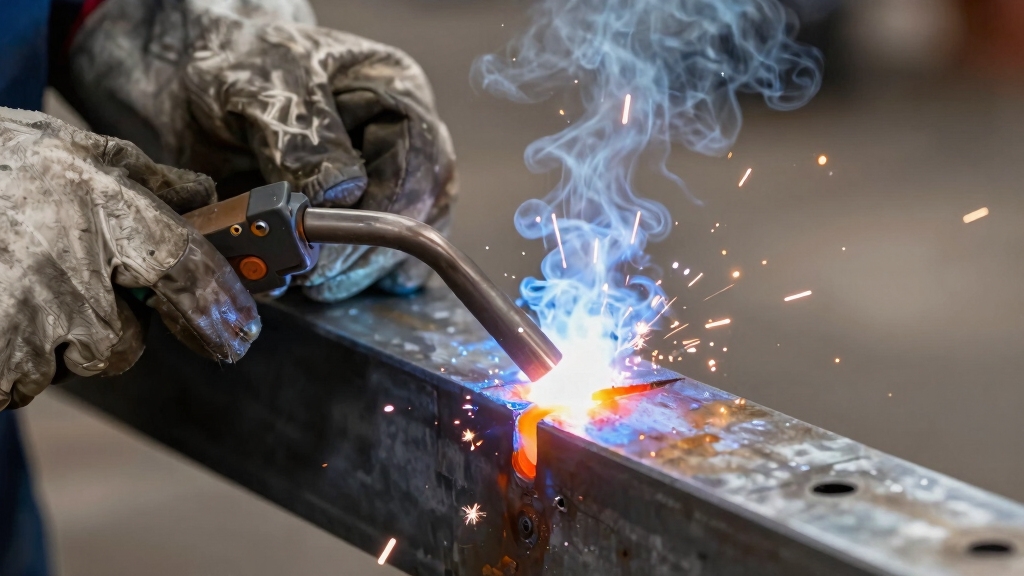
You need inert shielding gas in GTA welding to protect the weld pool and tungsten electrode from oxygen, nitrogen, and hydrogen contamination.
This gas forms a protective barrier, preventing oxidation, porosity, and embrittlement that compromise weld quality and strength.
It also stabilizes the electrical arc for consistent heat control and clean, defect-free welds. Using the right gas guarantees better mechanical properties and smoother bead appearance.
Understanding gas selection details will improve your welding results markedly.
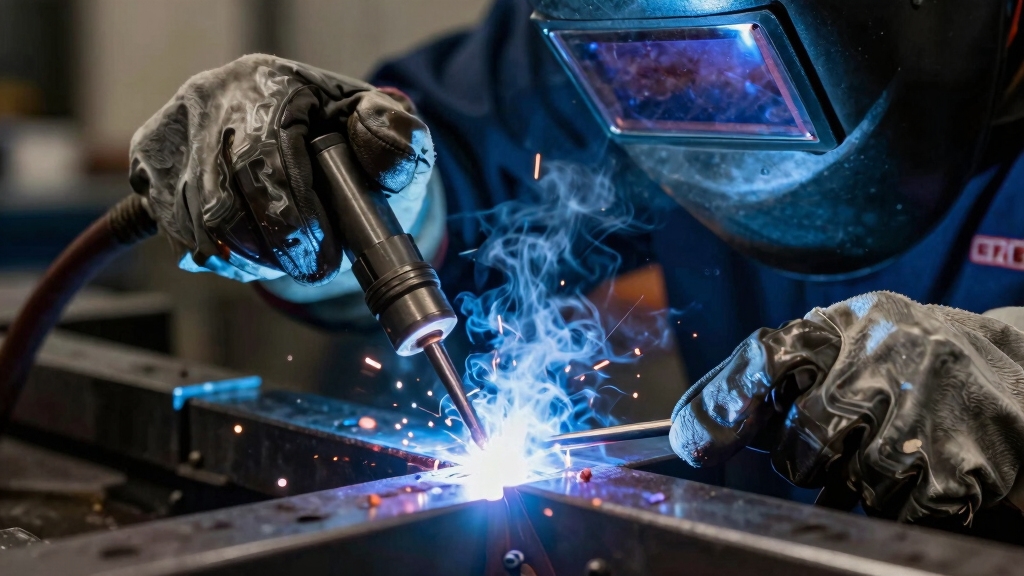
When you use inert shielding gas in GTA welding, it effectively displaces oxygen and other reactive gases from the weld environment to prevent oxidation and contamination.
Inert shielding gas in GTA welding displaces oxygen, preventing oxidation and contamination for cleaner welds.
This gas forms a protective barrier around the molten weld pool and tungsten electrode, isolating them from atmospheric gases like nitrogen and oxygen.
By maintaining this inert atmosphere, you avert fusion defects, porosity, and weld metal embrittlement.
The shielding gas stabilizes the arc and guarantees consistent heat transfer from the electrode to the workpiece, enabling precise control over penetration and metal transfer.
Selecting the appropriate inert gas, such as argon or helium mixes, allows you to tailor the shielding effect to the material and joint design, optimizing weld quality and preventing harmful reactions during the welding process.
Typical TIG gas flow rates range from 10 to 35 CFH, and adjusting the flow rate is essential to maintain effective shielding protection without causing turbulence or gas waste.
Maintaining an inert atmosphere around the weld pool does more than just stabilize the arc; it actively prevents weld defects and contamination by blocking harmful atmospheric gases like oxygen, nitrogen, and hydrogen.
These gases, if allowed to interact with the molten metal, cause oxidation, porosity, and embrittlement, compromising weld integrity. By displacing oxygen, the shielding gas prevents oxidation and slag formation, ensuring a clean, strong weld seam.
It also inhibits nitrogen and hydrogen absorption, which can induce cracking and porosity. This protective barrier maintains weld metal homogeneity and reduces impurities, improving bead appearance and structural quality.
Consequently, you achieve precise, defect-free welds with enhanced mechanical properties, minimizing post-weld treatments and rework while ensuring consistent performance across various metals and thicknesses.
Argon’s inert shielding properties guarantee contamination-free, aesthetically clean welds with optimal penetration and durability despite TIG being technique-intensive.
Without inert shielding gas, the weld pool directly contacts atmospheric gases such as oxygen, nitrogen, and hydrogen, causing immediate and severe contamination.
This exposure leads to oxidation, porosity, and embrittlement in the weld metal, compromising structural integrity.
You’ll observe increased slag formation, spatter, and inconsistent bead appearance, all indicative of contaminated welds.
The tungsten electrode and arc become unstable, impairing arc initiation and control, which results in irregular heat distribution and incomplete fusion.
Without the protective barrier, nitrogen and hydrogen induce cracking and reduce ductility.
Furthermore, the absence of shielding gas allows atmospheric gases to react chemically with the molten metal, producing defects that weaken the joint.
Consequently, weld strength diminishes, and post-weld rework increases.
Fundamentally, omitting inert shielding gas severely degrades weld quality and reliability.
This is why a non-consumable tungsten electrode and inert gas shielding are essential to create clean, precise welds on non-ferrous and stainless metals.
You know, argon really stands out as a shielding gas in GTA welding for a few solid reasons. First off, it provides exceptional arc stability. This means you can rely on it to ensure consistent heat transfer, which is super important for maintaining precise control during the welding process.
Another great thing about argon is its high density. It effectively displaces oxygen, which helps prevent oxidation and contamination of the weld pool. This is crucial because you want your welds to be as clean and strong as possible, right?
And let’s not forget about argon’s versatility! It’s compatible with a wide range of materials, from unalloyed steels to non-ferrous metals. This adaptability really optimizes weld quality across different applications, making argon a go-to choice for many welders.
Additionally, the use of 100% argon in GTA welding ensures a clean, precise weld with stable arc characteristics, especially for materials like aluminum.
Because argon provides a stable and consistent arc, it has become the preferred shielding gas for GTA welding.
When you use argon, you benefit from improved arc starting and maintenance, which reduces interruptions and enhances weld quality.
Argon’s inert properties stabilize the electrical arc, allowing you to maintain precise control over heat distribution and penetration.
This stability is vital when working with varying arc lengths or thin materials, as it prevents arc wandering and guarantees consistent metal transfer.
Additionally, argon efficiently transfers heat from the tungsten electrode to the workpiece, optimizing weld pool control.
Its use complements DCEN polarity, which directs most heat to the workpiece for deeper penetration and electrode longevity.
Although several inert gases can shield the weld pool, argon’s exceptional ability to displace oxygen makes it the most common choice in GTA welding.
When you apply argon, it effectively pushes atmospheric oxygen away from the molten weld pool, preventing oxidation reactions that cause porosity, embrittlement, and compromised weld strength.
This displacement forms a consistent, inert barrier, preserving the chemical integrity of the weld metal and tungsten electrode.
You’ll notice argon’s higher density compared to air helps maintain this protective atmosphere, minimizing contamination risk during welding.
Using argon guarantees that nitrogen and hydrogen are also excluded, which further reduces weld defects.
In addition, the precise control of welding current enabled by inverter welding machines enhances the effectiveness of argon shielding by maintaining a stable arc and consistent heat input.
Argon’s ability to create a stable, inert atmosphere extends beyond just displacing oxygen. It also adapts effectively to a wide range of materials and welding conditions.
You’ll find argon suitable whether you’re welding aluminum, stainless steel, or even titanium alloys. Its inert nature prevents contamination and supports arc stability, helping you achieve clean, precise welds with minimal distortion.
Here’s a quick reference for argon’s versatility:
| Material Type | Welding Benefit |
|---|---|
| Aluminum & Magnesium | Oxide layer cleaning via AC |
| Stainless Steel | Stable arc, minimal spatter |
| Titanium Alloys | Prevents oxidation, guarantees purity |
For aluminum welding, 100% argon is typically preferred due to its excellent arc stability and ability to shield the weld pool effectively.
When you rely on inert shielding gas in GTA welding, it plays a critical role in stabilizing the arc by maintaining a consistent, contamination-free environment around the tungsten electrode.
This inert atmosphere prevents oxidation and contamination that would otherwise cause arc fluctuations and instability. By displacing atmospheric gases such as oxygen and nitrogen, the shielding gas guarantees steady heat transfer from the electrode to the workpiece, enabling consistent arc length and intensity.
This stability allows you to precisely control heat input and metal transfer, resulting in accurate weld bead placement and penetration. Additionally, the shielding gas facilitates easier arc initiation and continuous maintenance, reducing spatter and defects.
Ultimately, it provides you with superior control essential for high-quality, repeatable GTA welds. Selecting the appropriate shielding gas mixture is crucial to optimize arc stability and weld quality in various materials and thicknesses.
Since different shielding gases possess unique thermal properties, they directly influence heat input and penetration during GTA welding.
For example, argon provides a stable arc with moderate heat transfer, resulting in controlled penetration ideal for thin to medium-thickness materials.
Helium, with its higher ionization potential and thermal conductivity, increases arc temperature, thereby enhancing heat input and producing deeper weld penetration.
When you use argon-helium mixtures, you gain the benefits of both: improved arc stability from argon and increased heat from helium.
This allows you to weld thicker sections efficiently.
Selecting the right gas or gas blend lets you tailor the weld pool’s thermal characteristics, optimizing penetration depth and minimizing distortion while ensuring weld integrity.
Precise gas selection is critical to achieve desired weld profiles and metallurgical properties.
Additionally, the choice of shielding gas interacts with welding polarity and wire type, influencing arc stability and heat distribution for optimal weld quality, especially in gas-shielded processes with DCEP polarity.
Although shielding gas serves the fundamental purpose of protecting the weld pool from atmospheric contamination, its specific selection critically depends on the metal being welded.
Different metals react uniquely to atmospheric gases; for instance, aluminum requires argon for effective oxide layer cleaning.
Stainless steel benefits from argon-helium mixtures to increase heat input and penetration.
You must choose an inert gas that prevents oxidation and nitrogen absorption, which cause porosity and embrittlement, especially in reactive metals like titanium alloys.
Additionally, the gas must provide stable arc characteristics tailored to the metal’s thermal conductivity and melting point.
Selecting the appropriate shielding gas guarantees precise arc control, minimizes weld defects, and maintains material integrity.
Hence, understanding each metal’s properties guides your choice of shielding gas to optimize weld quality and performance.
For aluminum welding, the use of zirconiated tungsten electrodes can significantly improve arc stability and reduce contamination risks.
Choosing the right shielding gas directly influences the final weld’s appearance and mechanical strength. By displacing oxygen and atmospheric gases, the gas prevents oxidation and contamination, ensuring a clean, defect-free weld.
This results in enhanced bead consistency, improved surface finish, and stronger metallurgical bonds. Furthermore, the gas stabilizes the arc, providing precise control over heat input and penetration depth. This minimizes thermal distortion and promotes uniform fusion.
| Aspect | Effect |
|---|---|
| Oxidation Control | Prevents porosity and embrittlement |
| Arc Stability | Enables consistent heat input and penetration |
| Surface Finish | Produces clean, smooth, and uniform beads |
You’ll achieve stronger, visually superior welds by maintaining an inert atmosphere around the weld pool and tungsten electrode throughout the process.
When it comes to GTA welding, picking the right shielding gas is crucial. You really want to match your gas to the material you’re working with to ensure you get the best protection and weld quality possible.
Think about the gas mixtures that can help you balance things like arc stability, heat input, and cleaning action. It all depends on what you’re trying to achieve in your application.
Also, don’t forget to consider your joint design and the specific weld characteristics you want. Tailoring your shielding gas choice to these factors can truly maximize your performance and help keep defects to a minimum.
When welding diverse materials, selecting the appropriate inert shielding gas becomes essential to guarantee peak weld quality and performance.
Different metals react distinctively under heat and atmospheric exposure, so your choice of gas directly influences weld integrity and appearance.
To secure compatibility, consider these key factors:
Dialing in the right gas mixture can markedly enhance your GTA welding results by optimizing arc stability, heat input, and weld quality.
Using pure argon provides a stable arc with excellent control, ideal for most applications and materials like stainless steel and aluminum.
Introducing helium or an argon-helium blend increases heat input and penetration, which benefits thicker sections or metals with high thermal conductivity.
Selecting the correct mixture enables precise control of the weld pool, reduces spatter, and minimizes oxidation risks.
By adjusting the gas composition, you can tailor arc characteristics to your joint design and material type, ensuring consistent bead formation and mechanical strength.
Proper gas selection also supports effective tungsten electrode maintenance and arc starting, essential for achieving clean, defect-free welds with minimal post-weld processing.
Although selecting a shielding gas might seem straightforward, it demands careful consideration of the specific welding application to guarantee peak performance.
You should evaluate key factors to choose the most suitable gas composition:
Yes, shielding gas flow rates directly impact weld quality.
If you set the flow too low, atmospheric gases can contaminate the weld pool, causing porosity and oxidation.
Too high, and turbulence can introduce air, also degrading the weld.
You need to optimize flow to maintain a stable, inert atmosphere around the arc, ensuring arc stability, clean seams, and consistent penetration.
Proper flow rates reduce defects and improve overall weld integrity.
Shielding gas directly impacts your tungsten electrode’s lifespan by maintaining an inert atmosphere around it, preventing oxidation and contamination.
When you use argon or argon-helium mixes, you stabilize the arc and reduce electrode erosion.
This means your tungsten lasts longer because it doesn’t degrade from chemical reactions or excessive heat fluctuations.
Proper gas flow also minimizes tungsten spitting and balling, ensuring consistent performance and extending electrode service intervals.
Yes, you need to be cautious with inert shielding gases like argon and helium.
They’re asphyxiation hazards in confined spaces because they displace oxygen, which can cause suffocation without warning.
Always make certain proper ventilation and monitor oxygen levels when welding indoors.
Also, handle gas cylinders securely to prevent leaks or physical injury.
Following safety protocols and using appropriate personal protective equipment minimizes risks during GTA welding.
You’ll need a gas cylinder filled with your chosen inert gas, a pressure regulator to control flow, and a flowmeter for precise adjustment.
Connect these to the welding torch via gas hoses designed for shielding gases. Make sure you use proper fittings and check for leaks.
Additionally, a gas diffuser inside the torch nozzle evenly distributes the gas, creating a stable protective atmosphere around the weld pool to maintain arc stability and prevent contamination.
You know the saying, “One size doesn’t fit all.”
You can absolutely customize shielding gas mixtures to suit specific welding tasks.
By blending gases like argon and helium, you control heat input, arc stability, and penetration depth precisely.
Adjusting mixtures helps optimize weld quality on different materials or joint designs.
This tailored approach guarantees you get clean, strong welds with minimal defects, perfect for your unique application needs.
You can’t achieve clean, strong GTA welds without inert shielding gas. It blocks contamination and prevents defects. Without it, your welds become porous and weak, vulnerable to oxidation. Yet, with the right gas, like argon, you gain arc stability and precise control.
Different gases alter heat and penetration, tailored to your metal. So, choosing the proper shielding gas isn’t optional; it’s the methodical step that transforms flawed welds into flawless, durable joints.