Phone:
(701)814-6992
Physical address:
6296 Donnelly Plaza
Ratkeville, Bahamas.

Phone:
(701)814-6992
Physical address:
6296 Donnelly Plaza
Ratkeville, Bahamas.

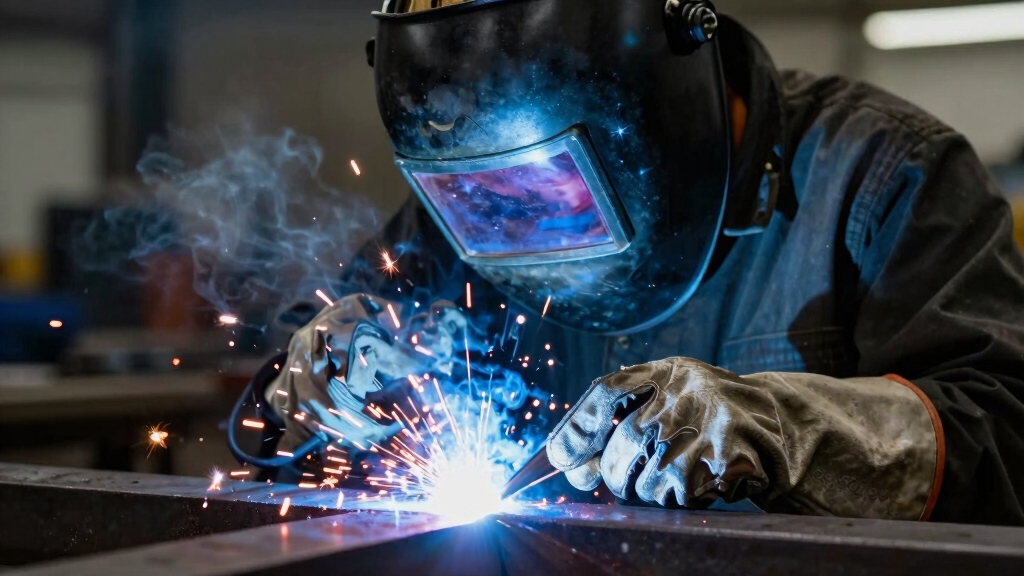
For MIG welding, you’ll want a lens shade between 10 and 13, depending on your amperage and material.
Under 100 amps, shades 8 to 10 usually work. For 60–160 amps, shades 11 or 12 are recommended, while over 160 amps need shade 13 or higher.
Material type and transfer mode also impact your choice. Thicker metals or spray transfer require darker shades.
Balancing protection with visibility is essential to avoid eye strain and guarantee weld quality. More precise guidance can clarify your optimal setup.
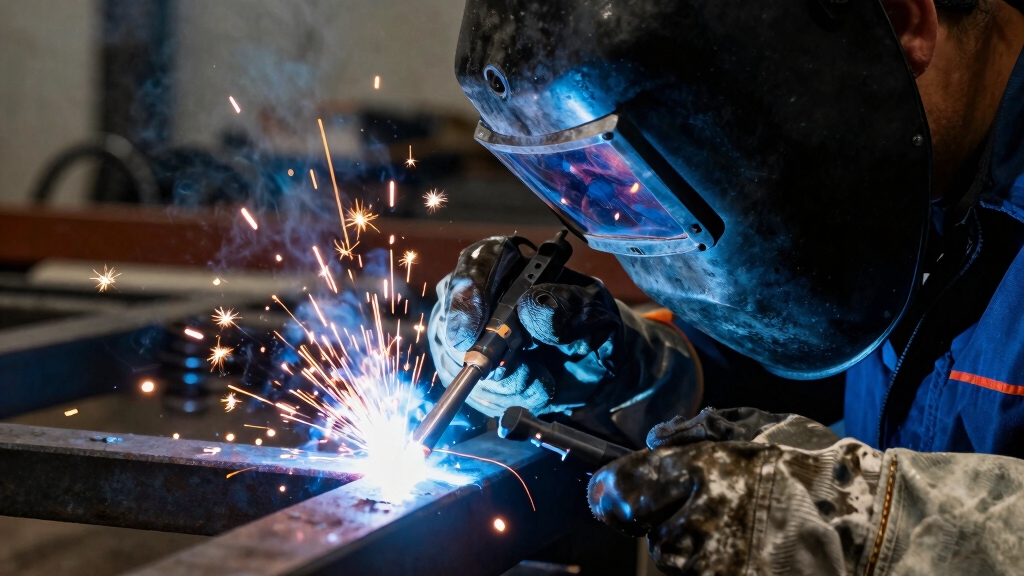
When you’re selecting the shade lens for MIG welding, you need to take into account the welding current and voltage, as these directly affect the arc’s brightness and intensity.
Selecting the correct shade lens for MIG welding depends on welding current and voltage, which influence arc brightness and intensity.
Typically, shade numbers range from 8 to 13 for MIG welding, with higher shades providing greater protection against stronger arcs.
For currents under 100 amps, a shade 8 or 9 lens usually suffices.
As you increase current beyond 100 amps, shades 10 to 12 become necessary to effectively filter ultraviolet and infrared radiation, preventing eye damage.
Voltage also influences arc brightness, so higher voltages may require darker lenses within this range.
You should also consider the welding environment’s ambient light to ensure sufficient visibility.
Selecting the precise shade lens optimizes both safety and weld quality.
It is important to use lenses that meet ANSI standards to ensure proper UV and IR protection during welding.
Although the arc’s brightness and intensity vary with welding amperage, you must adjust your lens shade accordingly to guarantee adequate eye protection.
Higher amperage settings produce a more intense arc, increasing ultraviolet and infrared radiation. This demands a darker lens shade to prevent retinal damage and eye strain.
Conversely, low amperage requires a lighter shade to maintain clear visibility of the weld puddle and joint.
Generally, amperage below 60 amps suits shade 10, while amperage between 60 and 160 amps requires shades 11 to 12.
Above 160 amps, shades 13 or higher become necessary. Matching lens shade to amperage guarantees peak protection without compromising weld quality or precision.
Always consult manufacturer guidelines to select the precise shade for your welding amperage range.
Adjustable settings such as shade level allow welders to tailor helmet performance to specific amperage and lighting conditions for optimal safety and visibility.
Since different materials and their respective shielding gas mixtures influence arc brightness and heat output, selecting the correct lens shade for MIG welding depends heavily on the metal type and thickness you’re working with.
Choosing the right lens shade for MIG welding hinges on metal type, thickness, and shielding gas used.
For mild steel with a 75% Argon/25% CO₂ mix, a shade 10 to 12 lens typically suffices due to moderate arc intensity.
When welding stainless steel using 75% Argon/25% CO₂ or Argon-Hydrogen blends, a shade 11 lens works best, balancing brightness and heat.
Aluminum, requiring pure Argon and producing a brighter arc, calls for a darker shade 12 or 13 lens, especially on thicknesses above 3/8 inch.
Thick carbon steel with 90% Argon/10% CO₂ in spray transfer mode demands shade 12 or higher to protect against intense arc radiation.
Match shade selection precisely to metal and gas to secure peak visibility and eye safety.
Also, understanding the role of polarity in heat distribution can help optimize welding conditions and influence arc intensity, affecting lens shade choice.
Because MIG welding generates intense ultraviolet (UV) and infrared (IR) radiation alongside visible light, relying solely on the correct shade number won’t fully protect your eyes.
You need thorough eye protection that addresses all radiation types and physical hazards. The lens shade filters visible light but may not block all UV and IR emissions, which can cause photokeratitis or retinal damage.
Additionally, your eye protection should consider:
Lens quality and UV/IR blocking capabilities beyond shade rating.
Full face coverage to prevent sparks and spatter injuries.
Impact resistance to withstand flying debris and slag.
Comfort and fit to ensure consistent wear during prolonged welding.
Consistent use of properly rated welding helmets with the correct filter shade significantly reduces injury risk and is mandated by OSHA standards for PPE.
Frequently, welders working outdoors or in brightly lit environments struggle with glare and insufficient contrast. This can compromise weld quality and safety.
To adjust your MIG welding shade properly, consider ambient light intensity, arc brightness, and welding current. Increasing the shade number reduces glare but may reduce visibility of the weld pool. A lighter shade improves visibility but risks eye strain.
| Ambient Light Level | Recommended Shade Range | Notes |
|---|---|---|
| Low indoor lighting | 8 – 10 | Standard visibility |
| Medium daylight | 10 – 12 | Balances glare and clarity |
| Bright direct sunlight | 12 – 14 | Maximizes protection |
Adjust your helmet shade dynamically. Ensure you maintain clear weld pool visibility without sacrificing eye protection in bright conditions. Proper arc stability is essential to reduce spatter and improve weld quality in challenging lighting conditions.
When you switch between short-circuit and spray transfer modes in MIG welding, selecting the appropriate shade level becomes essential for maintaining ideal visibility and protection.
Short-circuit transfer generates lower arc intensity and less spatter, so a lighter shade, typically between #10 and #12, provides sufficient eye protection without sacrificing clarity.
Spray transfer, with its higher heat and brighter arc, demands a darker shade, usually #12 to #14, to guard against intense UV and infrared radiation.
Consider these shade guidelines when welding:
Choosing the right shade guarantees safety and precision in varying transfer conditions. The choice of shielding gas, such as argon and CO2 blends, can also influence arc brightness and should be considered when selecting shade levels.
Selecting the correct shade level for short-circuit and spray transfer modes sets the stage for choosing the right auto-darkening helmet for MIG welding.
You need a helmet with adjustable shade settings, typically ranging from 9 to 13, to accommodate varying arc intensities.
Make sure the lens has a fast switching speed, ideally under 1/25,000 of a second, to protect your eyes from sudden brightness spikes.
Look for a wide viewing area to enhance visibility and reduce neck strain.
Consider helmets with sensitivity and delay controls for customization based on welding conditions and personal preference.
Battery life and dual power sources, solar and battery, improve reliability during extended sessions.
Finally, check for compliance with ANSI Z87.1 standards to guarantee safety and optical clarity, critical for precise weld inspection and minimizing eye fatigue.
Additionally, choosing helmets designed to handle the stable arcs and precise current control provided by inverter welding machines can further enhance protection and comfort during MIG welding.
Choosing the right MIG welding shade is super important, and getting it wrong can seriously risk your eye health. If you pick a shade that’s too light, you mightn’t get enough protection. On the flip side, if it’s too dark, you could struggle to see what you’re doing. It’s a tricky balance!
A lot of welders tend to overlook this crucial aspect of safety. I get it—when you’re focused on the job, it’s easy to forget about eye protection. But compromising visibility during the weld can lead to mistakes, and we definitely want to avoid that.
Selecting the correct lens shade based on your welding amperage is essential to ensure both adequate UV and IR protection and clear visibility.
Although many welders focus heavily on gas composition and machine settings, choosing an incorrect MIG welding shade often undermines weld quality and operator safety. If your shade is too light, you risk eye strain and insufficient protection from intense UV and IR radiation. Conversely, a shade too dark can reduce visibility, leading to poor weld bead placement and increased defects.
Common mistakes include:
Selecting a shade number incompatible with welding amperage and voltage.
Ignoring manufacturer recommendations for lens darkness.
Using a fixed shade lens rather than an auto-darkening filter for variable conditions.
Overlooking the impact of ambient lighting on shade effectiveness.
Additionally, maintaining a balanced approach to settings and equipment supports consistent weld quality and operator safety.
When welders neglect proper eye protection, they expose themselves to significant risks that can compromise both safety and weld quality.
Choosing an inadequate MIG welding shade leaves your eyes vulnerable to intense ultraviolet and infrared radiation emitted during the arc process.
This exposure can cause arc eye, photokeratitis, and long-term retinal damage. You must select a shade level that matches the welding amperage and process.
Too light a shade won’t filter harmful rays effectively, while too dark can impair visibility and precision.
Industry standards recommend shade numbers from 10 to 13 for MIG welding, but consider ambient lighting and material reflectivity.
Overlooking these factors often leads to eye strain and reduced weld accuracy.
Prioritize selecting the correct shade to safeguard your vision and maintain weld consistency.
Be aware that increasing amperage raises heat input and weld pool energy, which may require adjustments in shade to ensure adequate protection for your eyes during welding. amperage and heat input
For MIG welding different metals, you’ll want specific shielding gases. Use 75% Argon/25% CO₂ for mild steel to balance penetration and control.
For carbon steel, 95% Argon/5% Oxygen or 92% Argon/8% CO₂ works best.
Stainless steel favors 75% Argon/25% CO₂ or Argon-Hydrogen blends.
Aluminum needs pure Argon up to 3/8 inch thickness.
For thick steel, opt for 90% Argon/10% CO₂ to guarantee proper spray transfer and penetration.
Think of shielding gas as a protective cloak for your weld. Its composition directly influences weld quality and spatter levels.
For example, pure CO₂ offers deep penetration but increases spatter and roughness. Argon-CO₂ mixes balance penetration and reduce spatter, improving weld smoothness.
Adding oxygen stabilizes the arc and refines bead contour, while helium boosts heat input for thicker metals. Choosing the right mix guarantees peak weld integrity and minimal defects.
You’ll find pure CO₂ is the most cost-effective shielding gas, ideal for hidden welds or trailer underbodies due to its low price.
Argon-CO₂ mixtures cost more but offer better weld aesthetics and reduced spatter, making them worth the investment for visible welds.
Argon-Oxygen and Argon-Helium blends increase expenses further, driven by enhanced arc stability or heat input. You should weigh performance needs against budget constraints carefully.
Shielding gases directly affect weld penetration and heat input by altering arc characteristics and thermal transfer.
For instance, CO₂ provides deep penetration with high heat input but increases spatter.
Argon-Helium mixes boost heat input for thicker materials, enhancing penetration without excessive spatter.
Argon-CO₂ blends balance penetration and arc stability, optimizing heat input for medium thickness.
You’ll want to match your gas choice to material thickness and desired weld profile for precise control.
You know what they say: “Too much of a good thing can be bad.”
In MIG welding, shielding gas flow rate is vital because it protects the weld pool from atmospheric contamination.
If the flow is too low, you risk porosity and weak welds.
Too high, and you create turbulence, drawing in oxygen and nitrogen, which also degrades weld quality.
Maintaining the proper flow guarantees arc stability, consistent bead appearance, and peak weld strength.
Choosing the right MIG welding shade lens is like calibrating a compass. It guides your vision through the intense glare, ensuring precision and safety.
As amperage and material shift, so must your lens, adapting like a well-tuned instrument. Remember, eye protection isn’t just about darkness; it’s your shield against invisible hazards.
Mastering shade selection sharpens your craft, turning every weld into a beacon of skill and care in the intricate dance of light and metal.