Phone:
(701)814-6992
Physical address:
6296 Donnelly Plaza
Ratkeville, Bahamas.

Phone:
(701)814-6992
Physical address:
6296 Donnelly Plaza
Ratkeville, Bahamas.

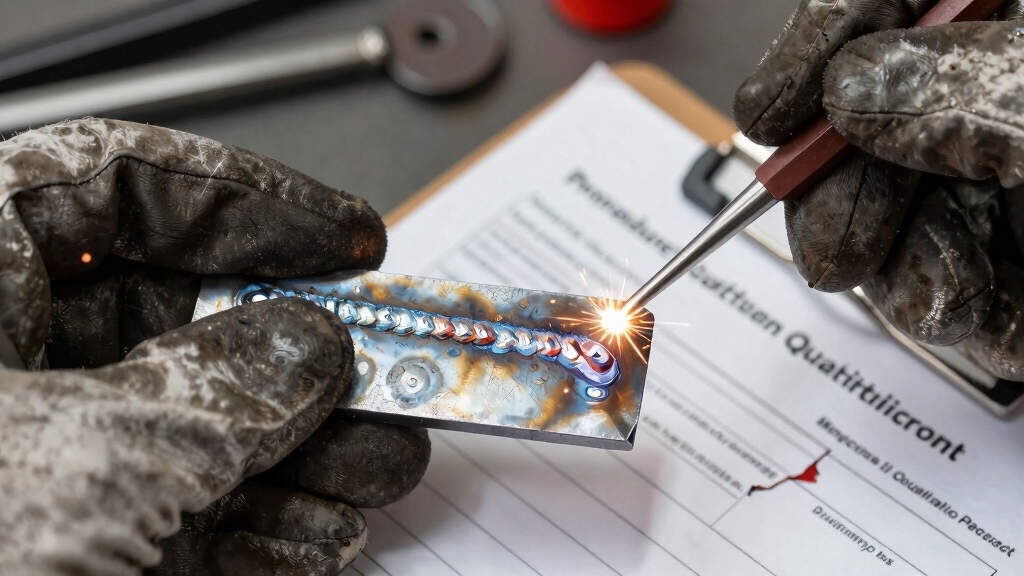
A Welding Procedure Specification (WPS) is your detailed, code-mandated guide defining welding variables like process, materials, and joint design to ensure repeatable, quality welds.
The Procedure Qualification Record (PQR) documents test weld data, verifying mechanical properties and validating your WPS.
Together, they guarantee compliance with standards like AWS D1.1 and ASME Section IX, maintaining consistent weld integrity.
When you change essential variables or introduce new methods, qualifying procedures becomes mandatory.
Understanding these roles clarifies how welding quality and safety are assured.
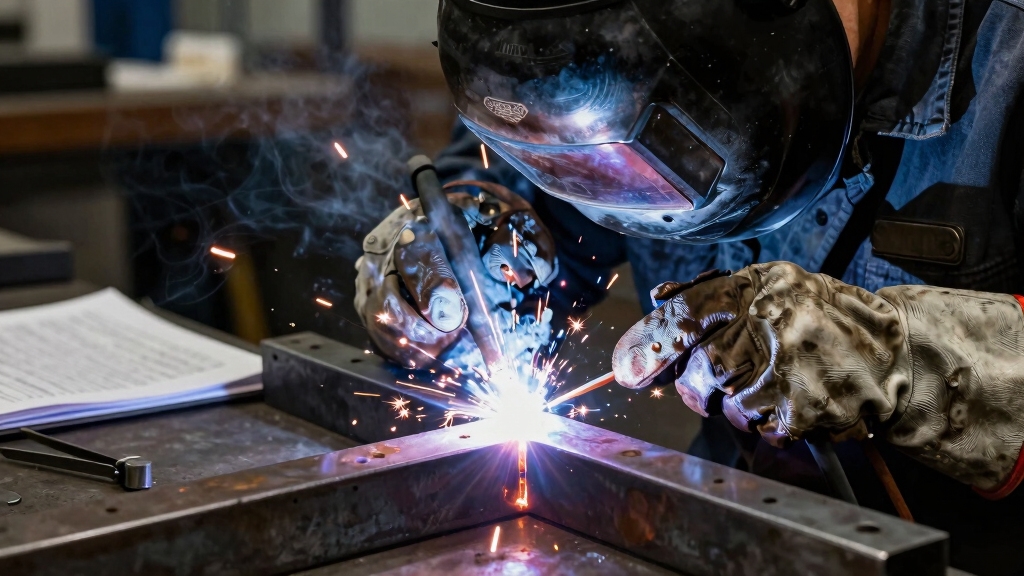
When you set out to weld a critical joint, you rely on the Welding Procedure Specification (WPS) to guide every step of the process with exact parameters.
The WPS is a mandatory, code-required document detailing all essential variables such as welding process, base materials, joint configuration, filler metal, shielding gas types, flow rates, and welding positions.
It acts as a precise blueprint ensuring welders produce repeatable, consistent welds that meet safety and quality standards.
By following the WPS, you maintain control over power supply settings and material compatibility, minimizing variability.
This document guarantees compliance with industry codes like AWS and ASME, enabling you to replicate welds reliably across production runs, thereby assuring structural integrity and adherence to project specifications.
Adhering strictly to the WPS also supports inspection of welds to detect defects and ensure quality control throughout the fabrication process.
Although the Procedure Qualification Record (PQR) may seem like a behind-the-scenes document, it plays a critical role in validating welding procedures by documenting the actual test weld data.
The Procedure Qualification Record is essential for validating welding procedures through documented test weld data.
You use the PQR to record precise welding parameters and mechanical test results from a test weld, including tensile strength, bend tests, and visual inspections.
This data proves the welding procedure can consistently produce sound welds that meet strength and durability requirements.
Once you complete and verify the PQR through testing per relevant codes like AWS D1.1 or ASME Section IX, it forms the factual basis for developing the Welding Procedure Specification (WPS).
Maintaining detailed records of the test weld and continuity is essential to ensure ongoing compliance and certification validity within the six-month continuity requirement.
Understanding the detailed data recorded in the PQR allows you to develop a Welding Procedure Specification (WPS) that precisely guides production welding.
The PQR verifies the welding process’s capability by providing actual test results on mechanical properties and weld integrity.
Using this validated data, you create a WPS that defines essential parameters such as welding technique, materials, joint design, and environmental variables.
This ensures repeatability and compliance with codes like AWS D1.1 or ASME Section IX.
By strictly following the WPS, you maintain consistent weld quality and structural performance across production welds.
Together, the PQR confirms that your procedure produces sound welds, while the WPS translates that proven technique into actionable, standardized instructions.
This guarantees welding quality throughout fabrication.
Additionally, adherence to certification and testing standards ensures that both the PQR and WPS meet industry requirements for structural integrity and compliance.
Since welding procedures directly impact the integrity and safety of structures, you need to qualify a procedure whenever you introduce a new welding process, change essential variables, or work with materials not covered by existing qualifications.
Welding procedure qualification is crucial whenever you change processes, variables, or materials to ensure safety and integrity.
Essential variables include base material type or grade, welding process, filler metal, and joint design. Qualification involves performing test welds documented in a Procedure Qualification Record (PQR) and subjecting them to mechanical and nondestructive tests to verify weld soundness and compliance with applicable codes like AWS D1.1 or ASME Section IX.
Skipping qualification risks structural failure and noncompliance. Even minor changes outside prequalified conditions mandate requalification.
Consequently, you must rigorously follow qualification protocols to validate your Welding Procedure Specification (WPS), ensuring consistent weld quality, safety, and regulatory adherence throughout production. Proper selection and compatibility of welding consumables are critical factors verified during this qualification process to ensure weld integrity.
When you follow specific joint configurations and material conditions outlined by standards such as AWS D1.1, you can use prequalified welding procedures that eliminate the need for extensive Procedure Qualification Record (PQR) testing.
These prequalified WPSs provide a streamlined approach, allowing you to apply proven parameters without additional qualification efforts, provided you adhere strictly to the prescribed variables.
However, if you deviate from these conditions, such as changing base metals or employing new welding processes, you must perform full procedure qualification.
Major codes like ASME Section IX and AWS D1.1 govern these rules, ensuring safety and weld integrity.
Understanding and applying prequalified procedures correctly can save time and resources while maintaining compliance with industry standards.
Always verify that your application matches the prequalified criteria to avoid costly requalification.
Additionally, proper surface preparation and adherence to coating specifications are critical to ensure weld quality and corrosion resistance when using coated materials.
You should review or update a WPS whenever there’s a change in essential variables like base material, welding process, filler metal, or joint design.
Additionally, update it if testing standards evolve or if inspections reveal non-conformities.
Regular reviews guarantee compliance with industry codes such as AWS D1.1 or ASME Section IX.
Even if no changes occur, conducting periodic audits maintains quality and verifies the WPS remains valid for consistent, safe welding operations.
Can one PQR really qualify multiple WPSs? Yes, it can.
You can derive several WPSs from a single PQR as long as they fall within the essential variable ranges tested and documented in that PQR.
This means you can create multiple procedure specifications with controlled variations without re-qualifying each one, saving time and resources.
Just make sure all WPSs strictly adhere to the tested parameters validated by the original PQR.
If you weld without a qualified WPS, you risk producing inconsistent, substandard welds that may fail under stress.
This can lead to structural weaknesses and safety hazards, along with costly rework or repairs.
You’ll also violate industry codes like AWS D1.1 or ASME Section IX, leading to failed inspections, legal liabilities, and project delays.
Always make certain your welding procedure is qualified to maintain quality, compliance, and safety in your work.
Environmental factors like temperature, humidity, and wind can directly impact the validity of your WPS and PQR. They affect weld quality by altering cooling rates, causing moisture contamination, or introducing defects such as porosity.
If conditions during production deviate from those during qualification, your procedure may no longer be valid. You must control or document these factors to guarantee your welding procedure remains qualified and compliant with relevant codes.
You’ll find that over 75% of welding professionals use digital tools to manage WPS and PQR documentation efficiently.
These platforms streamline data entry, version control, and compliance tracking while ensuring secure access.
Digital management systems integrate testing results, enable real-time updates, and support regulatory adherence with standardized forms like ASME QW-482 and QW-483.
Using these tools reduces errors, accelerates audits, and improves traceability across projects.
Think of WPS and PQR as the blueprint and test run of a bridge you’re building. Without the WPS guiding your welding steps and the PQR proving those steps hold strong under pressure, the bridge, your weld, could fail.
These documents aren’t just paperwork; they’re your assurance that every joint will stand firm, ensuring safety and durability. So, always qualify your procedures to build with confidence and precision.