Phone:
(701)814-6992
Physical address:
6296 Donnelly Plaza
Ratkeville, Bahamas.

Phone:
(701)814-6992
Physical address:
6296 Donnelly Plaza
Ratkeville, Bahamas.

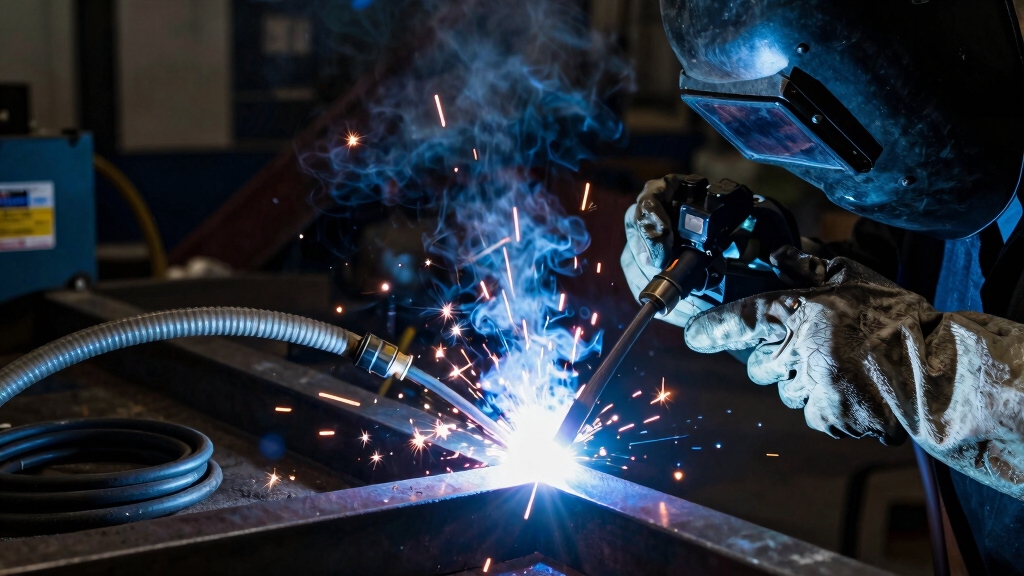
You primarily use direct current (DC) and alternating current (AC) as power sources for arc welding. DC offers steady, unidirectional flow, improving arc stability and control over weld penetration and quality.
AC provides rapid polarity shifts that break oxide layers, essential for welding reactive metals like aluminum. Modern inverter technology refines these sources further, enhancing efficiency and precision.
Understanding how these power types differ can help optimize your welding performance and equipment longevity.
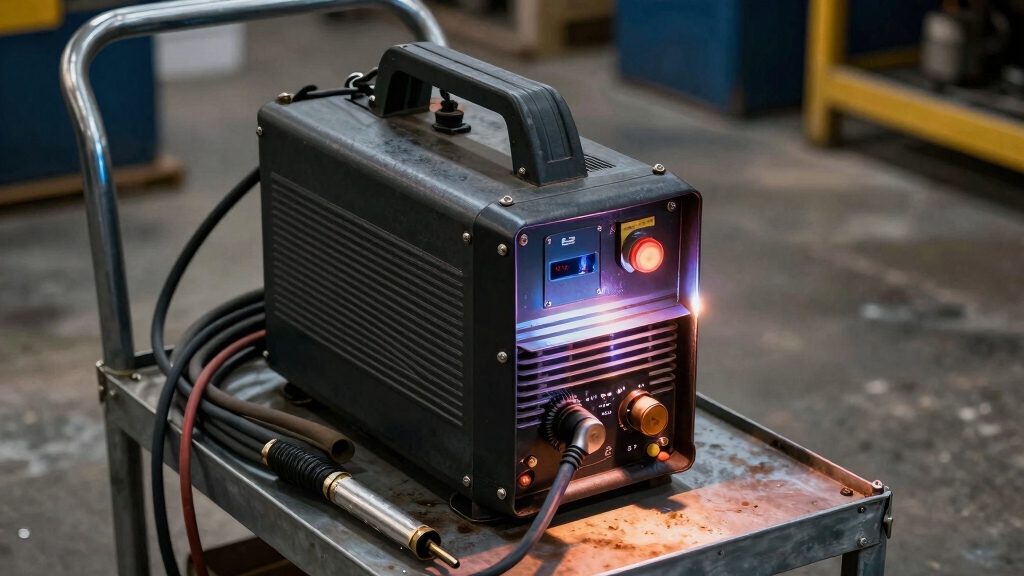
When selecting common arc welding power sources, you’ll encounter primarily direct current (DC) and alternating current (AC) units, each engineered to meet specific welding process demands.
These power sources deliver controllable current and voltage tailored to the welding application, ensuring stable arc conditions. AC units generate a bidirectional electron flow, useful for breaking oxide layers, but can produce less stable arcs.
DC sources, by contrast, provide steadier, smoother output with polarity options to optimize weld characteristics. Both types allow you to adjust current and voltage precisely, accommodating a range of welding techniques.
Modern units incorporate inverter technology for enhanced efficiency and control, but the foundational distinction remains: AC’s polarity alternation versus DC’s steady flow. Each affects arc performance and suitability for different welding tasks.
Inverter welding machines further improve arc stability and energy efficiency through rapid microsecond output regulation and high-frequency inverter technology.
Direct current (DC) power sources deliver a steady, unidirectional flow of electrons that enhances arc stability and weld quality in many manual welding processes.
By maintaining constant current, DC minimizes arc length fluctuations, ensuring consistent heat input and reducing spatter. You can configure DC for either negative or positive polarity, influencing penetration and electrode performance.
Welding rectifiers convert AC into DC, producing a smoother output ideal for Shielded Metal Arc Welding (SMAW) and Gas Tungsten Arc Welding (GTAW).
This controlled, stable current flow enables precise modulation of voltage and amperage, adapting to specific weld requirements.
Compared to alternating current, DC provides a more reliable arc, improving operator control and weld integrity.
This is especially beneficial in applications demanding fine, high-quality welds where process stability is critical.
Maintaining the correct polarity selection in DC welding optimizes heat distribution and penetration for better weld results.
Although alternating current (AC) produces a less stable arc compared to direct current, it remains essential in specific welding applications.
Alternating current offers unique advantages despite its less stable arc in specialized welding tasks.
This is due to its unique ability to break up oxide layers on metals like aluminum and magnesium.
This oxide disruption occurs because AC polarity shifts rapidly, over one hundred times per second.
This allows the arc to clean the metal surface continuously.
Additionally, AC welding power sources, typically welding transformers, provide a direct step-down in voltage while increasing amperage.
This fits the high current demands for these metals.
Despite its harder-to-control arc, AC’s oxide-clearing capability guarantees purer welds on reactive metals where DC would struggle.
Consequently, you’ll still see AC favored in processes such as Gas Tungsten Arc Welding (GTAW) on aluminum.
This balances arc stability with the necessary surface cleaning properties.
Using an inert shielding gas like argon further enhances weld quality by preventing contamination during the process.
While alternating current remains valuable for specific welding tasks, advancements in power source technology have introduced inverter-based systems that redefine how welding power is generated and controlled.
Inverter welders first rectify incoming AC to DC. They then use high-frequency switching via insulated gate bipolar transistors (IGBTs) to convert DC back into a controlled, stepped-down voltage.
This process enables precise modulation of current and voltage, ensuring stable arc characteristics and rapid response to arc fluctuations.
Compared to traditional transformer-based units, inverter systems are remarkably lighter and more compact due to the absence of bulky metal cores and extensive copper windings.
You’ll also benefit from enhanced energy efficiency, advanced control options, and better portability. Inverter technology is a transformative development in arc welding power sources.
Modern rigs often incorporate inverter technology for precise arc control and energy efficiency, making them ideal for remote heavy-duty welding tasks.
Because welding power sources generate heat and electrical load continuously during operation, understanding duty cycle limitations is critical to selecting the right equipment for your application.
Duty cycle defines the maximum percentage of time the power source can operate within a 10-minute interval without overheating. If you exceed this, the unit risks damage and reduced lifespan.
Additionally, material thickness directly influences power requirements; thicker metals demand higher amperage and longer arc durations. You must make certain your power source’s duty cycle accommodates these demands to maintain continuous welding without interruption.
Selecting a power source undersized for your material thickness or duty cycle needs leads to overheating and operational inefficiencies.
Consequently, matching duty cycle ratings with expected welding loads and material properties is essential for reliable, high-quality arc welding performance.
Models with dual voltage input offer flexibility that can help optimize duty cycle management across different work environments.
You’ll find that ambient temperature impacts arc welding power source performance by influencing cooling efficiency and electrical resistance.
Higher temperatures can cause overheating, reducing duty cycle and potentially damaging components.
Conversely, low temperatures may increase electrical resistance, affecting current stability and arc consistency.
You must monitor and adjust cooling methods to maintain stable operation, ensuring the power source remains within ideal temperature limits for reliable and precise welding performance.
Safety safeguards shield you with smart solutions: modern welding power sources sport thermal overload protection to prevent overheating, short-circuit detection to stop sudden spikes, and voltage regulation for steady supply.
They also incorporate insulated casings and automatic shutoffs triggered by fault conditions.
These features function flawlessly to forestall fire hazards and equipment damage, ensuring your operation remains secure, stable, and sustainable throughout demanding welding duties.
You’ll find welding power sources manage input voltage fluctuations by incorporating voltage regulation and feedback control systems.
These systems adjust output current and voltage dynamically to maintain stable arc conditions despite input variations.
Inverter-based units rapidly switch DC power at high frequencies, allowing precise modulation.
Transformer-based sources rely on magnetic properties to smooth changes.
This guarantees consistent welding performance and protects equipment from damage caused by unstable input voltages.
You generally shouldn’t use welding power sources for non-welding electrical applications.
These units are specifically designed to provide controlled current and voltage tailored to welding processes, with features like constant current or constant voltage output.
Their dynamic arc stabilization and duty cycle limitations make them unsuitable for general-purpose power delivery.
Using them outside welding risks equipment damage and inefficiency due to their specialized design and operational constraints.
Imagine you run a busy fabrication shop where your inverter welder runs daily. To prolong its lifespan, you’ll regularly clean cooling vents and fans to prevent overheating.
You’ll inspect cables for wear, tighten connections, and check duty cycles to avoid overload.
Periodic calibration guarantees stable output. Neglecting these tasks risks arc instability and premature failure. Systematic maintenance is essential for consistent performance and long-term reliability.
You rely on direct current for steady, precise arcs, while alternating current pulses with fluctuating energy, adapting to different materials.
Inverter technology sharpens this contrast, delivering compact power with unmatched efficiency. As duty cycles stretch and material thickness varies, your choice of power source becomes a calculated balance between consistency and adaptability.
Together, these forces shape your welding process, like a conductor orchestrating the perfect symphony of heat and control.