Phone:
(701)814-6992
Physical address:
6296 Donnelly Plaza
Ratkeville, Bahamas.

Phone:
(701)814-6992
Physical address:
6296 Donnelly Plaza
Ratkeville, Bahamas.

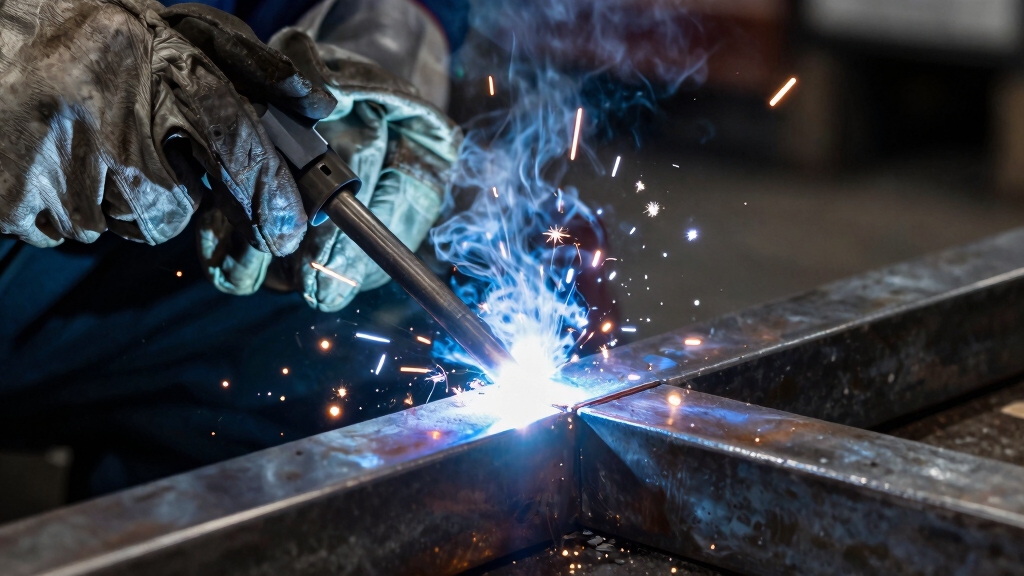
Pulse MIG welding alternates between high peak and low background currents to precisely control heat and metal transfer.
You get a single molten droplet per pulse, reducing spatter and preventing weld defects common in conventional MIG.
This technique limits thermal distortion, improves bead quality, and works well on thin to medium metals like aluminum and stainless steel.
By controlling pulse frequency and current, you’ll achieve stable arcs and consistent penetration. Exploring this process further reveals its equipment, applications, and optimization strategies.
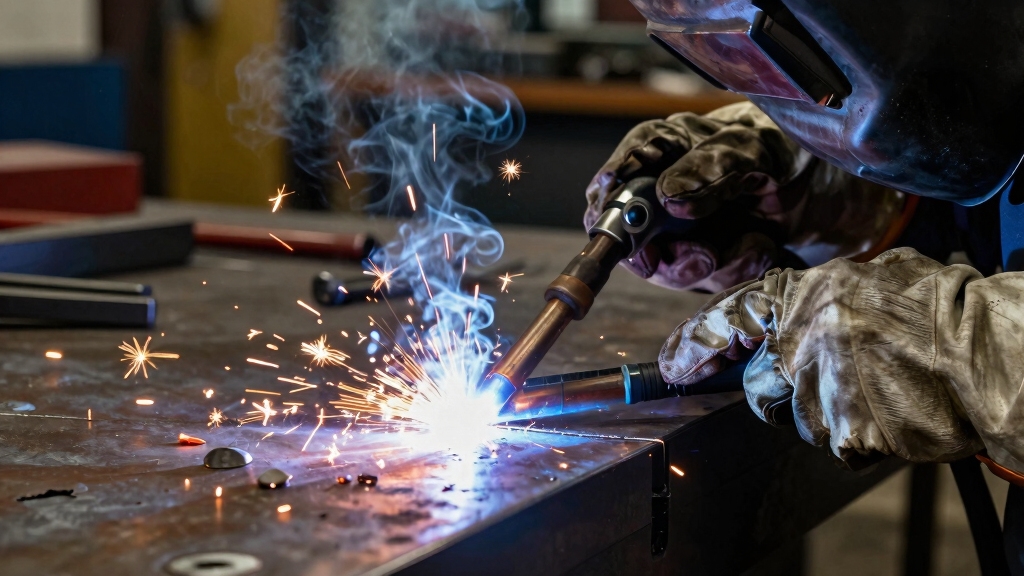
Although pulse MIG welding shares similarities with conventional MIG welding, it operates using a controlled alternation between high peak currents and low background currents to precisely manage the weld pool.
You’ll notice that the high peak current melts the electrode wire, forming a droplet that transfers across the arc during each pulse. Meanwhile, the low background current maintains arc stability without causing metal transfer, allowing the weld pool to cool and stabilize.
This pulsing frequency, adjustable from a few to several hundred pulses per second, enables exact control over heat input and droplet size. As a result, you achieve consistent metal deposition with minimal spatter and improved bead quality, especially useful when welding thin or heat-sensitive materials.
Pulse MIG welding typically uses DCEP polarity to ensure deep penetration and stable arc characteristics.
When you compare pulse MIG welding to conventional MIG welding, you’ll see that pulse MIG uses alternating high peak and low background currents to control metal transfer more precisely. This contrasts with the steady current in conventional MIG.
This modulation improves droplet control, reduces spatter, and enhances weld consistency. Conventional MIG delivers a continuous wire feed with a constant current, which results in less control over heat input and metal transfer.
Proper shielding gas selection and equipment maintenance also play a critical role in minimizing spatter during pulse MIG welding by supporting arc stability and consistent metal transfer.
| Feature | Pulse MIG | Conventional MIG |
|---|---|---|
| Current Type | Alternating peak & background | Constant steady current |
| Metal Transfer | Single droplet per pulse | Continuous wire melting |
| Heat Input Control | Precise, modulated | Less precise, steady |
| Spatter | Markedly reduced | Higher spatter levels |
| Application Suitability | Thin metals, out-of-position | General purpose, thicker metals |
Because pulse MIG welding alternates between high peak and low background currents, it precisely controls heat input to the weld area.
The high peak current delivers just enough energy to melt the electrode wire and form a controlled droplet.
The low background current maintains the arc without excessive heating.
This cycling limits the overall thermal energy transferred, reducing the risk of overheating the base material.
This cycling controls heat input, preventing overheating and protecting the integrity of the base material.
By minimizing continuous heat input, pulse MIG decreases thermal distortion and warping, especially on thin or heat-sensitive metals.
Additionally, the rapid pulsing frequency allows the weld pool to solidify partially between pulses, enhancing dimensional stability.
You’ll find this precise heat management essential when welding components requiring tight tolerances and minimal post-weld deformation.
Selecting the correct shielding gas further refines arc stability and weld quality during pulse MIG welding.
Controlling heat input effectively sets the stage for selecting appropriate materials and thicknesses for pulse MIG welding. This process excels with thin to medium thickness metals where precise heat control prevents warping and burn-through.
You’ll find pulse MIG ideal for aluminum automotive panels, stainless steel, and exotic alloys. Its ability to modulate peak and background currents guarantees stable weld pools on delicate materials.
Consider these factors when choosing materials and thicknesses:
Adjusting parameters such as voltage and wire feed speed is essential to maintain arc stability and optimize weld quality during pulse MIG welding.
You’ll notice that Pulse MIG welding really enhances weld quality. It achieves this by precisely controlling heat input and droplet transfer, which helps reduce defects like spatter and distortion.
Pretty impressive, right?
But that’s not all. This method also boosts efficiency. With higher travel speeds and improved deposition rates, you can get the job done faster without sacrificing control or penetration.
And here’s the kicker: it lowers costs, too. By minimizing rework, material waste, and energy consumption, Pulse MIG welding proves to be a smart choice for those demanding applications.
It’s a win-win all around!
Additionally, Pulse MIG welding combined with spool gun compatibility allows for superior aluminum welding quality with low spatter and better control.
When you employ pulsed MIG welding, you gain superior control over the weld pool, which directly enhances weld quality.
This precise modulation between peak and background currents allows for consistent droplet transfer without electrode contact, minimizing spatter and defects.
You’ll notice improved bead formation and penetration, ensuring strong fusion with minimal distortion.
Here’s how enhanced weld quality benefits you:
Additionally, the rapid microsecond adjustments in current enable precise heat input control critical for optimizing weld characteristics.
Beyond improving weld quality, pulsed MIG welding markedly boosts welding efficiency by optimizing current modulation and droplet transfer.
You benefit from precise control of peak and background currents, which stabilizes the arc and weld pool. This allows faster travel speeds without sacrificing bead integrity.
This process enables higher deposition rates through controlled droplet transfer, reducing weld time per joint. Additionally, the waveform modulation minimizes spatter and improves puddle control, especially in out-of-position welds.
As a result, you spend less time on cleanup and corrections. Digital interfaces let you fine-tune parameters to match material thickness and wire type, maximizing productivity.
Ultimately, pulsed MIG welding delivers up to 30% faster welding speeds compared to traditional methods. This enables you to complete jobs more efficiently while maintaining consistent, high-quality welds.
Precise adjustments in welding parameters are essential to fully leverage pulse MIG benefits and minimize spatter.
Although pulsed MIG welding requires advanced equipment, it markedly reduces overall operating costs by minimizing material waste, rework, and post-weld cleanup.
By precisely controlling heat input and droplet transfer, you avoid excessive spatter and distortion. This cuts down scrap rates and the need for corrective welding.
This precision translates into tangible savings through:
Additionally, pulsed MIG welding maintains a stable arc that supports consistent deposition rates and high-quality welds.
Optimize your Pulse MIG welding results by selecting equipment with advanced digital interfaces that tailor parameters to your material thickness and wire type.
These interfaces enable precise control over peak and background currents, pulse frequency, and waveform modulation. This allows consistent droplet transfer and stable arcs.
You’ll benefit from synergic pulse modes, which automate parameter adjustments, reducing setup time and errors.
Equipment supporting larger-diameter wires and higher wire feed speeds boosts deposition rates, increasing productivity without sacrificing weld quality.
Additionally, waveform modulation capabilities let you fine-tune droplet size and transfer frequency, enhancing puddle control, especially in out-of-position welding.
Prioritizing these features guarantees you maintain prime heat input, minimize spatter, and achieve consistent weld bead formation.
Ultimately, this improves your welding efficiency and output quality.
Adjusting wire feed speed directly influences amperage, optimizing heat input and weld characteristics during Pulse MIG welding.
When you use Pulse MIG welding, you gain precise control over heat input and metal transfer, which directly enhances weld quality and strength.
This control guarantees minimal spatter and consistent bead formation, producing clean, strong welds.
The pulsed current allows one molten droplet to transfer per pulse, preventing electrode contact and reducing defects.
You’ll notice these key improvements:
Additionally, selecting the appropriate shielding gas is essential to maintain arc stability and prevent contamination during welding.
Pulse MIG welding is super popular in the automotive industry, and for good reason! It’s fantastic at handling thin metal fabrication without causing much distortion. This is especially important when you’re working on delicate parts that need to fit together perfectly.
Plus, it really shines in out-of-position welding. You know how tricky that can be? With precise heat control, Pulse MIG helps maintain the integrity of those joints, which is crucial for a strong and lasting weld.
When you look at how it’s used in various applications, it’s clear that this process boosts both efficiency and weld quality. It’s a game-changer for those demanding industrial tasks!
Because pulse MIG welding offers precise control over heat input and weld quality, it has become indispensable in the automotive industry.
You’ll find it widely used where thin aluminum panels require minimal distortion and superior joint integrity. This process guarantees consistent, spatter-free welds, improving both appearance and structural performance.
Here are three critical automotive applications you should know:
Pulse MIG welding excels in thin metal fabrication by delivering controlled heat input that minimizes distortion and guarantees strong, consistent welds.
You benefit from precise control over the weld pool, reducing warping and burn-through common with thin materials.
This process guarantees high-quality bead formation on metals like aluminum and stainless steel, which demand delicate thermal management.
| Metal Type | Typical Thickness | Heat Input Control | Weld Quality | Common Application |
|---|---|---|---|---|
| Aluminum | 0.5 – 3.0 mm | High precision | Minimal distortion | Automotive panels |
| Stainless Steel | 0.8 – 4.0 mm | Stable arc | Strong fusion | Aerospace components |
| Mild Steel | 1.0 – 3.5 mm | Reduced spatter | Consistent beads | Sheet metal fabrication |
| Exotic Alloys | 0.5 – 2.5 mm | Controlled cooling | Enhanced strength | Specialized industrial use |
| Galvanized Steel | 0.7 – 3.0 mm | Lower fumes | Smooth welds | HVAC ducting |
Frequently encountered in complex fabrication scenarios, out-of-position welding demands precise control over molten metal transfer and heat input to prevent defects such as sagging or incomplete fusion.
Pulse MIG welding excels here by delivering controlled droplet transfer and consistent arc stability. This enables you to weld vertically, overhead, or in tight angles without compromising quality.
Its pulsed current restricts heat input, reducing weld pool fluidity and minimizing gravity’s effect on molten metal.
When you use Pulse MIG welding out-of-position, you benefit from:
This precision makes pulse MIG indispensable for demanding, multi-position welds across industries.
When you fine-tune your welding parameters to match the material thickness and wire type, you’ll markedly enhance weld quality and efficiency.
Start by selecting the appropriate pulse frequency and peak current to optimize droplet transfer and minimize spatter.
Adjust background current to maintain arc stability without overheating the workpiece.
Utilize digital interfaces on modern Pulse MIG machines to precisely control waveform modulation, which governs droplet size and transfer rate.
Increase wire feed speed cautiously to balance deposition rate with weld bead integrity.
Pay attention to shielding gas composition, as it influences arc stability and penetration.
Regularly calibrate your equipment and monitor heat input to reduce distortion and warping.
You need to wear appropriate PPE, including a welding helmet with proper shade to handle intense pulsed arcs.
Make certain good ventilation to reduce fumes, since pulse MIG emits less but still hazardous gases.
Maintain proper grounding to prevent electrical shock from high peak currents.
Be cautious of increased heat input spikes; avoid flammable materials nearby.
Regularly inspect equipment for waveform modulation faults to prevent arc instability and spatter-related hazards.
Pulse MIG welding extends electrode lifespan like a metronome’s steady beat controls tempo. You’ll see less electrode wear due to its pulsed current delivery.
The alternating high and low currents reduce overheating and sputtering, minimizing erosion. This controlled droplet transfer limits electrode tip degradation, letting you use wires longer and with better consistency.
Consequently, you’ll spend less on replacements and enjoy more stable arc performance during your welding tasks.
Yes, you can automate pulsed MIG welding effectively for robotic systems.
Its precise control over heat input and droplet transfer suits robotic repeatability and consistency, improving weld quality.
Digital interfaces and synergic pulse modes enable seamless integration with robotic controllers, optimizing parameters dynamically.
This automation increases productivity, reduces operator variability, and guarantees consistent penetration and bead formation.
These benefits are especially valuable in high-volume manufacturing or complex out-of-position welding tasks.
When your weld puddle acts like a rebellious storm, common issues include spatter, inconsistent droplet transfer, and poor bead appearance.
You’ll want to check your pulse settings: peak current, background current, and frequency for balance.
Wire feed problems and improper shielding gas flow can also sabotage your weld’s integrity.
Don’t forget to inspect torch angles and maintain clean metal surfaces to keep your pulse MIG welding precise and efficient.
You’ll find that pulse MIG welding materially reduces environmental emissions. By controlling heat input and minimizing spatter, it lowers fume generation compared to conventional MIG.
The precise droplet transfer decreases wasted material and rework, cutting overall emissions further. Additionally, lower heat input reduces energy consumption.
By mastering pulse MIG welding, you harness precise heat control to reduce distortion and improve weld quality, much like a vintage clock’s intricate gears guarantee perfect timing.
You’ll optimize efficiency, cut costs, and tackle a range of materials and thicknesses with confidence. Equip yourself with the right tools and techniques, and you’ll consistently produce stronger, cleaner welds.
Embrace pulse MIG welding. It’s the future of precision in your welding toolkit.