Phone:
(701)814-6992
Physical address:
6296 Donnelly Plaza
Ratkeville, Bahamas.

Phone:
(701)814-6992
Physical address:
6296 Donnelly Plaza
Ratkeville, Bahamas.

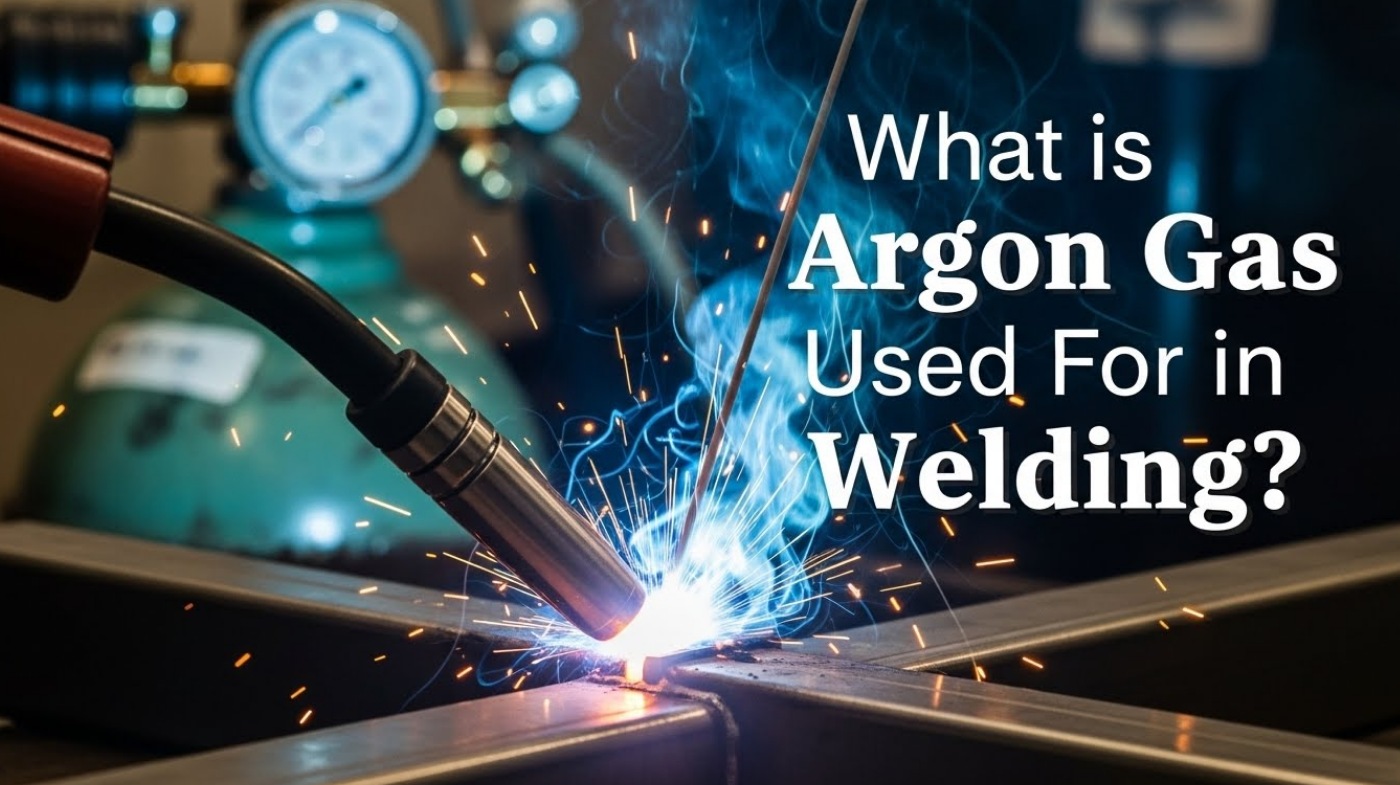
You use argon gas in welding to create an inert shielding atmosphere that protects the weld pool and tungsten electrode from oxygen, nitrogen, and contamination.
It stabilizes the arc for smooth starts, consistent heat, and controlled penetration, especially useful for thin or delicate metals.
Argon also reduces spatter and oxidation, improving weld quality and appearance across many metals like aluminum and stainless steel.
Understanding its thermal and cost benefits further highlights why argon is essential for precision welding applications.
When you weld, argon plays a crucial role as a shielding gas by creating an inert atmosphere that protects the molten metal from harmful exposure to oxygen, nitrogen, and hydrogen. Wearing proper heat-resistant gloves is also essential to protect welders from sparks and burns during the welding process.
This protective environment prevents oxidation, porosity, brittleness, and contamination, common weld defects caused by atmospheric gases.
Argon’s inert nature guarantees it doesn’t chemically react with the weld pool, maintaining metal integrity and preventing discoloration or weakening.
By excluding reactive gases, argon supports cleaner, stronger welds with fewer impurities, essential in GTAW and GMAW processes.
Additionally, argon enhances weld quality by minimizing spatter and producing smoother surfaces, which reduces post-weld finishing.
Its non-toxic, non-flammable properties improve workplace safety, making argon an efficient, reliable shielding gas widely used in industrial welding applications.
Furthermore, argon is especially versatile as it can be used effectively across various metals including aluminium, stainless steel, copper, and magnesium.
Beyond protecting the weld pool from atmospheric contamination, argon markedly improves arc stability and control during welding.
Argon not only shields the weld pool but also significantly enhances arc stability and control.
Its high ionization energy guarantees smooth arc initiation and consistent maintenance, minimizing fluctuations.
Argon’s thermal conductivity concentrates heat effectively at the weld zone, sustaining a narrow, stable arc column. This property is crucial in plasma arc welding where precise thermal management controls distortion and dross.
Additionally, argon’s electrical conductivity reduces voltage spikes in the plasma, supporting steady arc behavior.
Its heavier-than-air density maintains a stable plasma environment, preventing disruptions from air currents. This heavier-than-air property helps form an effective shield over the welding area.
In processes like TIG, MIG, and plasma arc welding, argon enables precise heat input management and supports pulsed current modes for cleaner welds.
Although often overlooked, argon plays an essential role in enhancing weld quality and appearance by providing an inert shielding environment that prevents contamination and defects.
Its inert nature blocks oxygen and nitrogen, minimizing oxide and nitride formation, which leads to cleaner weld beads with fewer inclusions and internal flaws. Argon is commonly mixed with CO₂ in proportions such as 75% argon / 25% CO₂ to optimize arc stability and penetration for various materials.
Argon shielding also eliminates porosity by preventing gas pockets, resulting in stronger, more reliable weld joints.
The stable arc and clean weld pool promote smooth, uniform bead profiles with minimal spatter, reducing post-weld finishing. It also stabilizes the arc for consistent heat input and improved process control.
Additionally, argon maintains metallurgical integrity by avoiding reactions with molten metal, preserving the base material’s properties. Using proper gas flow rates around 20-25 CFH ensures consistent shielding and prevents weld defects caused by contamination.
Since argon offers exceptional inertness and arc stability, it suits a wide range of metals, each requiring specific gas mixtures to guarantee welding performance.
For mild steel, you typically use 100% argon in TIG welding. Carbon steel benefits from argon/helium blends or 95% argon with 5% oxygen in MIG processes to enhance arc stability and droplet transfer. However, oxygen and carbon dioxide are problematic in TIG and can severely damage the tungsten electrode, so they should be avoided in TIG mixtures. Selecting the correct tungsten type for the electrode is critical to maintaining arc stability when welding these steels.
Stainless steel demands tailored mixtures: 95% argon with 5% hydrogen for austenitic grades or 98% argon with 2% nitrogen for duplex alloys.
Aluminum welding relies mainly on pure argon for cathodic cleaning and spatter reduction. However, argon/helium blends improve heat input for thicker sections. The use of zirconiated or lanthanated tungsten electrodes enhances arc stability and weld quality for aluminum in TIG welding.
For exotic metals like magnesium, copper, and nickel alloys, pure argon or argon/helium mixtures guarantee chemical inertness and maintain arc stability, adapting to heat conductivity and alloy characteristics. Choosing appropriate tungsten chemistry helps optimize electrode life and arc performance with these metals.
Exhibiting markedly lower thermal conductivity than gases like helium, argon concentrates heat within the welding arc and pool, boosting melting efficiency and energy use. Argon is the most commonly used gas in welding for stable arc and oxidation prevention.
You’ll notice this heat retention allows precise control of weld zone temperature, enhancing weld quality while minimizing the heat-affected zone. Proper ventilation and fume extraction are essential to manage welding fumes generated during the process, ensuring safe working conditions.
Argon’s poor heat transfer slows cooling rates, reducing residual stress and distortion in welded components. This stability supports smoother weld bead formation and less spatter. Additionally, argon maintains weld pool fluidity longer, enabling you to shape uniform, defect-free beads with consistent width and height.
When you use argon in welding, you really get to fine-tune how heat is distributed. This is super helpful because it keeps the weld quality nice and consistent. Additionally, choosing gloves with appropriate heat resistance levels ensures safe handling during welding with argon.
Plus, argon’s properties help limit how deep the penetration goes. This is perfect for working with thin materials, where too much melting could lead to defects.
Understanding how argon stabilizes the arc and manages heat is key. It allows you to optimize both the strength and the appearance of your welds. Argon provides a smooth and stable arc, which benefits both TIG and MIG welding processes. So, when you’re welding with argon, you’re not just making a connection; you’re ensuring it’s strong and looks great, too!
Although managing heat distribution during welding can be challenging, argon gas markedly enhances your control over penetration depth and thermal input. Its inert nature stabilizes the arc, allowing you to apply heat precisely where needed while minimizing oxidation and contamination. The stable arc produced by argon also ensures consistent electrical conductivity between the electrode and workpiece, which is crucial for precise heat management. This control is essential for maintaining weld integrity and reducing defects.
Key benefits of argon for controlled heat distribution include:
Localized heat concentration near the weld path, limiting thermal impact on adjacent areas.
Slower weld pool cooling rates, enabling better solidification control and reduced residual stresses.
Stable arc conditions that prevent heat-induced distortion or burn-through, especially on thin materials.
Argon’s ability to maintain a consistent shielding atmosphere helps prevent weld contamination, further enhancing heat control and weld quality.
Since argon stabilizes the welding arc, it guarantees consistent heat generation that directly influences penetration depth.
You benefit from argon’s stable arc conditions, which minimize temperature fluctuations and maintain uniform heat distribution. Maintaining a uniform coating thickness during welding prevents localized overheating and ensures the integrity of the weld area.
This stability guarantees predictable and deep penetration, critical for strong, durable welds.
Using high-purity argon (99.996%) prevents contamination and oxidation, preserving weld integrity and enhancing penetration consistency.
The argon shield settles over the weld pool, protecting it from atmospheric gases that would otherwise weaken penetration.
Proper gas flow rates, typically 15-20 CFH, are essential; too high causes turbulence, too low compromises shielding.
Additionally, argon blends with CO2 or helium allow you to tailor penetration depth for specific materials and thicknesses, optimizing heat management for precise control over weld quality and strength.
Argon’s excellent arc stability also aids consistency in weld formation, making it a preferred shielding gas in MIG welding.
Argon gas consistently delivers significant cost advantages in welding by reducing material waste and improving process efficiency. You benefit from its inert shielding, which minimizes filler material use and prevents oxidation, cutting scrap and rework costs.
Argon gas reduces material waste and boosts efficiency, cutting scrap and rework costs in welding.
Its stable arc boosts welding speed and reduces downtime, increasing throughput. Additionally, argon’s availability and lower price compared to other inert gases reduce supply expenses. Because argon tanks have a usable volume of about 60 cubic feet when filled to typical working pressures, welders can plan efficient gas use to avoid premature refills and costs. Argon’s inert shielding properties also help maintain weld integrity by preventing contamination during the welding process.
Key cost advantages include:
Building on its cost-saving benefits, argon gas plays a vital role in TIG welding by providing a stable, inert shielding environment that protects the weld area from atmospheric contamination.
By displacing oxygen and nitrogen, argon prevents oxidation, porosity, and weld defects, ensuring structural integrity and corrosion resistance. Its higher density forms an effective protective envelope, especially in flat positions, preserving the tungsten electrode and weld pool.
Argon stabilizes the welding arc, enabling consistent heat application and smooth starts at low amperage. This reduces spatter and enhances weld quality. It produces clean, strong welds by preventing oxidation, which is essential for both the appearance and strength of the final product clean, strong welds.
Compatible with metals like aluminum, stainless steel, and magnesium, argon supports precise heat control and fine bead placement.
Although TIG welding is slower and more technique-intensive, argon’s inertness guarantees contamination-free, aesthetically clean welds with optimal penetration and durability.
When it comes to welding thin and delicate materials, you really want to use argon. It helps maintain arc stability and gives you precise control over heat penetration. That’s super important, right? This inert gas does a great job of preventing warping and distortion, allowing for a narrow, focused weld pool with minimal thermal impact. Argon also provides a stable arc and improved arc control for smoother, cleaner welds. Using argon isn’t just about keeping things stable, either. It also ensures that you get consistent weld quality. Plus, it protects those sensitive metals from oxidation and contamination. For optimal results, pairing argon shielding with proper welding gloves enhances safety and precision. So, when you’re working on delicate projects, argon is definitely the way to go!
If you want to weld thin or delicate metals without causing warping or distortion, controlling heat input is essential. Argon gas helps you achieve this by enabling lower heat levels while ensuring proper penetration. Its narrow, focused arc directs energy precisely to the weld zone, preventing heat from spreading unnecessarily and reducing thermal stress. When using argon for welding thin materials, consider these benefits:
Stable heat delivery maintains consistent penetration, avoiding overheating. Pulse welding with argon cycles heat rapidly, allowing cooling between welds. Reduced thermal gradients minimize residual stress and prevent material bending. Additionally, argon provides post-weld shielding for controlled cooling on sensitive metals, which helps preserve material integrity during the cooling phase post-weld protection.
Enhancing arc stability with argon gas markedly improves welding performance on thin and delicate materials.
Argon’s inert atmosphere shields the tungsten electrode and weld pool from oxidation and contamination, maintaining consistent arc initiation and reducing interruptions.
When heated, argon becomes an efficient electrical conductor, promoting smooth current flow and steady temperature control, which is critical for precise heat placement.
This results in a concentrated arc pattern that minimizes heat spread, protecting surrounding material from damage.
You’ll notice easier arc starts, fewer arc dropouts, and reduced spatter, which collectively improve weld quality and reduce post-weld cleanup. Pulsed GMAW optimizes argon use via controlled pulses to minimize heat input and warping, enhancing weld precision in delicate materials.
Argon’s properties enable you to execute detailed, delicate welds with consistent, reliable arc stability essential for thin metalwork.
Achieve precise control over weld penetration depth by using argon gas, which is essential for welding thin and delicate materials. Argon’s inert nature produces a stable, focused arc that concentrates heat exactly where needed, minimizing heat spread and reducing burn-through risks.
Its low thermal conductivity allows you to weld at lower heat settings while maintaining proper fusion, preventing distortion and warping in sensitive assemblies. You can also utilize pulse welding with argon to cycle energy input, further refining heat control for consistent penetration along varying thicknesses.
Argon enables gentle, shallow penetration ideal for thin metals. Focused arc minimizes heat-affected zones and distortion. Pulse welding with argon improves precision and reduces residual stress.
This makes argon indispensable for high-quality welds on delicate substrates.
In industrial welding, argon gas plays a crucial role as a shielding agent that protects welds from atmospheric contamination. This ensures strength and consistency.
You’ll find argon widely used in aerospace, automotive, electronics, and industrial fabrication, where weld quality is critical. It’s available globally in pure or mixed forms, supplied in cylinders or bulk tanks, matching your scale and precision needs. Because argon is a colorless, odorless, inert gas, it helps maintain a stable welding environment without introducing impurities or reactions.
| Application | Argon Role | Emotional Impact |
|---|---|---|
| Aerospace | High-strength, defect-free | Confidence in safety |
| Automotive | Clean, durable welds | Pride in reliability |
| Electronics | Precision, clean welds | Assurance of quality |
Argon’s inertness and availability make it indispensable for reliable, high-standard welding operations you depend on.
You should store argon cylinders upright in a cool, dry, well-ventilated area, away from heat or direct sunlight.
Secure them with chains to prevent tipping and always keep valve protection caps on when not in use.
When transporting, keep cylinders upright, secured with restraints, and in ventilated vehicles.
Follow DOT regulations, use proper labeling, and handle cylinders carefully to avoid damage or leaks, ensuring safe and compliant welding operations.
Yes, you can recycle argon gas in welding processes.
Recovery systems capture argon from exhaust streams, purify it by removing contaminants like oxygen and nitrogen, then return it to your supply line.
This reduces costs and environmental impact while maintaining gas purity critical for welding quality.
Keep in mind, these systems require upfront investment, careful monitoring, and may not suit all setups, especially smaller or less controlled welding environments.
Think of your argon regulator as the maestro conducting a symphony of gas flow.
You’ll need a regulator designed specifically for argon, either single-stage for general use or dual-stage for precise control.
This device reduces high cylinder pressure to a consistent working pressure, ensuring steady gas flow.
Make sure it matches your cylinder’s fittings and pressure ratings, complies with safety standards, and suits your welding method for peak performance.
Yes, you face health risks if argon displaces oxygen in poorly ventilated spaces, causing asphyxiation.
While argon itself is non-toxic and inert, breathing high concentrations can lead to dizziness, headaches, nausea, or unconsciousness due to oxygen deficiency.
To protect yourself, make certain of proper ventilation, use oxygen monitors, and follow safety protocols.
Prolonged exposure to argon-rich, oxygen-poor environments can be life-threatening without these precautions.
When you use argon mixed with CO2, you’ll get a softer, more stable arc and a smoother weld bead than with 100% CO2.
Argon/CO2 blends reduce spatter and provide better arc control, making cleanup easier.
However, pure CO2 offers deeper penetration, which is handy for thicker materials but risks burn-through on thin metals.
You’ll find argon/CO2 blends balance weld quality and consistency across varying thicknesses effectively.
When you choose argon gas for welding, you’re opting for a subtle ally that quietly perfects your work. It gently shields your welds, ensuring stability and a flawless finish, while adapting seamlessly to various metals and delicate tasks.
Argon’s refined thermal properties and cost-efficiency make it an unassuming powerhouse in your welding toolkit, quietly elevating quality without drawing attention to itself. In welding, argon doesn’t just assist; it discreetly excels.