Phone:
(701)814-6992
Physical address:
6296 Donnelly Plaza
Ratkeville, Bahamas.

Phone:
(701)814-6992
Physical address:
6296 Donnelly Plaza
Ratkeville, Bahamas.

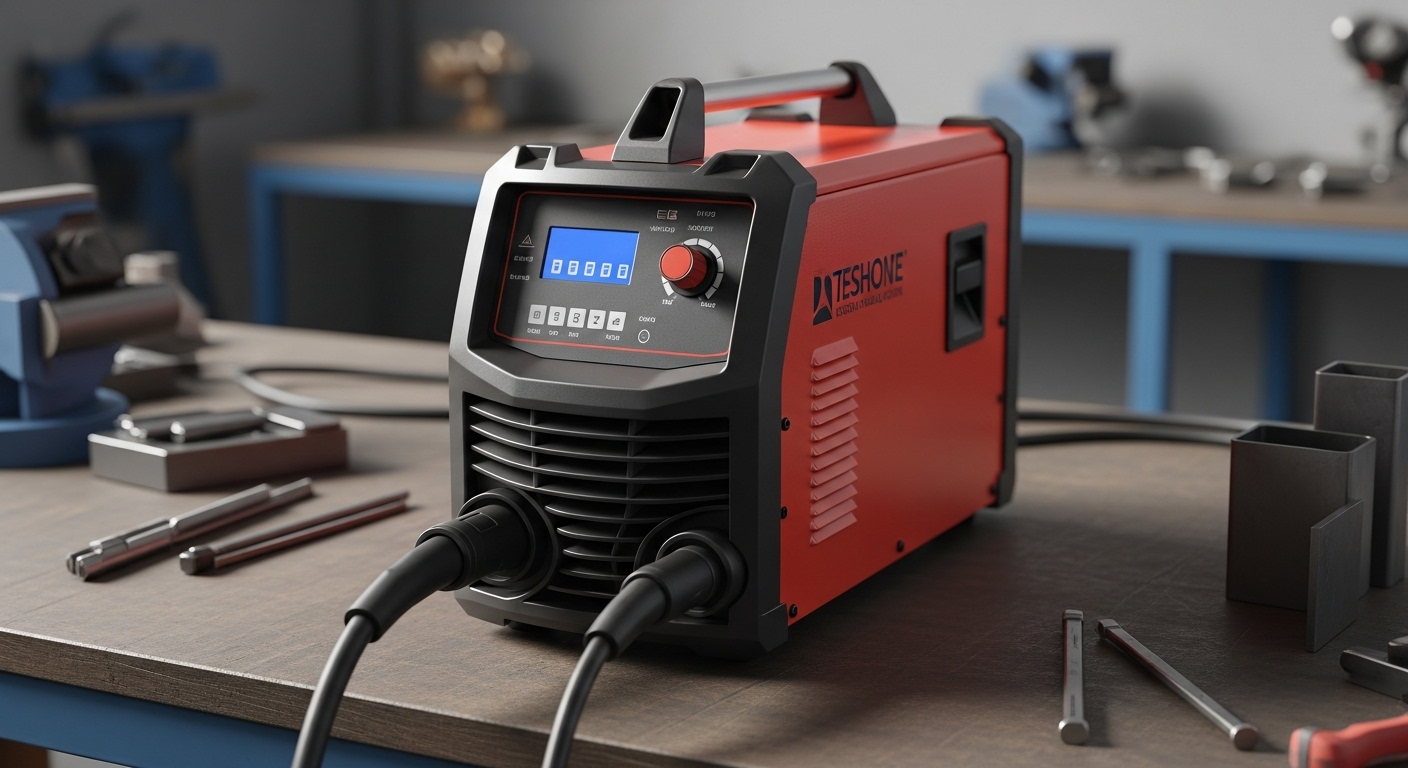
An inverter welding machine converts standard AC power into a stable, controllable DC output using high-frequency inverter technology.
It rectifies AC to DC, then inverts it to medium-frequency AC, stepping down voltage through a compact transformer before producing smooth DC welding current.
This process allows for precise arc control, improved efficiency, and lighter, smaller units compared to traditional welders.
If you want to understand its key parts and why it’s ideal for TIG, MIG, or MMA welding, there’s much more to explore.
An inverter welding machine breaks down the traditional welding process by converting standard AC power into a stable, controllable DC current through advanced inverter technology.
You’ll find it uses high-power switches like IGBT or MOSFET to first rectify incoming 50Hz AC into smooth DC around 310V.
Then, it inverts this DC into medium-frequency AC, typically tens of kHz, which passes through a compact, high-frequency transformer to step down voltage to welding levels.
Afterward, it rectifies and filters this AC back into a precise DC welding current.
You can adjust the output current in microseconds, allowing exact arc control.
This sequence, AC to DC to medium-frequency AC to DC, enables compact design, efficient energy use, and precise control essential for high-quality welding applications.
The precise control of the welding current and arc stability is crucial for achieving defect-free welds on sensitive metals.
When you compare inverter welding machines to traditional welders, you’ll notice significant advantages in size, weight, and efficiency.
Inverter welders operate at high frequencies, drastically reducing transformer core size and overall weight. This makes them highly portable and ideal for onsite work.
They offer superior energy efficiency by minimizing power loss through advanced electronic switching components like IGBTs. This results in lower operating costs and less heat generation.
Additionally, you gain precise control over current and voltage, enabling stable arcs and consistent weld quality across diverse materials.
Unlike traditional models relying on bulky 50Hz transformers, inverter welders respond dynamically to load changes. This enhances performance and reduces rework.
Choosing an inverter welding machine means you benefit from cutting-edge technology designed for precision, efficiency, and mobility without compromising weld integrity.
Their compatibility with various welding techniques allows for versatility in applications ranging from light fabrication to heavy-duty welding tasks.
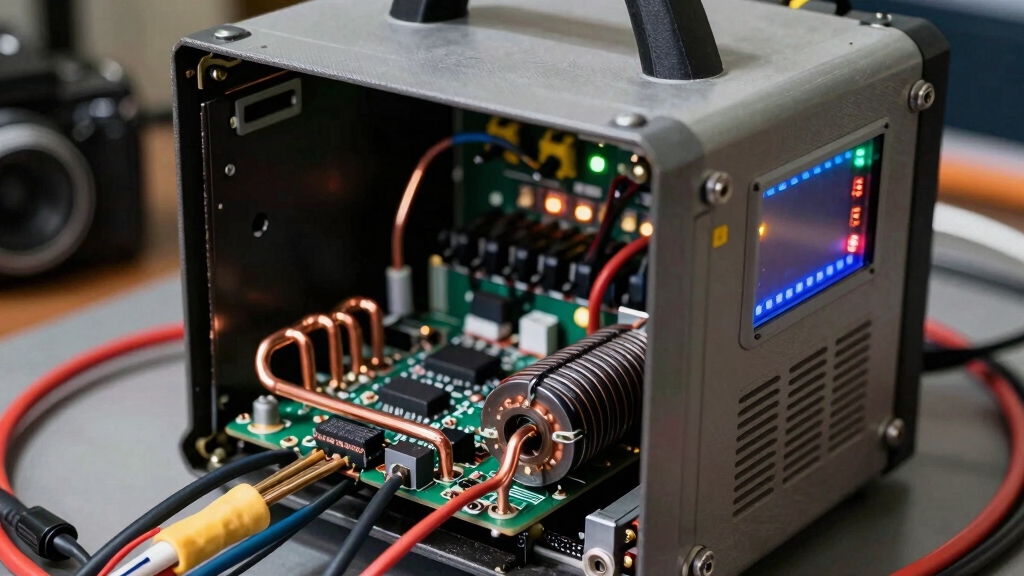
The inverter welding machine is quite fascinating, isn’t it? It relies on some core electronic components like rectifiers, IGBTs, and high-frequency transformers to efficiently convert power.
The whole process begins with rectifying AC to DC. After that, it inverts it into medium-frequency AC, which is pretty cool.
Then, it steps down the voltage and rectifies it again for a stable welding output. Understanding this power conversion sequence really helps you grasp how the machine achieves such precise and efficient control over the welding current.
It’s amazing how all these components work together to make welding easier and more effective! Additionally, controlling the heat input precisely is crucial because increased heat input can affect the mechanical properties of the welded material.
Explore the core electronic components that make inverter welding machines efficient and precise.
You’ll find critical parts like the rectifier, inverter switches, transformers, and control circuits working seamlessly to regulate current and voltage.
The inverter switches, typically IGBTs, rapidly chop DC into high-frequency AC, allowing compact transformers to step down voltage effectively.
Control circuits monitor output, adjusting parameters in real time for stable arcs.
Filters smooth the final DC output, ensuring consistent welding performance.
| Component | Function |
|---|---|
| Rectifier | Converts AC to DC |
| Inverter Switches | High-speed DC to medium-frequency AC |
| Transformer | Steps down voltage at high frequency |
| Filters | Smooth out ripple in DC output |
| Control Circuit | Regulates output, feedback, and protection |
The stability provided by inverter machines supports arc stability, which is crucial for precise heat input and consistent penetration during welding.
Because efficient power conversion lies at the heart of an inverter welding machine’s operation, understanding how each component transforms electrical energy is essential.
You start by rectifying the incoming 50Hz AC power to a smooth DC voltage of approximately 310V. Next, the inverter circuit rapidly switches this DC into medium-frequency AC, typically between 20kHz and several tens of kHz.
This high-frequency AC passes through a compact step-down transformer, reducing voltage to welding levels. Finally, the system rectifies and filters this signal into a stable DC welding current, enabling precise arc control.
Key steps include:
The arc welding torches in inverter machines produce intense heat ranging roughly from 6,000°F to 10,000°F, allowing precise adjustment for various material thicknesses.
Although traditional welding machines rely on bulky transformers and fixed-frequency outputs, inverter technology transforms how you control welding current by enabling rapid, microsecond adjustments.
This precise control stems from high-frequency switching components like IGBTs that convert DC to medium-frequency AC, allowing the welding current to adapt dynamically to arc conditions.
You gain superior arc stability and consistent heat input, which minimizes defects and improves weld quality.
Additionally, the high-frequency operation means the transformer is smaller and more efficient, reducing energy losses markedly compared to conventional 50Hz transformers.
This efficiency translates into less power consumption and heat generation, lowering operating costs and extending component lifespan.
Such precise and dynamic control is particularly beneficial in managing heat input, which is critical for producing strong, defect-free welds and reducing distortion.
Inverter welding machines really shine when it comes to TIG welding. They provide stable and precise DC currents, making them perfect for working with thin metals and critical joints. It’s like having a reliable partner by your side, ensuring your welds are clean and accurate every time.
But that’s not all! These machines are also fully compatible with MMA welding. You get consistent arc stability and energy efficiency, no matter what type of electrode you’re using.
It’s great because it means you can tackle a variety of projects without worrying about your equipment.
And let’s talk about MIG welding for a moment. With inverter machines, you benefit from rapid current adjustments that really boost efficiency. This means you have peak wire feed control and less spatter, which is a win-win for any welder.
Selecting the appropriate push or pull technique during MIG welding can further optimize bead quality and penetration, depending on the material and weld position.
When you choose TIG welding with an inverter welding machine, you gain exceptional control over the welding arc and heat input. This is essential for producing high-quality, precise welds.
The inverter’s rapid current adjustments let you maintain a stable arc, reducing spatter and improving bead appearance. This precision is vital for welding thin materials or metals prone to oxidation.
You’ll also benefit from the inverter’s compact design, making TIG welding more portable and accessible on-site.
Key TIG welding advantages using inverter machines include:
These features make inverter TIG welding ideal for demanding, precision-critical applications. Mastery of GTAW (TIG) techniques is crucial for aerospace welding applications requiring thin, high-strength alloys.
The MMA (Manual Metal Arc) welding process pairs exceptionally well with inverter welding machines due to their ability to deliver stable, adjustable current outputs that suit a wide range of electrode types and diameters.
You’ll benefit from the inverter’s microsecond current regulation, which guarantees consistent arc stability and minimizes spatter during MMA welding. Its dynamic control accommodates diverse consumables, from rutile to cellulose electrodes, optimizing penetration and bead profile.
The inverter’s efficient medium-frequency conversion enables compact designs with rapid response times, allowing you precise heat input adjustments critical for MMA’s manual operation.
Additionally, the stable DC output reduces arc interruptions and electrode sticking, enhancing weld quality and operator control.
This makes inverter machines especially effective for electrodes like 6010 rods, which require DCEP polarity for maximum penetration and arc stability.
Although MIG welding demands consistent wire feed and stable arc characteristics, inverter welding machines excel by delivering precisely controlled current and voltage outputs that enhance efficiency and weld quality.
You benefit from their rapid response and microsecond adjustments, which maintain arc stability and reduce spatter.
This precise control improves deposition rates and energy usage, making your welding process more productive and cost-effective.
Additionally, the compact design facilitates maneuverability in tight spaces without compromising performance.
Key benefits you’ll notice with inverter MIG welding include:
Furthermore, selecting the appropriate shielding gas composition is essential to optimize arc stability and weld quality when using inverter MIG machines.
Inverter welding machines frequently excel at joining materials that demand precise energy control and stable arcs, such as stainless steel, aluminum, and other alloys prone to oxidation.
You’ll find these machines ideal for welding thin-gauge metals where heat input must be carefully regulated to avoid warping or burn-through.
Their microsecond output adjustments enable consistent arc stability, vital in argon arc welding with tungsten electrodes, enhancing weld quality on corrosion-resistant and aerospace-grade materials.
Additionally, inverter welders suit MMA, TIG, and MIG processes requiring dynamic parameter control, making them perfect for professional fabrication, automotive repairs, and on-site maintenance.
Their portability combined with precise current and voltage modulation allows you to tackle diverse applications, from delicate furniture assembly to heavy-duty structural components.
This is where traditional welders might lack the responsiveness or efficiency needed.
When selecting an inverter welding machine, you’ll need to take into account factors such as the types of metals you plan to weld, the welding processes you’ll use, and the required current range.
Choosing an inverter welder depends on metal types, welding methods, and needed current range.
Consider the machine’s compatibility with MMA, TIG, or MIG welding. Make sure it delivers stable DC output suitable for your materials.
Portability and power efficiency also matter if you work on-site. Check for precise current control to handle delicate metals.
Evaluate duty cycle and cooling system for your workload demands. Key points to focus on include:
This approach guarantees you select an inverter welder tailored to your technical and operational needs.
Regularly maintaining your welding machine guarantees peak performance and extends its lifespan.
Begin by cleaning dust and debris from cooling vents and internal components to prevent overheating and ensure efficient heat dissipation.
Inspect all electrical connections for corrosion or looseness; tighten or replace as necessary to maintain stable current flow.
Check the condition of the inverter’s IGBT modules and replace any with signs of damage or overheating.
Regularly verify the integrity of cables, connectors, and the control panel for wear or faults.
Calibrate the output settings periodically to ensure precise voltage and current delivery.
Finally, store the machine in a dry, dust-free environment to protect sensitive electronic components.
Following these steps will help maintain your inverter welding machine’s reliability and welding quality.
You might expect inverter welders to struggle on generator power, yet they often perform well if the generator provides stable voltage and frequency.
Inverter welders need clean, consistent input to maintain their precise electronic switching and current control.
Using a low-quality or overloaded generator can cause erratic output or damage.
To guarantee reliable operation, pair your inverter welder with a high-capacity, well-regulated generator designed for sensitive electronics.
Yes, inverter welding machines are safe for beginners when used correctly. Their precise current control and stable arc reduce spatter and overheating risks, making welding easier to manage.
Lightweight and portable design minimizes strain, and built-in safety features like overcurrent protection help prevent accidents. However, you still need proper training and protective gear, as welding involves high voltage and intense heat regardless of machine type.
You can expect an inverter welding machine to last around 8 to 15 years, depending on usage and maintenance.
High-quality components like IGBTs and transformers improve durability, but frequent heavy-duty use shortens lifespan.
Proper cooling, regular cleaning, and avoiding voltage spikes help extend it.
Since inverter welders have advanced electronics, protecting them from dust, moisture, and power surges is essential for reliable, long-term operation in professional or on-site environments.
You rely on inverter welders to handle voltage fluctuations by using built-in control circuits and feedback loops that continuously monitor and adjust output current.
These systems swiftly modulate the inverter’s switching frequency and duty cycle to stabilize the arc despite input voltage changes.
This dynamic response maintains consistent welding parameters, preventing arc instability and ensuring high-quality welds even with unstable power supplies or fluctuating grid voltages.
Certainly, cautious craftsmen can confidently consider inverter welders for outdoor use, but never disregard necessary safety measures.
These machines manage moisture moderately well due to compact, sealed components and advanced electronics.
However, welding in wet conditions demands waterproof gear, insulated gloves, and dry footing to prevent electric shock.
Always double-check your equipment’s IP rating and local regulations before welding outdoors in damp environments to guarantee safe, stable operations and superior performance.
Now that you understand how inverter welding machines work and their advantages, you can see why they outperform traditional welders in precision and energy efficiency.
While some believe inverter technology is just a modern gimmick, the truth is in its advanced electronic components that regulate current with remarkable accuracy.
By choosing the right inverter machine and maintaining it properly, you’ll guarantee consistent weld quality, reduced power consumption, and reliable performance tailored to your specific welding needs.