Phone:
(701)814-6992
Physical address:
6296 Donnelly Plaza
Ratkeville, Bahamas.

Phone:
(701)814-6992
Physical address:
6296 Donnelly Plaza
Ratkeville, Bahamas.

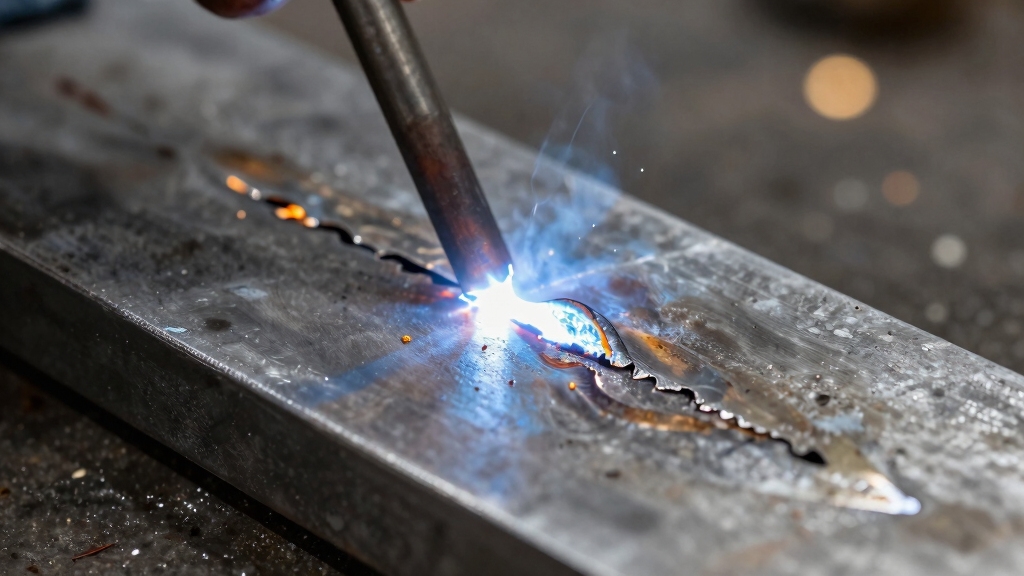
An arc strike in welding happens when the electrode or arc unintentionally contacts the base metal outside the weld zone, leaving small, hardened scars or pits.
These localized melts rapidly solidify, altering the metal’s microstructure and creating brittle, stress-prone areas that compromise weld integrity.
Arc strikes often occur near joints or ground clamps due to poor technique, grounding issues, or surface contamination. Understanding their causes and consequences is essential for effective prevention and repair strategies.
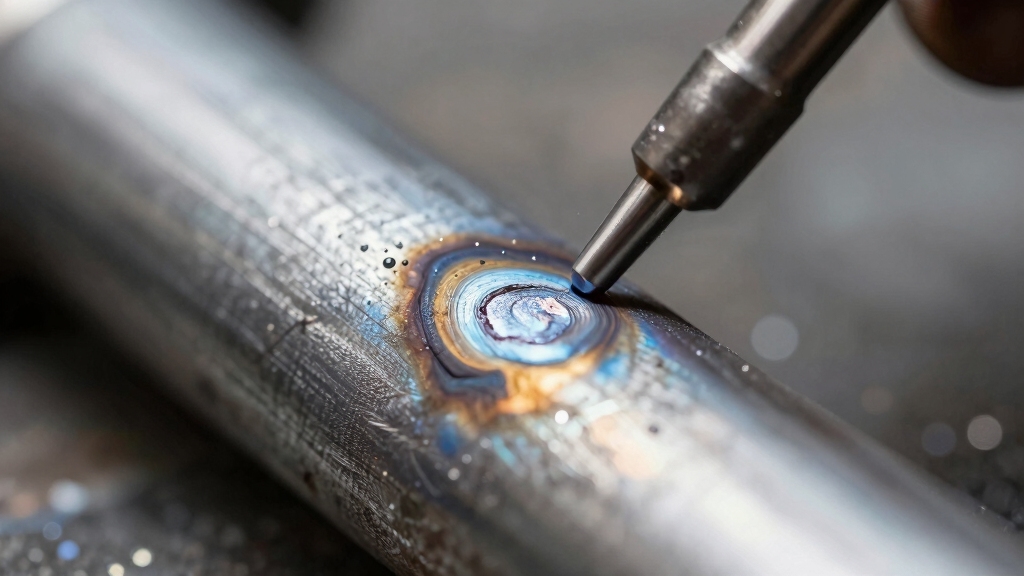
An arc strike occurs when the welding electrode or arc unintentionally contacts the base metal outside the intended weld area, causing localized melting and rapid solidification that leaves a scar.
An arc strike is an unintended contact of the electrode with base metal, causing localized melting and scarring.
When you unintentionally touch the electrode or arc to the base metal beyond the weld joint, the concentrated heat melts that spot momentarily. This melt quickly solidifies, creating a scar with altered microstructural properties.
Arc strikes typically appear near the joint or on surfaces adjacent to it, often during equipment setup or due to unstable grounding. Because the strike forms outside the weld zone, it’s not part of the joint and can weaken the base metal by introducing stress concentrators.
Understanding arc strike formation helps you recognize its impact on weld integrity and underscores the importance of precise arc control during welding operations. Proper surface preparation and inspection methods are essential to detect and prevent surface discontinuities caused by arc strikes.
Recognizing how arc strikes form naturally leads to understanding what causes them.
The primary causes include improper arc initiation technique, where you might touch down outside the joint or drag the electrode incorrectly.
Poor grounding creates unstable current paths, causing unintended arcing near the ground clamp.
Surface contamination like rust or scale disrupts stable arc starts, forcing multiple attempts that increase strike risk.
Worn equipment and challenging working conditions further heighten uncontrolled arc initiation.
Additionally, operator errors such as excessive tapping during arc start or incorrect welding parameters contribute markedly.
Addressing these causes requires disciplined technique, proper surface preparation, stable grounding, and well-maintained equipment.
Ensuring precise amperage control during welding also helps prevent unintended arc strikes and improves overall weld quality.
When an arc strike happens, it leads to rapid thermal cycling, which can really change the metal’s microstructure.
This means that the heat-affected zone can become hardened, but it also ends up being more brittle and prone to cracking.
It’s pretty important to grasp these microstructural changes since they play a big role in assessing the integrity of the affected material.
Increased heat input enlarges grain size and reduces acicular ferrite, which lowers impact toughness especially at subzero temperatures, highlighting the significance of managing welding heat levels.
Experiencing rapid thermal cycling during an arc strike subjects the base metal to intense, localized heating followed by almost instantaneous cooling. This sudden temperature change drives significant microstructural transformations in the affected zone.
The rapid heating causes localized melting or phase changes, while the swift cooling prevents equilibrium microstructures from forming. This results in hardened, brittle phases like martensite or bainite depending on the alloy.
You’ll find that this thermal shock creates residual stresses and microstructural heterogeneity, weakening the metal’s toughness. The heat-affected area around the strike exhibits increased hardness and reduced ductility, making it susceptible to cracking under stress.
Understanding this rapid thermal cycling is critical because these microstructural alterations compromise the metal’s mechanical integrity. They can initiate premature failure in welded components if left unaddressed. Proper control of heat input during welding is essential to minimize residual stresses and preserve joint strength.
Arc strikes induce significant metallurgical changes that harden the heat-affected zone (HAZ) around the impact site.
When an arc strike occurs, the localized rapid heating followed by swift cooling transforms the metal’s microstructure, producing a hardened, brittle region.
This altered HAZ exhibits increased hardness compared to the surrounding base metal, which compromises ductility and toughness.
You’ll find that this hardened zone acts as a stress concentrator, elevating susceptibility to cracking under mechanical or cyclic loads.
The abrupt microstructural shift between the strike area and unaffected metal heightens residual stresses, further promoting crack initiation.
Understanding these hardness changes is critical because the compromised HAZ undermines structural integrity.
This makes arc strikes a serious defect requiring detection and remediation to prevent premature failure in welded components.
Proper heat treatment and controlled cooling can mitigate these effects by reducing residual stresses and restoring ductility in the heat-affected zone.
Although the rapid heating and cooling during an arc strike occur within a very localized area, they trigger profound microstructural changes in the metal.
The intense heat instantly transforms the grain structure, producing hard, brittle phases such as martensite in steels.
This altered microstructure markedly increases hardness but reduces ductility, making the zone prone to cracking under stress.
Surrounding the strike, a heat-affected zone forms with tempered microstructures that also differ from the base metal, further influencing mechanical properties.
Additionally, the rapid solidification can introduce residual stresses and micro-cracks, acting as stress concentrators.
Understanding these changes is critical, as they compromise the integrity and performance of the welded component, especially under cyclic or dynamic loading conditions.
Effective heat input management and controlled welding techniques are essential to minimize these detrimental effects and reduce the risk of cracking in sensitive metals such as cast iron thermal stress.
When localized melting occurs outside the intended weld zone, it creates hardened and brittle areas that act as stress concentrators in the base metal. These zones are prone to crack initiation due to rapid cooling and microstructural changes.
Over time, stress accumulates at these points, causing crack propagation that compromises weld integrity and may lead to catastrophic failure.
| Effect | Description |
|---|---|
| Hardened Microstructure | Increased brittleness promotes crack initiation |
| Stress Concentration | Indentation focuses mechanical stress |
| Crack Propagation | Cracks grow under cyclic or static loading |
You must address arc strikes promptly since unnoticed cracks can undermine the weld’s performance and safety in service. Furthermore, controlling heat input during welding is critical to minimizing such defects and ensuring weld quality.
Detecting arc strikes visually can be quite interesting! You can often spot them by looking for small scars or indentations on the base metal surface.
These marks usually appear close to the weld joint or around the areas where the ground clamp is attached.
However, be aware that these marks can be a bit tricky to find, especially if access is limited or if there are obstacles in the way.
Additionally, proper surface preparation before welding helps reduce defects such as arc strikes and ensures better weld quality.
Spotting arc strikes on a welded surface requires careful visual inspection focused on identifying small scars or indentations on the base metal.
These marks appear as localized depressions with irregular edges, often accompanied by discoloration or slight surface roughness due to rapid melting and resolidification.
You should examine areas adjacent to the weld bead, looking for subtle changes in texture or geometry that differ from the uniform base metal.
Use adequate lighting and clean the surface beforehand to enhance visibility.
Recognizing these scars demands familiarity with the typical appearance of arc strikes—small, concentrated defects that disrupt the smoothness of the metal.
Accurate detection is critical, as these scars indicate metallurgical alterations that can compromise structural integrity if left unaddressed.
Proper eye protection, such as using welding helmets with the correct shade number, is essential when inspecting for arc strikes to prevent UV and IR radiation exposure.
Arc strikes tend to show up in specific, predictable locations on welded components, making targeted visual inspection essential. You’ll most commonly find these marks adjacent to the weld joint, near ground clamp areas, or on surfaces contacted during electrode setup.
Visually, arc strikes appear as small, round scars or indentations with a distinct discoloration due to rapid heating and cooling.
| Location | Visual Characteristics | Inspection Tip |
|---|---|---|
| Adjacent to weld joint | Small, dark scars or pits | Focus near bead edges |
| Near ground clamps | Irregular marks, often clustered | Inspect clamp contact points |
| Equipment setup areas | Random spots, isolated | Check where electrode touches |
| Base metal surfaces | Shiny or oxidized indentations | Clean surface enhances detection |
| Poorly accessible zones | Subtle, may require angled lighting | Use portable lights |
Always inspect these zones thoroughly to detect arc strikes early. Proper protective gear such as heat-resistant welding gloves can help prevent injury when handling components with arc strikes or performing inspections near hot surfaces.
Visual detection of arc strikes often proves challenging due to their small size and sometimes subtle appearance on base metal surfaces. You need a keen eye and proper lighting to identify these defects accurately.
Their location near weld joints or ground clamps adds complexity, especially when access is limited. To detect arc strikes visually, focus on:
Understanding these visual cues allows you to identify arc strikes promptly. This prevents overlooked defects that could compromise structural integrity.
When grounding isn’t properly established, electrical current can stray from its intended path and create arcs at unintended locations.
This stray current forms unexpected arc strikes, often near the ground clamp or other metal surfaces, causing localized melting and damage.
You must make certain stable grounding to control current flow and prevent these defects.
| Cause | Effect |
|---|---|
| Loose ground clamp | Unstable current flow |
| Corroded contact | Increased resistance, stray arcing |
| Inadequate grounding | Arc strikes distant from weld zone |
Poor grounding allows current to seek alternative paths, creating arcs where you don’t want them.
These arcs cause microstructural damage and compromise weld integrity, increasing the risk of cracks and structural failure.
Properly maintained and secured ground connections are essential for safe, defect-free welding.
Did you know that your technique can really impact how arc strikes form? It’s all about how you initiate the arc and handle the electrode. If you position the electrode incorrectly or apply too much force when starting the arc, you might end up making unintended contact with the base metal.
Although arc strikes often result from equipment or environmental factors, operator technique during arc initiation plays a critical role in their formation. When you initiate the arc, precise electrode placement and controlled movement prevent unintended contact with base metal outside the joint.
Your ability to start the arc smoothly without dragging or tapping excessively directly influences strike occurrence. Consistent arc length and steady hand control minimize erratic current flow, reducing strike risk.
Consider these critical operator actions during arc initiation:
Mastering these practices is essential to prevent localized melting and maintain weld integrity.
Electrode handling errors often lead to unintended arc strikes by causing the welding arc or electrode to contact the base metal outside the joint.
When you mishandle the electrode, such as tapping too hard, dragging it across the surface, or initiating the arc at an incorrect angle, you increase the risk of stray marks.
Your technique directly influences arc stability; inconsistent electrode positioning can cause the arc to wander or strike improperly.
Additionally, improper control during arc initiation, like multiple attempts to establish the arc due to surface contamination or poor settings, compounds this risk.
By maintaining steady hand movements, correct electrode angles, and controlled arc starts, you minimize arc strikes.
Mastering electrode handling is essential to prevent localized base metal damage that compromises weld integrity and structural performance.
Since surface contamination such as rust, scale, and coatings interferes with stable arc initiation, it markedly increases the likelihood of arc strikes during welding.
Surface contamination like rust and coatings disrupts arc initiation, significantly raising arc strike risk during welding.
When you attempt to start the arc on a contaminated surface, the irregular electrical conductivity forces repeated strikes, raising the risk of unintended contact.
Contaminants alter the surface resistance and disrupt the arc’s stability, causing erratic energy flow and localized melting outside the joint.
Consider these contamination effects:
You must recognize that surface contamination directly compromises arc control, greatly elevating arc strike occurrence during welding operations.
Mastering proper arc initiation technique is essential to prevent arc strikes during welding.
You must start the arc deliberately within the joint, avoiding any contact between the electrode and the base metal outside the weld zone.
Clean the surface thoroughly to remove rust, scale, and coatings that hinder stable arc initiation.
Make sure your ground connections are stable and securely attached to prevent errant current paths causing unintended arc strikes.
Maintain your equipment rigorously, replacing worn cables and consumables promptly to preserve arc control.
Control your welding parameters precisely and avoid excessive tapping force during arc starts, which often results in stray marks.
Following these measures systematically minimizes the risk of arc strikes, preserving the metallurgical integrity and structural performance of your welded components.
Although preventing arc strikes is essential, you’ll sometimes encounter damage that requires immediate attention to maintain structural integrity.
Preventing arc strikes is crucial, but prompt repair is vital to preserve structural integrity when damage occurs.
When you detect an arc strike, you must act decisively to mitigate its detrimental effects. Start by grinding out the affected area to remove hardened, brittle metal and restore a sound surface.
Then, preheat the surrounding material to reduce thermal stresses before rewelding the zone. Conduct nondestructive testing to verify no subsurface cracks remain.
Finally, apply post-weld heat treatment to temper the heat-affected zone and relieve residual stresses.
This method restores strength and prevents crack propagation effectively.
Yes, arc strikes affect different metals differently because each metal’s thermal conductivity, hardness, and microstructure respond uniquely to rapid heating and cooling.
You’ll find metals like steel develop brittle, hardened zones prone to cracking.
In contrast, aluminum’s softness may show less hardness increase but more distortion.
Understanding your metal’s properties helps you anticipate damage severity, tailor prevention strategies, and mitigate structural risks from arc strikes effectively.
Yes, arc strikes are more common in welding processes like Shielded Metal Arc Welding (SMAW) and Flux-Cored Arc Welding (FCAW) because they involve manual electrode handling, increasing the risk of unintended contact with the base metal.
You’ll find fewer arc strikes in processes like Gas Tungsten Arc Welding (GTAW), where the electrode doesn’t touch the workpiece.
Proper technique and stable grounding help you minimize strikes regardless of the process used.
Arc strikes are like hidden landmines in your workspace, posing serious safety hazards. They can cause unexpected sparks or molten metal splatter, risking burns or eye injuries if you’re not properly protected.
Additionally, arc strikes may lead to structural weaknesses, increasing the chance of sudden weld failure that endangers both you and others nearby. Always maintain proper technique and equipment to minimize these dangerous, unseen threats.
You can detect arc strikes using non-visual methods like ultrasonic testing or magnetic particle inspection.
These techniques reveal subsurface cracks and hardness changes caused by arc strikes, even when surface access is limited.
While visual inspection is straightforward, non-visual methods are essential for detecting hidden defects and evaluating the extent of microstructural damage.
Employ these techniques to confirm weld integrity and prevent catastrophic failures from undetected arc strike defects.
Environmental conditions directly affect your chance of arc strikes.
High humidity or moisture can cause unstable electrical arcs and poor grounding, increasing stray currents.
Dust, rust, or surface contamination impede stable arc initiation, forcing you to make multiple starts that raise strike risk.
Cold temperatures may cause brittle surfaces, while windy conditions can destabilize the arc.
You must control these factors to maintain consistent, controlled welding and prevent unintended arcing.
You must recognize arc strikes, understand their causes, and assess their impact on metal integrity. You need to refine your technique, control surface contamination, and apply proper preventive measures to avoid damage.
When strikes occur, you should detect them early, evaluate their severity, and implement effective repairs. By mastering these steps, you’ll guarantee weld quality, maintain structural strength, and extend the lifespan of your metalwork with precision and confidence.