Phone:
(701)814-6992
Physical address:
6296 Donnelly Plaza
Ratkeville, Bahamas.

Phone:
(701)814-6992
Physical address:
6296 Donnelly Plaza
Ratkeville, Bahamas.

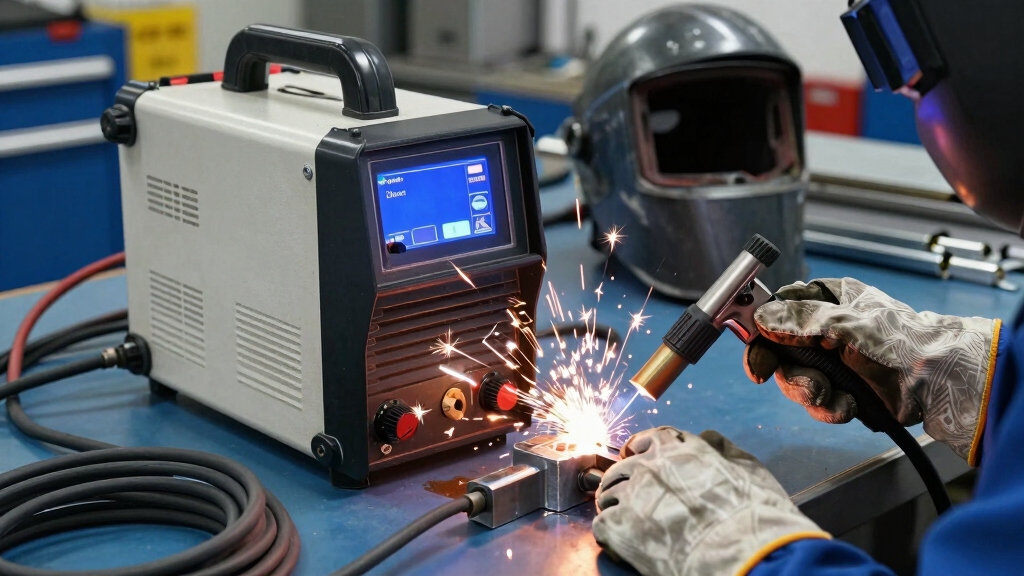
A multi process welder combines MIG, TIG, Stick, and Flux-Cored welding into one versatile machine that adapts power output and polarity for each method.
You’ll switch modes easily via selectors and adjust wire and gas settings to suit different metals and job demands.
Inverter tech guarantees precise arc control and efficiency, making it ideal for diverse projects.
While it may not match specialized units in peak performance, its flexibility and workflow benefits make it invaluable.
Explore how to optimize its capabilities next.
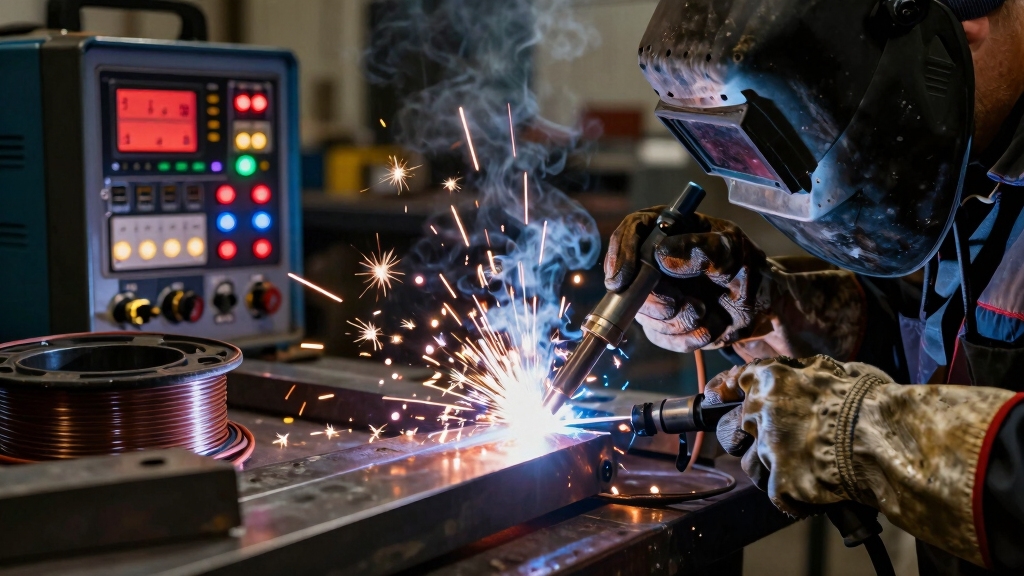
What exactly is a multi-process welder, and how does it function to support diverse welding needs?
A multi-process welder combines multiple welding methods into one versatile machine for diverse projects.
You’re dealing with a single machine that integrates multiple welding processes: MIG, TIG, Stick, and Flux-Cored. This allows you to switch seamlessly between methods.
It achieves this by adjusting polarities and process selectors, adapting electrical output and arc characteristics for each welding type.
The power source generates an electric arc that melts the electrode and base metal, reaching up to 6,500 degrees Fahrenheit. This ensures strong fusion across various metal thicknesses and joint types.
This versatility lets you handle indoor or outdoor applications without needing separate equipment.
Additionally, many multi-process welders utilize inverter technology to provide precise current control and improved energy efficiency across all supported welding methods.
Multi-process welders typically combine four primary welding methods: MIG, TIG, Stick, and Flux-Cored, into one versatile unit. This enables you to tackle a wide range of metal joining applications.
MIG welding (GMAW) uses a continuously fed wire electrode with shielding gas. It offers fast, clean welds ideal for automotive and construction work.
TIG welding (GTAW) employs a non-consumable tungsten electrode for precision. It’s favored in aerospace and electronics.
Stick welding (SMAW) uses a consumable electrode, delivering robust welds on rusty or dirty surfaces. It’s perfect for outdoor and pipeline jobs.
Flux-Cored Arc Welding (FCAW) utilizes a flux-cored wire, suitable for heavy-duty outdoor applications without external gas.
Multi-process machines like the Power MIG 140 MP increase flexibility by allowing easy switching between these methods with tool-less drive roll changes.
Combining MIG, TIG, Stick, and Flux-Cored welding in a single machine offers unparalleled flexibility across diverse welding tasks. You’ll save time by switching processes quickly without changing equipment, which enhances workflow efficiency.
Multi process welders adapt to various metal types, thicknesses, and joint configurations, making them indispensable for mixed job sites. They also save space and reduce capital expenditure by replacing multiple single-process machines.
Key benefits include:
Additionally, proper wire feed mechanism integration ensures consistent wire delivery and stable arc conditions across processes.
Using a multi process welder, you optimize resource use while maintaining high-quality welds across applications.
Versatility in welding equipment lets you tackle a broad range of projects with fewer tools. Multi process welders excel in construction, enabling seamless shifts between TIG for precise piping roots and Stick for robust fills.
In automotive and aerospace sectors, their adaptability supports MIG and TIG welding on diverse metals and thicknesses. Shipbuilding and heavy industries benefit from Flux-Cored and Stick processes, especially outdoors where shielding gas is impractical.
Repair and maintenance tasks gain efficiency with quick switching among processes, handling rust or painted surfaces effectively. Fabrication shops use these welders with plasma cutting for streamlined workflow.
Whether working indoors or in the field, you’ll find multi process welders indispensable for steel structures, pipelines, and machinery. They offer unmatched flexibility across demanding arc welding applications. The inclusion of Synergic MIG mode further simplifies operation by auto-adjusting voltage and wire feed for optimal weld quality.
Although these welders offer broad functionality, they may not deliver the peak performance specialized single-process machines provide for certain tasks. When you rely on a multi process welder, you might encounter limitations related to process-specific demands and environmental suitability.
TIG welding requires high operator skill. Multi process units may lack the advanced controls dedicated TIG machines offer for precision work.
MIG processes on these machines often struggle outdoors due to shielding gas sensitivity. This reduces weld quality in windy conditions.
Multi process welders typically exclude advanced methods like submerged arc welding (SAW), limiting options for heavy industrial applications.
Understanding these constraints helps you evaluate whether a multi process welder suits your specific workflow or if a dedicated machine better meets your technical requirements.
Additionally, multi process welders may have slower deposition rates compared to specialized MIG machines, which can impact productivity in high-speed welding applications involving continuous wire feed.
Switching welding modes on your multi-process welder is pretty straightforward!
First things first, you’ll want to adjust the polarity settings. This step is crucial because it ensures that everything matches up with the process you’ve chosen.
Once that’s done, go ahead and use the machine’s selector to pick your welding method. Whether you’re going for MIG, TIG, Stick, or Flux-Cored, just make your selection and you’re almost there.
Finally, don’t forget to switch the wire type and shielding gas as needed. This little detail can make a big difference in achieving top-notch weld quality and performance.
For optimal results, always remember to set shielding gas flow between 20–25 CFH to prevent oxidation and ensure a stable arc.
Happy welding!
When you switch welding modes on a multi-process welder, adjusting the polarity settings is essential to ensure proper arc stability and weld quality.
Each welding process demands a specific polarity configuration to optimize electrode performance and penetration depth.
For example, MIG welding typically requires DC electrode positive (DCEP) to ensure stable wire feed and clean welds.
Stick welding often uses DC electrode negative (DCEN) for deeper penetration.
TIG welding may utilize either AC or DC, depending on the base metal and electrode type.
To adjust polarity settings effectively, you should:
Understanding the effects of DCEN and DCEP polarity on heat distribution and electrode wear is important for selecting the optimal settings.
Switching welding modes on a multi-process welder involves adjusting the machine’s controls to match the desired welding process, such as MIG, TIG, Stick, or Flux-Cored.
You select the process via a dedicated selector switch or digital interface. After selection, verify polarity and power settings correspond to the chosen method.
This assures peak arc stability and weld quality. Here’s a quick reference for common mode selections:
| Welding Process | Control Setting |
|---|---|
| MIG (GMAW) | Wire feed + DC+ polarity |
| TIG (GTAW) | High frequency + AC/DC choice |
| Stick (SMAW) | Electrode holder + DC- or AC |
Always consult your welder’s manual for exact switch locations and confirm settings before welding.
Proper mode selection guarantees efficiency and weld integrity. Understanding the difference between constant current and constant voltage modes is key to optimizing your welding process.
Getting your multi-process welder ready for a different welding mode means you’ll need to change the wire type and adjust the shielding gas accordingly.
Start by disconnecting the current wire spool and installing the appropriate wire for the selected process. MIG requires solid wire, while flux-cored welding uses flux-cored wire.
Next, switch the shielding gas to match the wire and welding method. For example, MIG welding typically uses argon-CO2 blends, whereas flux-cored welding often runs without gas.
Finally, adjust your machine settings to guarantee compatibility with the new wire and gas.
This precision guarantees peak arc stability and weld quality. Additionally, understanding the wire feed control is crucial to optimize feed rates and maintain consistent weld quality during the process switch.
How do you determine which multi-process welder best fits your needs? Start by identifying the welding processes essential for your projects: MIG, TIG, Stick, or Flux-Cored. Confirm the machine supports these.
Identify essential welding processes like MIG, TIG, Stick, or Flux-Cored, and ensure the welder supports them.
Evaluate amperage range and duty cycle to guarantee compatibility with metal thickness and workload. Consider portability if you work outdoors or on-site. Look for synergetic controls for automated parameter adjustments or manual settings for precise control.
Factor in power source compatibility and input voltage for your workspace. Assess build quality and included accessories like spool guns or plasma cutters to enhance versatility.
Keep in mind that inverter technology can improve efficiency and provide more precise arc control in modern multi-process welders.
Finally, weigh initial cost against long-term efficiency gains. Choosing wisely prevents underperformance and maximizes productivity across your intended applications.
With regular use, multi-process welders typically last between 5 to 15 years, depending on maintenance and workload.
You’ll want to perform routine inspections, clean cooling fans, and replace worn consumables to extend lifespan.
High-quality models with robust components endure longer under heavy duty, while improper use or neglect shortens service life.
Investing in reputable brands and adhering to manufacturer guidelines guarantees your welder remains reliable and efficient over time.
To keep your multi-process welder in top shape, don’t overlook regular inspection and cleaning.
Start by checking cables, connections, and the power source for wear or damage.
Clean the wire feed system and replace worn contact tips to guarantee smooth operation.
Keep cooling fans dust-free and verify gas flow if applicable.
Calibrate settings periodically, and store the unit in a dry, dust-free environment.
Neglecting maintenance risks costly downtime and reduced weld quality.
Yes, you can upgrade many multi-process welders with new welding technologies, depending on the model and manufacturer.
Some units support firmware updates or modular add-ons like advanced control panels, spool guns, or plasma cutting features.
However, hardware limitations may restrict integration of cutting-edge processes like Electron Beam or SAW.
Always check compatibility and consult the manufacturer to make certain your welder supports upgrades without voiding warranties or compromising performance.
You’ll find that multi process welders generally accept consumables from various brands, as they use standard electrodes, wires, and gases compatible across manufacturers.
However, some units may recommend specific consumables optimized for their settings to guarantee peak performance..
Always check your welder’s manual for approved consumable types and brands to avoid issues like inconsistent arc stability, poor weld quality, or equipment damage.
Think of multi-process welders as hybrid engines. They balance versatility with efficiency. Compared to single-process machines, they typically consume more energy due to supporting multiple modes and added electronics.
However, their synergetic settings optimize power use, reducing waste during operation. While single-process welders may be slightly more energy-efficient in specialized tasks, multi-process units offer practical energy savings.
They consolidate equipment and minimize idle power consumption across varied welding jobs.
Choosing a multi process welder is like wielding a Swiss Army knife. It’s versatile and ready for any challenge.
By mastering its multiple welding modes, you’ll boost efficiency and tackle diverse projects with precision.
Remember, understanding its benefits and limitations guarantees you select the right tool for your needs.
With the right knowledge and equipment, you’ll weld smarter, not harder. Every joint will be a tribute to your skill and adaptability.