Phone:
(701)814-6992
Physical address:
6296 Donnelly Plaza
Ratkeville, Bahamas.

Phone:
(701)814-6992
Physical address:
6296 Donnelly Plaza
Ratkeville, Bahamas.

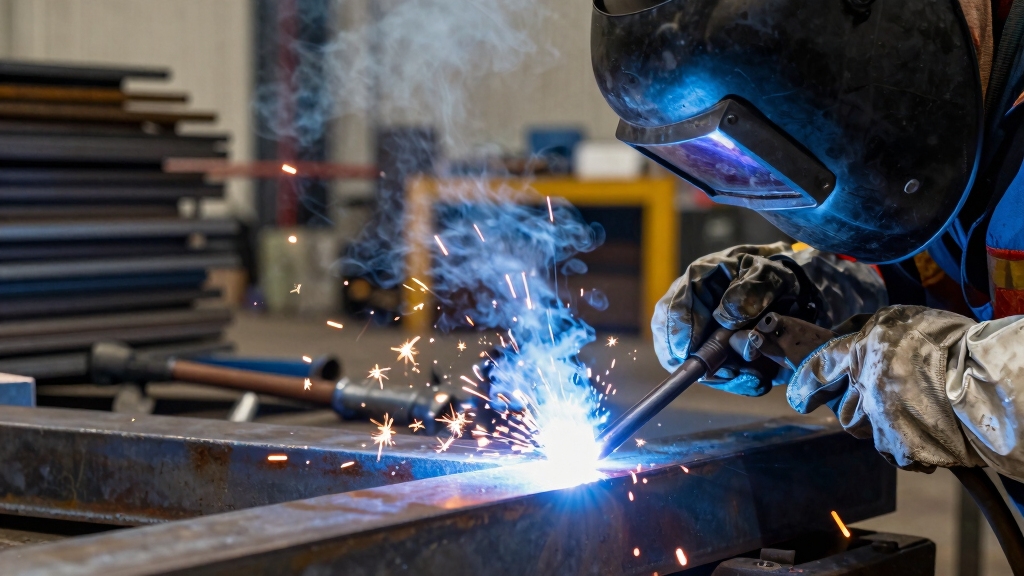
You use a MIG welder to join metals quickly and precisely by creating an electric arc between a continuous wire electrode and the workpiece. This melts them to form a strong bond.
The shielding gas protects the weld from contamination, ensuring clean, consistent results. It handles various metals and thicknesses, which is critical for automotive repairs, construction, and aerospace.
This semi-automatic process offers control and repeatability on complex joints. Exploring its applications reveals why it’s essential across industries.
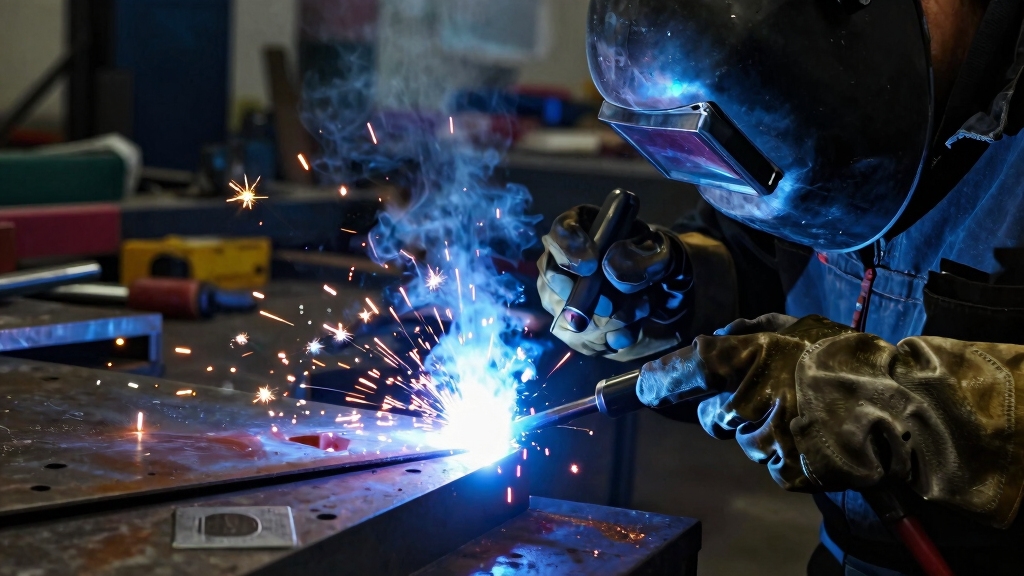
MIG welding joins metals by creating an electric arc between a continuously fed wire electrode and the workpiece. This process melts both materials to form a cohesive weld pool.
You’ll feed the solid wire electrode through the welding gun, where the arc generates intense heat. This heat simultaneously melts the wire and base metal, creating a molten pool that fuses the materials together as it cools.
Shielding gas surrounds the weld area, protecting it from oxidation and contamination. This ensures weld integrity and strength.
The continuous wire feed maintains a stable arc and consistent deposition rate. This allows for efficient weld bead formation.
As you control the torch movement, you influence the weld’s penetration and shape. This makes MIG welding precise and adaptable for various joint configurations.
Properly adjusting wire feed speed and voltage is essential to achieve a steady arc and high-quality welds.
MIG welding is really versatile! It works great with carbon steels, stainless steel, aluminum, and even cast iron.
One of the best things about MIG welding is its ability to handle a wide range of material thicknesses.
Whether you’re working with thin sheets or thick plates, you can easily adjust the wire feed and current settings to get just the right weld.
So, knowing which materials are compatible with MIG welding can really help you improve both the quality and efficiency of your welds.
It’s all about finding the right fit for your project! MIG welding is used in over 60% of industrial projects due to its versatility and efficiency.
Welding versatility depends heavily on the types of metals you can join effectively. MIG welding excels by accommodating a variety of metals, each requiring specific wire and shielding gas combinations to optimize weld quality and integrity.
You’ll find MIG welding compatible with carbon and low alloy steels, favored for structural applications due to their weldability and strength. It also works with stainless steel, which demands precise control over heat input and shielding gas to prevent contamination.
Aluminum requires specialized wire feeders and inert gases like pure argon to handle its high thermal conductivity. Understanding these compatible metals helps you select appropriate parameters, ensuring sound welds while minimizing defects.
MIG welding’s adaptability across these materials makes it indispensable in automotive, construction, and manufacturing sectors. However, some metals such as copper, magnesium, and titanium present challenges that often require specialized settings or preheating to achieve quality welds.
Beyond choosing compatible metals, understanding the thickness range you can effectively weld is key to achieving strong, defect-free joints.
MIG welding excels across a broad spectrum, from thin sheet metals, often as little as 24 gauge (0.5 mm), to thicker sections exceeding 1/2 inch (12.7 mm).
You’ll adjust wire diameter, voltage, and shielding gas composition based on material thickness to maintain optimal heat input and penetration.
Thin materials benefit from low amperage and smaller wire to prevent burn-through. Thicker metals require higher amperage and larger wire for adequate fusion.
Controlling these parameters guarantees weld integrity without distortion or porosity.
This versatility allows you to work efficiently on automotive panels, structural beams, and heavy fabrication, making MIG welding a go-to method for diverse thickness ranges.
For example, selecting the appropriate transfer mode based on material thickness and welding position ensures optimal weld quality and reduces defects.
MIG welding is a fantastic choice for automotive repairs, especially when you’re working with thin metal. It gives you great control, which helps you avoid that pesky burn-through that can ruin your project.
When it comes to rust repair, MIG welding really shines. The continuous wire feed and shielding gas work together to protect the joints while you restore that all-important structural integrity.
This technique is particularly effective for frame and bodywork. You’ll end up with strong, clean welds that are crucial for the safety and durability of the vehicle. So, if you’re diving into automotive repairs, consider giving MIG welding a try! Proper metal cleaning before welding significantly reduces weld defects and improves overall quality.
Joining thin metals with MIG welding demands precise control over heat input and wire feed speed to prevent burn-through and warping.
When working with automotive sheet metals, you must adjust the amperage and voltage carefully to maintain weld integrity and avoid distortion.
Using a smaller wire diameter and a faster travel speed helps limit excessive heat buildup.
Shielding gas selection, typically a mix of argon and CO2, also influences weld quality by stabilizing the arc and reducing spatter.
Key considerations include:
Fine-tuning wire feed speed to match thin gauge thickness.
Employing a push technique for better gas coverage and weld bead control.
Maintaining a short arc length to minimize heat concentration.
Mastering these parameters guarantees strong, clean welds essential for automotive body repairs.
Selecting the appropriate argon and CO2 gas mix can optimize arc stability and penetration for thin metal applications.
Mastering weld control on thin automotive sheet metals sets the foundation for effective rust repair using MIG welding. You’ll precisely remove rusted sections, then clean and prepare edges to guarantee strong weld penetration.
Using a wire feed speed and voltage calibrated to thin gauge steel, you’ll minimize heat distortion and burn-through. Applying short, controlled weld beads reduces warping, while the shielding gas, often an argon-CO2 mix, prevents oxidation during welding.
You’ll strategically stitch welds and allow cooling pauses to preserve metal integrity. Post-weld, grinding and finishing restore surface continuity, guaranteeing corrosion resistance when primed and painted.
Maintaining proper amperage is critical to avoid burn-through and achieve optimal penetration on thin automotive panels.
Precision plays a critical role when using MIG welding for frame and bodywork repairs on vehicles.
You rely on controlled heat input and consistent wire feed to restore structural integrity without warping thin automotive metals.
MIG welding efficiently fuses steel panels and frame components, ensuring durable, clean joints that withstand stress and corrosion.
You must adjust shielding gas and wire type to match material specifications for peak results.
Key considerations include:
Maintaining precise control over heat to prevent metal distortion.
Selecting appropriate filler wire for frame versus body panels.
Ensuring continuous shielding gas coverage to avoid porosity.
Using the push technique with a 10–15° torch angle helps achieve deeper fusion while minimizing burn-through in thin automotive metals.
| Feature | Benefit |
|---|---|
| High deposition rate | Speeds up assembly and reduces downtime. |
| Versatility | Welds different steel thicknesses. |
| Clean welds | Minimizes post-weld cleanup. |
| Semi-automatic | Supports mechanization and precision. |
The synergic MIG mode in modern welders offers auto-adjusted voltage and wire feed, making welding easier and more efficient.
MIG welding streamlines manufacturing and fabrication by delivering consistent, high-quality welds across diverse materials and thicknesses.
MIG welding enhances manufacturing with reliable, superior welds on various materials and thicknesses.
You’ll find it ideal for joining carbon steels, stainless steel, and aluminum efficiently, thanks to its continuous wire feed and controlled shielding gas.
Its precision supports rapid production without compromising structural integrity.
When using MIG welding in manufacturing, you benefit from:
The wire feed mechanism ensures consistent wire delivery and stable arc conditions, which are critical for maintaining weld quality throughout the process.
Building on its effectiveness in manufacturing and fabrication, this welding method plays a pivotal role in shipbuilding and aerospace industries where high-strength, reliable joints are mandatory.
You’ll find MIG welding essential for joining thick steel plates in ship hulls. It delivers consistent penetration and minimizes defects critical for structural integrity.
In aerospace, the process accommodates specialized alloys like aluminum and stainless steel, ensuring lightweight yet robust connections.
Its continuous wire feed and controlled shielding gas environment reduce porosity and improve weld quality, crucial for fatigue-resistant airframe components.
Additionally, the semi-automatic nature allows you to maintain precision and repeatability across complex geometries.
Frequently favored by hobbyists and professionals alike, this welding method offers a combination of ease, speed, and quality that suits a wide range of DIY projects.
As you work on custom fabrications or home repairs, MIG welding’s semi-automatic nature enables you to maintain consistent welds with minimal spatter.
This improves efficiency and reduces cleanup time.
Its versatility lets you weld various materials, from thin sheet metals to thicker sections, without complex adjustments.
Key advantages for DIY use include:
Selecting the appropriate shielding gas plays a critical role in ensuring weld quality and process efficiency. You need to match the gas composition to the base material and desired weld characteristics.
Pure argon works well for non-ferrous metals like aluminum, providing a stable arc and smooth bead. For carbon steels, you’ll often use an argon-CO2 mix, balancing arc stability and penetration. Increasing CO2 improves penetration but can cause more spatter and a rougher bead.
Using 100% CO2 is cost-effective but results in harsher arcs and more oxidation. Specialty gases like helium enhance heat input for thicker materials but increase cost. You must also consider gas flow rates to prevent contamination without causing turbulence.
Proper shielding gas selection directly impacts weld integrity, appearance, and mechanical properties.
When you optimize your welding parameters and technique, you markedly improve the quality and consistency of your MIG welds. Focus on controlling wire feed speed, voltage settings, and travel speed to maintain a stable arc and uniform bead profile.
Proper joint preparation minimizes contamination and improves weld penetration. Additionally, selecting the correct shielding gas tailored to your material guarantees adequate protection from oxidation.
Keep these tips in mind for superior results:
Adjust wire feed speed and voltage simultaneously to avoid spatter or burn-through.
Maintain consistent travel angle and speed to ensure proper fusion and bead shape.
Clean and prepare base metals thoroughly to prevent porosity and weak welds.
Following these steps enhances weld integrity, reduces rework, and maximizes productivity in your MIG welding projects.
MIG welding offers faster deposition rates and is easier to learn, making it ideal for high productivity and thicker materials.
TIG welding provides superior precision and control, producing cleaner, high-quality welds especially on thin or exotic metals.
You’ll choose MIG for speed and versatility, while TIG suits detailed, critical welds requiring strong aesthetics and minimal distortion.
Both have distinct advantages, so your choice depends on the project’s material, complexity, and finish requirements.
You need essential safety gear for MIG welding: a welding helmet with a proper shade filter to protect your eyes from intense UV and IR radiation.
Flame-resistant gloves shield your hands from sparks and heat, and a long-sleeve flame-resistant jacket or apron protects your skin.
Always wear safety boots to prevent burns from hot metal. Additionally, ensure adequate ventilation or use a respirator to avoid inhaling hazardous fumes produced during welding.
You can use MIG welding outdoors in windy conditions, but you’ll face challenges.
Wind disrupts the shielding gas, causing contamination and poor weld quality.
To mitigate this, you’ll need windshields, gas nozzles with better coverage, or switch to flux-cored arc welding, which is more wind-resistant.
Always monitor gas flow rates and ensure proper shielding to maintain weld integrity.
Otherwise, you risk porosity, weak joints, and inconsistent results.
To maintain and clean your MIG welder, regularly inspect and clean the contact tip to guarantee proper wire feeding.
Remove spatter buildup from the nozzle using a wire brush or nozzle dip.
Check and replace worn liners and drive rollers.
Keep the wire spool clean and dry.
Inspect cables and connections for damage or wear.
Also, guarantee the shielding gas supply is free of leaks and moisture to maintain consistent arc quality.
Ever faced a sputtering arc or irregular wire feed? To troubleshoot your MIG welder, first check wire tension and spool alignment to prevent bird nesting.
Make certain proper gas flow and leak-free connections to avoid porosity. Clean contact tips regularly, and verify correct polarity and voltage settings.
If the weld is inconsistent, inspect for worn liners or damaged cables. These steps keep your welds strong and your workflow smooth.
Think of your MIG welder as a bridge, uniting metals with precision and strength. Whether you’re repairing a car or building a ship, mastering shielding gases and technique is essential.
You control this bridge’s integrity, ensuring every joint withstands stress. Embracing MIG welding means wielding a tool that transforms raw materials into durable structures.
With practice, your welder becomes the key to unsealing limitless fabrication possibilities. It symbolizes both innovation and reliability in your hands.