Phone:
(701)814-6992
Physical address:
6296 Donnelly Plaza
Ratkeville, Bahamas.

Phone:
(701)814-6992
Physical address:
6296 Donnelly Plaza
Ratkeville, Bahamas.

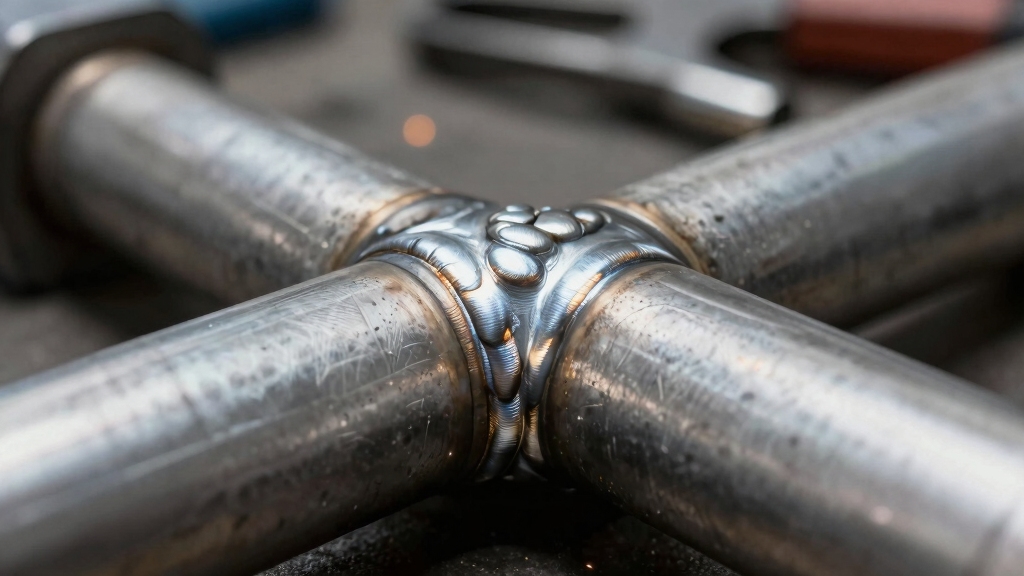
You use a butt weld to join two metal pieces end-to-end on the same plane, creating a seamless, flush joint with full penetration.
This method guarantees strong, leak-proof connections essential for load-bearing and pressure-containing applications in piping, structural frameworks, and automotive parts.
Proper joint preparation, groove selection, and heat control are critical for durable results.
Understanding the types, methods, and quality checks behind butt welding will help you achieve peak strength and performance.
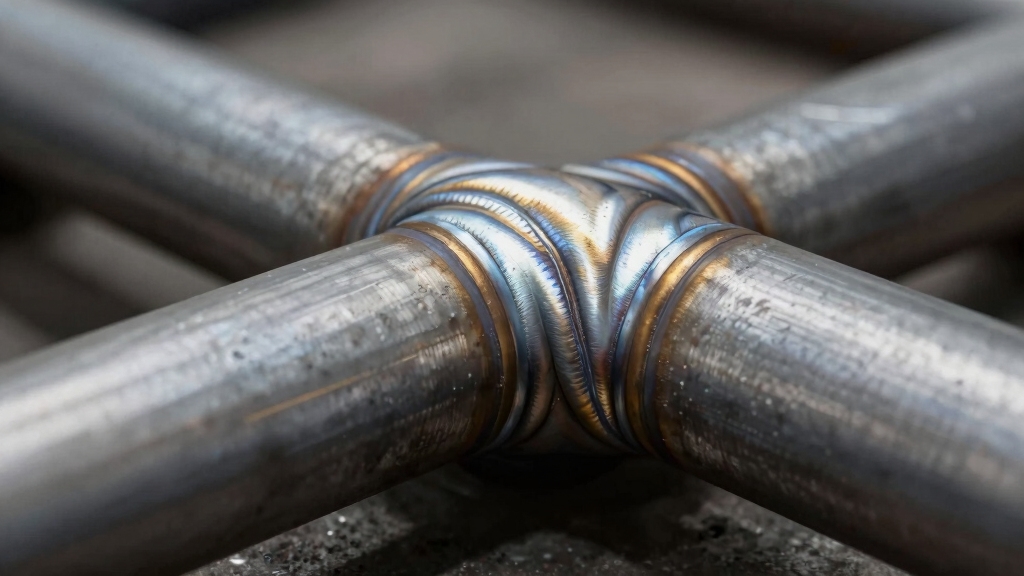
A butt weld joins two metal pieces end-to-end on the same plane, creating a seamless and strong bond along their edges.
You’ll find it’s the simplest and most versatile weld joint design, widely used for structural components and piping systems.
To guarantee optimal strength, you need to prepare a groove between the metal ends, which varies depending on thickness and material type.
When positioning the metals, align them precisely in a single plane to facilitate full penetration during welding.
This joint delivers a flush, smooth finish that’s both durable and leak-proof, making it ideal for high-pressure applications.
Achieving complete joint penetration is essential to ensure the weld attains base-metal-equivalent strength and structural integrity.
You’ll come across a few common types of butt welds, like square, single bevel, and double V. Each of these has its own unique applications, so knowing the right one to use is key.
Now, your choice really depends on the material you’re working with. For instance, upset butt welding is fantastic for nonferrous bars and rods. On the other hand, if you’re dealing with sheets and forgings, flash butt welding is the way to go.
Also, don’t forget about material thickness! It plays a crucial role in ensuring you get the best joint strength and penetration. So, keep that in mind when making your selection.
Proper weld bead profiles around the joint circumference are essential to guarantee strong, leak-proof connections.
Explore various butt weld types to match specific material thicknesses and application demands.
For thin materials, you’ll often use square butt welds, which require minimal groove preparation.
As thickness increases, single bevel, single J, or single U welds provide better penetration and strength by shaping the groove to accommodate deeper weld pools.
For even thicker sections, double V or double bevel welds allow welding from both sides, reducing distortion and ensuring full penetration.
When working with nonferrous bars or rods, upset butt welding applies pressure and heat to forge a symmetrical, flash-free joint.
Flash butt welding suits sheets, tubing, and forgings by generating localized heat and expelling impurities.
Choosing the right butt weld type depends on material thickness, shape, and strength requirements, ensuring optimized joint integrity and performance.
Understanding the role of fusion welding methods is critical in selecting the appropriate technique for creating strong, permanent butt welds.
Selecting the appropriate butt weld type hinges on the specific material you’re working with, as different metals and forms respond uniquely to welding techniques.
For nonferrous materials like aluminum or copper bars and rods, upset butt welding offers symmetrical, spatter-free joints.
When joining sheets, tubing, or forgings, flash butt welding provides controlled heat and pressure, ensuring consistent penetration.
Thin materials typically require square butt welds to avoid distortion, while thicker metals benefit from single bevel, single U, or single J grooves that facilitate deep fusion with less filler.
Double V and double bevel welds suit particularly thick sections, balancing heat input and minimizing residual stress.
Controlling heat input is critical to minimizing distortion and maintaining joint integrity in butt welds across different materials.
Frequently, the thickness of the metal determines which butt weld type you should use to guarantee peak strength and efficiency.
For thin materials, a square butt weld works well, minimizing groove preparation while securing full penetration.
As thickness increases, you’ll need more complex joint designs like single bevel, single U, or single J welds to maintain weld integrity and reduce distortion.
For very thick sections, double V or double bevel configurations distribute heat evenly, allowing for deeper penetration and stronger joints.
Proper groove preparation tailored to thickness secures consistent weld quality and prevents defects.
Selecting the correct weld type based on thickness also optimizes welding parameters, such as voltage and current, enhancing process control and minimizing rework.
This precision is crucial for structural, piping, or pressure vessel applications where reliability is non-negotiable.
Additionally, ensuring compliance with minimum leg length requirements according to AWS D1.1 helps maintain joint strength and code adherence.
When joining two metal pieces with a butt weld, you’ll typically rely on specific welding methods designed to guarantee full penetration and a strong, seamless bond.
These methods secure the joint so it withstands mechanical stress and environmental factors. You can choose from various techniques depending on material type, thickness, and application demands.
Key methods include:
Each method emphasizes control over current, voltage, and pressure, securing weld integrity and performance in critical structures. MIG welding’s ability to deliver high travel speeds and consistent weld quality makes it a popular choice for many industrial applications.
Although butt welding seems straightforward, preparing the materials properly is critical to achieving a strong, defect-free joint.
Begin by making certain the metal edges are clean and free of contaminants like oil, rust, and scale, using mechanical or chemical cleaning.
Start by thoroughly cleaning metal edges to remove oil, rust, and scale using mechanical or chemical methods.
Next, align the metals precisely in a single plane with minimal gap, as improper fit-up compromises weld penetration and strength.
Depending on material thickness, select the appropriate groove design: square, bevel, U, or J, and machine the edges accordingly to facilitate full penetration.
Control joint configuration by choosing single or double-sided welds based on access and strength requirements.
Verify edge geometry and alignment with measuring tools before welding.
Proper preparation reduces defects, improves weld quality, and ensures consistent fusion across the butt joint.
Following the Welding Procedure Specification (WPS) ensures proper parameters and consistent quality throughout the welding process.
You’ll often see butt welds in industrial piping systems. They’re crucial when it comes to creating leak-proof, high-pressure joints. It’s all about ensuring safety and reliability in those situations.
In structural applications, butt welds really shine too. They create seamless connections for beams and frameworks, which is important for maintaining load-bearing strength. You wouldn’t want any weak points in those structures, right?
And let’s not forget about the automotive industry. Manufacturers rely on butt welds to assemble chassis and exhaust systems. This is key for keeping everything durable and aligned, especially when the vehicle is under stress. So, whether it’s in pipes, buildings, or cars, butt welds play a vital role!
For stainless steel pipe applications, the TIG welding method is preferred for its precise control and superior weld quality, especially for pipes up to 6 inches in diameter.
Industrial piping systems demand reliable, leak-proof connections that withstand high pressure and varying temperatures. Butt welds are a preferred choice across multiple sectors. When you work with pipelines or process systems, butt welds provide full penetration joints essential for maintaining system integrity and safety.
Their ability to create smooth, flush welds reduces turbulence and corrosion risks inside pipes. You’ll find butt welds extensively used in:
These applications rely on butt welds for their strength, durability, and consistent performance under demanding industrial conditions. Proper heat control during welding is crucial to prevent defects and ensure the longevity of these critical joints.
When designing structural frameworks or automotive components, you rely on butt welds to deliver strong, seamless joints that maintain integrity under stress.
In structural applications, butt welds join beams and girders, ensuring load-bearing capacity and resistance to fatigue. You’ll find them essential in constructing bridges and buildings, where joint strength and durability are critical.
In automotive manufacturing, butt welds connect chassis parts, frames, and exhaust systems, providing rigidity and crashworthiness. Their full-penetration capability minimizes weak points, crucial for safety and performance.
Depending on material thickness and design, you select appropriate butt weld types, such as single bevel or double V, to optimize strength and minimize distortion.
Proper execution of butt welds requires mastery of positional welding techniques to ensure consistent penetration and bead quality across various joint orientations.
Although butt welds may seem straightforward, they provide exceptional strength and durability that meet demanding engineering standards.
Butt welds combine simplicity with exceptional strength and durability for the toughest engineering challenges.
When you use butt welds, you benefit from a seamless, flush joint that withstands high stress and pressure without failure. Their versatility allows you to join various metals with minimal preparation, saving time and reducing costs.
The leak-proof quality guarantees safety in critical applications like pipelines and pressure vessels. Plus, certain butt weld types eliminate spatter, assuring cleaner, more efficient fabrication environments.
Experience unmatched joint strength for structural integrity. Achieve smooth weld surfaces that enhance aesthetics and function. Rely on leak-proof seals in high-pressure systems.
Save costs with efficient preparation and welding processes. Enjoy cleaner workspaces with reduced spatter and waste.
To make strong, reliable butt welds, you must focus on precise joint preparation and proper welding parameters.
Begin by ensuring the metal edges are clean, properly aligned, and prepared with the correct groove design based on thickness and material type.
Use appropriate bevels, such as single V, double V, or U grooves, to promote full penetration.
Control voltage (2-8 volts) and current (50A to several hundred amperes) precisely.
Adjust pressure and welding speed to avoid defects.
Select a compatible welding process like MIG, TIG, or resistance welding.
Maintain consistent heat input to prevent warping.
Automated controls can enhance repeatability.
Finally, verify weld integrity through visual inspection and non-destructive testing to confirm strength and leak-proof performance.
This ensures your butt welds meet structural and operational demands.
Temperature directly influences the quality of your butt weld by controlling fusion and penetration.
If it’s too low, you risk incomplete fusion and weak joints. Excessive heat can cause warping, grain growth, or burn-through.
Maintaining optimal temperature guarantees proper melting and solidification, producing a strong, defect-free weld.
You must carefully monitor and control temperature during welding to achieve consistent mechanical properties and prevent issues like cracking or porosity in your butt weld.
You need to wear protective gear like welding helmets with proper shading, flame-resistant gloves, and clothing to shield yourself from sparks and UV radiation.
Make certain adequate ventilation to avoid inhaling harmful fumes.
Keep fire extinguishers nearby since sparks can ignite flammable materials.
Maintain a clean workspace and always check equipment for damage before use.
Follow lockout/tagout procedures when servicing welding machines to prevent accidental startups.
Of course, you can just trust your eyes and hope for the best. But if you want precision, you’ll use non-destructive inspection methods for butt welds.
Techniques like ultrasonic testing, radiographic testing, magnetic particle testing, and dye penetrant inspection help you detect internal and surface flaws without damaging the weld.
These methods guarantee weld integrity, strength, and safety. This is critical in pipelines, structural components, and pressure vessels where failure isn’t an option.
You can expect a typical butt weld to last decades under stress if it’s properly executed and inspected regularly.
Its lifespan depends on factors like material type, welding process, joint preparation, and operating conditions such as pressure, temperature, and cyclic loads.
With full penetration and correct groove design, butt welds resist fatigue and corrosion effectively.
They maintain structural integrity in demanding environments like pipelines or aerospace applications.
Proper maintenance extends their durability markedly.
Common causes of butt weld failure include improper groove preparation, leading to inadequate penetration or fusion.
You might also encounter failures from contamination like rust or oil on the metal surfaces.
Using incorrect welding parameters, such as voltage, current, or pressure, can create weak joints.
Residual stress buildup, poor joint design, or material incompatibility also contribute.
Finally, fatigue from cyclic loading and corrosion in service environments can weaken the weld over time.
Think of a butt weld as the backbone of your metal projects. It seamlessly joins pieces with strength and precision.
By mastering the types, preparation, and methods, you guarantee your welds hold firm under pressure, much like a well-forged chain link.
Whether in construction or manufacturing, your skill in creating strong, reliable butt welds transforms raw materials into unbreakable bonds.
This symbolizes both durability and craftsmanship in every joint you make.