Phone:
(701)814-6992
Physical address:
6296 Donnelly Plaza
Ratkeville, Bahamas.

Phone:
(701)814-6992
Physical address:
6296 Donnelly Plaza
Ratkeville, Bahamas.

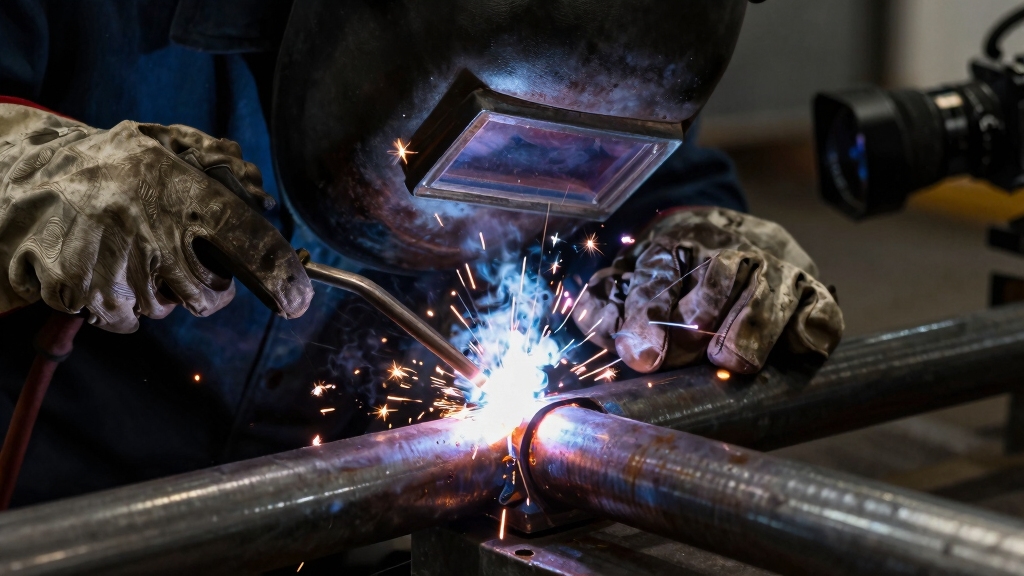
5G welding means joining a fixed horizontal pipe that can’t rotate, requiring you to weld around the pipe’s circumference in multiple positions: flat, vertical, horizontal, and overhead.
You’ll need precise control over torch angles (usually 10°–15°), travel speed, and heat input to prevent defects like sagging or undercutting.
Mastering 5G improves your skill in producing consistent, high-quality welds on pipelines. Explore key setup techniques and common challenges to sharpen your expertise further.
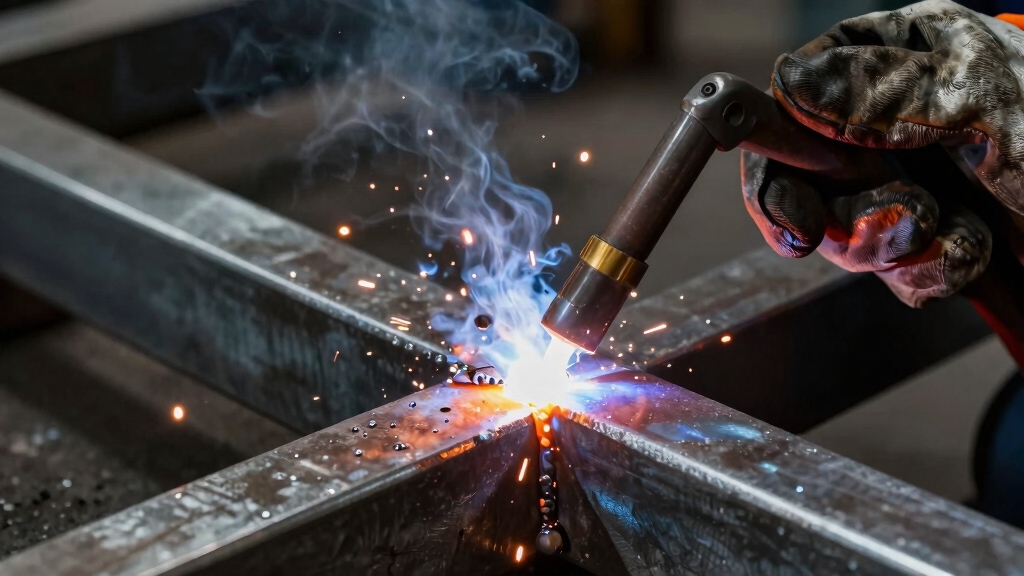
Although you might be familiar with various welding positions, 5G welding specifically refers to the horizontal fixed position used for pipe welding. In this setup, the pipe remains stationary and you weld around its circumference.
5G welding involves a fixed horizontal pipe where you weld fully around its stationary circumference.
The pipe is mounted horizontally without rotation, requiring you to weld groove joints fully around it. You’ll progress through flat, vertical, horizontal, and overhead welding positions as you advance, demanding precise control over weld pool behavior to prevent defects like sagging or undercutting.
This position is critical in industries like oil and gas where fixed piping is common. Mastering 5G welding enhances your versatility by preparing you for complex fieldwork and qualifying you for standardized certifications.
This ensures your welds meet stringent mechanical and nondestructive testing criteria in demanding environments. Proper selection of welding methods and parameters is essential to minimize distortion and ensure joint integrity in 5G welding.
To set up the 5G welding position, start by securing the pipe horizontally. It should be fixed in place without any rotation, which helps ensure that everything is aligned properly for those groove welds. Once that’s done, you’ll want to position yourself so you can easily move around the pipe.
As you progress, you’ll be adapting your stance to handle flat, vertical, and overhead welds. It’s all about finding that right balance and comfort as you work.
And don’t forget, mastering those welder positioning techniques is crucial! Keeping a consistent arc length and penetration is key, especially when you’re dealing with different angles. So, take your time and get it right!
Welding is a critical step within fabrication that provides permanent metal bonds and structural integrity to assembled components.
When setting up the 5G welding position, you mount the pipe horizontally and secure it firmly to prevent any rotation during welding.
Use strong clamps or fixtures to immobilize the pipe along its horizontal axis, ensuring it won’t shift as you weld around the circumference.
Position the joint so the groove is accessible for all welding passes: root, fill, and cap.
Confirm that the pipe’s alignment meets the specified tolerances to avoid weld defects.
Properly orienting the pipe allows you to navigate through flat, horizontal, vertical, and overhead positions without repositioning the pipe itself.
This setup is critical for consistent penetration and bead quality, especially since the pipe remains stationary and the welder moves around it to complete the groove weld circumferentially.
Extensive training and practice, often exceeding 30 to 100 hours, are essential to develop proficiency and produce defect-free welds in complex positions like 5G, highlighting the importance of mastering welding skill development.
Mastering welder positioning in the 5G welding setup requires you to skillfully move around the fixed horizontal pipe, adjusting your stance and angle to maintain consistent access to the groove weld.
Begin by establishing a stable footing that allows you to navigate from flat to vertical and overhead positions without compromising control. Keep your torch angle between 10° and 15° from vertical, adapting as you circumnavigate the pipe.
Use short, controlled arc lengths to prevent weld pool sagging, especially in overhead sections. Your body should rotate smoothly around the pipe, maintaining ergonomic posture to reduce fatigue.
Consistent hand positioning and steady travel speed guarantee uniform penetration and bead profile. By mastering these movements, you’ll effectively manage gravity effects and produce defect-free welds throughout the full 360° circumference.
Selecting the appropriate torch angle and travel technique, such as push or pull, is essential to optimize penetration and gas shielding based on the weld position and material thickness.
You’ll find 5G welding used a lot in pipeline construction. It’s particularly handy when working with fixed horizontal pipes that need those precise circumferential groove welds, especially since they can’t rotate.
And it doesn’t stop there! In industrial maintenance, this position really shines too. It’s perfect for making repairs on stationary pipe sections, especially in places like petrochemical plants and power generation facilities.
Controlling heat input is critical to ensure strong, crack-free welds in challenging positions like 5G.
Pipeline construction demands precise welding techniques that guarantee integrity and safety under high-pressure conditions.
When you apply 5G welding, you fix the pipe horizontally and weld around its circumference without rotating it. This method assures consistent groove welds critical for pipeline girth joints, especially in oil and gas sectors.
You’ll need to manage position changes skillfully, transitioning from flat to overhead to avoid defects like sagging or undercutting.
| Welding Aspect | Pipeline Application |
|---|---|
| Position | Fixed horizontal pipe, multi-position welds |
| Joint Type | Circumferential girth butt joints |
| Industry | Oil, gas, petrochemical pipelines |
Mastering 5G enhances pipeline installation quality and long-term durability in demanding environments. To maintain certification validity while working in such critical roles, welders must perform qualifying welds at least once every six months to meet the continuity requirements mandated by key industry standards.
Beyond construction, 5G welding plays a vital role in industrial maintenance where fixed horizontal pipes require reliable repair and upkeep.
When you work on these stationary pipes, you’ll navigate the weld around the pipe’s circumference without rotation, guaranteeing precise groove welds on butt joints.
This method suits field repairs in petrochemical plants, power stations, and refineries where downtime must be minimized.
You’ll need to adjust your technique continuously to control weld puddle behavior across flat, vertical, and overhead positions, preventing defects like undercut or slag inclusion.
Using appropriate filler metals and controlled arc parameters guarantees consistent penetration and mechanical integrity.
Mastering 5G welding in maintenance optimizes pipe lifecycle and reduces failure risks, making it indispensable for sustaining industrial pipeline infrastructure.
Proper surface preparation and the use of suitable filler metals are critical to prevent defects and ensure corrosion resistance in dissimilar metal joints.
Although 5G welding eliminates pipe rotation, it challenges welders to maintain precise control over the weld pool as they progress through flat, horizontal, vertical, and overhead positions.
You must constantly adjust technique to prevent defects like sagging and undercutting caused by gravity shifts.
Ergonomic strain also intensifies due to awkward postures.
Mastering muscle memory in tight spaces is essential for consistent penetration and bead quality.
| Challenge | Impact |
|---|---|
| Gravity Effects | Weld pool sagging, dripping |
| Position Changes | Frequent adaptation of travel speed |
| Ergonomics | Increased fatigue, reduced precision |
| Weld Pool Control | Maintaining penetration and bead shape |
Using an inverter welding machine can significantly aid welders in managing these challenges due to its precise current control and rapid response capabilities.
Understanding and overcoming these challenges guarantees high-quality welds critical for pipeline integrity and safety.
When welding in the 5G position, you must carefully manage arc length and travel speed to counteract gravity’s influence on the weld pool.
Maintain a shorter arc length to improve control and reduce spatter. Adjust the travel speed, slower for vertical and overhead sections, to prevent sagging or undercutting.
Use filler metals with fast-freeze characteristics, such as E6010 or E7018, to stabilize the puddle. Employ an uphill progression on vertical segments to guarantee proper penetration and avoid excessive buildup.
Keep a consistent electrode angle, typically between 10° and 15°, to direct the arc force correctly. For MIG welding, set root passes around 18 volts at 210 inches per minute and fill passes slightly higher.
Mastering these parameters secures a uniform bead profile and mechanical integrity throughout the fixed horizontal pipe circumference. The fast-freezing slag from cellulose-based flux in electrodes like E6010 allows for easier slag removal and better weld quality in challenging 5G conditions.
Mastering the techniques for welding in the 5G position sets a strong foundation.
However, obtaining a 5G welding certification takes your skills to a higher level by validating your ability to perform consistent, high-quality welds on fixed horizontal pipes.
This certification proves your proficiency with multi-positional welding challenges, including controlling the weld pool and maintaining penetration.
Here’s how it advances your skills:
Additionally, maintaining proper shielding gas composition during welding is crucial to avoid contamination and ensure optimal weld quality.
The key difference between 5G and 6G welding positions is pipe rotation. In 5G, the pipe stays fixed horizontally, and you weld around its circumference by moving yourself.
In 6G, the pipe is fixed at a 45-degree angle, combining vertical and overhead positions, making it more complex.
6G demands greater skill, controlling the weld pool against gravity in multiple positions simultaneously.
In contrast, 5G involves shifting through flat, vertical, and overhead without pipe rotation.
Pipe diameter directly affects your 5G welding approach by influencing access and technique.
Larger diameters demand you adjust your travel speed and electrode angle to maintain consistent penetration across wider joints.
Smaller pipes require precise control to avoid burn-through.
You’ll also need to modify your body positioning and welding parameters to manage gravity’s impact on the weld pool.
This ensures uniform bead quality despite diameter variations.
Like walking a tightrope, 5G welding demands sharp safety focus.
You must secure the pipe firmly to prevent movement and guarantee proper ventilation to avoid toxic fume buildup.
Wear full protective gear, including a helmet, gloves, and flame-resistant clothing, as overhead welding increases exposure risk.
Stay alert to avoid burns from molten metal dripping downward.
Maintain ergonomic posture to prevent fatigue and control the weld pool carefully to reduce spatter hazards.
Yes, you can automate 5G welding, but it’s complex due to the fixed horizontal pipe and changing weld positions.
You’ll need precise robotic controls to adjust the torch angle and maintain consistent arc length as the welder moves around the pipe.
Advanced sensors and programmable paths help manage gravity’s effect on the weld pool.
Automation improves repeatability, but setting up requires detailed programming and calibration to handle overhead and vertical shifts effectively.
Imagine welding a pipe in freezing rain. Your weld pool behaves like water on a tilted surface, hard to control.
Environmental factors like temperature, humidity, and wind drastically affect 5G welding quality by altering cooling rates and causing weld defects such as cracking or porosity.
You must adjust parameters like voltage and travel speed. Use protective measures like windshields to maintain consistent penetration and prevent contamination, ensuring a structurally sound weld.
Mastering 5G welding means mastering movement, method, and meticulousness. You’ll face formidable challenges, but with focused practice and precise positioning, you’ll push past pitfalls and perfect your process.
This position propels proficiency, proving pivotal in professional progress. By pursuing 5G welding certification, you polish your skills and position yourself powerfully in the welding world.
Remember, dedication to detail delivers dependable, durable welds, making 5G welding an essential venture for your technical triumph.