Phone:
(701)814-6992
Physical address:
6296 Donnelly Plaza
Ratkeville, Bahamas.

Phone:
(701)814-6992
Physical address:
6296 Donnelly Plaza
Ratkeville, Bahamas.

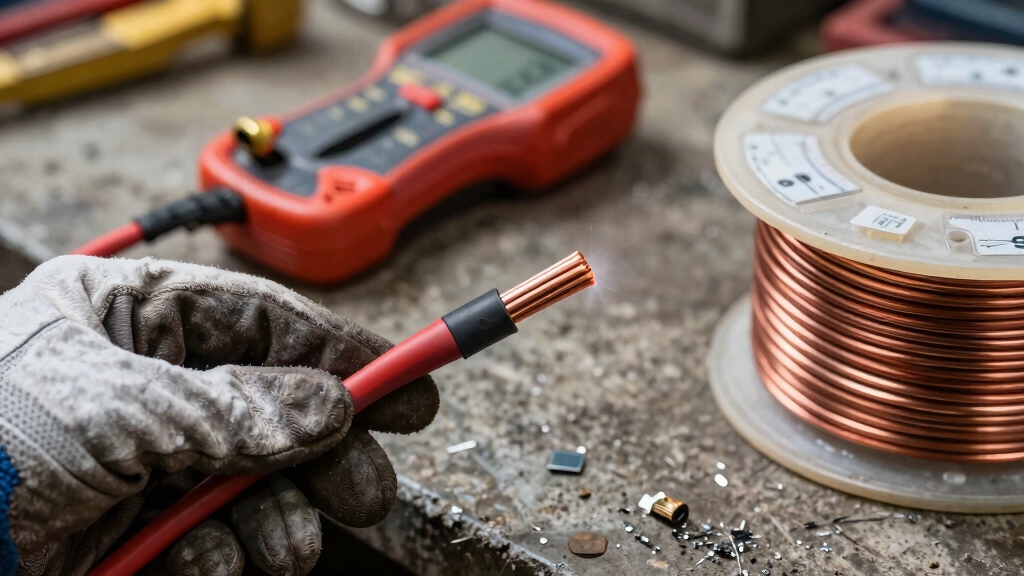
You should use 8 AWG copper wire with a 50-amp breaker for your 220V welder if your run is under 50 feet.
This setup matches welder specifications, prevents overheating, and minimizes voltage drop for consistent performance. Longer runs over 50 feet may require 6 AWG to avoid power loss and heat buildup.
Ensuring the correct wire gauge and breaker size protects your equipment and meets code standards. Discover how these choices impact your welder’s safety and efficiency.
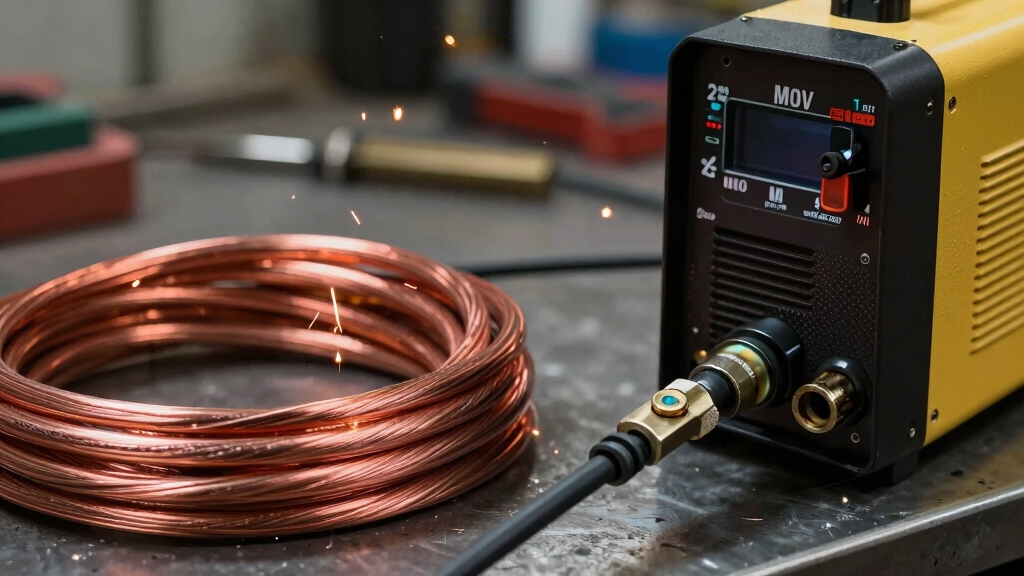
Choosing 8 AWG wire for your 220V welder guarantees you meet the necessary current capacity without risking overheating or excessive voltage drop. This gauge supports up to 50 amps, matching the welder’s manufacturer specifications and assuring safe operation.
Selecting 8 AWG wire ensures safe, efficient operation by meeting your welder’s 50-amp current needs.
At typical runs under 50 feet, 8 AWG maintains voltage integrity, preventing performance losses. Its thickness handles the heat generated during a 25% duty cycle, common for models like the Eastwood TIG 200 Digital.
Using thinner wire risks insulation damage and efficiency drops, while thicker wire is unnecessary and costly at this distance. By selecting 8 AWG, you guarantee compliance with electrical safety standards, maximize welder functionality, and reduce the chance of equipment failure caused by electrical resistance or thermal buildup.
This balance makes 8 AWG the best choice for your 220V welding setup. Additionally, the dynamic response of inverter welding machines helps maintain consistent electrical performance, which complements the proper wire gauge selection for optimal operation.
Because the breaker size directly limits the maximum current flowing through your welder circuit, you must select a wire gauge that safely handles that amperage.
For a 50 amp breaker, you need wire rated to carry at least 50 amps continuously without overheating or excessive voltage drop.
According to NEC guidelines and manufacturer specifications, 8 AWG copper wire suits a 50 amp circuit, providing safe ampacity and compliance.
Undersized wire risks insulation damage and fire hazards, while oversized wire may be unnecessarily costly.
Matching your wire gauge to the breaker secures the circuit’s protective device functions correctly, preventing nuisance trips or dangerous overloads.
Always verify the breaker’s amperage rating and select wire with ampacity equal to or exceeding that rating to maintain safety and performance in your 220V welder installation.
Using a power source with an appropriate duty cycle rating ensures the welder operates safely within its designed thermal limits.
For runs extending beyond 50 feet, you’ll need to upgrade to thicker wire like 6 AWG to prevent excessive voltage drop and maintain welder performance.
Runs over 50 feet require 6 AWG wire to avoid voltage drop and ensure welder efficiency.
Voltage drop increases with distance, reducing the effective voltage at your welder. This can cause inconsistent arcs and poor weld quality.
Using 6 AWG wire compensates for this by lowering resistance over longer distances. It ensures your 50A 220V welder operates within its designed parameters.
Additionally, thicker wire reduces heat buildup, enhancing safety and longevity. Always calculate voltage drop for your specific run length and amperage to decide if 6 AWG is necessary.
Maintaining proper wire gauge is essential to prevent arc instability and ensure consistent heat input during welding.
Although the Eastwood TIG 200 Digital operates at a 25% duty cycle, it demands a dedicated 50A, 220V circuit with 8 AWG wire for runs under 50 feet to guarantee safe and efficient performance.
Using the proper gauge and breaker assures minimal voltage drop, prevents overheating, and aligns with NEC standards.
To meet these requirements, you must:
Following these specs protects your welder and workspace, assuring consistent operation without electrical risks. Proper wiring also supports the welding transformer’s need for high current output to maintain a stable welding arc.
Making certain your 220V welder operates safely and meets code starts with proper installation practices. Use 8 AWG copper wire for runs under 50 feet, paired with a 50A double-pole breaker matching the welder’s specs.
Employ conduit or cable rated for your environment. Make certain grounding is solid and continuous. Always verify local codes to confirm NEC compliance.
| Step | Requirement | Purpose |
|---|---|---|
| Wire gauge | 8 AWG (under 50 ft) | Prevents overheating |
| Breaker rating | 50A Double-pole | Matches welder amperage |
| Grounding & conduit | Properly installed | Ensures safety and code compliance |
Consult a licensed electrician if unsure to guarantee a safe, reliable setup. Proper wiring and breaker selection are essential to prevent overheating and premature equipment failure in welding operations.
You can use aluminum wire for your 220V welder, but you need to size it larger than copper to handle the same current due to its higher resistivity.
Aluminum requires careful installation with anti-oxidant paste and compatible connectors to prevent corrosion and overheating.
For a 50A circuit, typically 6 AWG aluminum wire is recommended. Always follow NEC guidelines and consult a professional to ensure safety and code compliance.
When in doubt, it’s better to err on the side of caution.
Higher ambient temperatures reduce a wire’s current-carrying capacity, so you’ll need a thicker gauge to prevent overheating and voltage drop.
If your welder’s wire runs through hot environments, choose a gauge larger than standard specs suggest.
This adjustment guarantees safe operation, maintains performance, and complies with NEC guidelines, keeping your setup reliable and code-compliant.
You’ll notice wire overheating by discoloration or melting insulation, a burning smell, or hot-to-touch conduit.
Frequent breaker trips and flickering weld output also signal overheating.
Overheated wires can feel soft or brittle and may produce sparks or smoke.
If you spot any of these signs, immediately shut down the circuit.
Inspect connections and wire gauge, and correct the issue to prevent fire hazards or equipment damage.
You can’t just extend your welder’s power cord willy-nilly. It’s like playing with fire on a volcano!
To do it safely without rewiring, use a heavy-duty extension cord rated for 50 amps and 220V. Make sure it matches your welder’s specs exactly.
Keep the cord under 50 feet to avoid voltage drop. Always check the cord’s gauge (8 AWG or thicker) and connectors for secure, code-compliant connections. This helps prevent overheating or breaker trips.
Yes, stranded wire offers better flexibility, making it easier to route through tight spaces and reduce stress on connections during movement.
Solid wire is more rigid, providing a stable, low-resistance path but can be harder to handle in complex setups.
For welders, stranded wire often improves durability and vibration resistance, especially near moving parts or portable equipment.
You’ll want stranded wire if you prioritize maneuverability and long-term reliability in your welding setup.
When wiring your 220V welder, choosing the right gauge is vital for safety and performance. For example, 8 AWG wire supports up to 40 amps, matching many welders’ breaker sizes perfectly.
However, if your run exceeds 100 feet, opting for 6 AWG prevents voltage drop and overheating.
Following code-compliant installation practices guarantees your equipment runs efficiently and safely. This protects both you and your workspace from electrical hazards.