Phone:
(701)814-6992
Physical address:
6296 Donnelly Plaza
Ratkeville, Bahamas.

Phone:
(701)814-6992
Physical address:
6296 Donnelly Plaza
Ratkeville, Bahamas.

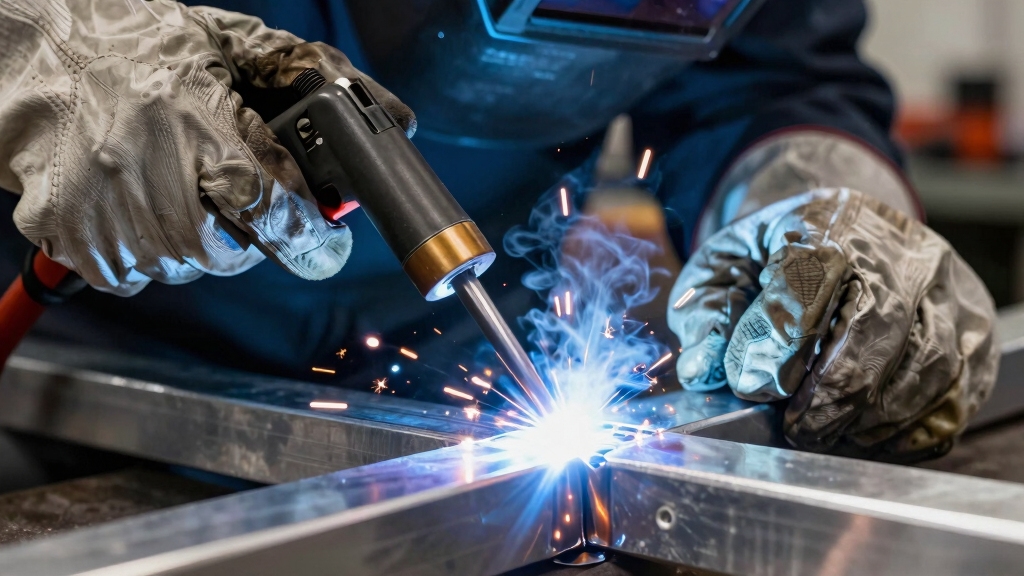
You’ll primarily use 100% argon for MIG welding aluminum up to about 1/2 inch thick because it offers excellent arc stability, clean metal transfer, and effective shielding.
For thicker aluminum plates, adding helium boosts heat input, penetration, and puddle fluidity, improving weld quality on heavy sections.
Avoid gases with active dopants or CO2 that cause oxidation or instability. Proper gas flow and cleaning are critical to prevent porosity and defects.
Understanding these factors helps you optimize your aluminum welds with the right gas choice and technique.
Because aluminum’s molten weld pool is highly susceptible to atmospheric contamination, using the correct shielding gas is indispensable in MIG welding to displace oxygen, nitrogen, and hydrogen. These elements otherwise cause oxidation, porosity, and brittle welds. Argon is commonly used as the primary shielding gas due to its inert atmosphere properties that protect the molten metal.
Using the right shielding gas is crucial in aluminum MIG welding to prevent contamination and ensure weld quality.
You must guarantee continuous gas coverage to protect the weld pool from immediate oxide formation, which compromises weld integrity and appearance. Shielding gases stabilize the arc, essential for consistent metal transfer and clean bead shape.
They also assist in breaking the aluminum oxide layer, which has a melting point far above aluminum’s. This allows the arc to effectively connect with the base metal without melting it. This oxide layer melts at around 2050°C, significantly higher than aluminum’s melting point, making its removal critical for successful welding oxide layer melting point.
Proper gas shielding prevents reformation of this oxide during welding, reduces spatter, and controls weld penetration. Ultimately, this guarantees strong, defect-free aluminum welds. Using argon or argon-helium blends can enhance arc stability and heat input control, optimizing weld quality and penetration.
Argon almost always serves as the primary shielding gas in aluminum MIG welding due to its exceptional arc stability and effective metal transfer characteristics.
You’ll find 100% argon is the standard choice, especially for aluminum up to ½ inch thick. It provides excellent arc control and minimal spatter, producing clean, fluid weld puddles. Its inert nature also ensures stable arc characteristics that are ideal for aluminum.
Argon’s weight helps it shield the molten metal effectively, preventing contamination. Plus, it’s widely available and cost-efficient compared to helium blends.
Using the right shielding gas is critical because proper shielding gas cover reduces weld contamination and ensures cleaner welds.
Using argon guarantees consistent weld quality across common aluminum thicknesses.
When welding aluminum with MIG, using 100% argon markedly enhances shielding effectiveness by protecting the molten metal from atmospheric contamination.
Argon’s high ionization potential maintains a clean weld pool, preventing oxidation and inclusions that compromise weld integrity. Choosing the correct shielding gas composition is critical to achieving stable arc characteristics and minimizing defects in aluminum welds.
Argon’s high ionization potential ensures a pristine weld pool, safeguarding against oxidation and weld defects.
You’ll need higher flow rates, around 35-50 CFM, to guarantee optimal coverage.
This pure argon environment keeps the weld bead free from porosity and weak spots, supporting strong, contamination-free joints ideal for most aluminum types.
It also facilitates precise heat control, especially in pulsed MIG, reducing burn-through risk and distortion on thinner gauges.
Compared to mixtures, 100% argon simplifies gas selection, boosts productivity with continuous wire feed, and offers a cost-effective solution.
Professionals rely on it for consistent, clean welds and to avoid failures common with CO2-containing gases.
Additionally, using a spool gun helps maintain smooth wire feed control crucial for aluminum welding quality.
When you add helium or helium-argon mixtures to your shielding gas, you really boost heat transfer. This enhancement helps with the arc energy and makes the puddle more fluid. Pretty cool, right? This heat input control is important for minimizing thermal distortion when welding aluminum.
With that increased heat input, you can weld thicker aluminum sections much more effectively. It improves penetration without needing to crank up the wire feed speed. So, understanding these properties is key. It lets you optimize your welding parameters, whether you’re working on thin or thick aluminum applications. However, keep in mind that using helium mixes often involves a premium cost compared to pure argon.
By incorporating helium or helium-argon mixtures into the shielding gas, you markedly enhance heat transfer during MIG welding of aluminum. Helium increases arc energy, raising overall heat input and improving puddle fluidity. However, these mixtures require higher gas flow rates and increased arc voltage to maintain arc stability. This elevated heat input also impacts the heat-affected zone, requiring careful control to prevent material distortion.
This higher energy level demands increased arc voltage and gas flow for stability but enables deeper penetration and better fusion in alloys like 5083. Using these mixtures, you can reduce wire feed speed while maintaining weld quality and achieve smaller bead sizes without sacrificing strength.
The enhanced heat transfer supports welding thicker sections and improves root penetration, reducing porosity.
You’ll frequently find that incorporating helium and helium-argon mixtures in MIG welding markedly enhances your ability to weld thicker aluminum sections.
These gas blends increase arc energy, allowing deeper root penetration with lower wire feed rates and amperage. The blend increases voltage in GMAW and GTAW, which further stabilizes the arc and improves weld quality. This enhanced arc stability is due to helium’s high ionization potential, contributing to more efficient heat transfer.
For example, a 75% argon-25% helium mix improves penetration and reduces porosity on aluminum thicker than one inch, while higher helium content, like 90%, maximizes heat input for the thickest plates.
Helium’s superior thermal conductivity boosts weld pool fluidity and wetting, minimizing sidewall fusion defects and enhancing bead quality. This results in a more focused and hotter arc, reaching temperatures beneficial for aluminum’s high thermal conductivity.
Additionally, helium-argon mixtures support faster travel speeds and reduce weld preparation, increasing productivity. Using these mixtures also helps maintain an optimal arc temperature for cleaner, stronger welds on thick aluminum.
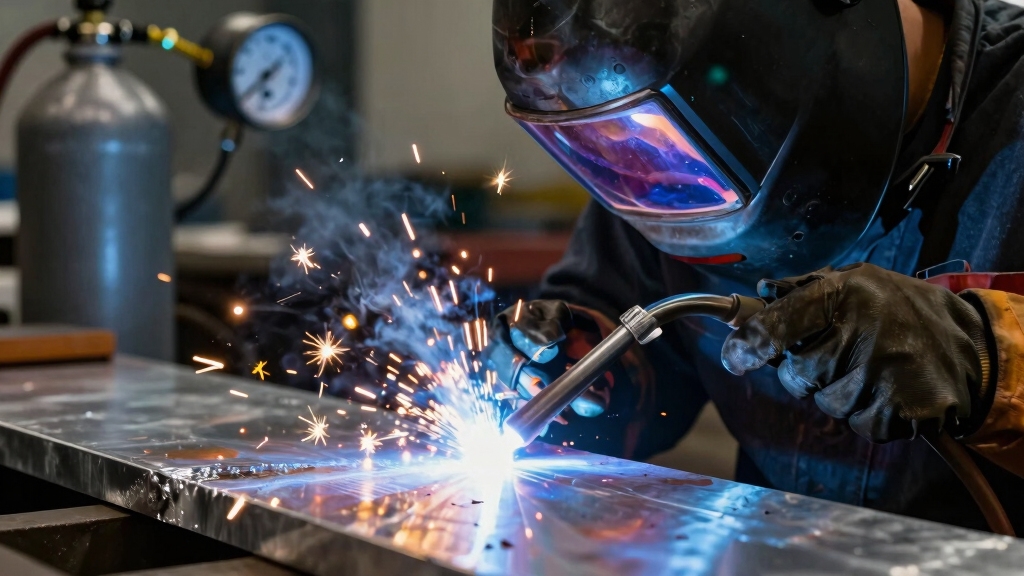
When it comes to welding aluminum plates thicker than 1/8 inch, using helium blends can make a significant difference. Why? Well, helium has a higher arc temperature which helps to overcome the high thermal conductivity of aluminum.
This means you can achieve deeper penetration and better heat transfer, making your welds stronger. Moreover, argon-helium mixtures combine the stability of argon with the heat and penetration benefits of helium, optimizing weld quality. The increased arc temperature from helium also improves arc fluidity, resulting in smoother, more consistent weld beads. Now, if you’re working with plates that are over 1/4 inch thick, it’s even more crucial to consider your helium content.
In fact, you might need to use a higher helium blend or even pure helium to ensure that you get adequate weld depth without needing to preheat the material. This approach allows for faster travel speeds and improved fusion, which is key to a successful weld. So, keep these tips in mind the next time you’re tackling thick aluminum plates!
A helium blend markedly enhances welding performance when working with thick aluminum plates.
You’ll benefit from helium’s superior thermal conductivity and specific heat, which transfer more heat to the molten pool. This raises arc energy, ensuring deeper penetration and stronger welds without increasing wire feed speed. Helium also reduces porosity by maintaining inert shielding, minimizing contamination. Its use in MIG welding can be optimized by understanding the heat distribution during the process.
Furthermore, it enables faster travel speeds, boosting productivity without compromising weld integrity. Its use is especially important in industries like aerospace and automotive, where aluminum’s weight reduction benefits are critical.
However, keep in mind helium’s high cost and limited availability.
When working with aluminum thicker than 4mm, incorporating helium blends becomes essential to achieve the necessary weld penetration and strength. Argon alone suits thinner gauges, but as thickness increases beyond 4mm, helium’s higher thermal conductivity allows deeper, broader welds.
For example, a 200A MIG welder can handle up to 8–10mm aluminum with helium mixes, while 250A machines effectively weld 5–6mm. On machines like the 200A synergic double pulse inverter, real-world welding of aluminum up to 8 mm at about 180 A has been reported, demonstrating practical thickness limits.
You’ll need full machine output and synergic settings, using the guideline of about one amp per thousandth of thickness plus 20%. Multiple passes and longer stick-out optimize spray transfer on thick plates. Avoid CO₂; stick to argon/helium blends for consistent, reliable penetration in thick aluminum.
Pro welders rely on helium mixes for large fillet welds and extensive aluminum sections. It is important to maintain proper ventilation and dust collection during welding to ensure safety and prevent accumulation of combustible aluminum dust.
Helium blends provide significant heat transfer advantages that make them preferable for welding thick aluminum plates.
Because helium delivers a higher arc temperature than pure argon, you get deeper penetration and more efficient melting. This overcomes aluminum’s high thermal conductivity. Proper shielding also helps preserve the protective oxide film on aluminum surfaces during welding.
This allows you to weld thick sections without preheating and at faster travel speeds, boosting productivity. Using DCEN with helium, you can achieve penetration often as deep or deeper than the weld width, ensuring a strong joint.
The arc profile also broadens, enhancing heat distribution over large surfaces for uniform fusion.
Achieve penetration as deep as the weld width on plates over 1/4 inch.
Weld faster with quicker puddle formation and travel speeds.
Utilize a broad, diffuse arc for even heat across thick material.
Maintain arc stability with 40-45 cfh flow rates of 99.995% helium.
Offset higher gas costs by reducing overall welding time on thick aluminum.
Although pure argon is commonly used as a shielding gas in aluminum MIG welding, you’ll often encounter arc instability due to surface oxides, moisture, and material variations.
Pure argon in aluminum MIG welding can lead to arc instability from surface oxides and moisture.
Adding active gas dopants like oxygen or micro-quantities of CO2 markedly improves arc stability. For instance, doping argon with 500 ppm oxygen stabilizes the arc, counteracting oxide layer disruptions without compromising the inert process.
Similarly, CO2 micro-additions enhance arc speed and bead shape by up to 25%, especially in pulsed GMAW. These active dopants mitigate arc deflection caused by uneven surface conditions or alloy differences.
You’ll need slight voltage adjustments to optimize arc length with doped gases, but these changes maintain weld quality and reduce defects. Incorporating active dopants guarantees a consistent, stable arc critical for reliable aluminum MIG welding. It is also essential to use Argon 4.6 purity gas with a dew point around -62 °C to minimize moisture and contamination risks that can lead to porosity or weld defects.
While adding active gas dopants can improve arc stability in aluminum MIG welding, not all gases are suitable for the process.
Avoid active gases like CO2, as they cause excessive oxidation and poor arc stability, leading to contaminated welds.
Also, steer clear of gases that produce ozone, a toxic byproduct that increases respiratory risks when inhaled with aluminum oxide particles. Ozone forms under UV radiation and oxygen produced by the welding arc, and bare aluminum surfaces increase UV reflection, intensifying ozone formation.
Using DC negative polarity gases is ineffective since they fail to clean the aluminum oxide layer.
Additionally, improper gas flow or low purity gases increase porosity and contamination.
To guarantee quality welds, exclude these gases and conditions:
It is also important to consider that aluminum welding generates fine aluminum oxide particles classified as hazardous dust that can penetrate deep into the lungs, posing health risks if inhaled.
When welding aluminum with MIG, selecting the right technique and gas flow is crucial to achieving ideal arc stability and weld quality. Use 100% argon for spray and pulse transfer on thinner aluminum (up to 12.5mm) to guarantee a clean, stable arc with minimal spatter. The shielding gas protects the weld pool from atmospheric contamination, ensuring the weld remains free of defects like porosity and oxidation.
For thicker sections, argon-helium mixtures (e.g., 75% Ar/25% He) increase heat input and penetration. Maintain gas flow between 15-25 CFH, adjusting for gas type to prevent turbulence or porosity.
| Welding Technique | Recommended Gas & Flow Rate |
|---|---|
| Spray Transfer | 100% Argon, 20-25 CFH |
| Pulse Transfer | 100% Argon, 20-25 CFH |
| Thick Aluminum Welds | 75% Argon/25% Helium, 18-22 CFH |
Since aluminum’s unique properties present specific hurdles, you need to adapt your welding approach accordingly. Its high thermal conductivity demands increased amperage and precise torch control to maintain penetration without warping. Using a welding tractor can ensure consistent travel speed and torch positioning, which helps prevent common defects caused by manual inconsistencies, especially on aluminum.
The tenacious oxide layer requires thorough mechanical removal to avoid inclusions and poor fusion. Porosity risks from hydrogen absorption call for meticulous cleaning and effective shielding gas coverage.
Additionally, hot cracking susceptibility means selecting appropriate filler metals like 4043 or 5356 and minimizing residual stresses. Finally, be aware of weld undermatching, which reduces local strength and increases fracture risk.
Manage rapid heat dissipation with higher heat input and steady torch positioning. Remove the stubborn Al2O3 oxide layer via wire brushing or sandblasting.
Prevent porosity by cleaning oils and ensuring proper gas shielding. Use suitable filler alloys to reduce hot cracking tendencies.
Understand undermatching effects to control weld zone strength and ductility.
Yes, you can recycle welding gas when MIG welding aluminum, especially in high-volume industrial settings.
Recycling systems capture and purify used shielding gas, reducing waste and cutting costs by up to 80%.
However, you’ll need advanced equipment costing over $10,000 and must maintain filters regularly to keep purity above 99%.
Keep in mind, recycling helium-argon mixtures is more challenging, and contamination risks can affect weld quality if not properly managed.
At higher altitudes, you’ll need to choose pure argon over helium blends for aluminum MIG welding because argon’s higher density better protects the weld puddle against air contamination.
You’ll also have to increase gas flow rates by 10-20% to compensate for reduced atmospheric pressure and gas dispersion.
Adjust your regulator settings accordingly, ensuring adequate shielding to prevent porosity and maintain weld quality despite thinner gas density and faster gas dissipation.
Imagine controlling a river’s flow with pinpoint accuracy. That’s what a pressurized Thorpe Tube flowmeter-regulator offers for aluminum MIG welding.
You’ll want this type because it reduces backpressure sensitivity, ensuring steady argon or argon-based gas flow. Its precision engineering and real-time adjustments let you maintain ideal shielding, critical for clean, strong aluminum welds.
Durable construction and easy-read gauges keep your workflow smooth and reliable throughout the job.
You won’t find eco-friendly gas alternatives to argon that match its shielding quality for aluminum MIG welding.
Instead, focus on using argon blends to reduce fumes and optimize flow rates to minimize waste.
Clean your metal thoroughly to lower fume generation.
Switching to TIG welding or consulting suppliers for specific low-emission mixes can help, but argon remains essential for maintaining weld integrity and minimizing environmental impact.
Gas nozzle designs directly influence your aluminum weld quality by controlling shielding gas coverage and flow.
Cylindrical nozzles guarantee even gas distribution, minimizing spatter and improving seam consistency.
Conical nozzles accelerate gas flow, reducing turbulence and atmospheric contamination.
Selecting the proper nozzle length and bore size also optimizes thermal management and spatter protection, maintaining stable arc conditions and better weld integrity.
Choosing the right design maximizes shielding efficiency for cleaner, stronger aluminum welds.
Think of welding aluminum like tuning a delicate instrument. Using 100% argon is your steady note, ensuring a clean, stable arc.
When you add helium, it’s like amplifying the sound for thicker plates, boosting heat and penetration. Avoid active gases that disrupt the harmony.
By mastering shielding gas choices and flow rates, you’ll overcome aluminum’s quirks and strike the perfect balance every time, welding with precision and confidence.