Phone:
(701)814-6992
Physical address:
6296 Donnelly Plaza
Ratkeville, Bahamas.

Phone:
(701)814-6992
Physical address:
6296 Donnelly Plaza
Ratkeville, Bahamas.

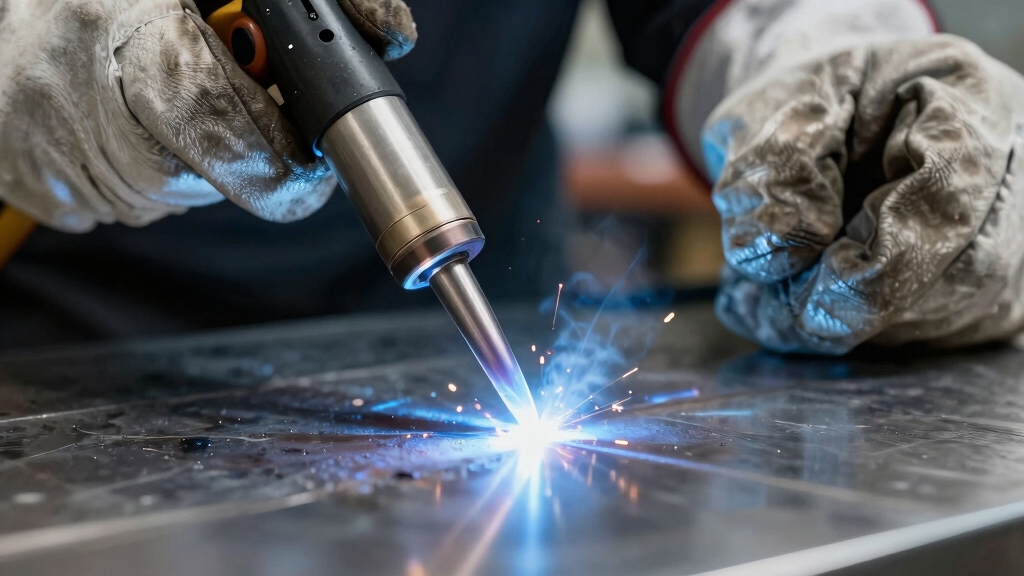
You use high-purity argon gas for TIG welding because it creates a stable, inert shield that protects the weld pool from oxygen and nitrogen contamination.
Argon’s inert properties prevent oxidation and guarantee smooth, precise welds across steel, aluminum, and reactive metals like titanium.
Sometimes, helium is added to increase heat and penetration on thicker metals. Different argon blends suit various alloys and welding needs, so understanding these choices can optimize your weld quality and efficiency.
Although several gases can be used for TIG welding, argon remains the go-to choice because it provides a stable, focused arc and effectively shields the weld pool from oxygen and nitrogen contamination.
Argon is preferred for TIG welding due to its stable arc and superior protection against contamination.
You’ll find that argon’s inert properties prevent oxidation and nitriding, ensuring high-quality, defect-free welds.
It works well across various metals, including steel, stainless steel, aluminum, and copper.
For titanium, argon’s purity must reach 99.995% with oxygen limited to 2-20 ppm to avoid reactivity issues.
When setting flow rates, you’ll typically use 10 to 35 cubic feet per hour, adjusted based on welding conditions.
Using argon, you get consistent arc stability, excellent shielding, and clean welds, making it indispensable for precision TIG welding tasks.
Its high ionization energy enables smooth arc initiation and consistent maintenance, minimizing fluctuations for superior weld quality.
When you’re welding materials like mild steel, carbon steel, and medium-thickness metals, it’s a good idea to go with pure argon.
Why? Well, it helps to create a stable, focused arc and ensures you get those clean welds that you want.
Now, if you’re working with titanium, pure argon becomes even more crucial.
Its inert properties really shine here, especially because titanium welding requires extremely low oxygen levels.
This is key to preventing contamination.
Additionally, using 100% argon helps maintain excellent arc stability and protects the molten metal from oxidation during welding.
Pure argon is frequently the go-to shielding gas in TIG welding when you need a stable, focused arc and reliable protection against atmospheric contamination.
You’ll use pure argon primarily for welding mild steel, carbon steel, and medium-thickness stainless steel where arc stability and weld cleanliness are critical.
It’s ideal for producing smooth, precise weld beads without oxidation or nitrogen contamination.
When welding aluminum or copper alloys, pure argon also provides excellent arc control, though you might add helium for thicker sections.
For reactive metals like titanium, pure argon is essential since even minimal impurities can cause weld defects.
You should set flow rates between 10 to 35 cubic feet per hour, adjusting for environmental conditions to maintain consistent shielding and optimal weld quality.
Pure argon’s inert properties guarantee strong, defect-free welds across various materials.
However, maintaining high gas purity is crucial to prevent contamination and ensure weld integrity when using pure argon.
When welding titanium, selecting argon as the shielding gas guarantees protection against contamination that can compromise weld integrity.
Titanium is highly reactive at elevated temperatures, so pure argon with 99.995% purity and oxygen levels below 20 ppm is essential.
This assures the weld remains free from oxidation and nitriding, which weaken the joint. You’ll benefit from:
Using a non-consumable tungsten electrode helps maintain arc stability and quality during the welding process.
When you add helium to your TIG shielding gas, it really amps up the arc’s heat output and broadens its characteristics. This means you get improved penetration, especially when working with thicker materials. Pretty cool, right?
Thanks to this enhancement, you can achieve faster welding speeds and enjoy better weld pool fluidity—particularly when you’re dealing with aluminum and copper. It’s definitely a game-changer in those cases!
But here’s something to keep in mind: helium has a lighter density, which means you’ll need higher flow rates. This can lead to increased gas consumption and, of course, that can affect your costs. So, it’s a trade-off you might want to consider.
For optimal aluminum TIG welding, pairing helium shielding gas with zirconiated tungsten electrodes can significantly improve arc stability and weld quality.
Increasing helium content in TIG shielding gas markedly enhances arc temperature and weld penetration, giving you greater control over heat input. This improvement is essential when working with metals that require deep, precise welds.
Here’s how helium boosts your TIG welding performance:
Keep in mind, you’ll need increased flow rates with helium due to its lower density, which impacts shielding efficiency. Inverter welding machines provide precise heat input control that complements helium’s benefits by allowing rapid current adjustments for stable arcs and improved weld quality.
Though argon provides a stable arc, adding helium to your TIG shielding gas noticeably enhances arc characteristics by increasing temperature and broadening the arc profile.
This higher thermal output improves weld pool fluidity and allows deeper penetration, especially beneficial on thick or high-conductivity metals like aluminum and copper.
The broader arc distributes heat more uniformly, reducing the risk of burn-through while enabling faster welding speeds.
You’ll also experience improved arc stability when using argon-helium blends, as helium’s lighter atomic mass energizes the plasma without sacrificing control.
Typical mixtures range from 25% to 50% helium, balancing enhanced heat input with manageable arc behavior.
Incorporating helium consequently boosts TIG welding performance by refining arc dynamics, optimizing weld quality, and expanding your capability across diverse metals without compromising the inert protection argon provides.
Additionally, selecting the correct polarity type is crucial to maximize the benefits of helium-enhanced shielding gases in TIG welding.
Adding helium to your TIG shielding gas requires you to adjust flow rates carefully, as helium’s lower density demands higher volumes to maintain effective arc coverage.
To optimize performance, consider these flow rate factors:
Additionally, the choice of shielding gas directly affects plasma arc temperature and cutting precision, so understanding gas composition effects is critical when adjusting flow rates.
When selecting argon-helium mixes for TIG welding, you’ll find that ratios like 75% argon/25% helium or balanced blends between 50% and 75% of each offer ideal performance across various metals.
Ideal argon-helium TIG mixes range from balanced blends to 75% argon for versatile metal welding performance
For aluminum and copper alloys, higher helium content, around 50% or more, increases arc heat, enhancing penetration and weld pool fluidity on thicker sections.
Stainless steel benefits from blends near 75% argon/25% helium, balancing arc stability with added heat to improve bead shape and depth.
Steel generally favors higher argon percentages for consistent arc control, but adding helium can boost heat input when welding thicker or highly conductive metals.
Precise control of heat input during TIG welding is crucial to prevent distortion and maintain weld quality, especially on alloys sensitive to temperature changes.
If you want to enhance heat input and improve weld bead quality on stainless steel, using argon-hydrogen blends can be highly effective. Adding up to 5% hydrogen to argon increases arc heat, which improves penetration and weld bead width without compromising weld integrity. This blend also aids in oxide removal, resulting in cleaner, more attractive welds.
When using argon-hydrogen blends for stainless steel, consider these key points:
This blend provides a hotter, wider arc ideal for precision stainless steel TIG welding. Unlike 75/25 argon-CO₂ mixtures, argon-hydrogen blends avoid carbide precipitation and help preserve corrosion resistance.
Argon-nitrogen mixes frequently enhance the welding of austenitic and duplex stainless steels by compensating for nitrogen lost during the welding process.
When you use an argon shielding gas blended with 1-10% nitrogen, you help maintain the weld pool’s nitrogen content, which is critical for preserving the desired microstructure and corrosion resistance.
Without this addition, the weld can become ferrite-rich, reducing toughness and corrosion properties.
Nitrogen also stabilizes the arc and improves bead appearance.
This mix is especially beneficial when welding super-duplex stainless steels, where nitrogen balance directly affects mechanical strength.
By selecting an argon-nitrogen blend, you assure alloy integrity and optimize weld quality.
This makes it a precise choice for critical stainless steel applications that demand both strength and corrosion resistance.
Although selecting the proper TIG shielding gas depends on several factors, the type of metal you’re welding plays a pivotal role in the decision.
To optimize weld quality and arc stability, consider these guidelines:
When setting flow rates for TIG welding, you must balance shielding effectiveness with gas consumption to maintain weld quality.
Typically, flow rates range between 10 and 35 cubic feet per hour, depending on material type, joint configuration, and environmental conditions.
Too low a flow risks oxygen and nitrogen contamination, causing porosity and embrittlement, while excessive flow wastes gas and can create turbulence, drawing in atmospheric gases.
Always make certain your shielding gas meets stringent purity standards. Argon for titanium, for example, requires 99.995% purity with oxygen levels below 20 ppm to prevent weld defects.
Use calibrated flowmeters to monitor delivery accurately and regularly inspect gas delivery equipment for leaks or contamination.
Maintaining stable gas flow and high purity is essential to achieve consistent, defect-free TIG welds.
Selecting the best TIG shielding gas means weighing the trade-offs between cost and weld performance.
You want to optimize your gas choice based on material type, weld quality, and budget constraints.
Consider these key points:
1. Material Compatibility and Arc Characteristics: Pure argon offers excellent arc stability and is cost-effective for steel and titanium.
Helium or argon-helium mixes increase heat input and penetration on thicker or high-conductivity metals but at higher expense.
2. Flow Rate and Gas Consumption: Helium’s lower density demands higher flow rates, increasing gas usage and cost.
Argon requires less, making it economical for manual welding.
3. Alloy-Specific Additives: Small additions of hydrogen or nitrogen enhance weld quality on stainless steels.
However, they raise costs and require precise control to avoid defects.
You’ll find that gas pressure directly influences TIG welding arc stability by controlling shielding gas flow.
If pressure’s too low, the weld pool gets exposed to oxygen and nitrogen, causing contamination and erratic arcs.
Too high, and the gas flow becomes turbulent, destabilizing the arc and wasting gas.
Maintaining peak pressure guarantees a consistent, focused arc, protecting the weld area and improving bead quality.
Adjust flow rates carefully for material and position.
Think of TIG shielding gases as silent guardians, invisible but essential. When handling them, you must guarantee proper ventilation to prevent asphyxiation.
Always store cylinders upright and secure them to prevent tipping. Use regulators designed for specific gases, and inspect hoses for leaks regularly.
Wear protective gloves and eye protection. Never expose cylinders to heat or sparks. These precautions keep you safe while maintaining the integrity of your welds.
You technically can’t perform TIG welding without shielding gas, even in emergencies.
The inert gas like argon or helium protects the weld pool from contamination by oxygen and nitrogen, preventing oxidation and porosity.
Without shielding gas, the weld quality severely degrades, causing weak, brittle joints.
If you lack gas, it’s safer to delay or use a different welding method rather than risk compromised welds or equipment damage.
Windy weather weakens the weld’s protective shield, whisking away TIG shielding gas and risking oxidation.
You’ll need to increase flow rates or use gas lenses to guard against gusts. High humidity hampers arc stability, causing inconsistent coverage and contamination.
Dust and drafts disrupt the gas blanket, so you should ensure clean, controlled conditions.
Adjust your shielding gas strategy to maintain weld integrity amid environmental disturbances.
To switch between TIG shielding gases, you’ll need a multi-gas regulator with selectable pressure settings for each gas type.
Use compatible gas cylinders with proper fittings and hoses rated for inert gases. Your torch should have a gas lens to guarantee stable flow when changing gases.
Additionally, purge the torch and lines between switches to prevent contamination. Monitoring flow meters helps maintain accurate rates for each gas during welding.
Choosing the right gas for TIG welding is like picking the perfect lens to see every detail clearly. Pure argon offers excellent control for most metals, while helium boosts heat and penetration.
Argon blends with hydrogen or nitrogen tailor welds on stainless steel for strength and finish. By adjusting flow rates and ensuring gas purity, you’ll optimize weld quality. Balance cost and performance wisely to achieve precise, reliable results every time.