Phone:
(701)814-6992
Physical address:
6296 Donnelly Plaza
Ratkeville, Bahamas.

Phone:
(701)814-6992
Physical address:
6296 Donnelly Plaza
Ratkeville, Bahamas.

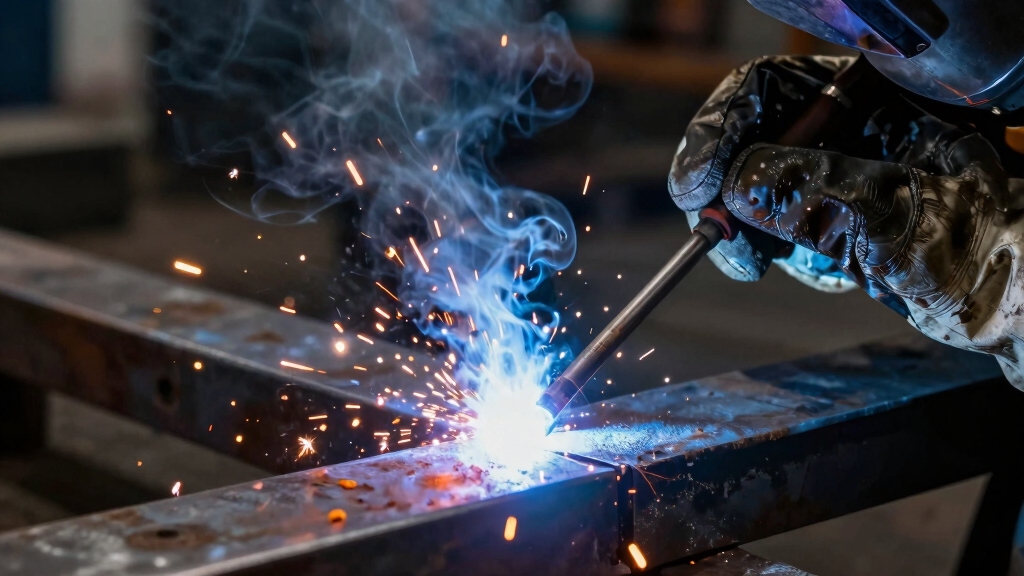
You cause welding spatter mainly by using incorrect parameters like improper voltage, amperage, or wire feed speed, which destabilize the molten weld pool.
Contaminated surfaces with oil or rust and unsuitable shielding gas also disrupt arc stability. Poor torch angles and worn consumables create erratic metal transfer, increasing spatter.
Understanding how these factors interact and adjusting your technique and equipment precisely can markedly reduce spatter and improve weld quality. Exploring these details will enhance your welding results.
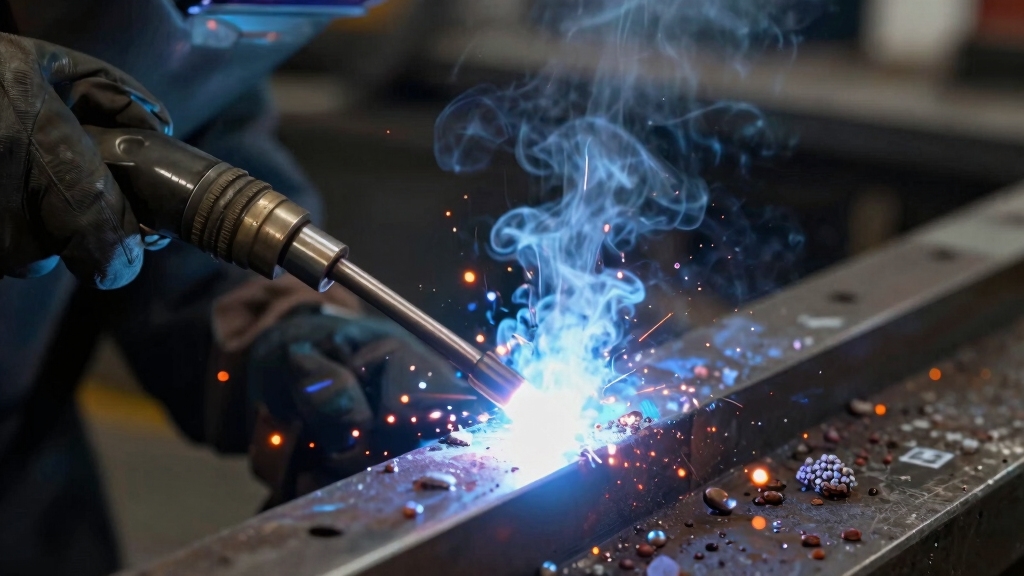
When welding parameters are set incorrectly, you risk destabilizing the molten weld pool and causing spatter.
Incorrect welding settings can destabilize the molten weld pool, leading to excess spatter and poor weld quality.
An imbalance between voltage and amperage disrupts the wire transfer process. Specifically, low voltage or excessive amperage triggers arc explosions that eject molten droplets.
If amperage is too high, the wire fails to melt uniformly, increasing spatter. Similarly, incorrect wire feed speed creates arc instability.
Too fast or too slow, it forces you to recalibrate for equilibrium. You also need to maintain a consistent arc length.
A shallow or fluctuating arc length undermines pool stability and elevates spatter levels. Finally, irregular travel speed produces uneven weld pool dynamics, promoting spatter formation.
Precisely adjusting these parameters is essential for achieving a stable arc and minimizing spatter. Using the correct welding polarity also significantly reduces spatter and improves arc stability.
Adjusting welding parameters alone won’t eliminate spatter if your materials and surfaces are contaminated.
When base metals carry oil, rust, or grease, these impurities disrupt the molten pool’s flow, causing irregular metal transfer and spatter ejection.
Similarly, low-quality filler materials with additives fail to melt uniformly, creating lumps that increase spatter.
Protective coatings like galvanized or painted surfaces vaporize under heat, rapidly expanding gases that disturb the weld pool and expel droplets.
Contaminated consumables, such as worn contact tips or damaged nozzles, further destabilize the arc and promote spatter formation.
To minimize spatter, you must guarantee clean, high-quality materials and maintain consumables in peak condition.
Contamination directly impairs molten metal stability and arc consistency during welding.
Additionally, zinc vaporization from galvanized coatings produces zinc oxide fumes that can compromise weld quality and increase spatter.
Did you know that the type of shielding gas you choose can really affect how stable your arc is and how much spatter you see? For instance, pure CO₂ can create harsher arcs compared to argon-CO₂ blends, which tend to be more forgiving. It’s pretty interesting how these choices can make such a difference!
Now, let’s talk about flow rates. Keeping that ideal flow rate is super important. If it’s too low, you risk letting in atmospheric contamination, which can increase spatter.
On the flip side, if it’s too high, you might create turbulence that disrupts the weld pool. Small additions of CO₂ or O₂ to argon improve arc stability and spatter reduction, leading to better weld quality.
How does the choice of shielding gas influence welding spatter? The type of shielding gas directly affects arc stability and spatter generation.
When you select the wrong gas, you risk creating a harsh, unstable arc that ejects molten droplets. Consider these impacts:
Choosing the appropriate shielding gas tailored to your material and welding process optimizes arc stability. This minimizes spatter and improves weld quality.
Additionally, argon’s inert shielding properties help prevent oxidation and porosity, further reducing spatter and ensuring cleaner weld beads.
Frequently, insufficient shielding gas flow rates cause increased welding spatter by allowing ambient air to infiltrate the weld zone.
When the flow rate drops below ideal levels, typically under 15 cubic feet per hour, you let oxygen and nitrogen mix with your shielding gas, disrupting arc stability.
This contamination oxidizes the molten metal, generating spatter and compromising weld quality.
Conversely, excessive flow rates create turbulence, drawing in air and causing erratic arcs.
You must balance flow precisely to maintain a stable, protective gas envelope around the arc.
Additionally, your choice of shielding gas composition interacts with flow rates.
For example, argon-CO₂ blends require careful regulation to prevent spatter.
Monitoring and adjusting flow rate according to material and weld conditions guarantees minimized spatter and consistent weld integrity.
Pure argon at recommended flow rates of 20–25 CFH is ideal for minimizing spatter and maintaining arc stability in aluminum MIG welding due to its superior arc control.
Although welding technique and material choice greatly impact spatter, defects in your equipment often play an equally critical role.
Faulty or worn components destabilize the arc and disrupt molten metal flow, directly increasing spatter formation. To minimize this, focus on:
Regular inspection and timely replacement of these elements guarantee a stable arc and smooth metal transfer. Additionally, maintaining precise control over welding current using inverter welding technology can significantly reduce spatter by stabilizing the arc.
Maintaining the right torch angle is crucial for achieving a stable arc and minimizing spatter. If you don’t keep that angle consistent, you could run into issues. Plus, your welding technique plays a huge role too!
Think about it: steady hand positioning and a controlled travel speed can directly influence how the weld pool behaves.
When you start to deviate from these parameters, that’s when problems arise. You might notice increased arc instability, which often leads to more spatter than you’d like.
So, staying mindful of your technique and angle can really make a difference in your results! Using the push technique can help reduce spatter by improving gas shielding and bead aesthetics.
Proper torch angle plays a critical role in controlling welding spatter by maintaining arc stability and directing the molten weld pool effectively. Holding the torch too upright or too flat destabilizes the arc, causing erratic metal transfer and increased spatter.
You need to optimize torch positioning to guarantee consistent weld quality. Focus on these three key aspects:
Using proper nozzle positioning (about 1/8 inch recess) also helps maintain bead quality and minimize spatter during welding.
Consistently maintaining an ideal welding technique markedly reduces spatter by stabilizing the arc and controlling molten metal flow.
You must keep a steady hand and maintain a uniform torch angle to prevent arc disturbances that lead to spatter. Erratic movements or inconsistent travel speed cause irregular weld pools, promoting droplet ejection.
Additionally, avoid excessive travel speed, which destabilizes the arc and increases spatter formation. Proper hand positioning minimizes turbulence in the molten pool, ensuring smooth metal transfer.
Refining your technique through practice helps you achieve consistent wire feed and arc length, vital for stable welding conditions. Controlling current amperage is also crucial as extremes can cause spatter, burn-through, or weak fusion.
Although welding parameters and technique play critical roles, the inherent material composition directly impacts spatter formation by influencing the behavior of the molten weld pool.
You’ll notice that different metals melt and flow uniquely, affecting droplet detachment and transfer stability.
For example:
Understanding these distinct metallurgical properties helps you anticipate spatter tendencies. This enables you to adjust your welding approach or material choice accordingly for cleaner welds.
Additionally, the heat input during welding can alter the grain size and impact toughness of the heat-affected zone, which indirectly influences spatter formation and weld quality through changes in material behavior under heat. heat input effects
When welding parameters aren’t balanced correctly, you’ll notice the molten weld pool becomes unstable, increasing spatter markedly.
If voltage is too low or amperage too high, the arc destabilizes, causing erratic metal transfer and spatter formation.
Excessive amperage can trigger arc explosions, ejecting droplets uncontrollably.
Incorrect wire feed speed disrupts the arc’s stability, so you must synchronize it with voltage and amperage settings.
Maintaining a consistent arc length is vital; a shallow or inconsistent arc length leads to instability and spatter.
Likewise, uneven torch travel speed creates irregular weld pools, fostering spatter.
You should carefully adjust these parameters together, as their interplay directly influences metal transfer modes and arc stability, minimizing spatter and improving weld quality.
If welding surfaces and consumables aren’t properly cleaned and maintained, you’ll encounter significant spatter issues.
Contaminants like oil, rust, and grease on base metals disrupt the smooth flow of molten metal, causing irregular ejections.
Oil, rust, and grease on metals hinder molten metal flow, leading to uneven weld spatter.
Similarly, protective coatings such as galvanized or painted layers vaporize under heat, rapidly expanding gases that disturb the weld pool.
Additionally, consumables like worn contact tips or damaged nozzles cause arc instability, further increasing spatter.
Key contributors include:
Addressing these factors precisely reduces spatter by maintaining weld pool stability and consistent metal flow during welding.
Because welding parameters directly influence arc stability and molten pool behavior, you must carefully calibrate voltage, amperage, wire feed speed, arc length, and travel speed to minimize spatter.
Start by adjusting voltage and amperage to avoid low voltage or excessive amperage, which destabilize the molten pool and cause arc explosions.
Set wire feed speed to match these values precisely, preventing arc instability from speeds that are too high or low.
Maintain a consistent, appropriate arc length; too long or varying arcs increase spatter by disrupting metal transfer.
Finally, control your travel speed to guarantee uniform weld pool formation; inconsistent speed leads to irregularities and spatter.
Mastering welding technique plays a crucial role in reducing spatter formation, as subtle adjustments in torch angle, hand movements, and travel speed directly influence arc stability and molten pool control.
Mastering welding technique is essential to control arc stability and minimize spatter through precise torch angle and steady hand movements.
To optimize your welding practice, focus on these critical actions:
Yes, spatter can damage your welding equipment over time.
When molten droplets repeatedly hit contact tips, nozzles, or torch components, they cause wear, clogging, and deformation.
This leads to inconsistent arc stability and poor weld quality.
If you don’t clean or replace affected parts regularly, spatter buildup accelerates equipment degradation, increasing maintenance costs and downtime.
To protect your gear, optimize your welding parameters and maintain consumables diligently.
Think of welding spatter as microscopic landmines in the air.
When you inhale these tiny metal particles, you risk serious respiratory issues, including metal fume fever, bronchitis, and long-term lung damage.
The toxic fumes can also irritate your eyes and skin.
To protect yourself, you need proper ventilation, respiratory protection, and strict adherence to safety protocols, reducing exposure to these hazardous airborne contaminants during welding tasks.
Yes, you need to remove spatter before painting welded joints.
Spatter creates uneven surfaces and poor adhesion points, leading to paint peeling or corrosion underneath.
Proper cleaning guarantees a smooth, contaminant-free surface, which improves coating durability and appearance.
Use grinding or wire brushing methods to eliminate spatter effectively.
Neglecting this step compromises the protective quality of the paint and shortens the lifespan of your welded structure.
When ambient temperature drops, you’re walking on thin ice with welding spatter.
Cold surroundings cool the weld pool rapidly, causing unstable molten metal transfer and increased spatter.
Conversely, high temperatures can cause overheating, leading to erratic arcs and spatter.
You must adjust welding parameters like voltage, amperage, and travel speed to maintain arc stability.
Proper preheating and controlling environmental conditions help you minimize spatter effectively in varying ambient temperatures.
Yes, you should always wear flame-resistant clothing, gloves, and a welding helmet with a proper shade to protect against hot spatter.
Make sure your workspace is free of flammable materials since spatter can ignite them.
Use welding curtains to shield others nearby.
Maintain equipment to prevent excessive spatter production, and keep a fire extinguisher within reach.
Proper ventilation is essential to avoid inhaling fumes generated by spatter and welding processes.
You might think spatter is just an unavoidable byproduct of welding, but incorrect parameters and poor technique make it a preventable nuisance. While contaminated materials and faulty equipment amplify spatter, precise adjustments and clean surfaces drastically reduce it.
By mastering your torch angle, shielding gas, and settings, you transform a chaotic mess into a clean, efficient weld. The difference between frustration and finesse lies in the details you control.