Phone:
(701)814-6992
Physical address:
6296 Donnelly Plaza
Ratkeville, Bahamas.

Phone:
(701)814-6992
Physical address:
6296 Donnelly Plaza
Ratkeville, Bahamas.

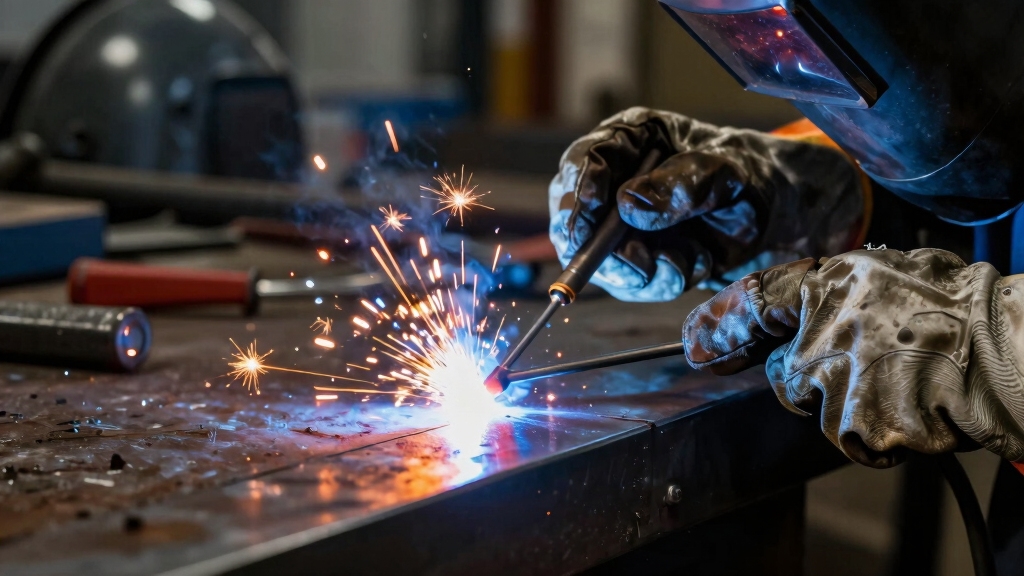
In welding, electrodes conduct electrical current to create and maintain the arc that melts metals for fusion.
You’ll find electrodes consist of a metal core matching the base material and a flux coating that stabilizes the arc and shields the molten weld from contamination.
Selecting the right electrode optimizes penetration, mechanical strength, and bead formation while preventing defects like cracking or porosity.
Understanding electrode types, coatings, and classifications is essential for achieving reliable, high-quality welds.
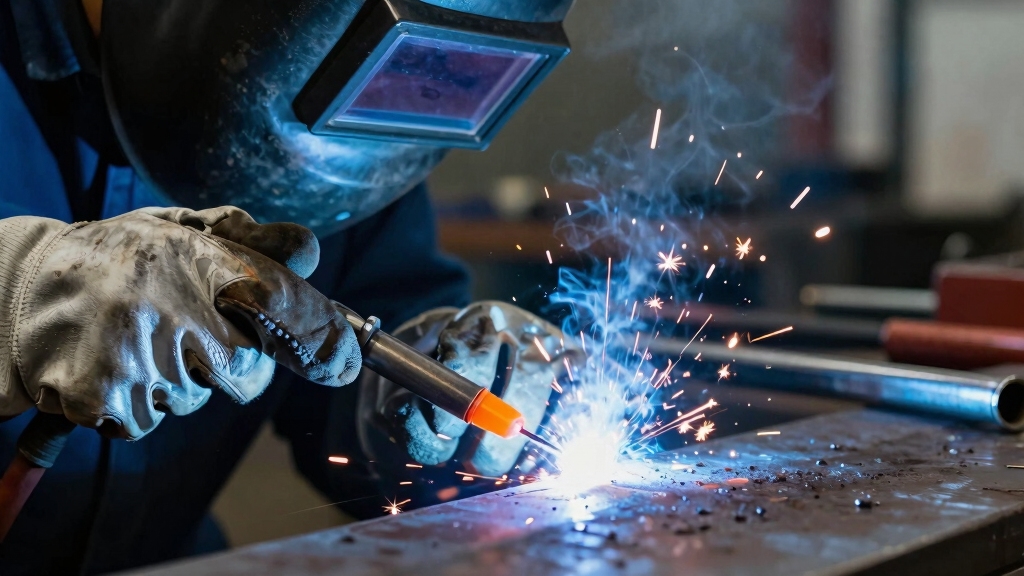
Understanding welding electrodes is essential because they directly influence the quality and integrity of welds.
You rely on electrodes composed of a metal core wire and a flux coating, which together manage electrical flow and protect the weld pool.
The metal core typically matches your base material, like mild steel or stainless steel, to guarantee compatibility and strength.
The flux coating plays a critical role by stabilizing the arc and shielding the molten weld from atmospheric contamination.
Without the correct electrode, you risk poor penetration, weak joints, or excessive slag.
Proper electrode selection optimizes current flow, weld bead formation, and mechanical properties.
Grasping what welding electrodes are and their function helps you maintain control over the welding process and achieve structurally sound, defect-free joints.
Electrode selection also involves understanding polarity requirements to optimize heat distribution and weld quality.
Welding electrodes are pretty interesting! They’ve a core metal that varies from steel and cast iron to aluminum, and it’s all about making sure it matches the base material for compatibility. This ensures a solid bond during the welding process.
Now, let’s talk about the flux coating. It’s not just there for show; it includes components like cellulose, titanium dioxide, and metal carbonates. These ingredients help control arc stability, manage slag formation, and provide gas shielding—pretty crucial aspects of welding!
And don’t forget about special alloy additions! Things like ferromanganese and calcium fluoride play a key role in enhancing deoxidation and improving weld quality. So, every element in the electrode has a purpose, working together to create strong, reliable welds.
For example, electrodes with a low-hydrogen flux coating help reduce the risk of cracking and improve the overall toughness of the weld deposit.
The core metal of welding electrodes determines their compatibility with various base materials and directly affects the mechanical properties of the weld. Core metals typically include steel, cast iron, copper, and aluminum. Each is selected to match the base metal’s chemical and mechanical characteristics. Using the correct core metal guarantees prime fusion and strength in the weld joint. Selecting the appropriate wire classification based on core metal ensures optimal mechanical strength and corrosion resistance for specific welding applications.
| Core Metal Type | Typical Application |
|---|---|
| Steel | General fabrication, structural |
| Cast Iron | Repair and joining castings |
| Copper | Electrical and corrosion resistance |
| Aluminum | Lightweight, non-ferrous welding |
Precision in welding hinges markedly on the flux coating, which plays a critical role in stabilizing the arc and protecting the molten weld pool.
You’ll find that flux coatings combine several components, each tailored to enhance weld quality and arc stability. Key elements include:
Understanding these components helps you select electrodes that deliver optimal electrical conductivity, slag formation, and weld integrity. Proper storage and handling of electrodes are essential to prevent moisture absorption and flux deterioration, which can compromise weld quality due to increased diffusible hydrogen.
Several specialized alloy additions markedly influence the performance and suitability of welding electrodes for various applications.
You’ll find elements like ferromanganese and ferrosilicon added to electrodes to act as deoxidizers. They prevent weld metal porosity and ensure sound mechanical properties.
Titanium dioxide (TiO2) enhances arc stability and slag fluidity, improving weld bead appearance and ease of slag removal.
Calcium fluoride boosts slag fluidity and produces a protective shielding gas, aiding in weld pool protection.
These alloying additions tailor the electrode’s behavior, controlling penetration depth, weld metal toughness, and resistance to hydrogen-induced cracking.
When selecting electrodes, you must consider these alloy constituents to match the base metal and desired weld characteristics precisely.
This ensures peak strength, ductility, and corrosion resistance in your welded joints.
Electrodes like 6013 feature a rutile coating that provides a stable arc and smooth slag removal, making them ideal for versatile welding applications.
Understand that welding electrodes come in distinct types tailored for specific applications. Each is designed to optimize performance based on the welding process and base material.
You need to select electrodes precisely to assure weld integrity and efficiency. Key types include:
Proper electrode selection also involves considering the electrode condition to prevent arc instability and ensure high-quality welds.
Because electrode coatings directly affect arc stability, slag formation, and weld metal protection, they play a vital role in determining welding performance.
When you select an electrode, the coating composition—such as cellulose, rutile (titanium dioxide), or basic flux—modifies the arc’s behavior and weld quality.
Cellulose coatings generate a gaseous shield that enhances arc stability and produces deep penetration, ideal for vertical or overhead welding.
Rutile coatings improve slag fluidity and facilitate smooth arc operation with easy slag removal.
Basic coatings, enriched with calcium fluoride and carbonates, yield low-hydrogen welds with superior toughness and ductility, essential for structural applications.
Proper electrode selection and maintenance ensure consistent current flow and minimize resistance, which is critical for achieving strong, consistent welds.
When you look at a welding electrode classification, you’ll notice that each digit tells you something important. For instance, it reveals details about the type of current you’ll be using, the electrode’s tensile strength, and the composition of its coating. It’s pretty fascinating how much information is packed into those numbers!
Understanding these codes is really key. It helps you choose the right electrode based on your specific welding needs, like how deep you want the penetration to be and how the slag behaves. By decoding the classification, you can ensure that the electrode is compatible with your base material and the welding parameters you’re working with. So, it’s a worthwhile skill to have!
For example, selecting an electrode like E7018 for vertical stick welding ensures optimal penetration and minimal slag issues due to its low iron powder content and fast freeze rate, which is essential for vertical welding positions.
Although welding electrode codes may seem complex at first, they provide essential information that helps you select the right electrode for your specific application.
The AWS classification system breaks down electrode codes into distinct elements, giving you a clear understanding of performance and compatibility.
Here’s how to read the code:
Different electrodes, such as 6011 and 6013, have unique penetration and arc characteristics that influence their best use cases and weld quality.
Understanding current and coating types is crucial for selecting the right welding electrode, as these factors directly influence arc stability, penetration, and weld quality.
Electrodes are classified by their coating composition and suitable current type: AC, DC+, or DC−. For instance, cellulose-potassium coatings (E6010) excel with DC+ for deep penetration.
Rutile coatings (E6013) offer a smooth arc and work well on AC or DC.
Heavy coatings containing titania and ferromanganese control slag formation and arc ionization, enhancing weld bead appearance and mechanical properties.
The digit following “E” in electrode codes indicates both coating type and current compatibility. This guides you to match the electrode’s flux chemistry with your base material and welding conditions to optimize performance and minimize defects.
Some electrodes, such as 7018, require strict moisture control and proper storage to maintain low-hydrogen properties and prevent weld defects.
Selecting the right welding electrode hinges on matching its composition and characteristics to your project’s specific requirements. You must analyze the base metal type, thickness, and desired weld properties to guarantee compatibility.
Here’s a focused approach to guide your choice:
When you choose a welding electrode, several critical factors directly impact both the weld quality and the electrode’s performance. You must consider base metal compatibility, electrode coating type, welding position, and current type. These determine penetration depth, slag removal, and mechanical properties of the weld.
| Factor | Impact on Weld Quality | Electrode Consideration |
|---|---|---|
| Base Metal | Prevents cracking, guarantees fusion | Match electrode metal core |
| Welding Position | Influences slag removal, bead shape | Use suitable coating type |
| Current Type | Affects arc stability, penetration | Choose AC or DC compatible electrode |
Selecting with precision guarantees peak tensile strength, ductility, and corrosion resistance. This minimizes defects and rework.
You should store welding electrodes in a dry, controlled environment to prevent moisture absorption, which can cause weld defects.
Use sealed containers or electrode ovens at recommended temperatures, especially for low-hydrogen types like E7018.
Avoid exposure to humidity and condensation by keeping electrodes in original packaging until use.
Maintain proper storage conditions to preserve coating integrity and guarantee consistent arc performance and weld quality.
You should know that welding electrodes can absorb up to 3% moisture, causing dangerous hydrogen-induced cracks.
Always wear insulated gloves to avoid electric shocks. Use eye protection with the right shade to prevent arc eye.
Handle electrodes with dry tools and store them in sealed containers to keep moisture out.
Maintain proper ventilation to avoid inhaling toxic fumes.
Never touch electrodes with bare hands during welding to guarantee safety.
You’ll find that larger electrode sizes increase welding speed because they deposit more filler metal per unit time. However, they also raise heat input, which can cause more distortion or burn-through on thin materials.
Conversely, smaller electrodes produce lower heat input, offering better control and less risk of overheating, but welding takes longer.
Around 70% of welding defects stem from arc instability. To fix this, you should make sure your electrode is clean and dry. Moisture causes erratic arcs.
Maintain proper arc length; too long or short disrupts stability. Check your current and polarity settings to match the electrode type.
Also, clean the base metal to remove rust or contaminants.
Finally, confirm your electrode’s flux coating is intact. Damaged coatings lead to inconsistent arcs.
Electrode expiration degrades weld quality by compromising flux coating integrity, leading to unstable arc and inconsistent current flow.
You’ll notice increased porosity, slag inclusion, and weak mechanical properties in the weld.
Moisture absorption in expired electrodes causes hydrogen-induced cracking.
To maintain performance, always inspect storage conditions and avoid using electrodes beyond their shelf life.
Expired consumables reduce weld strength, toughness, and overall reliability.
Now that you understand welding electrodes inside and out, choosing the right one becomes your compass in the welding journey.
Remember, the electrode’s composition, coating, and classification aren’t just details; they’re the gears driving weld quality and strength.
Like a key fitting perfectly into a lock, selecting the correct electrode guarantees your project holds firm under pressure. Master this, and you’ll weld with confidence and precision every time.