Phone:
(701)814-6992
Physical address:
6296 Donnelly Plaza
Ratkeville, Bahamas.

Phone:
(701)814-6992
Physical address:
6296 Donnelly Plaza
Ratkeville, Bahamas.

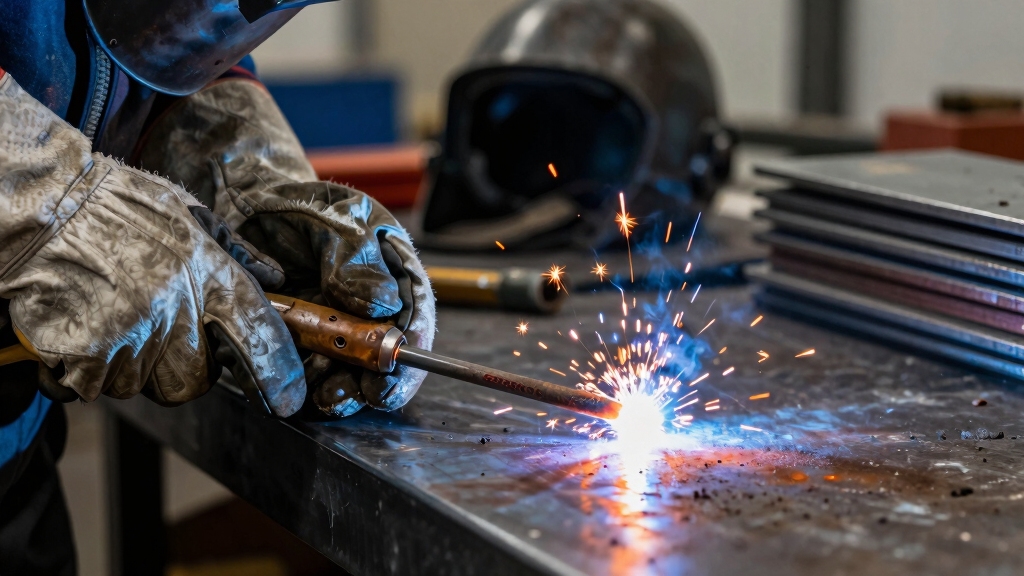
You use 6013 welding rods for mild steel repairs where precision and control matter, especially on thin or clean surfaces.
They deliver a stable arc with shallow to medium penetration, ensuring smooth, spatter-minimized welds across all positions.
Their rutile coating aids slag removal and consistent bead formation, making them ideal for maintenance, automotive, light fabrication, and farm equipment work.
If you want to understand how they compare to other rods and get handling tips, there’s more to explore ahead.
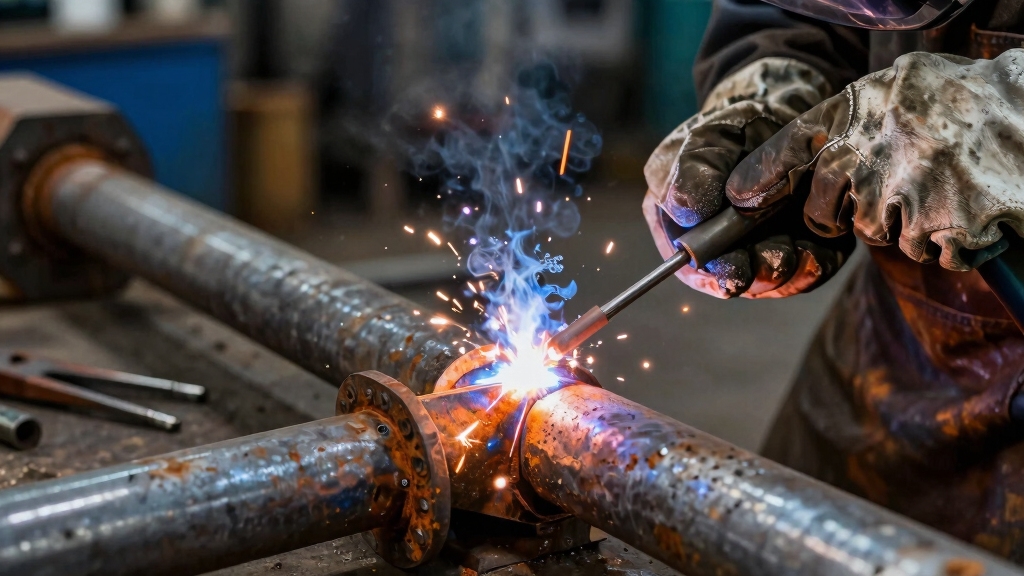
Because 6013 welding rods provide a stable arc and shallow to medium penetration, they work effectively for mild steel repairs where precision and control are essential. You’ll find these rods ideal for thin sheet metal and clean surfaces, minimizing burn-through risks.
Their rutile coating guarantees smooth arc stability, reducing spatter and simplifying slag removal, which is critical for maintaining weld quality. The electrode’s all-position capability lets you adapt to varying joint angles and orientations, assuring consistent bead formation.
While 6013 rods don’t penetrate as deeply as 6010 or 7018, their balance of penetration and arc control suits non-critical welds requiring neat appearance and moderate strength. You can also rely on their compatibility with both AC and DC currents, offering flexibility across different welding setups.
Additionally, 6013 rods are preferred by beginners due to their easy arc control and reduced risk of rod sticking, making them ideal for novice welders.
When you need reliable welding for mild steel, 6013 rods excel across diverse applications due to their stable arc and versatile all-position capability.
You’ll find them ideal for maintenance and repair of mild steel structures like pipes and sheet metal, where consistent bead quality and shallow penetration prevent burn-through.
In automotive work, they efficiently join frames and body panels, providing clean welds with minimal spatter.
Construction projects benefit from their ability to weld beams and columns with reliable fusion on low-carbon steel.
Additionally, light fabrication tasks, such as metal frames, brackets, and ornamental ironwork, leverage 6013’s smooth arc and easy slag removal.
You can also use these rods in farm equipment and household appliance repairs, making them a practical choice for various mild steel welding needs that demand precision and versatility.
While 6013 rods provide excellent all-position welding, for applications requiring deep penetration root passes, other electrodes like 6010 are often preferred.
Although welding positions can vary widely on the job, 6013 rods maintain a stable arc and consistent deposition. This makes them well-suited for flat, horizontal, vertical, and overhead welding.
6013 rods offer stable arcs and consistent deposition, perfect for flat, horizontal, vertical, and overhead welding.
You’ll find their rutile coating facilitates smooth slag removal, which is vital when welding in vertical and overhead positions. Gravity influences slag behavior in these scenarios.
Their moderate penetration allows you to avoid burn-through on thin metals, especially in vertical welding. When welding overhead, the rod’s arc stability helps control bead shape and prevents excessive spatter.
In horizontal welding, the 6013 rod’s consistent deposition ensures uniform bead width and penetration. This is essential for joint integrity.
Because they handle positional changes well, these rods are ideal for repair work. You often adjust angles and positions without sacrificing weld quality.
To maintain optimal weld performance, it is crucial to store 6013 rods within the recommended temperature and humidity ranges to prevent moisture absorption and coating deterioration.
While 6013 rods offer versatility and ease of use, comparing them to other common stick electrodes like 6010 and 7018 reveals distinct differences in penetration, arc characteristics, and application suitability.
You’ll notice 6010 rods deliver deep penetration with a forceful arc, ideal for root passes and dirty or rusty materials, but they demand more skill.
On the other hand, 7018 rods provide a smooth, low-hydrogen arc with superior tensile strength, making them suitable for structural and critical welds.
In contrast, 6013 rods produce a medium to shallow penetration with a stable, smooth arc, perfect for thin metals and general maintenance.
You’ll find 6013s easier to handle but less suited for heavy-duty or high-strength applications compared to 6010 and 7018 electrodes.
Proper electrode selection ensures the weld quality, strength, durability and reduces defects and rework.
Understanding the handling differences between 6013 rods and other electrodes helps optimize your welding technique for this specific rod.
Maintain a tight arc length, approximately rod diameter or less, to control slag and ensure consistent penetration.
Use a 10-15° drag angle to promote smooth slag flow and minimal spatter.
Adjust amperage carefully; too high causes excessive penetration and slag, while too low results in poor fusion.
Employ steady, consistent travel speed to avoid burn-through on thin metals while ensuring adequate weld bead formation.
Since 6013 rods excel in all-position welding, adapt your hand positioning for vertical or overhead joints to maintain arc stability.
Clean the base metal thoroughly to maximize weld integrity, as 6013 rods perform best on clean, thin steel.
These techniques optimize deposition and reduce defects.
Unlike 7018 rods, 6013 electrodes do not require specialized storage to maintain performance.
Yes, you can use 6013 rods with both AC and DC power sources. They provide stable arc characteristics on either current type, allowing you to adapt to available equipment.
This versatility makes them convenient for various welding situations, especially when power supply options vary. Just make sure you adjust amperage settings according to the rod diameter and current type for peak penetration and minimal spatter during your welds.
Think of 6013 rods as a painter’s brush designed for delicate strokes.
They’re ideal for welding thin to medium-thickness metals, typically ranging from 18 gauge to about 1/4 inch thick.
You’ll get precise, shallow to medium penetration, perfect for sheet metal and light structural work.
Using them beyond this thickness risks insufficient fusion.
Stick within these limits to guarantee clean, consistent welds without burn-through or weak joints.
Yes, you can use 6013 rods to weld oxidized carbon steel, but with some caution. Their rutile coating helps produce a stable arc and cleaner welds, reducing oxidation on the backside.
However, you’ll need to make certain the surface isn’t excessively rusted or contaminated for best results. The rod’s medium penetration and slag control make it suitable for cosmetic and repair welds on oxidized surfaces, though thorough cleaning improves weld quality greatly.
Imagine you’re repairing a thin sheet metal car panel. When using 6013 rods, slag removal is easier due to its smooth, flaky slag that peels off cleanly with minimal effort.
Unlike heavier slag from 6010 rods, 6013’s slag doesn’t stick aggressively, letting you maintain a steady workflow.
You’ll need to keep a tight arc and proper rod angle to avoid slag inclusions, ensuring a clean weld bead and efficient post-weld cleanup.
Yes, you can easily learn stick welding with 6013 rods. Their forgiving arc and smooth, stable operation let you focus on technique without constant slag issues.
The rod’s medium penetration suits thin metals, reducing burn-through risk. It works well in various positions, which is ideal for beginners practicing different welds.
You’ll appreciate the manageable slag removal and consistent bead deposition, making 6013 rods an excellent choice for developing fundamental stick welding skills.
Now that you understand why 6013 welding rods excel in mild steel repairs and their versatility across welding positions, why settle for anything less?
Their smooth slag removal and stable arc make them ideal for both beginners and pros. When you compare them to other electrodes, their balanced performance stands out.
By following the right techniques, you’ll guarantee clean, strong welds every time. Ready to optimize your welding projects with 6013 rods?