Phone:
(701)814-6992
Physical address:
6296 Donnelly Plaza
Ratkeville, Bahamas.

Phone:
(701)814-6992
Physical address:
6296 Donnelly Plaza
Ratkeville, Bahamas.

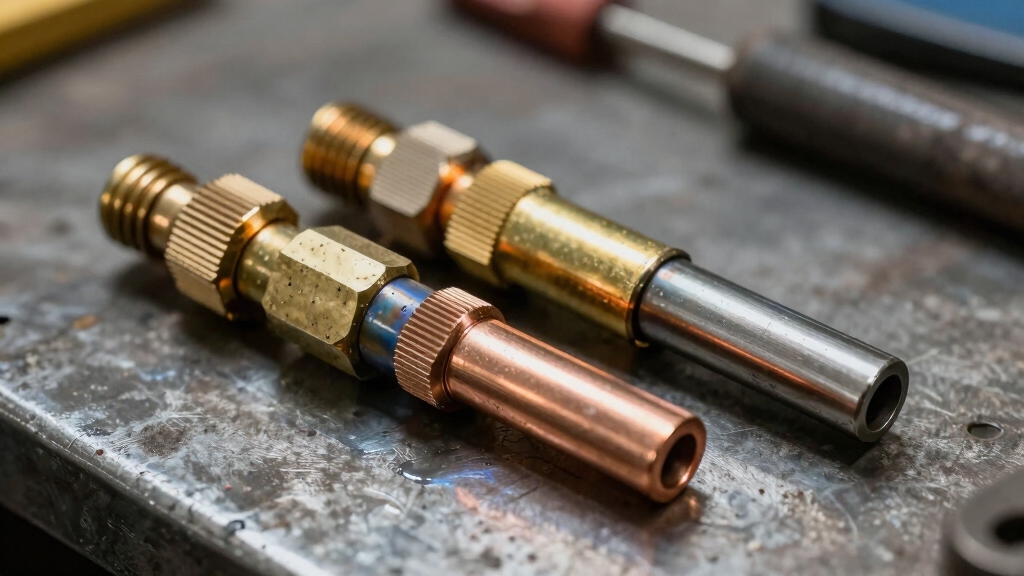
You should select Victor oxy acetylene welding tips based on your metal thickness.
Use smaller tips (No. 0 or No. 2) for thin metals up to 3/16″ and larger ones like No. 4 for thicker materials up to 1/2″ or more.
Always inspect and maintain your torch handle, valves, and tips to guarantee safety and prevent flashbacks by using dual check valves and flashback arrestors.
Properly adjust regulators to match tip specs for steady flames. You can explore essential steps for peak welding performance and torch care next.
Setting up your Victor oxy acetylene welding equipment safely begins with inspecting all components, including the torch handle with dual check valves, oxygen and acetylene regulators, and welding nozzles.
Start your Victor oxy acetylene welding setup by thoroughly inspecting all equipment components for safety.
Make certain the SR450 oxygen regulator and SR460 acetylene regulator are securely attached, with no visible damage or leaks.
Check that the dual check valves on the brass torch handle function properly to prevent gas backflow.
Attach the appropriate welding nozzle size securely to the torch, verifying its integrity.
Confirm that flashback arrestors are installed and operational to enhance safety.
Before opening cylinders, confirm all valves are closed and that hoses are free of cracks or wear.
Use the flint striker for ignition, and always wear No. 5 shade goggles.
Conduct a final leak test with soapy water for absolute assurance.
Ensure cylinders are fully depressurized in a well-ventilated area before any maintenance or disposal to prevent explosion risks.
Select the correct Victor welding tip based on your project’s material thickness and desired weld type to guarantee peak performance.
Using the appropriate tip size assures proper heat distribution, efficient fuel use, and prime weld quality.
Matching tip sizes to your welding needs maximizes efficiency and weld integrity.
This prevents material damage and guarantees consistent results.
Adjusting the oxygen-to-fuel ratio is essential to achieve a neutral flame for optimal heat and clean combustion.
Begin by ensuring both the oxygen and acetylene regulators on your Victor torch are properly connected and leak-free before adjusting.
Start with the acetylene regulator SR460, turning the adjusting screw counterclockwise to relieve pressure.
Slowly open the acetylene cylinder valve fully, then turn the regulator screw clockwise to set the desired pressure, typically between 5-7 psi for welding.
Next, adjust the oxygen regulator SR450 similarly: open the oxygen cylinder valve fully, then turn the regulator screw clockwise to reach the required pressure, usually 20-40 psi depending on the tip size and application.
Always confirm the pressures match your welding tip specifications.
Check both gauges for stability, and never exceed recommended pressures to maintain safety and peak flame control on your Victor oxy acetylene setup.
For optimal performance, it is important to understand how precise arc control enhances welding quality and safety.
To light your Victor torch flame safely, start by opening the acetylene valve just a little bit. Then, using a flint striker, ignite the gas. Once you have a flame going, you can gradually add oxygen to get the right mix.
Now, it’s time to adjust the flame. You’ll want to fine-tune both valves until you get that sharp, neutral flame. You’ll know you’ve got it right when there’s no excess noise or soot. Remember, keeping control of those valves is super important! It helps prevent flashbacks and ensures that your flame stays stable while you’re welding.
Proper gas flow and control are essential for maintaining arc stability and preventing contamination. Stay safe and happy welding!
When you light your Victor oxy acetylene torch, always open the acetylene valve slightly before igniting to prevent backfire and guarantee a stable flame.
Begin by making certain your oxygen valve is closed. Use a flint striker to ignite the acetylene gas at the torch tip, maintaining a safe distance.
Once lit, gradually open the oxygen valve to achieve the desired flame. Follow these steps:
These precise ignition procedures ensure safety and peak flame performance with your Victor torch. Additionally, always wear flame-resistant clothing and ensure proper ventilation to minimize exposure to hazardous fumes during welding.
Although lighting the torch is critical, adjusting your Victor oxy acetylene flame correctly guarantees both safety and peak performance.
Start by opening the acetylene valve slightly, followed by oxygen, to prevent flashbacks.
Observe the flame’s inner cone; it should be sharp and well-defined, indicating optimal fuel and oxygen mix.
Avoid an overly oxidizing flame, which appears too pointed and hisses, or a carburizing flame, which has a feathered inner cone.
Use the dual check valves and flashback arrestors on your torch handle to prevent gas reversal and backflow.
Adjust the oxygen regulator SR450 and acetylene regulator SR460 gradually to maintain steady pressure.
Always wear No. 5 shade goggles and keep tip cleaners handy to make certain clear, stable flames throughout your welding process.
Additionally, when welding zinc-plated steel, ensure you have proper respiratory protection to prevent inhalation of hazardous zinc oxide fumes.
Select the appropriate Victor welding nozzle size to match the metal thickness you’re working with, ensuring ideal heat distribution and weld quality. Using the correct nozzle optimizes flame control, prevents metal warping, and enhances penetration.
Victor offers nozzle sizes #0, #2, and #4 to suit various welding demands. For thin metals up to 3/16“, use the #0 nozzle to apply gentle heat without burning through. For medium thicknesses up to 1/2“, the #2 nozzle provides balanced heat for consistent welds.
For thicker metals up to 1-1/4“, use the #4 nozzle to deliver sufficient flame intensity and depth. Always match nozzle choice to your metal’s thickness to maintain weld integrity and efficiency.
Proper heat input control during welding is critical to prevent distortion and ensure strong joints, especially on thicker materials like 1/2″ steel and above, as explained in heat-input control principles.
Hey there! It’s super important to keep an eye on the valves of your Victor torch handles. You want to make sure they’re working smoothly and sealing just right. It’s really easy to forget, but a quick inspection can save you a lot of trouble down the line.
Also, don’t forget to keep the handles nice and clean. Debris and residue can really mess things up, so give them a good wipe down to maintain their performance.
And hey, a little lubrication goes a long way! Just make sure you’re using the right kind.
Lastly, when you’re done using your torch, store it in a dry, secure spot. This will help extend its service life and keep it in top shape for your next project!
Additionally, always wear heat-resistant welding gloves to protect your hands from sparks and intense heat while handling the torch.
Regularly inspecting the valves on your Victor torch handle is essential to maintaining peak performance and guaranteeing safety during welding and cutting operations.
You should focus on three key inspection points to keep your equipment reliable and efficient:
Additionally, proper maintenance extends the equipment’s longevity and helps avoid potential hazards related to gas leaks and valve malfunctions.
After making sure your valves operate smoothly and leak-free, maintaining the cleanliness of your Victor torch handle plays a vital role in prolonging its lifespan and guaranteeing consistent performance.
Regularly wipe the handle with a clean, lint-free cloth to remove dirt, grease, and welding residues. Avoid abrasive materials that can scratch the brass surface or damage seals.
Inspect the dual check valves for debris and gently clean them with a soft brush if necessary, guaranteeing no particles obstruct valve function. Keep the threads and connections free from contaminants to prevent leaks and maintain airtight seals.
Proper cleaning prevents corrosion and mechanical wear, preserving handle integrity. By consistently performing these steps, you’ll guarantee your Victor torch handle remains durable and reliable for precision oxy-acetylene welding tasks.
Additionally, wearing protective gloves while cleaning can protect your hands from residual heat and chemical residues, enhancing safety during maintenance.
To make certain the Victor torch handles and valves operate smoothly and resist wear, apply appropriate lubrication to the moving parts as specified by the manufacturer.
Use only lubricants compatible with oxygen and acetylene systems to prevent contamination or damage. After each use, clean and dry the components thoroughly before storage to avoid corrosion.
When storing the torch, follow these steps:
Proper lubrication and storage extend the life of brass torch handles and valves, ensuring consistent performance and safety.
Although flashbacks can occur unexpectedly, you can prevent and manage them effectively by understanding the function of Victor’s built-in safety features like flashback arrestors and reverse flow check valves.
These components stop flame propagation into hoses and regulators by automatically shutting off gas flow if a flashback occurs.
Always inspect and maintain these devices regularly, ensuring they’re clean and undamaged to guarantee peak performance.
When a flashback happens, immediately close both oxygen and acetylene valves, then purge the lines to clear any residual gases.
Never bypass or disable safety elements, as Victor’s UL-listed torch and forged brass valves are designed for durability and protection.
Following these procedures maintains safe operation and extends equipment life during oxy-acetylene welding.
Keeping your Victor welding and cutting tips clean is essential for maintaining peak performance and safety. Residue buildup restricts gas flow, causing uneven flames and potential flashbacks.
Clean Victor welding and cutting tips regularly to ensure optimal performance and prevent unsafe flame conditions.
After each use, clean tips promptly with the correct tip cleaner to clear debris from orifices without damaging the swaged tip and spiral mixer. Store tips in a dry, organized container to prevent contamination and physical damage.
Follow these steps:
Proper cleaning and storage prolong tip life and guarantee safe, consistent operation.
Enhance your Victor torch’s performance by upgrading to advanced welding tips designed for specific applications and improved efficiency.
Choose from sizes No. 0, No. 2, and No. 4 welding tips with swaged tips and spiral mixers, which optimize gas flow and flame stability.
For heavier work, consider optional nozzles that extend welding capacity up to 3/8″ or even 1.25″ thickness.
Using brass or copper tips tailored to your project guarantees consistent heat distribution and cleaner welds.
Upgrading also means better compatibility with Victor’s reliable regulators, such as the SR450 oxygen and SR460 acetylene models, enhancing control and safety.
Don’t forget to match tips to your cutting or brazing needs for maximum versatility and durability during prolonged use.
You’ll find Victor welding tips compatible primarily with metals like mild steel, stainless steel, and copper alloys.
They’re designed to handle welding, brazing, and heating tasks efficiently on these materials.
The brass and copper construction guarantees good thermal conductivity and durability, making them suitable for various thicknesses.
Just match the tip size and flame type to your specific metal and application for best results without risking damage or poor weld quality.
Victor cutting tips focus on efficiently directing a high-velocity oxygen stream to sever metals up to specific thicknesses, like 1/2″ standard or up to 6″ with heavy-duty kits.
Heating tips, such as the No. 6 rosebud, provide a broader, even flame for uniformly preheating or heating metals without cutting.
You’ll notice cutting tips are smaller and precise, while heating tips cover wider areas to prepare metals for welding or shaping.
You’ll find Victor portable torch kits use G-150 regulators specifically designed for these setups.
These regulators feature high-capacity 2-1/2″ diameter gauges, ensuring precise pressure control for both oxygen and acetylene.
They’re built to handle the demands of portable use without sacrificing performance, providing you with reliable flow rates and safety through integrated reverse flow check valves and flashback arrestors.
This makes your welding and cutting tasks more efficient and secure.
Brazing brilliance begins here: yes, you can confidently use Victor welding tips for brazing applications. They accommodate up to 1/2″ brazing thickness, ensuring precise, professional performance.
With their durable brass and copper construction, these tips provide consistent heat control and peak flame stability.
Just select the appropriate nozzle size, and you’re set to achieve strong, clean joins in your metalworking projects with reliable, robust results every time.
Victor torch handles come with built-in safety features like dual check valves and flashback arrestors, which prevent gas reverse flow and potential flashbacks.
You’ll find them constructed from durable brass, ensuring long-lasting performance.
The handles also include UL-listed certification, verifying safety standards.
These features work together to protect you during operation, reducing risks associated with gas leaks or flashbacks while maintaining reliable control over oxygen and acetylene flow.
Now that you’ve mastered setting up and adjusting your Victor oxy acetylene equipment, the real challenge begins. Will you choose the perfect tip for your metal’s thickness?
Can you maintain flawless flame control without risking flashbacks? Your skill with handling, cleaning, and upgrading these tips will determine your welding precision and safety.
Keep pushing your limits because with Victor gear, every detail counts, and excellence is just a spark away.