Phone:
(701)814-6992
Physical address:
6296 Donnelly Plaza
Ratkeville, Bahamas.

Phone:
(701)814-6992
Physical address:
6296 Donnelly Plaza
Ratkeville, Bahamas.

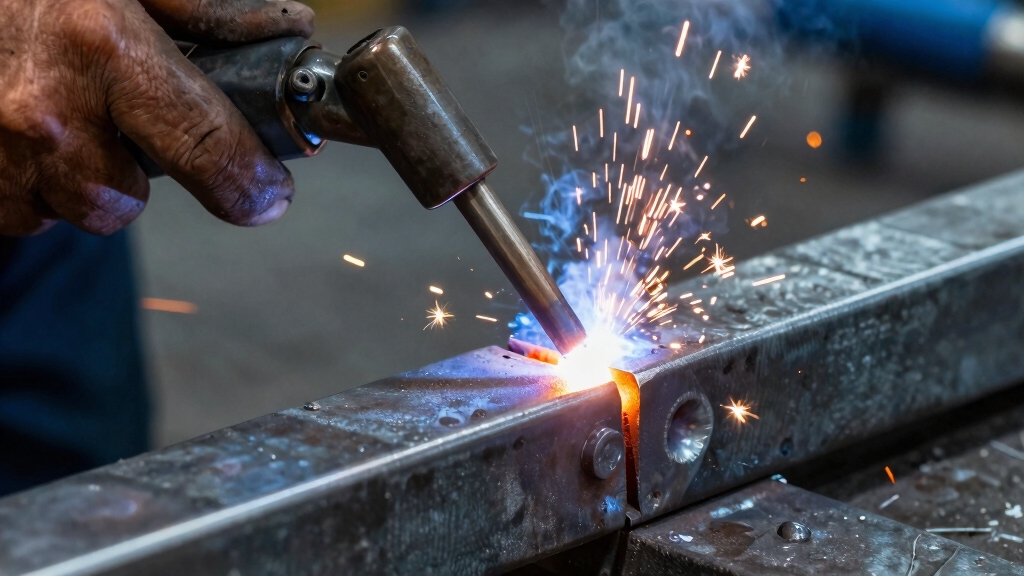
You control welding quality by balancing voltage and amperage carefully. Voltage primarily determines arc length and shapes the weld bead profile. Higher voltage widens and flattens the bead without changing penetration if amperage stays steady.
Amperage sets the current that governs penetration depth and heat input. Higher amperage increases fusion and deposition rate. Together, voltage and amperage define heat input and weld characteristics.
Understanding how to adjust these parameters for material and thickness is key to optimizing weld quality and avoiding defects. More insights on balancing these factors follow.
While amperage primarily dictates weld penetration, voltage controls the arc length, directly shaping the weld bead profile.
When you increase voltage, the arc length extends proportionally, which flattens the weld bead and widens its width-to-depth ratio without markedly altering penetration if current remains constant.
For example, raising voltage from 20 to 23 volts in MIG welding broadens the bead shape, producing a washed-in appearance and smoother arc stability.
Conversely, lower voltage narrows the bead and reduces arc length, concentrating heat but limiting bead width.
In TIG welding, maintaining 10-15 volts allows precise arc gap control, essential for fine bead profile adjustments.
Understanding this voltage-bead relationship is critical for optimizing weld quality and meeting specific joint requirements.
Additionally, choosing the proper TIG welding polarity can influence heat distribution and bead characteristics, complementing voltage adjustments for better weld control.
Voltage plays a significant role in shaping the weld bead by controlling arc length.
Voltage significantly influences weld bead shape by managing the arc length during welding.
However, amperage directly governs weld penetration and metal deposition. When you increase amperage, you raise the current’s heat input, which deepens the weld pool and improves fusion with the base metal.
Typically, penetration grows about 1 mm for every 50-amp increase, though this varies with material type and thickness. Higher amperage also accelerates metal deposition, as wire feed speed correlates directly with current.
However, if you push amperage too high on thin materials, you risk burn-through. For instance, welding 1/8-inch aluminum requires around 120-140 amps to balance penetration and thermal conductivity.
Increasing amperage also results in higher heat input, which can enlarge the heat-affected zone and affect mechanical properties of the weld.
Because amperage and voltage jointly influence heat input and weld characteristics, you must balance them carefully to optimize fusion and bead profile.
Amperage controls penetration depth and deposition rate, while voltage determines arc length and bead width. Increasing amperage deepens penetration but risks burn-through if excessive.
Conversely, raising voltage widens the bead without markedly affecting penetration if current remains steady. Together, they define heat input (amps × volts), directly impacting weld quality.
The table below illustrates typical effects of varying amperage and voltage:
| Amperage (A) | Voltage (V) | Penetration (mm) | Bead Width (mm) | Heat Input (W) |
|---|---|---|---|---|
| 150 | 20 | 3 | 8 | 3000 |
| 180 | 22 | 4 | 9 | 3960 |
| 200 | 23 | 4.5 | 10 | 4600 |
| 220 | 21 | 5 | 8.5 | 4620 |
| 240 | 24 | 5 | 11 | 5760 |
Proper polarity selection, such as DCEP for MIG welding, also plays a critical role in controlling heat distribution and optimizing weld penetration.
Did you know that you can control amperage indirectly by adjusting wire feed speed? It’s pretty interesting!
When you increase the feed rate in GMAW-CV setups, it actually raises the current. This boost in amperage leads to a higher heat input, which in turn intensifies penetration and metal deposition.
Getting a grip on this relationship is super important. It can really help you optimize weld quality. Plus, it can help you steer clear of defects like burn-through, which no one wants to deal with.
However, careful heat input control is necessary to avoid distortion or defects, especially in thin or heat-sensitive materials.
Adjusting wire feed speed directly influences amperage, making it a critical parameter for controlling heat input during welding.
When you increase wire feed speed, amperage rises proportionally, delivering more current to the arc. This relationship enables precise control over weld penetration and deposition rate.
Consider these key impacts:
Additionally, maintaining appropriate wire feed speed is essential when using 100% argon shielding gas to ensure arc stability and effective heat input.
Controlling wire feed speed directly influences amperage, which in turn governs the heat input during welding. As you increase wire feed speed, amperage rises proportionally, delivering more current to the weld pool.
This elevated amperage intensifies heat generation, enhancing penetration depth and metal deposition. For example, every 50-amp increase typically adds about 1 mm of penetration, depending on the material.
Since heat input equals amperage multiplied by voltage, adjusting wire feed speed indirectly modulates total energy delivered. You must balance wire feed speed to maximise heat input: too high risks burn-through on thin materials, while too low causes insufficient fusion.
Inverter welding machines provide precise current control that allows rapid adjustments in amperage to optimize heat input for varying wire feed speeds.
Selecting the appropriate amperage and voltage for welding depends heavily on the material’s thickness and thermal properties. To optimize your settings:
Proper heat input management is crucial to produce strong welds with adequate fusion and to reduce distortion during welding.
When you’re welding, it’s really important to match the amperage to the thickness of your material. This ensures that you get the right amount of penetration without accidentally burning through. It’s a delicate balance, but once you get the hang of it, it makes a huge difference!
Now, let’s talk about voltage. You’ve got to adjust it carefully. Why? Because it helps control the width of the bead and keeps the arc stable. It’s interesting to note that even if you change the voltage, it won’t affect the penetration as long as the current stays steady. So, you can play around with the voltage a bit to get that perfect bead profile.
Ultimately, the key is to balance heat input by coordinating both the amperage and voltage. When you do this right, you’ll not only optimize fusion quality but also minimize any defects.
It’s all about finding that sweet spot! Additionally, selecting the correct torch angle technique can further influence penetration and bead appearance for optimal results.
Achieving peak weld quality hinges on matching amperage to the material’s thickness and thermal properties. You need to calibrate current carefully to guarantee proper penetration without defects.
Consider these key steps:
For welding thicker steel such as 1/2 inch, it is critical to select a machine capable of delivering at least 250 amps to ensure proper penetration and weld strength.
While matching amperage to material thickness sets the foundation for penetration and fusion, controlling voltage fine-tunes the bead profile and arc stability.
Increasing voltage extends arc length, which widens the weld bead without altering penetration when amperage remains constant. For example, raising voltage from 20 to 23 volts flattens the bead and increases its width-to-depth ratio, producing a washed-in appearance.
Conversely, lower voltage narrows the bead and enhances arc focus, beneficial for narrow, deep welds. You must balance voltage to maintain a stable arc; too high causes excessive spatter and undercut, while too low risks arc instability.
Adjust voltage precisely to achieve desired bead geometry, ensuring consistent quality and preventing defects like incomplete fusion or irregular bead shape. Also, choosing the correct amperage and shade combination is essential to reduce eye strain and maintain safety during welding.
Since heat input directly affects weld quality and penetration, balancing voltage and amperage becomes critical to optimize fusion and prevent defects.
You need to take into account these steps:
When you increase welding amperage, you need to wear proper protective gear like flame-resistant gloves, helmet with correct shade, and protective clothing to prevent burns from higher heat.
Make certain adequate ventilation to avoid toxic fumes. Monitor material thickness closely to prevent burn-through.
Use insulated tools and keep cables in good condition to handle increased current. Always maintain a safe distance from the arc and have fire suppression ready in case of sparks or overheating.
You’ll find that welding polarity directly influences voltage and amperage settings by altering arc characteristics.
Using direct current electrode positive (DCEP) typically requires higher amperage for deeper penetration and slightly increased voltage for arc stability.
Conversely, direct current electrode negative (DCEN) demands lower amperage and voltage, producing less penetration but higher deposition rates.
Selecting polarity adjusts heat distribution, so you must fine-tune amperage and voltage to balance penetration, bead profile, and weld quality effectively.
Yes, voltage and amperage settings directly impact electrode wear rate.
Higher amperage increases heat and current flow, accelerating electrode consumption.
Elevated voltage extends arc length, causing more spatter and uneven wear.
If you run excessive amperage or voltage, the electrode degrades faster, reducing efficiency and increasing costs.
You should optimize settings to balance penetration, arc stability, and electrode life.
This minimizes wear while maintaining weld quality and consistency.
Fluctuating power supply is like a shaky heartbeat for your weld; it destabilizes arc length and current.
You’ll see inconsistent heat input, causing uneven penetration and bead shape. This instability leads to poor fusion, increased spatter, and potential burn-through or weak welds.
To maintain quality, you must stabilize voltage and amperage, ensuring steady arc characteristics and consistent metal deposition throughout the weld process.
You need to adjust voltage and amperage based on environmental factors like temperature, humidity, and wind.
Cold conditions reduce heat input efficiency, requiring higher amperage for adequate penetration.
Wind cools the weld pool, so raising voltage stabilizes the arc and maintains bead shape.
High humidity can cause arc instability, prompting voltage adjustments to ensure consistent arc length.
Monitoring these variables helps optimize fusion and prevents defects caused by environmental fluctuations.
You’ll find that voltage and amperage don’t just coexist; they interact precisely to shape your weld’s quality. Adjusting voltage controls arc length and bead shape, while amperage drives penetration and deposition.
Curiously, tweaking one often demands adjusting the other to maintain balance, especially as wire feed speed changes. Mastering this interplay lets you optimize heat input and avoid defects, ensuring each weld meets exacting standards.
You’ll see they’re two sides of the same technical coin.