Phone:
(701)814-6992
Physical address:
6296 Donnelly Plaza
Ratkeville, Bahamas.

Phone:
(701)814-6992
Physical address:
6296 Donnelly Plaza
Ratkeville, Bahamas.

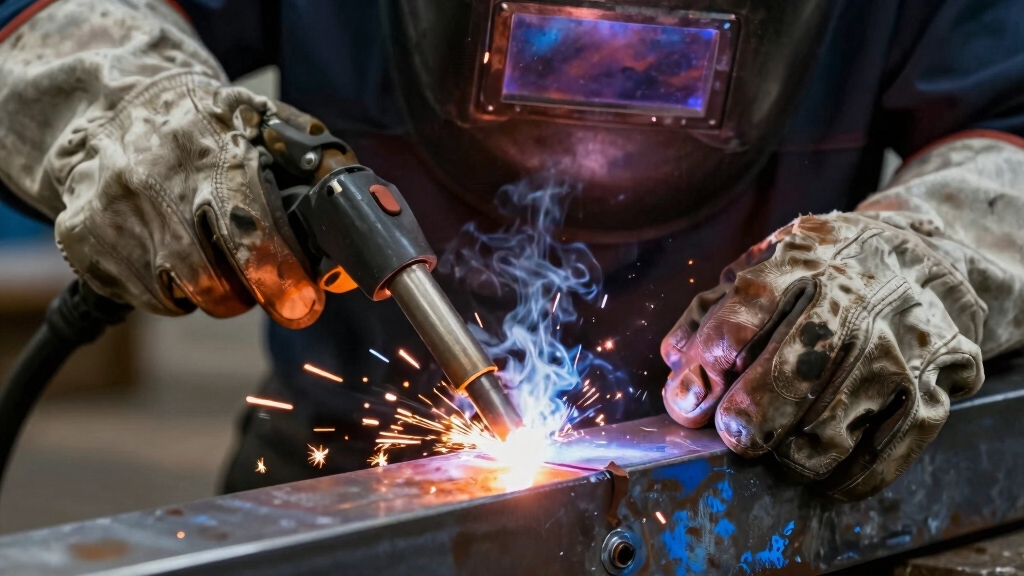
To achieve strong, clean MIG welds, you need to prep your metal by removing rust, oil, and paint and grounding securely.
Set your wire feed speed and drive rolls according to wire type and material thickness.
Keep your shielding gas flow steady and nozzle clean.
Maintain a steady gun angle and consistent stickout around 3/8 inch for smooth beads.
Watch your duty cycle to avoid overheating.
Master these basics, and you’ll improve your weld quality markedly. There’s more to perfect your technique ahead.
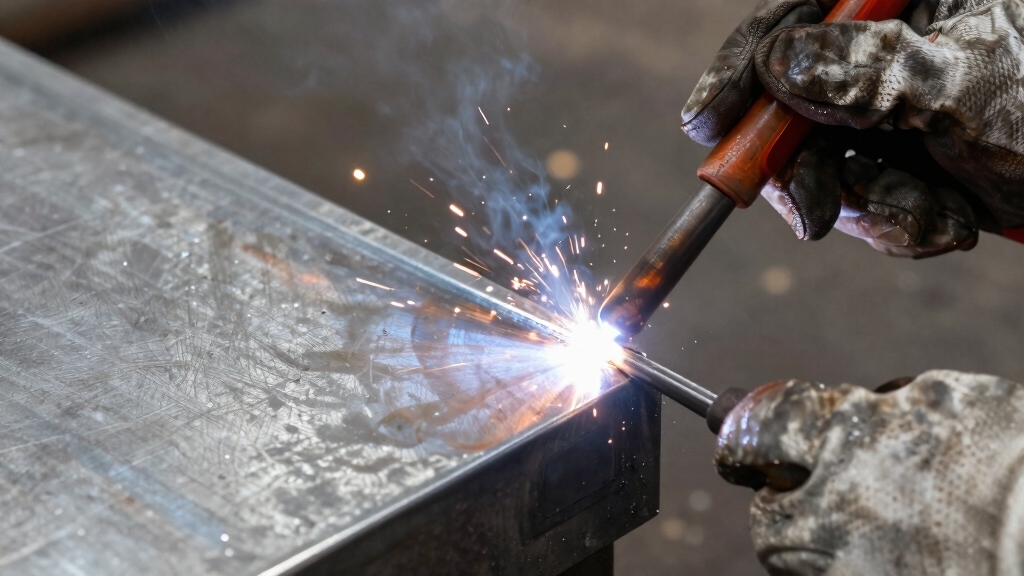
Cleaning your base metal thoroughly is the first step to achieving strong MIG welds. You need to remove rust, paint, grease, and oil to guarantee proper penetration and prevent porosity.
Use a wire brush or grinder to clear heavy contaminants, then follow with sanding disks or non-woven abrasives for stubborn rust or paint. Avoid grinding over grease; clean it off first with a suitable solvent.
Inspect for cracks and grind them out to prevent defects. Applying a deoxidizer in the wire can further reduce porosity risks.
Also, secure a solid electrical ground using a copper clamp on clean, bare metal close to the weld area. Skipping this prep leads to poor weld quality, weak joints, and potential arc instability. Don’t rush this vital step.
Maintaining proper equipment condition is essential to ensure consistent wire feeding and arc performance during welding.
To get the best weld quality, you’ll want to pay close attention to your wire feed speed. It’s super important to adjust it just right for the type of metal you’re working with and its thickness. Getting this dialed in will help ensure your welds are consistent every time.
Next up, let’s talk about drive rolls. Choosing the right ones is crucial because they help ensure smooth wire feeding. You definitely don’t want any distortion or damage to your liner, so take a moment to make sure you’ve got the right fit.
And don’t forget about the gas flow rate! It’s essential to set this according to your welding parameters. Proper shielding is key to preventing porosity, so make sure it’s just right.
When using 100% argon for MIG welding steel, remember that you need to increase voltage and current significantly to maintain arc stability and achieve proper penetration.
Fine-tuning the wire feed speed is essential to achieving consistent weld quality and proper metal fusion. You’ll need to adjust the speed according to the metal type and thickness, following your machine’s chart or manual.
Too slow a feed causes insufficient weld bead buildup and poor penetration. Too fast leads to excessive spatter and overheating. Start with a moderate setting, then test weld and observe bead shape and penetration.
Look for a slightly crowned, consistent bead without porosity or burn-through. Adjust incrementally, balancing feed speed with voltage to maintain a stable arc and proper melt rate. Selecting the appropriate gas mixture can also significantly influence weld stability and spatter levels.
After setting the wire feed speed correctly, focus on selecting the proper drive rolls to guarantee smooth wire delivery and consistent arc stability.
Choose drive rolls based on wire type: v-groove rolls fit solid steel wire, knurled rolls suit flux-core or metal-core wires, and u-groove rolls accommodate soft wires like aluminum.
Match roll size to wire diameter precisely to prevent slippage or deformation. Avoid excessive tension on the drive rolls; too tight pressure can distort wire shape and damage the liner, causing feed issues and erratic arcs.
Inspect rolls regularly for wear or buildup, replacing them when grooves flatten or clog. Properly selected and maintained drive rolls assure steady wire feed, reduce downtime, and improve weld bead quality, making them a critical factor in optimizing your MIG welding setup.
Maintaining consistent wire feed speed is essential to prevent arc instability and minimize spatter during welding.
Consistently setting the correct gas flow rate is essential to maintain ideal shielding during MIG welding. Too low a flow allows air contamination, causing porosity and weak welds.
Too high a flow wastes gas and creates turbulence, drawing in oxygen and nitrogen that degrade weld quality. Start by consulting your machine’s manual for recommended flow rates based on metal type and thickness, typically between 15 and 25 cubic feet per hour (CFH).
Use a reliable flowmeter to adjust the regulator precisely. Always check for leaks in hoses and fittings that can reduce effective shielding.
Position the nozzle 1/4 to 1/2 inch from the workpiece to optimize gas coverage. Proper gas flow guarantees consistent arc stability, reduces spatter, and produces clean, strong welds every time.
Choosing the appropriate shielding gas based on the metal and welding process is equally important to ensure weld quality and appearance.
When you handle your MIG gun with the right angle and steady motion, you guarantee peak arc stability and weld quality. Maintain a 10-15 degree angle in the travel direction and hold the nozzle 1/4 to 1/2 inch from the workpiece.
Keep a stickout of about 3/8 inch to optimize heat input and gas coverage. Move the gun steadily, touching the wire lightly and pulling it evenly to avoid erratic arcs. Experiment with pushing (forehand) or pulling (backhand) techniques, ensuring consistent stickout and heat.
Whether you hold the gun steady or weave slightly, listen for a consistent sizzling sound, like meat frying, which signals proper settings. Avoid steep angles and jerky movements, as they compromise bead integrity and penetration. Mastering these fundamentals lays the groundwork for professional welds.
Always ensure you are using the correct polarity settings specific to your wire and shielding gas to optimize heat distribution and weld quality.
Control your gun movement to maintain a straight line at a steady speed. This ensures even heat distribution and penetration. Moving too slow creates an oversized bead; too fast results in poor penetration.
Your ideal bead is slightly crowned, consistent in width and height, showing full penetration without voids. Adjust your technique for vertical or overhead welding by pausing slightly at the puddle’s top without overlapping.
Follow these key steps:
Controlling the weld pool fluidity requires careful attention to settings and technique to prevent defects and ensure quality.
Mastering gun angle, travel speed, and bead shape sets a strong foundation, but overlooking common mistakes can still sabotage your weld quality.
Perfecting basics like gun angle and travel speed is essential, but avoiding common errors ensures top weld quality.
Watch your voltage and wire feed speed carefully; too high or low disrupts proper melting and bead formation.
Maintain correct gas flow; insufficient shielding leads to porosity, while excessive flow causes turbulence.
Keep your stickout around 3/8 inch; longer stickout lowers heat input and compromises coverage.
Avoid steep gun angles that reduce control and cause uneven beads.
Never skip metal preparation; rust, oil, or paint invite defects.
Travel speed matters: too fast results in weak penetration; too slow creates oversized, uneven beads.
Finally, make sure your puddle doesn’t overlap excessively, which slows progress and weakens the weld.
Correcting these errors boosts consistency and weld integrity.
Additionally, selecting the proper welding consumables ensures optimal shielding and fusion for high-quality welds.
Hey there! It’s really important to keep an eye on your MIG welder’s duty cycle. This helps prevent overheating and can really extend its lifespan, especially if you’re using air-cooled guns.
Also, don’t forget to regularly check your consumables. Make sure to tighten them properly using the tools recommended by the manufacturer. This can help avoid issues like premature wear and micro-arcing.
Taking these simple steps will help ensure you get consistent weld quality and that your equipment performs reliably. Happy welding!
Remember to optimize your wire feed speed to match the material and weld type for the best results.
Regularly monitoring the duty cycle of your MIG welder guarantees you avoid overheating and equipment damage during extended use. The duty cycle is the percentage of a 10-minute period your welder can operate before needing to cool down. Exceeding this limit risks thermal shutdown and shortens equipment life.
To manage duty cycle effectively:
Inverter welding machines contribute to improved duty cycle management due to their rapid microsecond adjustments that help maintain stable arcs and prevent overheating.
Consistently maintaining your MIG consumables guarantees peak welding performance and extends their lifespan. Regularly inspect contact tips, nozzles, and liners for wear or damage.
Replace parts showing erosion to avoid poor arc stability and spatter buildup. Clean nozzles to maintain gas flow and prevent contamination. Use manufacturer tools to tighten consumables securely, preventing micro-arcing and premature wear.
Avoid vice grips or pliers on parts to prevent warping.
| Consumable Part | Maintenance Tip |
|---|---|
| Contact Tip | Inspect for wear; replace if enlarged or clogged |
| Nozzle | Clean spatter after each use for ideal gas flow |
| Liner | Check for wire feeding issues; replace if damaged |
Proper care guarantees consistent weld quality and reduces downtime.
You need a welding helmet with a proper shade to protect your eyes from intense UV and infrared rays.
Wear flame-resistant gloves and long-sleeve clothing to shield your skin from sparks and heat.
Use safety glasses under the helmet for extra eye protection.
Respirators are essential in poorly ventilated areas to avoid inhaling fumes.
Don’t forget hearing protection if you’re working in noisy environments.
Sturdy boots are important to protect your feet from heavy objects and hot metal.
Weather conditions impact your MIG welding by affecting gas shielding and arc stability. Wind disperses shielding gas, causing porosity and weak welds.
You should weld in sheltered areas or use wind guards. Cold temperatures can make metals brittle and slow cooling, requiring adjusted heat settings.
High humidity risks moisture contamination, leading to weld defects. Always monitor environmental factors and adapt your setup to maintain weld quality and prevent common issues.
You can’t effectively MIG weld aluminum without special equipment.
Aluminum requires a spool gun or a push-pull system to feed the soft wire smoothly and prevent birdnesting. Standard MIG setups struggle with wire feeding due to aluminum’s softness and oxidation.
Plus, using pure argon shielding gas is necessary. Without these, you risk poor weld quality, porosity, and equipment damage.
Invest in proper tools for consistent, clean aluminum welds.
Welding in confined spaces is like threading a needle. You need precision and care.
You should clean the area thoroughly, guarantee solid grounding close to the weld, and maintain proper gun angles (10-15 degrees) with steady motion.
Adjust settings for limited ventilation, use appropriate PPE, and monitor gas flow closely to prevent porosity.
Keep your stickout short and work methodically to avoid overheating and guarantee consistent penetration in tight spots.
You should store MIG welding consumables in a clean, dry environment to prevent rust and contamination.
Keep wire spools sealed in airtight packaging or plastic bags with desiccants.
Store contact tips, nozzles, and liners in labeled containers to avoid damage and mix-ups.
Avoid exposure to moisture, dirt, and grease.
Regularly inspect consumables for wear or corrosion before use to maintain weld quality and equipment longevity.
By preparing your metal properly and setting up your MIG machine right, you’ll get strong, clean welds every time.
For example, a fabricator who adjusted wire feed speed and cleaned their joints saw a 30% drop in weld defects.
Handle the gun steadily and avoid common mistakes like incorrect voltage. Keep your equipment maintained to sustain performance. With these tips, you’ll weld efficiently and produce professional results consistently.