Phone:
(701)814-6992
Physical address:
6296 Donnelly Plaza
Ratkeville, Bahamas.

Phone:
(701)814-6992
Physical address:
6296 Donnelly Plaza
Ratkeville, Bahamas.

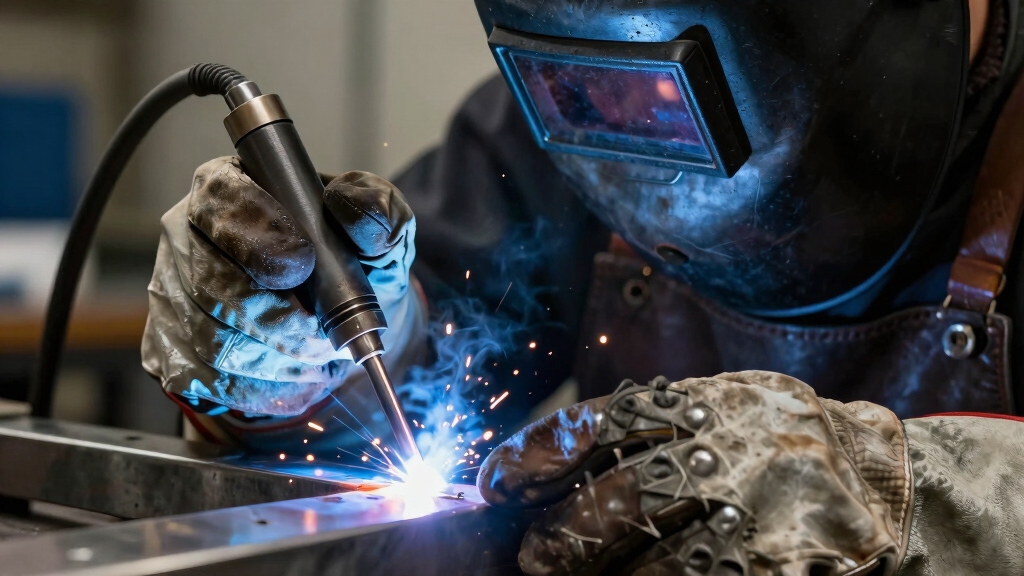
You’ll find TIG welding hard because it demands you simultaneously control the torch angle, foot-pedal amperage, and filler rod feeding with precise coordination.
Maintaining a steady arc length and consistent heat input is critical, or you risk weld defects like porosity and contamination.
The process requires a slower, deliberate pace and meticulous material prep since impurities quickly degrade weld quality.
If you master these variables through focused practice, you’ll overcome the steep learning curve and produce flawless welds.
Explore how mastering each factor enhances your TIG technique.
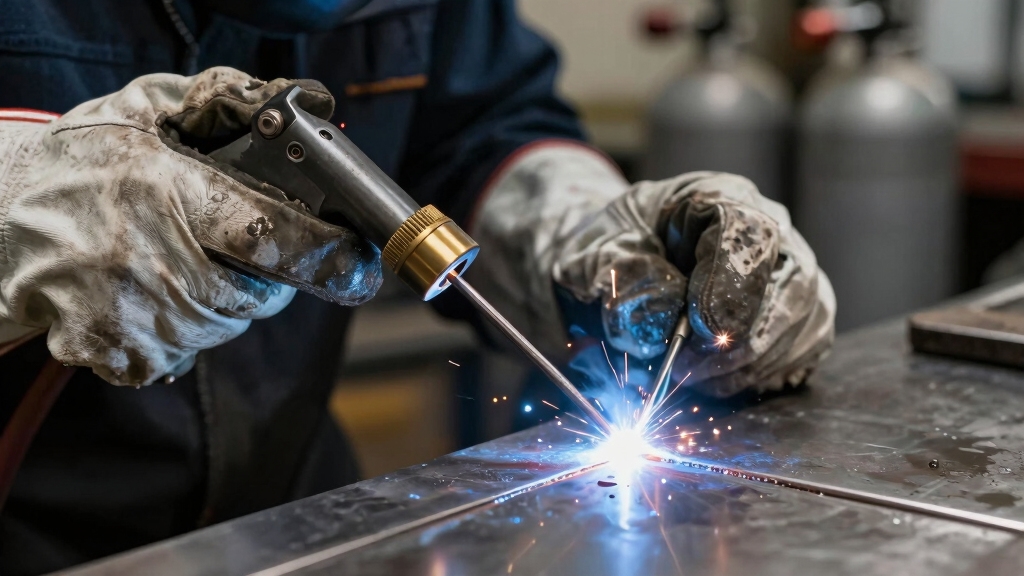
Although TIG welding offers unmatched precision and control, it stands out as the hardest welding method because it demands the simultaneous coordination of multiple complex variables, including torch manipulation, amperage control via foot pedal, and filler metal feeding.
You must maintain steady hands, carefully regulate heat input, and feed the filler rod at the correct pace, all at once. This intricate multitasking creates a steep learning curve, requiring intense focus and patience.
Unlike other welding methods, you can’t rush; your speed and rhythm directly impact weld integrity. Moreover, TIG welding tolerates no impurities, demanding meticulous surface preparation.
Mastering this technique means developing refined motor skills and acute attention to detail, which only come through consistent, deliberate practice under controlled conditions. You’re fundamentally balancing art and engineering in real time.
Additionally, precise control over the arc length and shielding gas coverage is essential to prevent contamination and ensure strong, defect-free welds.
Mastering TIG welding equipment demands sharp focus and refined coordination, as you must simultaneously control the torch, modulate the amperage with a foot pedal, and feed the filler metal with precision.
Master TIG welding by coordinating torch control, amperage modulation, and precise filler metal feeding simultaneously.
Each piece of hardware demands your full attention: the torch angle affects the arc stability, while the foot pedal requires delicate modulation to avoid weld defects.
Balancing gas flow, maintaining tungsten cleanliness, and managing machine settings add layers of complexity.
Even a slight misstep in equipment handling can degrade weld quality, forcing you to constantly refine your technique.
The interplay between these components challenges your dexterity and cognitive multitasking, pushing you to develop finely tuned muscle memory and acute sensory feedback.
This equipment complexity sets TIG welding apart as a discipline demanding exacting skill and persistent practice.
Using an inverter welding machine enhances your control by enabling rapid current adjustments and stable arc performance, which is crucial for high-quality TIG welds.
Mastering foot pedal control in TIG welding is crucial. You really need to be able to regulate the amperage smoothly because any sudden changes can lead to weld defects.
It’s not just about the foot pedal, though. You also have to keep the torch at the right angle, which means steady hands and precise positioning. This is key to ensuring you have the perfect arc length and puddle formation.
Now, trying to balance both of these actions is no easy feat. It takes a lot of coordination and concentration. That’s what makes TIG welding so uniquely challenging. You can see why it requires a bit of practice to get it just right!
Additionally, understanding the correct welding polarity is essential for managing heat distribution and achieving optimal weld quality.
Controlling the TIG welding foot pedal demands exceptional coordination and fine motor skills, as it directly regulates amperage output in real time.
You must modulate pressure smoothly to adjust heat without disrupting the weld puddle, requiring precise, incremental foot movements.
Any abrupt or uneven pedal action can cause amperage spikes or drops, leading to defects like burn-through or weak fusion.
Simultaneously, you must synchronize foot control with hand movements feeding filler metal and maintaining arc stability.
This dual coordination challenges your neuromuscular system, demanding focused practice to develop consistent muscle memory.
Mastering pedal precision is critical because it influences bead appearance, penetration depth, and overall weld integrity.
Without refined foot control, even experienced welders struggle to produce clean, uniform TIG welds under varying conditions.
Extensive training and practice, often exceeding 30 to 100 hours, are essential to develop the proficiency needed for consistent foot pedal control and defect-free welds.
Although adjusting the foot pedal demands fine motor skills, maintaining the correct torch angle proves equally critical and challenging in TIG welding.
You must hold the torch at a precise angle, typically between 10 to 15 degrees from vertical, to guarantee peak arc stability and consistent heat distribution.
Deviating from this angle alters puddle shape and can cause uneven penetration or tungsten contamination.
Controlling both torch angle and foot pedal amperage simultaneously requires refined hand-foot coordination, which takes considerable practice to develop.
Even slight variations in torch tilt disrupt shielding gas coverage, increasing oxidation risk.
To master this, you need deliberate, focused training to build muscle memory and spatial awareness.
Torch angle control is a subtle but indispensable skill that directly affects weld quality and demands your constant attention throughout the welding process.
Using argon gas as the shielding medium helps maintain arc stability and protects the weld pool from atmospheric contamination during torch angle adjustments.
When welding with TIG, the precise control of numerous variables directly influences the quality and integrity of your welds.
You must simultaneously manage current, gas flow, arc length, and torch angle, each critically affecting puddle formation and bead consistency.
Even slight deviations in amperage or foot pedal pressure can cause porosity or inadequate fusion.
The interplay of tungsten selection, filler wire size, and machine settings demands your constant attention to maintain stability.
This complexity requires you to develop fine motor skills and acute sensory feedback to adjust variables in real time.
Mastering these controls guarantees clean, strong welds, while failure leads to defects that compromise structural soundness.
Your ability to precisely regulate these interconnected factors ultimately determines the success of every TIG weld you produce.
Choosing the correct shielding gas such as pure argon or specific argon blends is essential to protect the weld pool and achieve optimal results.
Precise control over welding variables won’t compensate for poorly prepared materials. Surface contaminants and mismatched sizes directly undermine weld quality.
No amount of precise control can fix welds compromised by dirty materials and size mismatches.
You must thoroughly clean the base metal to remove oils, oxides, and dirt. TIG welding’s sensitivity to impurities can cause porosity and weak welds.
Additionally, guarantee the material thickness matches the filler wire diameter precisely. Mismatches disrupt heat distribution and puddle control.
Proper edge preparation, such as beveling or grinding, promotes uniform penetration and fusion. This minimizes defects.
Neglecting these steps leads to inconsistent arcs and compromised bead integrity, no matter how skilled your torch or pedal control is.
Using mechanical cleaning methods like fine grinding or stainless steel brushing effectively removes heat tint and chromium-depleted layers, which is critical for maintaining corrosion resistance and weld quality.
Because maintaining a clean tungsten electrode is critical to producing high-quality TIG welds, you must prevent contamination at all costs.
Contamination occurs when the tungsten dips into the weld pool or contacts surface impurities, causing erratic arc behavior and weld defects.
To avoid this, maintain a consistent arc length and proper torch angle, ensuring the electrode never touches the molten metal.
Keep your tungsten sharp and properly ground to promote stable arc initiation.
Always clean the electrode after interruptions and before re-striking the arc.
Additionally, eliminate surface contaminants through meticulous preparation and use appropriate shielding gas flow to protect the electrode.
Vigilant technique and equipment control are essential. Any lapse can introduce contamination, degrade weld integrity, and increase rework, emphasizing the demanding precision TIG welding requires.
Using a dedicated tungsten grinder with a diamond wheel helps prevent contamination and extends electrode life.
When it comes to TIG welding, maintaining a consistent arc is crucial. You really have to find that sweet spot between speed and precision to get those ideal welds. It’s not just about moving fast; it’s about being deliberate and steady.
You know, it takes some serious coordination between your hands and the foot pedal. You’re juggling a lot of variables all at once! If you rush through it, you might end up with some serious quality issues.
So, it’s best to slow things down a bit and adopt a more methodical pace. Trust me, this approach will lead to more reliable and defect-free welds in the end. Mastering TIG welding also involves understanding thermal distortion control to maintain tight tolerances and structural integrity.
Maintaining a consistent arc in TIG welding demands you adopt a slower, more methodical pace to guarantee stable heat input and uniform puddle formation. You must control the torch angle, arc length, and foot pedal precisely, as even minor fluctuations disrupt arc stability, causing uneven welds or contamination.
Steady coordination between your hands and foot pedal guarantees consistent amperage and gas shielding, essential for penetration and bead quality. Understanding how shielding gases stabilize the arc and control heat input further enhances your ability to maintain weld integrity.
| Factor | Importance |
|---|---|
| Torch Angle | Maintains arc focus and shape |
| Arc Length | Controls heat and puddle size |
| Amperage Control | Regulates penetration depth |
| Gas Flow Rate | Prevents oxidation and porosity |
| Hand Steadiness | Ensures uniform weld bead |
This disciplined approach minimizes defects and upholds the structural integrity of your welds.
Though TIG welding demands meticulous attention to detail, its inherent complexity requires you to slow down and adopt a measured, methodical pace.
Speed directly affects arc stability, puddle control, and heat input, making haste detrimental to weld integrity.
You must maintain a steady travel speed that balances sufficient penetration without overheating the base metal.
Moving too quickly compromises fusion, while going too slowly risks excessive heat buildup and distortion.
This delicate equilibrium demands continuous adjustment as you monitor arc length, torch angle, and filler metal addition.
Unlike faster welding methods, TIG welding’s precision-driven process necessitates maintaining a consistent, moderate tempo throughout the weld.
Mastering this deliberate rhythm underpins producing clean, defect-free welds, reinforcing why TIG welding is inherently slower but superior in quality.
Balancing speed with precision sets the groundwork, but TIG welding demands more than just controlling pace. It requires seamless coordination and unwavering focus.
You must simultaneously manage torch angle, maintain proper arc length, control amperage with the foot pedal, and feed filler metal with steady hands. Each action influences the weld pool’s stability and penetration.
Even slight lapses in concentration can cause tungsten contamination or inconsistent bead formation. This complexity forces you to adopt a slower, more methodical pace, allowing your brain and muscles to synchronize these tasks.
Developing this coordination takes deliberate practice, as TIG welding’s precision leaves no room for rushed or distracted work. Ultimately, mastering focus and coordination guarantees clean, defect-free welds and elevates your technical proficiency.
Because TIG welding demands simultaneous control of multiple variables, its learning curve is markedly steeper than other welding methods.
You must coordinate torch manipulation, filler metal feeding, and amperage adjustment via foot pedal all at once, requiring precise multitasking.
Managing arc length and torch angle directly affects puddle formation, demanding your constant attention and fine motor skills.
Additionally, you’ll need to maintain tungsten cleanliness and control gas flow to prevent contamination and guarantee weld integrity.
The process requires a slower pace and steadier focus than faster techniques like MIG or stick welding.
You also face complex equipment management and meticulous material preparation, as TIG tolerates no impurities.
These factors combine to make TIG welding uniquely challenging, requiring a higher level of skill, coordination, and technical understanding from the outset.
Consistently practicing TIG welding develops the precise coordination needed to control multiple simultaneous variables effectively.
Regular TIG welding practice sharpens the precise coordination essential for managing multiple variables simultaneously.
You must master torch manipulation, foot pedal amperage control, and filler metal feed, all while maintaining correct arc length and torch angle.
This intricate multitasking demands steady hands and acute focus.
Repetition builds muscle memory, allowing you to execute these actions fluidly without conscious effort.
As you practice, your ability to maintain consistent bead quality improves, reducing contamination and imperfections.
Regular, focused sessions help shift from deliberate movements to automatic coordination, essential for handling the process’s technical complexity.
Without dedicated practice, the steep learning curve remains a barrier.
Ultimately, consistent training is your path to mastering TIG welding’s demanding coordination requirements and producing flawless welds.
Imagine you’re controlling a TIG torch when a sudden gas leak occurs, risking oxygen displacement.
Unique safety precautions include proper inert gas ventilation to prevent asphyxiation and ensuring the foot pedal’s wiring is insulated to avoid electrical shocks.
You must also wear flame-resistant gloves and a helmet with a high-quality filter lens to protect against intense UV radiation.
Constantly monitor gas flow and equipment integrity to maintain a safe welding environment.
TIG welding generally costs more than other welding methods because you’ll need specialized equipment like torches, foot pedals, and inert gas cylinders.
Managing and maintaining this gear adds to expenses. Additionally, consumables like tungsten electrodes and filler metals can be pricier.
While slower welding speed might increase labor time, the higher upfront and operational costs reflect TIG’s precision and versatility.
This makes it a more significant investment compared to MIG or stick welding.
Yes, you can automate TIG welding in industrial applications, but it’s complex due to precise control needs.
Automated systems must manage torch positioning, amperage, gas flow, and filler wire feed simultaneously with high accuracy.
While robotics handle repetitive tasks well, TIG’s demand for steady arc length and contamination prevention requires advanced sensors and programming.
You’ll need sophisticated equipment and careful setup to maintain consistent weld quality in automation.
You’ll find TIG welding excels with stainless steel, aluminum, magnesium, copper alloys, and thin-gauge metals.
These materials respond well because TIG allows precise heat control and clean, high-quality welds, especially on metals sensitive to contamination.
You’ll need to prepare surfaces thoroughly and select appropriate filler metals.
Carbon steel also works but demands careful parameter adjustment.
In short, TIG suits metals requiring strong, aesthetically refined joints where precision and cleanliness matter most.
Weather and environment markedly impact TIG welding quality. You must shield the weld area from wind and drafts, as they disrupt the inert gas coverage, causing oxidation and contamination.
High humidity and moisture can introduce impurities, leading to weld defects. Temperature extremes affect material behavior and cooling rates, requiring adjustments in technique.
Always guarantee a controlled, clean environment to maintain arc stability and produce consistent, high-quality welds.
So, you think TIG welding is a walk in the park? Think again. Mastering the foot pedal, torch angle, and avoiding tungsten contamination demands surgeon-level precision.
No room for sloppy shortcuts here. If you enjoy fumbling with equipment and watching welds crack under pressure, TIG’s your jam. But if you want top-tier, flawless welds, buckle up for a slow, deliberate journey where practice isn’t optional—it’s survival.
Welcome to welding’s ultimate boss level.