Phone:
(701)814-6992
Physical address:
6296 Donnelly Plaza
Ratkeville, Bahamas.

Phone:
(701)814-6992
Physical address:
6296 Donnelly Plaza
Ratkeville, Bahamas.

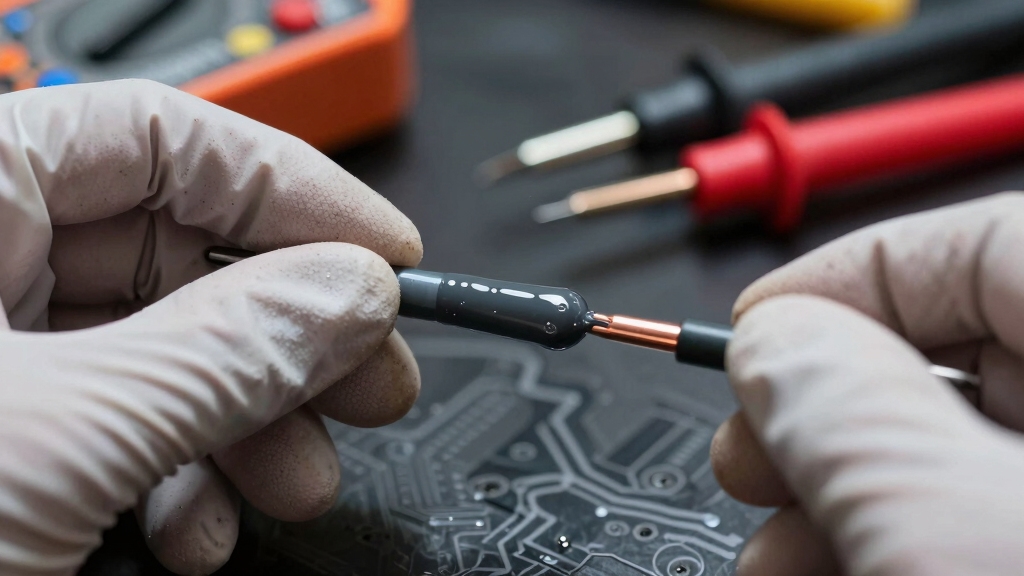
You shouldn’t expect JB Weld to be electrically conductive. Its epoxy matrix encapsulates steel particles, but these particles are dispersed discontinuously, preventing continuous conductive pathways.
This sealed, non-conductive epoxy interrupts electron flow, making JB Weld behave as an insulator rather than a conductor. While mechanically strong, it won’t replace solder or conductive adhesives in electrical repairs.
Understanding its composition and limitations reveals why it’s unsuitable for electrical conductivity but beneficial for mechanical reinforcement.
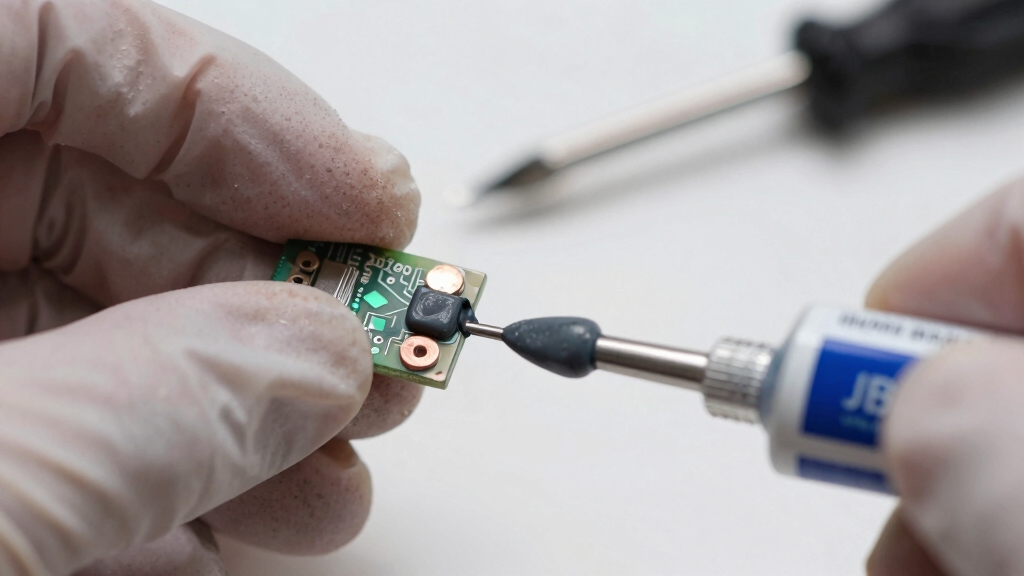
Although JB Weld contains metal particles like steel powder, it primarily consists of a two-part epoxy system combining resin and hardener components.
JB Weld combines metal particles with a two-part epoxy system of resin and hardener for strong bonding.
You mix these components to initiate a chemical reaction that results in a strong, durable bond. The steel powder is embedded within the epoxy matrix, contributing to the cured compound’s dark gray color and mechanical strength, reaching tensile levels around 6220 PSI.
Despite the metallic inclusions, the epoxy resin acts as the primary bonding agent, providing adhesion and structural integrity.
The curing process takes between 4 to 6 hours to set, with full curing achieved within 15 to 24 hours. Understanding this composition clarifies that JB Weld’s strength and durability stem from its epoxy base rather than the metallic particles alone.
Proper surface preparation, such as cleaning and roughening, and mixing equal parts resin and hardener thoroughly are essential steps to maximize bond strength and durability.
You might be wondering about JB Weld and its ability to conduct electricity.
Well, it turns out that JB Weld has minimal electrical conductivity. Even though it contains steel particles embedded in its epoxy matrix, those metal bits don’t really form a continuous conductive path. So, at the end of the day, it mainly acts as an insulator.
If you’re looking for something that can conduct electricity, you’ll need to consider adding materials like graphite.
Alternatively, you could opt for specialized conductive epoxies designed for that purpose.
In welding, selecting the right consumables, including those with proper material properties, is crucial to achieving desired electrical and mechanical performance.
When evaluating JB Weld’s electrical conductivity properties, you’ll find that it acts primarily as an insulator rather than a conductor.
Despite containing ferromagnetic steel particles, the epoxy resin matrix dominates its electrical behavior, severely limiting electron flow.
Testing confirms its conductivity is negligible compared to traditional conductive materials like solder.
The resin’s molecular structure interrupts continuous conductive pathways, preventing effective current transmission.
This means JB Weld can’t reliably replace solder or conductive adhesives in electrical applications.
Its electrical resistance remains high, making it unsuitable for repairing or creating electrical connections where conductivity is critical.
If you need a bonding agent with conductive properties, JB Weld’s formulation falls short.
You must consider specialized conductive epoxies or solder for safe, effective electrical performance.
Additionally, when bonding galvanized steel, special attention to heat control is necessary to avoid coating damage and welding defects.
Considering the presence of steel particles in JB Weld, you might expect it to conduct electricity. However, these metallic inclusions don’t create a continuous conductive path.
The steel powder is dispersed within the epoxy resin matrix, which acts as an insulating medium. This prevents electron flow between particles.
This discontinuous distribution interrupts electrical conduction despite the ferromagnetic nature of the metal powder. The epoxy’s dominant non-conductive properties overshadow the limited conductivity of the embedded steel.
As a result, the overall material behaves as an insulator. When you examine the cured composite, the metal particles remain isolated rather than interconnected. Thus, current can’t traverse the material effectively.
Consequently, although JB Weld contains metal, its formulation and microstructure guarantee it behaves as an insulator. This makes it unsuitable for applications requiring reliable electrical conductivity. Additionally, proper surface preparation is essential in conductive and non-conductive bonding applications to ensure optimal adhesion and performance.
Enhancing JB Weld’s electrical conductivity requires modifying its formulation or combining it with conductive materials. You can add ground graphite to the epoxy to introduce a conductive pathway. This may affect the adhesive strength and curing time.
Alternatively, applying conductive carbon-filled plastic films with specialized adhesives offers improved conductivity. However, this demands precise surface preparation. For applications needing reliable conductivity, silver-filled epoxy provides a superior, albeit costlier, solution.
Another practical method involves reinforcing solder joints with JB Weld. This creates a mechanical bond while the solder guarantees electrical conduction. Low-melting point rosin-core solder remains the preferred option when conductivity is critical.
Keep in mind, these enhancements transform JB Weld from an insulator to a semi-conductor at best. Evaluate your project requirements carefully before relying on modified JB Weld for electrical conduction. For metal bonding involving electrical components, understanding oxidation effects on surfaces can be crucial to improving conductivity and adhesion.
Although JB Weld contains metal particles, you shouldn’t rely on it for electrical repairs. It functions primarily as an insulator rather than a conductor.
Its epoxy resin matrix limits electron flow, resulting in conductivity levels far below those of traditional solder. While the embedded steel powder provides magnetic properties, it doesn’t translate to effective electrical conduction.
Consequently, JB Weld can’t replace solder or conductive adhesives when you need reliable current transfer. You might consider it for mechanical reinforcement or sealing around electrical components, but not as a primary conductive interface.
For electrical repairs, prioritize materials designed specifically for conductivity, such as silver epoxy or rosin-core solder. Using JB Weld in these contexts risks poor electrical performance and connection failure despite its excellent adhesive strength.
When working with metal components, proper surface preparation including removal of coatings is critical to ensure optimal adhesion and performance.
When you apply JB Weld to live electrical parts, you risk creating unreliable and potentially hazardous conditions because it doesn’t conduct electricity effectively.
JB Weld’s epoxy resin matrix acts as an insulator despite embedded steel particles, preventing consistent electrical flow.
This impedance can cause circuit interruptions, increased resistance, and localized heat buildup, potentially leading to component failure or fire hazards.
Additionally, JB Weld lacks the flexibility and conductivity of solder, making it unsuitable for dynamic electrical connections.
Applying it on energized parts may also compromise adhesion due to thermal expansion and electrical arcing.
For live circuits, you should avoid JB Weld and instead use proven conductive materials like solder or silver epoxy to ensure electrical integrity and safety.
Wearing insulating gloves when working with electrical components is essential to protect against shocks and burns during repairs and maintenance.
Since JB Weld isn’t suitable for conducting electricity, it’s important to evaluate its mechanical strength relative to common conductive materials like solder and silver epoxy.
JB Weld exhibits a tensile strength of approximately 6220 PSI, showcasing robust adhesion and durability due to its two-part epoxy system with steel powder reinforcement.
JB Weld offers strong adhesion and durability with a tensile strength near 6220 PSI.
In contrast, typical solder joints, primarily composed of tin-lead or lead-free alloys, have lower tensile strengths, generally ranging between 3000 to 7000 PSI.
These joints are optimized for electrical conductivity rather than sheer mechanical strength.
Silver epoxy, while conductive, usually offers tensile strengths lower than JB Weld, around 3000 to 5000 PSI, given its formulation prioritizes conductivity over mechanical robustness.
Consequently, if mechanical strength is your priority, JB Weld surpasses common conductive materials, though it sacrifices electrical performance.
However, for applications requiring both mechanical strength and wear resistance, surface treatments like case hardening can enhance mild steel components to complement adhesives like JB Weld.
To boost JB Weld’s conductivity, one effective method is to mix in some ground graphite. This addition creates conductive pathways within the resin, enhancing its electrical flow.
Another option is to use silver epoxy. While it offers superior conductivity, keep in mind that it does come at a higher price point.
If you’re looking for something that maintains mechanical strength as well as good electrical connections, consider combining solder reinforcement with JB Weld. This way, you get the best of both worlds!
Additionally, ensuring proper arc stability during welding processes can significantly improve the quality and conductivity of metal joints bonded with epoxy materials.
You can boost JB Weld’s electrical conductivity by mixing in ground graphite, a conductive material known for its excellent electron mobility.
By incorporating finely powdered graphite into the epoxy resin before curing, you create conductive pathways within the adhesive matrix. This improves electron flow, offsetting the inherent insulating properties of the resin.
For optimal dispersion, carefully blend a controlled ratio of graphite powder, avoiding excessive amounts that could compromise the adhesive’s mechanical strength and curing characteristics.
Keep in mind that while this method enhances conductivity, it won’t match the performance of specialized conductive adhesives.
You should also guarantee thorough mixing to achieve uniform conductivity throughout the bond line. Ultimately, adding ground graphite is a cost-effective way to improve JB Weld’s conductivity for low-current applications without markedly sacrificing bond integrity.
Additionally, controlling impurities such as oxygen or moisture is crucial when working with adhesives and conductive materials to prevent weakening of the bond or inconsistent conductivity, similar to how impurities affect welding gases.
How can you markedly enhance JB Weld’s electrical conductivity beyond simple additives like graphite? You can integrate silver epoxy, a specialized adhesive containing silver particles that substantially improve conductivity.
Unlike JB Weld, silver epoxy offers reliable electrical pathways, making it suitable for critical electrical repairs. It cures quickly and maintains strong adhesion while providing far lower resistance.
Here’s a comparison of key properties:
| Property | JB Weld | Silver Epoxy |
|---|---|---|
| Conductivity | Very low (insulator) | High (metallic) |
| Cure Time | 15-24 hours | 5-10 minutes |
| Tensile Strength | 6220 PSI | ~3000-4000 PSI |
| Cost | Low | Higher |
Silver epoxy’s conductive nature markedly improves electrical performance where JB Weld falls short.
Enhancing JB Weld’s electrical conductivity often involves combining it with solder reinforcement. This leverages solder’s superior metallic pathways to compensate for JB Weld’s insulating properties.
When you apply solder over or alongside a cured JB Weld joint, the solder forms a continuous conductive bridge. This enables reliable current flow where JB Weld alone falls short.
This method maintains mechanical strength from the epoxy while ensuring electrical connectivity through the solder. To optimize results, clean and flux the surfaces before soldering to improve adhesion and minimize resistance.
You should use low-melting-point rosin-core solder to avoid damaging the epoxy bond. Keep in mind, this hybrid approach is practical only for repairs where mechanical support and electrical conduction are both critical. It doesn’t convert JB Weld into a primary conductor by itself.
When working with conductive bonding, it’s vital to opt for materials specifically designed to handle electrical currents, as JB Weld falls short due to its insulating properties. You need adhesives or bonding agents that guarantee minimal resistance and reliable conduction.
Here are the best alternatives to take into account:
Choosing the right alternative depends on your specific requirements for conductivity, mechanical strength, and environmental conditions.
Why opt for silver epoxy or solder over JB Weld in electrical repairs? When electrical conductivity is critical, JB Weld’s insulating epoxy matrix limits its use.
Silver epoxy contains conductive silver particles, offering consistent electron flow. This makes it suitable for repairing circuit traces and components requiring high conductivity.
Solder, especially rosin-core types, provides superior electrical and mechanical connection by melting and forming metallic bonds. This is essential for reliable wire splices and terminal attachments.
You should choose silver epoxy or solder when the joint must carry current or signal without resistance-induced loss or heat buildup.
JB Weld is better reserved for structural repairs where conductivity is irrelevant. For effective electrical connections, prioritize materials explicitly designed for conductivity over JB Weld’s adhesive strength, which doesn’t compensate for its poor electrical performance.
While silver epoxy and solder excel in electrical conductivity, JB Weld remains valuable for non-conductive structural repairs in electronics. To guarantee safe and effective use, you must apply it with precision and caution. Follow these tips:
Although JB Weld contains metal particles such as steel powder, these particles are embedded within an insulating epoxy resin matrix that prevents effective electrical conduction. The epoxy resin dominates the composite’s electrical behavior, acting as a barrier that isolates metal particles and disrupts electron flow. This results in JB Weld’s classification as an electrical insulator despite its metallic content.
| Property | Impact on Conductivity |
|---|---|
| Steel Powder Content | Present but isolated |
| Epoxy Resin Matrix | Electrically insulating |
| Particle Connectivity | Discontinuous, no conductive path |
| Magnetic Properties | Indicates metal presence, not conduction |
Understanding this microstructure clarifies why the metal particles do not form a conductive network. This limits JB Weld’s suitability for electrical applications.
J-B Weld takes about 15 to 24 hours to fully cure at room temperature.
You’ll notice it sets within 4 to 6 hours, but it doesn’t reach its maximum strength until the full cure time elapses.
For best results, keep the bonded surfaces clean and dry during this period, and avoid stressing the joint.
Patience guarantees peak tensile strength and durability in your repair.
Yes, you can use J-B Weld for waterproof repairs, but with limitations.
Once fully cured, it forms a strong, water-resistant bond suitable for sealing leaks in metal, plastic, and ceramic surfaces.
However, it’s not completely waterproof under high-pressure or prolonged water exposure.
For best results, make sure surfaces are clean and dry before application.
Allow the full 15-24 hour cure time to maximize durability in wet environments.
Think of J-B Weld as your modern-day Excalibur against heat and chemicals.
You’ll appreciate its epoxy’s resilience: it withstands temperatures up to 500°F (260°C) and resists many chemicals like gasoline, water, and solvents.
This durability makes it ideal for engine repairs and industrial applications.
However, prolonged exposure to extreme heat or certain aggressive chemicals might degrade its bond.
Always assess your specific conditions before relying on it fully.
Before applying J-B Weld, you need to thoroughly clean the surface by removing all dirt, grease, oil, and rust.
Use a wire brush or sandpaper to roughen smooth surfaces, ensuring better adhesion.
Make sure the surface is completely dry, as moisture can weaken the bond.
Proper preparation maximizes bonding strength and durability, so take the time to prep the area meticulously for best results.
Just like a blacksmith smoothing armor before battle, you can sand JB Weld after it fully cures to achieve a flush, even surface.
The epoxy sets in 4-6 hours, with full hardness at 15-24 hours, allowing precise shaping. You can also paint over it to match surroundings or provide extra protection.
Make sure the surface is clean and dry before painting to guarantee strong adhesion and a durable finish.
While JB Weld boasts metal particles, it’s not a conductor but an insulator. Think of it as a sturdy bridge that won’t let electricity cross.
Using it for electrical repairs risks failure or hazards, so avoid it on live circuits. For conductive bonding, silver epoxy or solder are your reliable allies.
Choose JB Weld for strength, not conductivity. Always prioritize safety and proper materials when working with electronics.