Phone:
(701)814-6992
Physical address:
6296 Donnelly Plaza
Ratkeville, Bahamas.

Phone:
(701)814-6992
Physical address:
6296 Donnelly Plaza
Ratkeville, Bahamas.

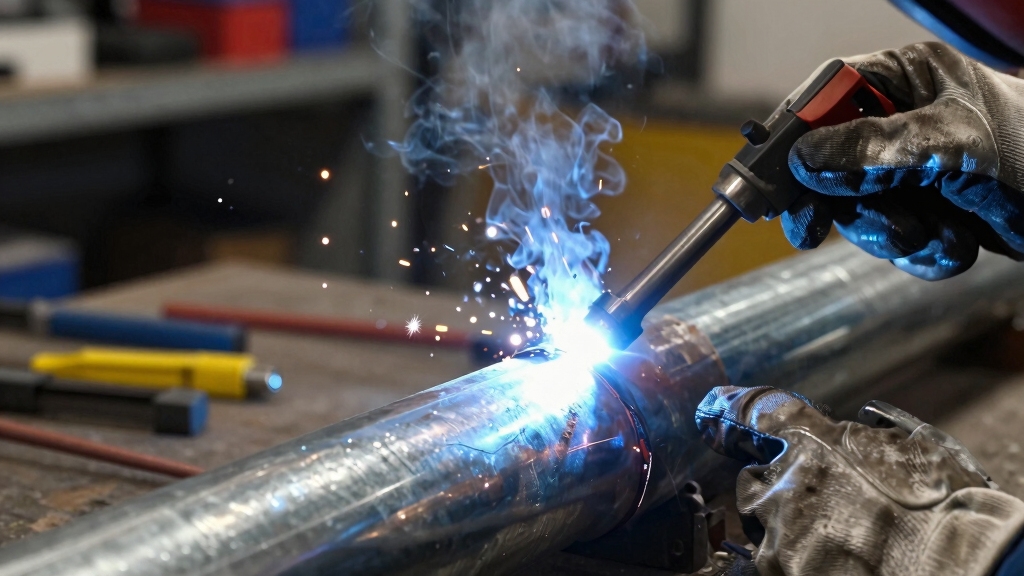
To weld galvanized pipe, first remove the zinc coating within about 2 inches of the joint using grinding or wire brushing to expose bare metal.
Make certain proper ventilation with hoods and filtration removing over 99% of zinc oxide fumes, and always wear respirators.
Use SMAW or GMAW welding with slower travel speeds and whipping electrode motion to avoid porosity.
After welding, inspect and clean thoroughly while maintaining safety measures.
Understanding these steps lets you master the process safely and effectively.
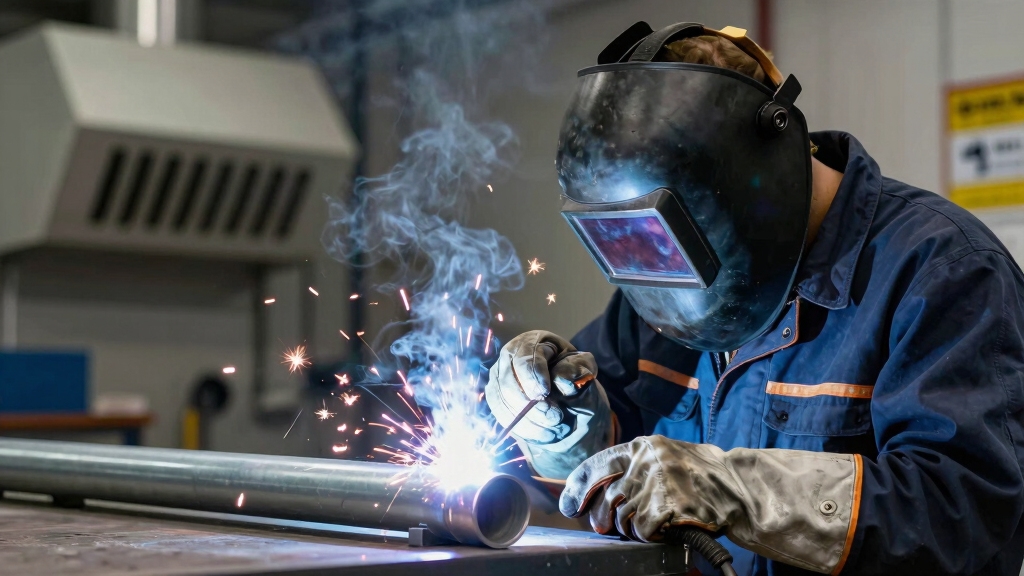
Because welding galvanized pipe releases zinc oxide fumes that are hazardous to your respiratory system, you must prioritize safety precautions and guarantee proper ventilation before starting.
Make certain your workspace includes ventilation hoods equipped with dedicated filtration systems capable of removing at least 99.8% of fumes.
Maintain continuous airflow to prevent toxic smoke from settling on surfaces.
Wear appropriate personal protective equipment, such as respirators or filtered welding hoods, throughout the welding process.
Avoid removing respiratory protection until you’ve exited the immediate area and allowed sufficient aeration time for the workspace.
Consistent adherence to these safety protocols minimizes inhalation risks and environmental contamination, ensuring a controlled, health-conscious welding environment.
Proper implementation of ventilation and protective gear is essential to safeguard your respiratory health when working with galvanized pipes.
Pre-cleaning and local exhaust ventilation are also mandatory to control fume exposure and maintain operator safety.
Sure! Here’s a more conversational version of your text:
—
Before you dive into welding galvanized pipe, there’s a little prep work you’ll need to do. It’s super important to remove the zinc coating from within about 2 inches of the joint. This step is crucial for ensuring a proper fusion when you weld.
Now, when it comes to stripping that surface coating, grinding techniques are your best bet. Just keep in mind that getting rid of all the zinc can be a bit tricky. So, take your time and make sure you’ve prepared the surface well.
Once you’ve got that all sorted out, you can go ahead and start welding. Just remember to keep safety precautions in mind while you work. It’ll help you stay safe and get the best results!
Be aware that vaporized zinc produces zinc oxide fumes that require proper ventilation and respiratory protection during welding.
Removing the zinc coating around the weld joint is essential for achieving a sound, defect-free weld on galvanized pipe. You should strip the coating within 2 inches (50.8 mm) of the joint before welding.
Mechanical methods like wire brushing or sanding can remove superficial zinc layers but may not eliminate all coating. Grinding offers deeper removal but requires care to avoid excessive metal loss.
For stick welding, deeper penetrating electrodes can partially bypass the coating, though spatter and defects may increase. Note that electroplated galvanized pipe has thinner coatings, making removal easier compared to hot-dipped varieties.
Always combine coating removal with proper ventilation and personal protective equipment to mitigate harmful zinc oxide fumes. Thorough preparation guarantees weld integrity and reduces porosity caused by zinc interference.
It is important to ensure proper ventilation and wear protective gear during the removal process to avoid exposure to hazardous zinc dust and fumes.
Utilize grinding as a primary technique to strip zinc coating from galvanized pipe surfaces prior to welding. Select an abrasive disc with medium grit, typically 60-80, to effectively remove the zinc without excessively damaging the base metal.
Secure the pipe firmly to avoid movement during grinding. Maintain a consistent angle of 15 to 30 degrees between the grinder and pipe surface to guarantee uniform coating removal.
Work within a 2-inch (50.8 mm) zone around the weld joint, removing zinc to expose clean steel. Avoid overheating the area to prevent warping or altering metal properties.
Use steady, overlapping passes for thorough coating removal. Always wear appropriate respiratory protection and guarantee ventilation to mitigate zinc oxide fume exposure during grinding.
This method prepares the surface for welding while minimizing contamination. Proper surface preparation is important before welding or coating to ensure strong adhesion and corrosion resistance, as verified by visual inspection.
Ensuring the galvanized pipe surface is free of zinc coating within a 2-inch (50.8 mm) radius around the weld joint is critical for achieving a strong, defect-free weld.
Start by using a grinder equipped with a flap disc or wire brush to remove the zinc coating thoroughly in this area.
Be methodical, making certain you strip the coating down to bare metal, as residual zinc can cause porosity and inclusions.
After grinding, clean the surface with a solvent to remove any debris or oils.
Maintain proper ventilation throughout to prevent inhalation of hazardous zinc oxide fumes.
Wear appropriate personal protective equipment, including respirators.
Only once you’ve fully removed the zinc coating and secured safety measures should you proceed with welding to assure optimal fusion and weld integrity.
It is also important to work in well-ventilated areas or outdoors to minimize exposure to toxic zinc fumes during welding.
When it comes to welding galvanized pipe, you really want to pick the right techniques to get the best results. Techniques like shielded metal arc welding or gas metal arc welding are great choices. They help ensure a strong, durable weld.
Now, let’s talk about electrodes. It’s a good idea to select ones with low silicon content. This little detail can really help manage any interference from the zinc coating. Also, adjusting your travel speed can make a big difference in the quality of your weld.
Another important thing to keep in mind is how you handle the zinc layer near the joint. Whether you choose to remove it or simply manage it properly, this step is crucial. It helps guarantee a strong weld fusion and reduces the chances of defects. So, keep these tips in mind for a successful welding project! Proper surface cleaning and removal of zinc oxides before welding is essential to avoid welding defects.
Choose welding techniques that accommodate the challenges posed by galvanized pipe coatings, such as zinc interference and fume generation.
Shielded Metal Arc Welding (SMAW) and Gas Metal Arc Welding (GMAW) are effective. GMAW suits thinner galvanized pipes due to better control and reduced spatter.
When welding, reduce travel speed by 10-20% to guarantee proper fusion and minimize zinc entrapment.
Employ a whipping electrode motion in SMAW to improve bead quality.
Maintain larger root openings to avoid zinc contamination in the weld pool.
Use multiple passes if necessary to enhance bead integrity.
Always implement proper ventilation and personal protection to mitigate zinc oxide fumes.
Focus on selecting electrodes with low silicon content to optimize weld quality on galvanized pipes. Low silicon electrodes reduce the risk of porosity and inclusions caused by zinc interference, improving fusion and bead integrity.
For shielded metal arc welding, choose EXX10 or EXX11 series electrodes. These perform well with galvanized materials when applied with slower travel speeds and a whipping technique.
When coating removal isn’t feasible, use filler materials compatible with zinc-coated surfaces to maintain weld strength. Stick welding electrodes like 6010, 7018, or 8010 are reliable alternatives, but expect increased spatter.
Always accommodate deeper penetrating rods to counter zinc layers. By methodically selecting electrodes tailored to galvanized pipe characteristics, you enhance weld quality and minimize defects. This ensures structural soundness and longevity.
Using electrodes with a low-hydrogen flux coating such as the 7018 helps reduce cracking risks and improves weld integrity in challenging conditions.
Managing the zinc coating on galvanized pipes requires specific welding techniques to address its impact on weld quality.
You should remove the zinc coating within 2 inches of the joint to reduce defects like porosity and spatter.
When removal isn’t possible, use appropriate filler materials and adjust welding parameters to compensate.
Make certain proper ventilation and personal protective equipment are used to manage harmful zinc oxide fumes.
Key handling considerations include:
These precise steps help maintain weld integrity while minimizing health risks and coating interference. Additionally, applying a weld-through primer can protect joints from corrosion while allowing strong weld penetration.
When welding galvanized pipe, you’ll need to adjust your techniques to counter the challenges zinc coating presents, such as increased spatter, porosity, and inconsistent puddle behavior.
First, reduce your root pass travel speed by 10-20% on flat or vertical butt joints to improve fusion.
Use a whipping electrode motion, advancing 3.2 to 7.9 mm per whip, to control bead shape and minimize defects.
Increase root openings to prevent zinc entrapment in the weld.
Opt for electrodes with low silicon content to reduce porosity.
Maintain consistent arc length to stabilize the puddle despite uneven coating thickness.
These tactical adjustments help you manage zinc’s interference, ensuring stronger welds and better bead formation despite the coating’s complexities.
It is also critical to control heating carefully to avoid exceeding 380°C, as higher temperatures can vaporize zinc coating and create hazardous fumes.
Select filler material carefully to guarantee compatibility with the zinc-coated sections of galvanized pipe.
Choose filler materials that ensure strong, compatible welds with zinc-coated galvanized pipe sections.
Since zinc interferes with fusion, you need filler metals that maintain weld integrity despite the coating. Choose rods or wires designed for galvanized steel welding, often low in silicon to minimize porosity and inclusions.
Consider these points when selecting filler material:
Use AWS-specified electrodes like EXX10 or EXX11 for shielded metal arc welding.
Opt for low-silicon content to reduce defects.
Select filler metals that tolerate the presence of zinc without excessive spatter.
Make certain filler compatibility with both the base metal and zinc coating to maintain bead quality.
Proper consumable selection ensures weld quality, strength, durability, and reduces defects and rework through chemical composition matching.
After choosing the appropriate filler material to handle zinc-coated sections, your attention must shift to controlling the hazardous fumes generated during welding.
Zinc oxide fumes pose serious health risks, so you need a well-ventilated workspace equipped with ventilation hoods featuring dedicated filtration systems capable of removing up to 99.8% of galvanized welding fumes.
Position hoods close to the weld zone to capture fumes at the source. Throughout welding, wear a respirator or filtered hood to protect your respiratory system.
Avoid removing personal protective equipment before leaving the welding area. Allow sufficient time for the workspace to aerate post-welding.
Proper ventilation and consistent use of protective gear are essential to minimize exposure and maintain a safe environment when welding galvanized pipe.
Although welding galvanized pipe presents unique challenges due to zinc coatings, you must rigorously inspect and test welds to guarantee structural integrity and safety.
Begin with visual examination to identify surface defects like porosity, cracks, and spatter.
Conduct non-destructive testing methods such as dye penetrant or ultrasonic inspection to detect subsurface flaws caused by zinc interference.
Mechanical testing, including bend or tensile tests, confirms weld strength and ductility.
Verify bead uniformity and assure adequate fusion between base metals.
Key inspection and testing steps include:
This methodical approach assures weld quality meets safety and performance standards despite zinc coating challenges.
Confirming the weld quality is only part of the process when working with galvanized pipe.
After welding, guarantee thorough post-weld cleanup by grinding off any residual zinc oxide deposits to prevent corrosion and maintain joint integrity.
Use wire brushes or grinders equipped with dust collection to minimize airborne particles.
Always operate in a well-ventilated area with dedicated filtration systems capable of removing up to 99.8% of hazardous fumes.
Wear appropriate respirators or filtered hoods throughout the cleanup to avoid inhaling toxic zinc oxide fumes.
Allow sufficient aeration time before removing protective masks and vacate the workspace to prevent prolonged exposure.
Regularly maintain ventilation equipment to ensure peak performance.
These steps are critical for safeguarding health and preserving weld quality on galvanized steel pipes.
Yes, welding galvanized pipe can cause long-term health issues if you don’t take proper precautions.
The zinc oxide fumes produced during welding are toxic and can lead to respiratory problems over time.
You must always use proper ventilation and wear respirators or filtered hoods to minimize fume inhalation.
Without these safety measures, prolonged exposure increases your risk of chronic lung conditions and other health complications.
Galvanized pipe welding can chip away at corrosion resistance like a slow drip eroding stone.
When you weld, the heat often burns off the protective zinc coating near the joint, exposing bare steel and making it vulnerable to rust.
To maintain corrosion resistance, you need to strip the zinc carefully around welds and apply appropriate post-weld coatings or treatments.
Otherwise, the welded area becomes a weak spot prone to corrosion over time.
You’ll notice common signs of weld failure on galvanized pipes include porosity, visible cracks, and excessive spatter around the weld bead.
Incomplete fusion or lack of penetration often appears as weak joints or gaps.
Discoloration or flaking near the weld may indicate zinc coating damage leading to corrosion.
Pay attention to inconsistent bead shape and irregular surface texture, as these suggest poor weld quality that compromises strength and durability.
You shouldn’t weld galvanized pipes underwater or in wet conditions because moisture causes poor weld quality and increases hazardous fume production.
Wet surfaces promote porosity, cracking, and weak fusion, compromising joint integrity. Always dry the pipe thoroughly and guarantee a clean, dry workspace before welding.
Use proper ventilation and PPE to protect from zinc oxide fumes. If wet conditions are unavoidable, consider alternative joining methods or specialized underwater welding techniques with strict safety protocols.
You don’t generally need to preheat galvanized pipes before welding.
Proper coating removal and ventilation take priority to manage zinc fumes and guarantee weld quality.
However, if the pipe is thick or has residual moisture, mild preheating can help reduce thermal stress and prevent cracking.
Always verify welding procedures per AWS standards. Adjust travel speed and electrodes accordingly for galvanized material to maintain weld integrity without preheating as a strict requirement.
When welding galvanized pipe, remember that zinc oxide fumes can exceed safe exposure limits by up to 15 times without proper ventilation.
Always remove the zinc coating before welding to prevent toxic fumes and guarantee a clean weld. Use appropriate filler materials and adjust your technique to tackle zinc’s challenges effectively.
Prioritize personal protective equipment and thorough post-weld cleanup to maintain safety and weld quality. Following these steps guarantees both your health and structural integrity.