Phone:
(701)814-6992
Physical address:
6296 Donnelly Plaza
Ratkeville, Bahamas.

Phone:
(701)814-6992
Physical address:
6296 Donnelly Plaza
Ratkeville, Bahamas.

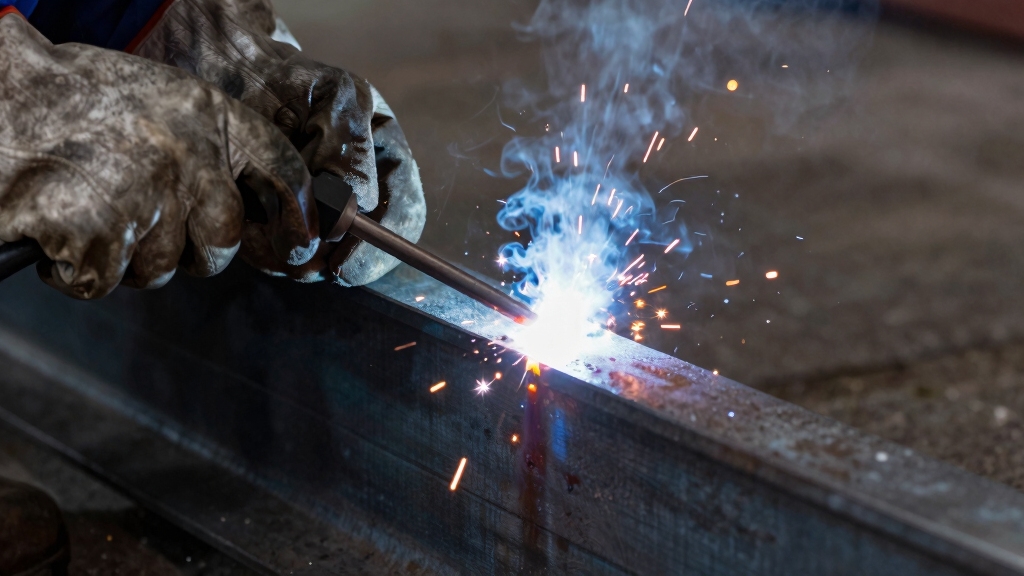
To stick weld vertical, select an electrode like E7018 for uphill or E6010 or E6011 for downhill. Match polarity and amperage carefully, generally lower than flat welding settings to control heat and puddle stability.
Clean and prep joints with proper bevels and fit-up. Then use a short arc length, 10–15° electrode angle, and controlled travel speed. Choose weaving or stringer bead patterns based on thickness and electrode type.
Mastering these basics sets a solid foundation for flawless vertical welds and advanced techniques.
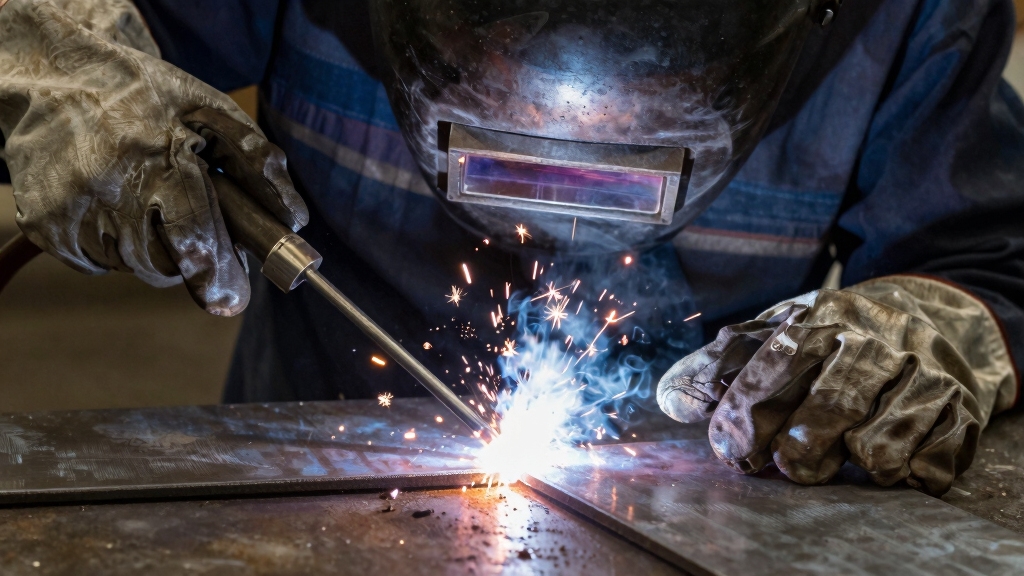
When selecting an electrode for vertical stick welding, you need to take into account the welding position, base material thickness, and desired penetration.
Choosing the right electrode depends on welding position, material thickness, and the penetration you need.
For uphill vertical welding on medium-to-thick materials, E7018 is your best choice due to its low iron powder content, fast freeze rate, and minimal drip. This allows effective weaving and strong penetration.
If you’re working with vertical fillets either uphill or downhill, E6010 or E6011 electrodes suit well. However, E6010 demands a whipping or stacked chip technique for control.
For stainless steels, avoid overheating with standard 308 rods. Instead, opt for 308-16V or 310-16 electrodes designed for vertical progression.
Matching electrode type to your welding conditions guarantees stable arc control, proper penetration, and high-quality welds without slag defects or burn-through.
Additionally, using 6010 electrodes with cellulose-based flux enhances deep penetration and cleaning action, especially useful in vertical welding positions.
When you’re getting ready to tackle vertical stick welding, one of the first things to consider is your amperage setting. It’s generally a good idea to keep it lower than what you’d use for flat welding. If you’re working on an uphill technique, you might want to bump it up a bit, but for downhill, a lower setting is usually more effective.
Now, let’s talk about polarity. This can be a bit tricky because it really depends on the type of electrode you’re using. For instance, if you’re working with stainless steel, opting for DCEN will help stabilize your arc. On the other hand, if you’re using E7018 rods, they tend to perform best on AC or with electrode positive.
Additionally, maintaining proper storage at 225–300°F is crucial to preserve the low-hydrogen coating on E7018 electrodes for optimal welding performance.
Set your amperage lower than flat position recommendations to maintain control and prevent weld defects in vertical stick welding.
Vertical welding demands reduced current to avoid excessive weld pool fluidity and sagging. For uphill welding on medium-to-thick materials, select amperage near the lower half of the electrode’s recommended range, slightly higher than downhill settings to guarantee adequate penetration without burn-through.
When using E7018 rods, reduce amperage further for weaving techniques to allow the puddle to freeze properly. Conversely, stringer beads may require a slight amperage increase to maintain arc stability.
Always test settings on scrap to fine-tune amperage based on electrode diameter, base metal thickness, and position. Precise amperage control optimizes penetration, minimizes slag inclusions, and guarantees a consistent, defect-free vertical weld bead.
Additionally, using the correct welding helmet shade corresponding to your amperage ensures proper arc visibility and eye protection during vertical welding shade number guidance.
Choosing the correct polarity plays a pivotal role in achieving stable arc characteristics and peak weld quality during vertical stick welding.
You’ll typically use DC electrode positive (DCEP) for E7018 rods to guarantee deep penetration and smooth arc control, especially uphill.
For stainless steel vertical welds, DC electrode negative (DCEN) stabilizes the arc and curbs excessive puddle fluidity. AC polarity suits general-purpose rods like E6011 but may cause less stable arcs uphill.
| Electrode Type | Recommended Polarity |
|---|---|
| E7018 | DC Electrode Positive |
| E6010/E6011 | AC or DC Electrode Positive |
| Stainless 308/310 | DC Electrode Negative |
Adjust amperage accordingly, slightly higher for uphill and lower for downhill to complement polarity and maintain weld integrity.
Maintaining the proper polarity setup ensures optimal heat distribution critical for weld penetration and stability.
Before starting vertical stick welding, thoroughly clean the workpiece and joint area to remove rust, oil, paint, and contaminants that could compromise weld quality.
Use a wire brush or grinder to expose bare metal and make certain proper fusion. Next, prepare your joint by beveling edges on thicker materials to achieve full penetration, typically at a 30 to 45-degree angle.
Make certain proper fit-up with minimal gaps to prevent excessive weld metal buildup. Clamp securely to prevent joint movement during welding, as vertical positions amplify gravity’s effect on molten metal.
Finally, preheat the workpiece if necessary, especially for thicker or high-carbon steels, to reduce thermal stress and cracking.
Implementing heat control techniques helps reduce welding defects and improve weld quality.
With your workpiece properly prepared and secured, you can focus on mastering uphill vertical stick welding techniques that deliver deep penetration and strong fusion.
Begin by selecting the appropriate electrode. E7018 is ideal due to its fast-freezing slag and low iron powder content.
Maintain a short arc length and hold the electrode at a 10-15 degree travel angle uphill from perpendicular.
Use a controlled weave pattern, such as triangle or zigzag, to build the weld bead incrementally. Pause at each side to create a stable weld shelf.
Adjust amperage slightly higher than flat welding but stay within the lower half of the recommended range to prevent overheating.
Let each weld puddle freeze before progressing to guarantee proper fusion and avoid slag inclusions. Mastering these steps secures structurally sound vertical welds on medium to thick materials.
Ensure you also control heat input carefully to minimize distortion and residual stress during welding of dissimilar metals like carbon steel to stainless steel.
When you tackle downhill vertical stick welding, you’ll want to pull the electrode steadily downward to maintain control and avoid excessive penetration.
This technique suits thinner materials where speed is key, but you must carefully manage heat input to prevent burn-through. Use E6011 or E6010 electrodes with lower amperage settings than uphill welding.
Follow these key safety and control measures:
Although vertical stick welding demands steady control, choosing the right bead pattern, either weave or stringer, directly impacts weld quality and penetration.
You’ll use weave beads, such as triangle or zigzag patterns, when you need to build a wider weld shelf and ensure proper fusion on thicker materials.
This pattern allows you to pause momentarily at each side, promoting uniform heat distribution and slag coverage.
Conversely, stringer beads involve a straight, in-and-out motion with a slight upward push angle, which is ideal for narrow, deep penetration on thinner metals or when speed is vital.
Stringer beads also reduce heat input, minimizing distortion.
Mastering when to apply each pattern guarantees peak weld integrity and minimizes defects in vertical stick welding applications, especially using electrodes like E7018.
Using an inverter welding machine enhances arc stability and precise heat input control, which is crucial for achieving quality welds in vertical stick welding.
When you’re welding vertically, controlling heat is super important. It helps to prevent burn-through and keeps the weld strong, especially when you’re working with thinner materials.
You really want to pay attention to how much amperage you’re using and keep those arc lengths short. This way, you can manage the heat input more effectively.
And don’t forget about the slag! It’s crucial to remove it right after each pass. If you let it sit, you run the risk of inclusions, which can mess up the quality of your weld.
Plus, keeping the surface clean makes it easier for the next layers to adhere properly. So, take your time with both the heat and the slag removal—it’s worth it for a solid weld!
Maintaining precise control over welding parameters like voltage and travel speed is key to producing defect-free vertical welds and reducing distortion, especially in challenging positions such as vertical stick welding with precise heat input management.
Mastering heat control in vertical stick welding is essential to guarantee proper penetration and prevent defects like burn-through or slag inclusions.
You must carefully balance amperage, travel speed, and electrode manipulation to maintain a stable puddle and avoid overheating the base metal.
Focus on these three critical strategies:
Implementing these assures uniform heat distribution and quality welds in vertical positions. Additionally, following a Welding Procedure Specification (WPS) ensures consistent parameters and helps avoid common heat-related defects.
When welding vertically, managing slag effectively is critical to guarantee clean, defect-free welds and maintain strong fusion between passes.
You must remove slag thoroughly after each pass, especially in multi-pass welds, to prevent slag inclusions that compromise weld integrity.
Use a proper chipping hammer and wire brush to clear slag while the weld is still warm but solidified, assuring each layer bonds correctly with the next.
Avoid excessive heat that causes slag to adhere too strongly or burn into the weld. Maintain a consistent short arc length and correct electrode angle to minimize slag buildup.
Efficient slag removal not only promotes ideal bead appearance but also assures the mechanical strength needed for vertical position welds on medium to thick materials.
Although vertical stick welding presents unique challenges, you can fix common mistakes by adjusting your technique and settings carefully.
First, maintain a short arc length and proper electrode angle, typically a 10-15 degree travel angle uphill to prevent slag inclusions and undercut.
Maintain a short arc and 10-15° uphill electrode angle to prevent slag inclusions and undercut.
Second, control amperage by starting at the lower half of the recommended range. Excessive heat causes burn-through or poor penetration.
Third, use correct rod manipulation. Employ weaving or stringer beads appropriate to the rod type, such as E7018 for uphill weaving, to build a stable weld pool and avoid lack of fusion.
Consistently clean slag between passes and pause to let puddles freeze. By mastering these adjustments, you guarantee vertical weld integrity and avoid common defects like slag entrapment, excessive spatter, and weak joints.
You need to wear a welding helmet with a proper shade to protect your eyes from intense UV and infrared light.
Use flame-resistant gloves and a long-sleeve jacket to shield your skin from sparks and slag spatter.
Safety glasses under the helmet guard against flying debris when slag pops off. Respiratory protection is crucial in confined areas.
Always opt for sturdy boots and make certain your clothing covers all exposed skin to prevent burns.
Gravity pulls the molten weld puddle downward, making it harder for you to maintain control in vertical positions.
You’ll need to use a short arc length and adjust your electrode angle to counteract this. Slow your travel speed to let each puddle solidify before moving on, preventing sagging or dripping.
Techniques like weaving help build a stable weld shelf, allowing you to manage gravity’s effect and maintain penetration and bead shape effectively.
Yes, you can safely stick weld stainless steel vertically, but you’ll need to adjust your technique and equipment.
Use lower amperage, around 75 amps for 3/32 rods, and select rods like 308-16V or 310-16 designed for vertical welding.
Balance heat carefully; too hot causes warping, too cold affects penetration.
Maintain DCEN polarity for arc stability, control slag aggressively, and always wear eye protection as stainless slag pops fiercely.
You face unique safety hazards in vertical stick welding like slag falling onto your skin or eyes due to gravity.
The upward weld puddle can cause spatter to drop unpredictably, so always wear protective gear, including safety glasses or a flip shield.
Overheating electrodes may cause sudden rod breakage, posing injury risks.
Also, gravity challenges require steady control to avoid slips that can lead to burns or poor weld quality, increasing rework hazards.
If your rod feels like it’s melting into a fiery dragon’s breath, slow down your travel speed immediately.
Excessive heat causes overheating; lower your amperage, especially if you’re running near the upper limit.
Keep a short arc length and pause briefly to let the puddle solidify. Restart with fresh rods if they overheat.
Always test settings on scrap metal to fine-tune your technique and avoid burning out your electrode prematurely.
Mastering vertical stick welding means balancing heat like a tightrope walker and controlling your electrode as if painting precise strokes on a canvas.
By choosing the right electrode, setting proper amperage, and perfecting uphill and downhill techniques, you’ll weld strong, clean joints every time.
Remember, managing slag and using the right bead pattern isn’t just a skill—it’s your blueprint for success. Stick with these fundamentals, and your vertical welds will stand tall and flawless.