Phone:
(701)814-6992
Physical address:
6296 Donnelly Plaza
Ratkeville, Bahamas.

Phone:
(701)814-6992
Physical address:
6296 Donnelly Plaza
Ratkeville, Bahamas.

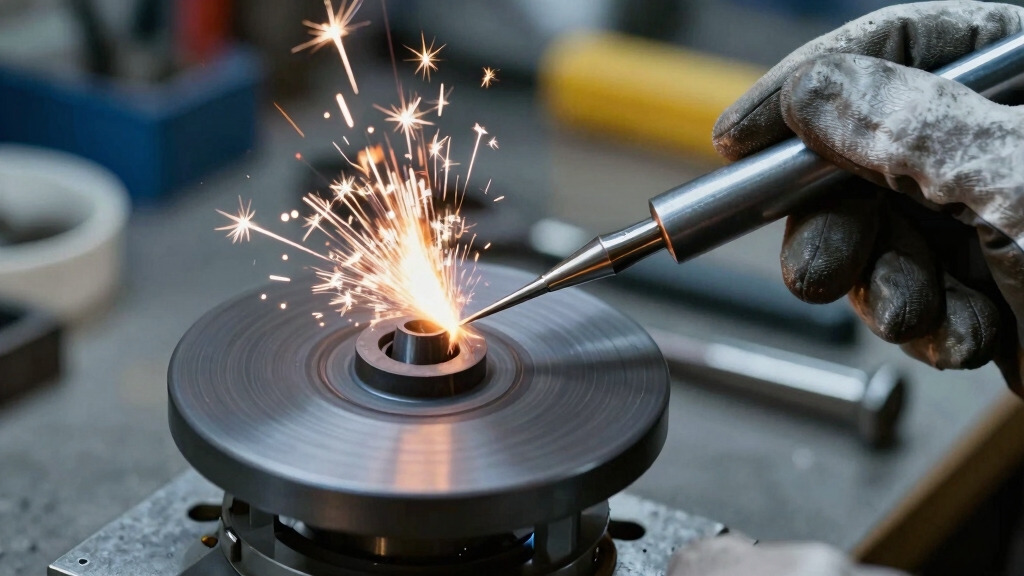
To sharpen your tungsten electrode, use a dedicated grinder with a diamond wheel to avoid contamination.
Hold the electrode at a 15–30° angle and grind lengthwise, rotating steadily to create a smooth, consistent taper.
Avoid touching the tip with bare hands and keep grinding marks aligned parallel to the electrode axis for ideal arc stability.
Match your electrode diameter and tip shape to your welding amperage and material.
Keep these guidelines in mind; you’ll discover more precise techniques and tips ahead.
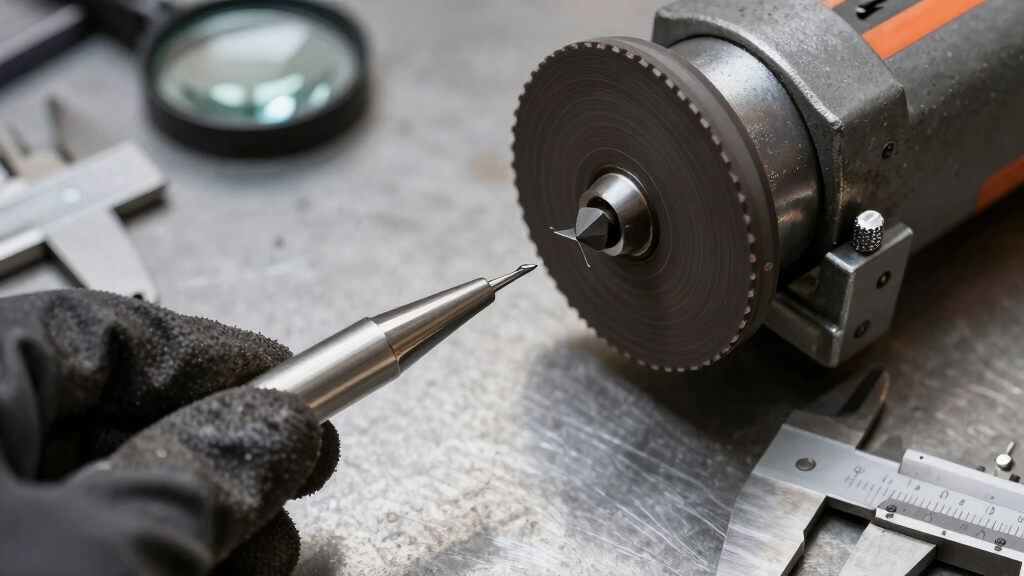
When sharpening tungsten electrodes, you’ll need the right tools to guarantee precision and avoid damaging the material.
A dedicated tungsten grinder or a bench grinder equipped with a diamond wheel offers the best results for achieving a sharp, consistent point.
If you don’t have these, a 4.5-inch angle grinder can serve as a rough alternative.
You can also use a cordless drill to chuck the tungsten electrode for controlled hand grinding.
To prevent rough scratches and contamination, always finish with a fine-grit stone or sanding disc.
For scoring before breaking the electrode, a hard rock or inexpensive diamond wheel from hardware stores works well.
Using these tools correctly helps maintain electrode integrity and assures peak welding performance.
For optimal results, use the recommended grit wheel appropriate to your tungsten diameter and desired finish quality.
Hold the tungsten electrode at a 15 to 30-degree angle against the grinding wheel to shape an ideal point.
Press it vertically at about 30 degrees if using a bench grinder, guaranteeing you grind along the electrode’s length to prevent micro-cracks.
Rotate the electrode evenly and consistently during grinding, maintaining steady pressure to form a sharp, tapered tip suitable for most TIG welding tasks.
Aim to create a small flat spot at the tip’s end for enhanced arc stability.
Use a fine-grit wheel or stone to avoid rough scratches, aligning all grinding marks parallel to the electrode’s axis.
This technique guarantees a focused, stable arc and extends electrode life while optimizing weld quality.
Proper grinding angles and techniques are essential to prevent micro-cracks that can compromise the electrode’s performance and durability.
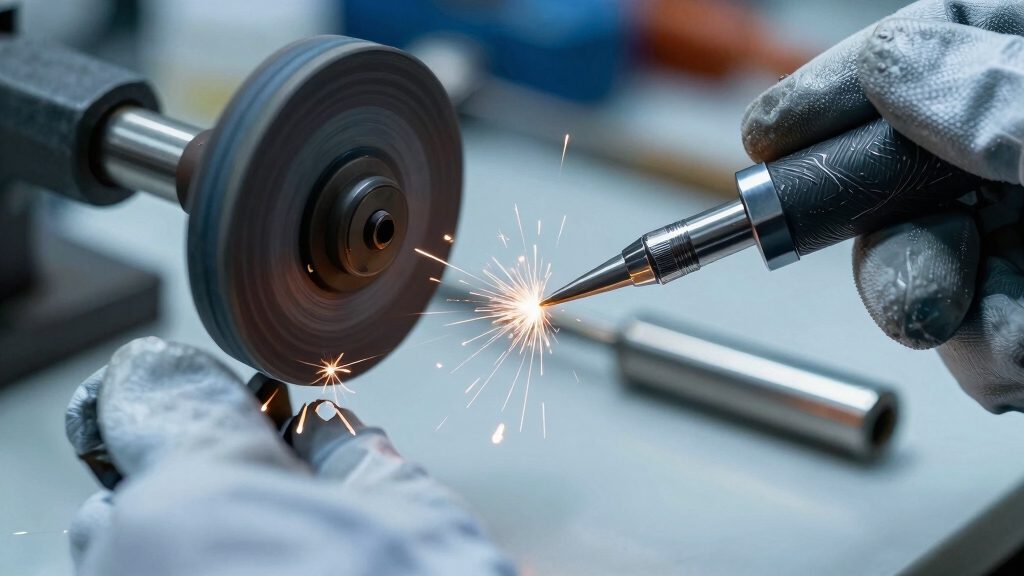
Since contamination can severely degrade weld quality, you must grind tungsten electrodes with clean tools. Avoid touching the sharpened tip with bare hands.
Use a dedicated grinder or a bench grinder fitted with a diamond wheel to prevent contamination from other metals. Always handle electrodes with a proper holder to keep skin oils off the tip. Clean the grinding wheel regularly to avoid embedded particles.
| Action | Reason |
|---|---|
| Use dedicated grinder | Prevent cross-contamination |
| Avoid bare hand contact | Eliminate skin oil transfer |
| Clean grinding wheel | Remove embedded contaminants |
| Use fine-grit stone | Prevent rough scratches |
| Inspect electrode | Assure no contamination present |
Following these guidelines guarantees a clean, sharp tungsten tip. This maintains weld integrity and arc stability. Choosing gloves with heat-resistant stitching can help protect your hands during electrode grinding and handling.
Maintaining a clean, properly sharpened tungsten electrode sets the foundation for matching electrode diameter and material to your welding application.
Choose a 1/16-inch diameter electrode for thin metals under 100 amps to guarantee precise arc control. For thick aluminum, use a 1/8-inch electrode to handle higher currents and preserve stability.
A 3/32-inch lanthanated tungsten suits machines up to 200 amps and accommodates various materials effectively. When working with ferrous or non-ferrous metals, a 2.4-millimeter gold-tipped lanthanum tungsten electrode offers versatility with consistent preparation.
For 2% thoriated tungsten, apply hand grinding or use a cordless drill to create the ideal point shape. Always match electrode diameter and material type to your machine’s amperage and the specific metal to maximize weld quality and electrode longevity.
Using the correct polarity, such as DCEN for tungsten welding, helps reduce electrode heating and prolongs tungsten life.
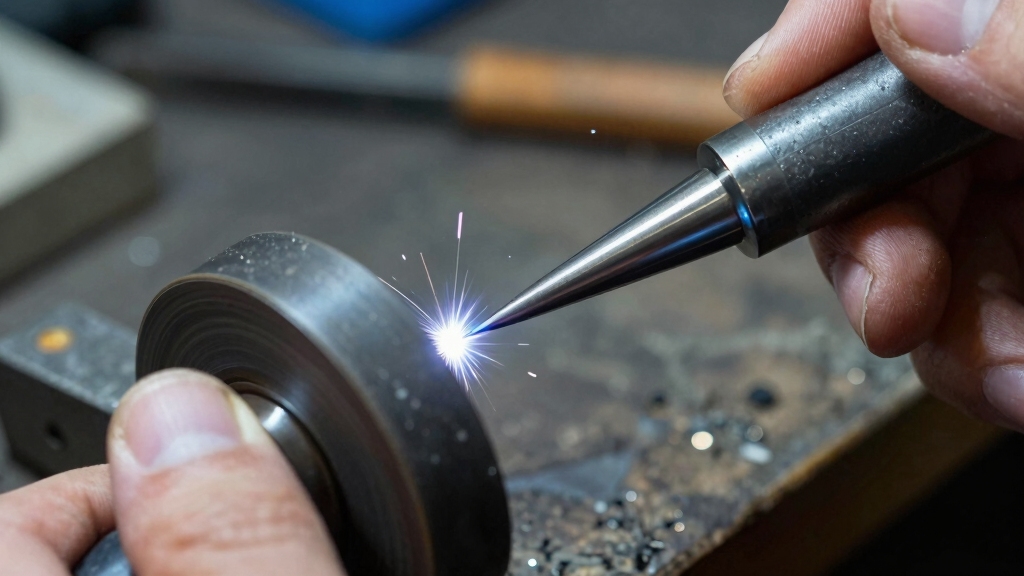
Although selecting the correct tungsten electrode diameter and material is crucial, choosing the right tip shape directly impacts your weld quality and stability. You’ll want to match the tip shape to your specific welding application to optimize arc focus and penetration.
| Tip Shape | Application | Amperage Range |
|---|---|---|
| Tapered Point | General TIG welding | Low to Medium |
| Needle-like Tip | Thin metal, low amperage | Very Low |
| Blunt Tip | Thick metal, high amperage | Medium to High |
Use a tapered point for versatile welding scenarios. Opt for a needle-like tip when working on thin metals with low amperage to maintain arc precision. Choose a blunt tip for high amperage and thicker materials to prevent electrode degradation and improve arc stability. Select wisely for consistent, high-quality welds. Proper tungsten electrode handling and correct electrode selection are critical for arc stability and preventing contamination.
You should sharpen tungsten electrodes before each welding session or whenever you notice arc instability or contamination.
Frequent sharpening guarantees a clean, sharp point that maintains arc focus and weld quality.
Avoid grinding too often to conserve electrode life, but never use a dull or contaminated tip.
Inspect your electrode regularly and regrind when you see wear, rough scratches, or a rounded tip that degrades performance.
You can reuse tungsten electrodes after welding, but only if you inspect them carefully, like checking a blade for nicks before resharpening.
Examine the tip for contamination, wear, or deformation.
If the electrode’s tip remains clean and sharp without cracks or excessive oxidation, you can grind it back to the proper shape and reuse it.
Otherwise, replace it to guarantee peak arc stability and weld quality.
Always handle electrodes with care to avoid contamination.
You should always wear safety goggles to protect your eyes from sparks and debris when grinding tungsten electrodes.
Use a dust mask or respirator to avoid inhaling harmful particles.
Gloves protect your hands from cuts and contamination, but don’t touch the electrode tip directly.
Hearing protection is advisable if using a noisy grinder.
Make certain proper ventilation and avoid loose clothing to prevent accidents during the sharpening process.
Environmental factors like humidity and dust affect tungsten electrode sharpening by causing contamination and oxidation.
You should work in a clean, dry area to prevent moisture buildup, which can lead to surface oxidation, reducing weld quality.
Dust and debris can embed in the electrode, causing roughness and unstable arcs.
Proper ventilation and using a dedicated electrode grinder in a controlled environment help maintain sharpness and electrode integrity for consistent, high-quality welding results.
You’ll spot improper sharpening when the tip looks jagged, uneven, or too blunt, instead of smooth and tapered.
If the electrode tip has sideways scratches or micro-cracks, your welds will suffer from instability and wider, inconsistent arcs.
When the point lacks a small flat spot, it’ll wobble during welding.
Also, contamination from skin oils or rough grinding surfaces causes erratic arcs and poor weld quality.
Sharpening your tungsten electrode correctly is essential for peak welding performance. Did you know that a properly ground electrode can improve arc stability by up to 30%?
By using the right tools, maintaining precise grinding angles, and preventing contamination, you’ll extend electrode life and enhance weld quality. Always match the tip shape and diameter to your material for best results.
Follow these steps carefully to guarantee consistent, professional welds every time.