Phone:
(701)814-6992
Physical address:
6296 Donnelly Plaza
Ratkeville, Bahamas.

Phone:
(701)814-6992
Physical address:
6296 Donnelly Plaza
Ratkeville, Bahamas.

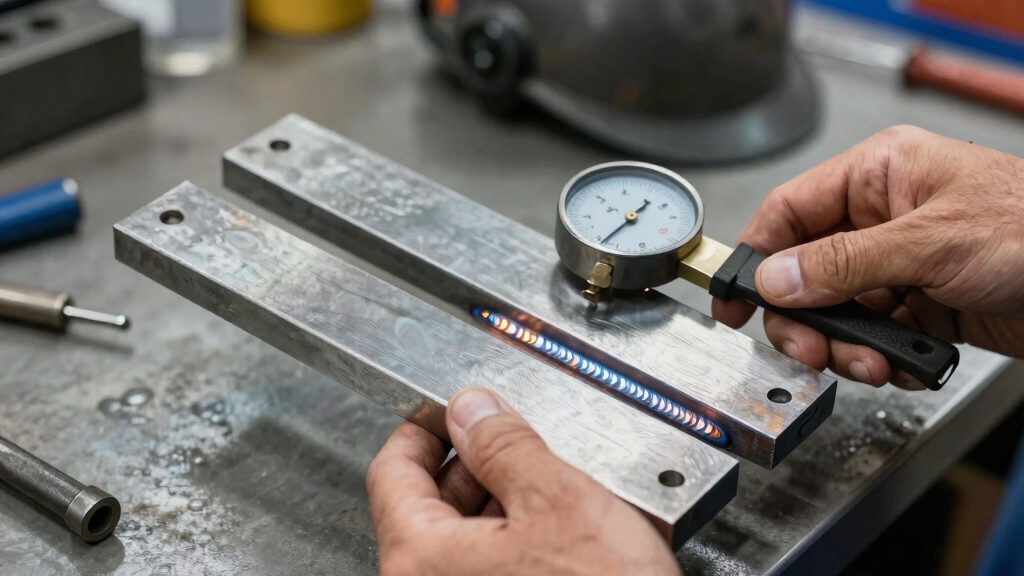
To read weld symbols, identify the horizontal reference line and arrow pointing to the joint. Notice whether symbols sit above or below the line; they show weld placement on the opposite or arrow side, respectively.
Interpret shapes like triangles for fillet welds or Vs for groove welds. Check numbers for weld size, length, and spacing, and the tail for welding process or procedure details.
Recognize AWS versus ISO standards to avoid errors. Keep these in mind, and you’ll grasp precise weld specifications and avoid common pitfalls as you explore further.
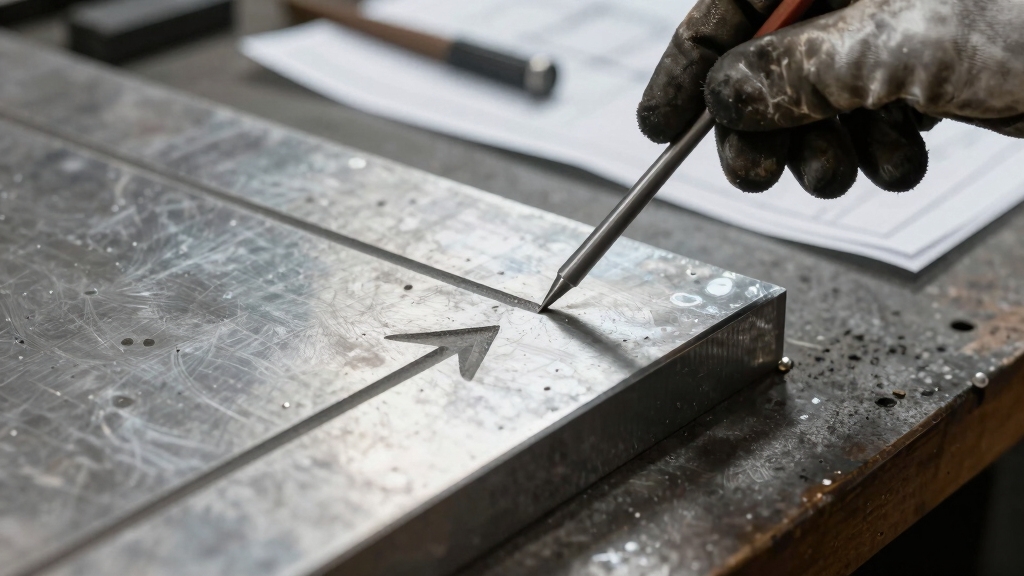
To spot the reference line and arrow in welding symbols, start by locating the horizontal reference line. This line acts as the central anchor for all welding information on the symbol.
Begin by finding the horizontal reference line, the key anchor for all welding details on the symbol.
The arrow connects directly to this line and points precisely to the joint requiring welding. You’ll notice that symbols placed below the reference line indicate welds on the arrow side of the joint, following AWS conventions.
Those above signify welds on the opposite side. Understanding this spatial relationship is vital for accurate interpretation.
The arrow’s position relative to the joint clearly identifies where the weld applies. The reference line organizes all supplementary information consistently.
Mastering these elements guarantees you correctly read and execute welding instructions without errors. Accurate interpretation of these symbols is essential to ensure compliance with welding specifications and prevent costly rework or compromised safety.
You’ll come across various shapes like triangles, Vs, half-circles, rectangles, and circles attached to the reference line. Each of these shapes indicates a specific type of weld.
It’s pretty important to pay attention to whether the symbols are above or below the reference line. This detail actually tells you where the weld is located in relation to the joint.
Understanding the fillet weld size is crucial for interpreting weld symbols accurately and ensuring the weld meets strength and code requirements.
Weld symbol shapes convey critical information about the type of weld required and its specific application. This allows you to quickly identify the welding method needed for a joint. Recognizing these shapes helps you interpret the weld’s geometry and function accurately.
Here are common weld symbol shapes you’ll encounter:
Understanding these shapes guarantees you apply the correct welding technique and produce structurally sound joints per design requirements. The bead geometry associated with each symbol adapts to balance tensile, compressive, and shear forces for joint durability.
Recognizing the placement of weld symbols relative to the reference line reveals specific information about the location and type of weld required.
When a weld symbol appears below the reference line, it indicates the weld is on the arrow side of the joint, per AWS standards.
Conversely, symbols placed above the line specify a weld on the opposite side. The arrow itself points directly to the joint, clarifying the weld location.
You’ll also see supplementary symbols attached to the reference line to indicate finishing or contour requirements.
Keep in mind, mixing AWS and ISO standards can cause confusion, so always confirm which system applies.
Understanding these placements guarantees you accurately interpret weld instructions, avoiding fabrication errors and guaranteeing compliance with detailed welding specifications.
Welding procedures must align with a qualified Welding Procedure Specification (WPS) to ensure consistent quality and compliance with industry codes.
You’ll find the weld size indicated as a number to the left of the weld symbol. This number specifies the leg length or depth required for the weld.
Pretty straightforward, right?
Now, when it comes to length and spacing measurements, those appear to the right of the symbol. They define the intervals for intermittent welds and the overall length of the weld.
Understanding where these measurements are placed is key! It helps ensure that your welds meet the necessary design strength and inspection criteria accurately. Proper edge preparation and alignment are critical to achieve full penetration and weld integrity.
Although it may seem straightforward, correctly placing weld size, length, and spacing on a welding symbol requires careful attention to standard conventions.
You need to position the weld size number to the left of the weld symbol on the reference line, indicating the leg length or depth of the weld.
Length and spacing values go to the right of the symbol but aren’t the focus here.
Remember, weld size must reflect the exact dimension required to meet strength and inspection criteria.
Key points to take into account for weld size placement include:
Selecting the correct weld size is crucial because amperage controls penetration, directly impacting the weld’s strength and quality.
When specifying weld length and spacing, place these dimensions immediately to the right of the weld symbol on the reference line to clearly communicate the size and interval of intermittent welds.
The first number indicates the length of each weld segment, while the second number specifies the spacing between these welds. For example, “3-6” means 3 inches of weld followed by 6 inches of unwelded space.
Accurately positioning these dimensions guarantees fabricators understand the exact weld pattern required, avoiding over-welding or under-welding.
Remember, continuous welds omit spacing values. Precise length and spacing details are essential for meeting strength requirements and passing non-destructive testing.
Double-check these dimensions against your welding procedure specifications and shop standards before finalizing the drawing. Proper specification helps ensure compliance with welding procedure qualification and structural integrity standards.
Examine the tail of the welding symbol closely to find critical information about the welding process and material requirements. This section often specifies the welding method, such as MIG, TIG, or SMAW, ensuring you apply correct equipment and technique.
You’ll also find references to the Welding Procedure Specification (WPS), which consolidates detailed instructions for the joint, including filler material and welding position. The tail streamlines communication by avoiding repetitive notes on the drawing.
Proper selection of wire electrode and matching polarity settings as specified in the WPS help maintain a stable arc and consistent weld quality.
Because welding symbols serve as critical communication tools in fabrication, understanding the distinct conventions between AWS and ISO standards is essential to avoid costly errors.
You’ll find AWS places weld symbols below the reference line for arrow-side welds, while ISO uses different line systems. Mixing these standards can lead to misinterpretation and fabrication defects.
| Feature | AWS Standard | ISO Standard |
|---|---|---|
| Reference Line | Single solid line | System A: Dual line (solid/dashed) |
| Weld Side Indication | Below line = arrow side | Above/below line varies by system |
| Symbol Placement | Below or above based on side | Uses line type and placement |
| Standard Governing Body | ANSI/AWS A2.4 | ISO 2553 |
| Tail Information | Welding process details | Process details in tail or notes |
Proper selection and understanding of shielding gases are crucial to ensure weld quality and consistency alongside symbol interpretation.
You must adopt one standard consistently to ensure accurate weld interpretation.
To make certain accurate communication and prevent fabrication errors, you must apply a single weld symbol standard consistently across all drawing views and details. Select the appropriate standard, AWS or ISO, and clearly indicate it in the drawing notes or title block. Consistency guarantees fabricators interpret weld locations, types, and processes without ambiguity.
Remember these key points when applying weld symbols:
Maintaining detailed continuity records supports compliance and ensures welding processes are properly documented in fabrication.
Applying weld symbols consistently on drawings reduces the chance of misunderstanding, but interpreting those symbols still requires careful attention.
Consistent use of weld symbols minimizes confusion, yet accurate interpretation demands careful focus and understanding.
One common mistake is confusing weld placement by misreading whether symbols are above or below the reference line. Remember, below indicates the arrow side, while above indicates the opposite side in AWS standards.
Avoid mixing AWS and ISO symbols on the same drawing. Doing so leads to fabrication errors due to differing conventions.
Don’t overlook the weld size and length numbers; they specify critical dimensions. Also, always check the tail for process or WPS references to ensure correct welding technique.
Finally, don’t disregard supplementary symbols attached to the reference line, as they dictate essential finishing requirements. Precision in every detail prevents costly rework.
You can identify the type of electrode used by checking the tail of the weld symbol, where welding process details are specified.
This section often includes electrode type, filler material, or welding method like MIG or TIG.
Additionally, references to approved Welding Procedure Specifications (WPS) in the tail provide detailed electrode and material info.
This ensures you apply the correct technique and consumables for the joint, maintaining consistency and quality in fabrication.
You might wonder if weld symbols directly specify post-weld heat treatment, but they don’t.
Instead, such information typically appears in the tail of the symbol or is referenced through welding procedure specifications (WPS).
These documents provide precise heat treatment details required after welding.
You represent multi-pass welds by adding a number to the weld symbol’s tail or by using multiple weld symbols stacked vertically on the reference line. The number indicates how many passes are required.
Sometimes, you’ll see a sequence of weld symbols specifying each pass’s type or size. This detailed notation guarantees you control weld buildup, penetration, and quality, especially for thick sections needing multiple layers to meet strength requirements.
Did you know that nearly 60% of weld failures stem from incorrect process application?
When you see a tail with multiple process codes, it means the weld requires different welding methods in sequence or combination.
This guarantees peak strength and quality by specifying exact processes like MIG followed by TIG.
You must follow these codes precisely to meet welding procedure specifications and avoid costly fabrication errors or rework on complex joints.
Yes, weld symbols differ in repair versus new construction.
In repair, symbols often include additional notations for removal of defective welds, surface preparation, or special weld contours to restore integrity.
You’ll see more supplementary symbols indicating grinding or gouging.
In new construction, symbols focus on initial joint preparation and weld type.
Always confirm the project’s welding procedure specifications, as repair welds may require stricter controls or process variations.
Now that you’ve mastered reading weld symbols, you hold the blueprint to clear, precise communication in welding.
Think of these symbols as the language that bridges design and execution. Each line and shape is a crucial piece of the puzzle.
By consistently applying standards and avoiding common pitfalls, you’ll guarantee flawless interpretation every time.
Keep this knowledge sharp, and you’ll weld your projects together with accuracy and confidence, like a craftsman shaping metal with every stroke.