Phone:
(701)814-6992
Physical address:
6296 Donnelly Plaza
Ratkeville, Bahamas.

Phone:
(701)814-6992
Physical address:
6296 Donnelly Plaza
Ratkeville, Bahamas.

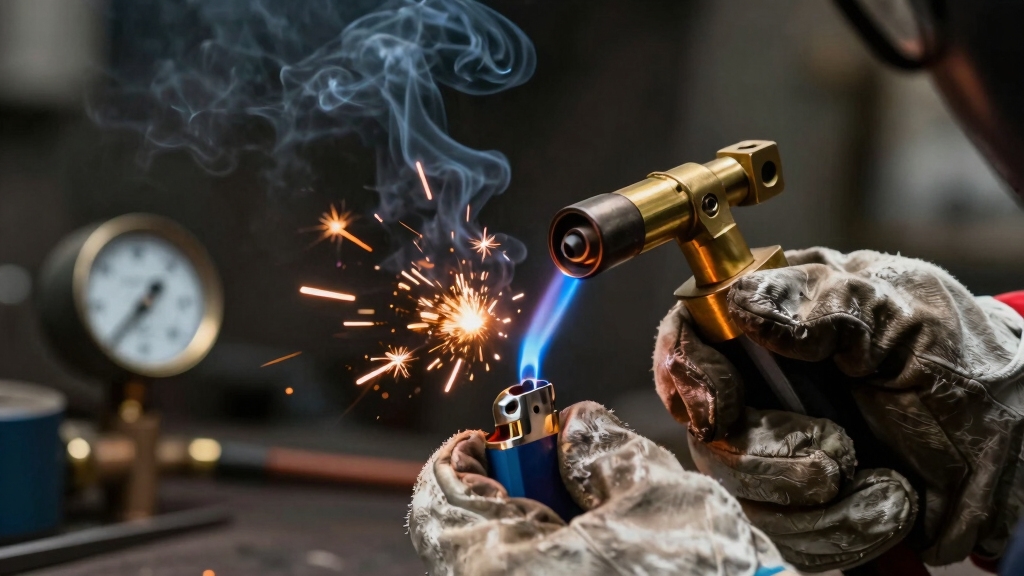
Before lighting your welding torch, inspect cylinders for damage and wear protective gear.
Connect regulators tightly, adjust oxygen to 5–10 PSIG, and acetylene to about 5 PSIG.
Select the correct torch tip, purge gas lines to remove contaminants, then open the acetylene valve slightly and ignite immediately.
Gradually introduce oxygen until you see a neutral flame with a clear inner cone.
Always adjust carefully for safety and flame stability.
Following these steps sets you up for efficient and safe operation, and there’s more essential guidance to improve your technique.
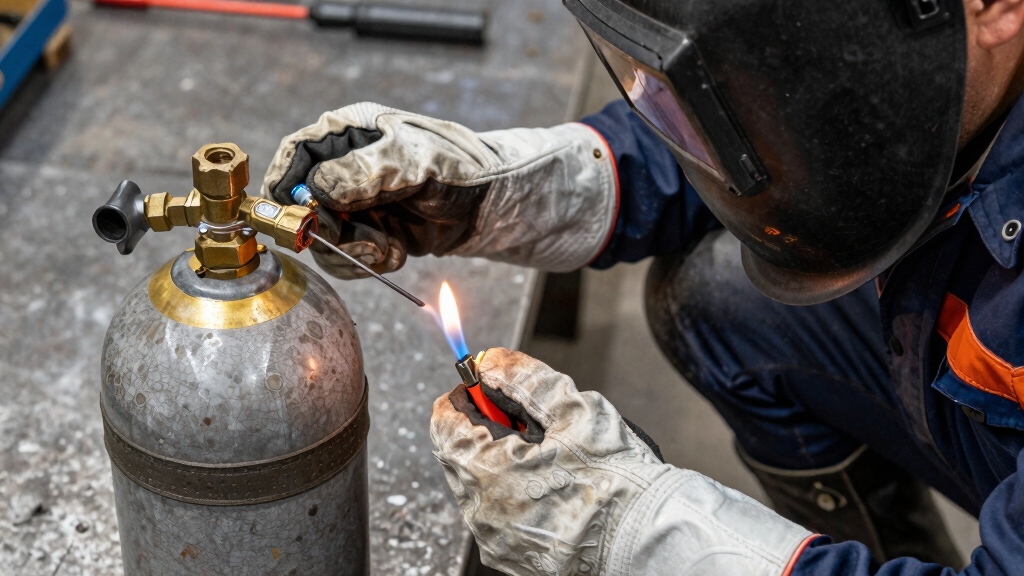
Before you begin any welding operation, always inspect your cylinders thoroughly for damage or leaks to assure safe use. Check for dents, cracks, corrosion, or compromised valves that could cause hazardous failures.
Thoroughly inspect welding cylinders for dents, cracks, corrosion, or leaks to ensure safe operation.
Use a leak test solution or soap and water on all connections, fittings, and hoses to identify escaping gas bubbles. Never bypass these inspections as gas leaks pose serious explosion risks.
Simultaneously, wear appropriate protective gear: flame-resistant gloves, safety goggles or a welding helmet with proper shading, and flame-retardant clothing. This equipment shields you from sparks, UV radiation, and hot metal splatter.
Prioritize these safety measures before proceeding to equipment setup or lighting. Your vigilance in this initial phase assures a safe, controlled welding environment and prevents accidents stemming from faulty cylinders or inadequate protection.
Always ensure that oxygen cylinders are fully depressurized in a well-ventilated area before handling to avoid pressurized gas hazards.
Securely connect the regulators to the oxygen and fuel gas cylinders, guaranteeing all fittings are tight and leak-free. Before attaching, verify cylinder valves are closed and regulator adjusting screws are fully released.
Use the correct regulator for each gas to prevent cross-contamination. After connection, open the oxygen cylinder valve slowly to pressurize the regulator gradually. Adjust oxygen pressure to 5–10 PSIG according to your welding requirements.
Next, open the fuel gas cylinder valve about a quarter to half turn; acetylene requires approximately 5 PSIG for welding. Set the fuel regulator accordingly. Always test connections for leaks using a soap solution before proceeding.
Confirm the work area is clear and hoses are correctly routed. Proper regulator setup guarantees stable gas flow, which is critical for safe and efficient torch operation. Additionally, ensure respiratory protection is used when welding zinc-plated steel to minimize exposure to hazardous zinc oxide fumes.
With regulators properly connected and gas pressures set, you’ll select the appropriate welding torch tip based on the size and style specified in the manufacturer’s charts.
Choose a tip that matches your welding application to guarantee peak flame characteristics and heat output.
Selecting the right tip ensures optimal flame quality and maximum heat for your welding tasks.
Once installed securely, purge the gas lines individually to eliminate air or contaminants that could compromise flame stability.
Open the oxygen valve briefly for 3–5 seconds, then close it; repeat the same for the fuel gas line.
This step is critical to maintain a clean, uncontaminated gas flow and prevent flashbacks.
Always verify that all connections are tight and leak-free after purging.
Following these precise procedures guarantees safety and consistent welding performance before you proceed to light the torch.
Proper adjustment of the oxygen-to-fuel ratio is essential to achieve a neutral flame with peak temperature and clean combustion.
To light your welding torch flame, start by opening the acetylene needle valve on the torch head about 1/8 to 1/4 turn. Ignite the gas immediately with a friction lighter held approximately one inch from the tip.
Gradually open the acetylene valve until the flame stabilizes and black smoke disappears. Next, slowly open the oxygen needle valve to introduce oxygen, adjusting until a neutral flame forms, characterized by a clear, well-defined inner cone and absence of soot.
Verify the neutral flame by observing a star-shaped pattern when applied to metal. Fine-tune the acetylene and oxygen flow based on tip size and manufacturer pressure charts to maintain ideal flame characteristics.
In windy environments, hold the torch at a 45-degree angle for consistent ignition and flame stability. Using argon gas as a shielding atmosphere during welding helps stabilize the arc and protect the weld pool from contamination.
After achieving a stable neutral flame, it’s important to follow proper shutdown procedures to prevent hazards and equipment damage.
Begin by closing the oxygen needle valve first to stop oxygen flow. Next, close the fuel gas needle valve completely. Then, shut off both cylinder valves to isolate gas supply. Finally, release regulator pressure by turning adjustment screws counterclockwise to zero.
Welding safety emphasizes the use of specialized PPE such as flame-resistant clothing and respiratory protection during operation and shutdown.
Follow this sequence to guarantee safety and maintain equipment integrity:
| Step | Action |
|---|---|
| 1 | Close oxygen needle valve |
| 2 | Close fuel gas needle valve |
| 3 | Shut off oxygen and fuel cylinders |
Never leave the system pressurized unattended; always verify complete shutdown before leaving your workspace.
A welding torch flame backfires or flashes back when the gas mixture is incorrect, pressure settings are off, or there’s a blockage in the tip or hoses.
You might’ve an overly rich or lean flame, causing instability.
Faulty or missing flashback arrestors and reverse flow check valves also increase risk.
Always inspect equipment, adjust gas pressures precisely, and maintain clean tips to prevent dangerous flame reversals.
Think of storing oxygen and acetylene cylinders like keeping volatile secrets locked away. Always store them upright, secured with chains or straps to prevent tipping.
Keep oxygen cylinders at least 20 feet from acetylene or separate them with a non-combustible barrier. Store in a well-ventilated, dry area away from heat sources or flames.
Close valve caps tightly and never store near combustible materials. Follow local regulations for safe storage.
Yes, you can use other fuel gases besides acetylene for welding, such as propane, hydrogen, or natural gas.
However, each gas has distinct flame characteristics, pressure requirements, and applications.
You’ll need to adjust regulator settings and select compatible torch tips according to manufacturer specifications.
Always make certain proper safety measures, including flashback arrestors, and verify that your equipment is rated for the specific gas to maintain safe, efficient operation.
You should inspect welding torch equipment before every use to ensure safety and proper function.
Perform a thorough service at least annually or according to the manufacturer’s recommendations.
Regularly check cylinders, hoses, valves, and regulators for damage, leaks, and wear.
Replace worn components immediately.
Frequent inspections prevent hazardous failures and maintain peak performance, so don’t skip these critical safety steps to protect yourself and your workspace.
You’ll notice regulator or hose malfunctions through fluctuating or unstable pressure readings, hissing sounds indicating leaks, visible cracks, wear, or bulges on hoses, and difficulty maintaining consistent flame control.
If the regulator gauge doesn’t hold steady or you detect gas odor near connections, these are warning signs.
Always perform leak tests before use and never ignore these symptoms.
They compromise safety and performance, requiring immediate inspection or replacement.
By carefully checking cylinders and choosing correct components, you create a safe setup. Connecting regulators and controlling gas pressure guarantees consistent combustion.
Selecting the suitable torch tip and purging gas lines prevents problems. Lighting and fine-tuning your flame fosters flawless fusion.
Finally, following firm shutdown steps safeguards your system. Staying sharp and systematic protects strong, stable sparks every time, making your welding work worry-free and wonderfully efficient.