Phone:
(701)814-6992
Physical address:
6296 Donnelly Plaza
Ratkeville, Bahamas.

Phone:
(701)814-6992
Physical address:
6296 Donnelly Plaza
Ratkeville, Bahamas.

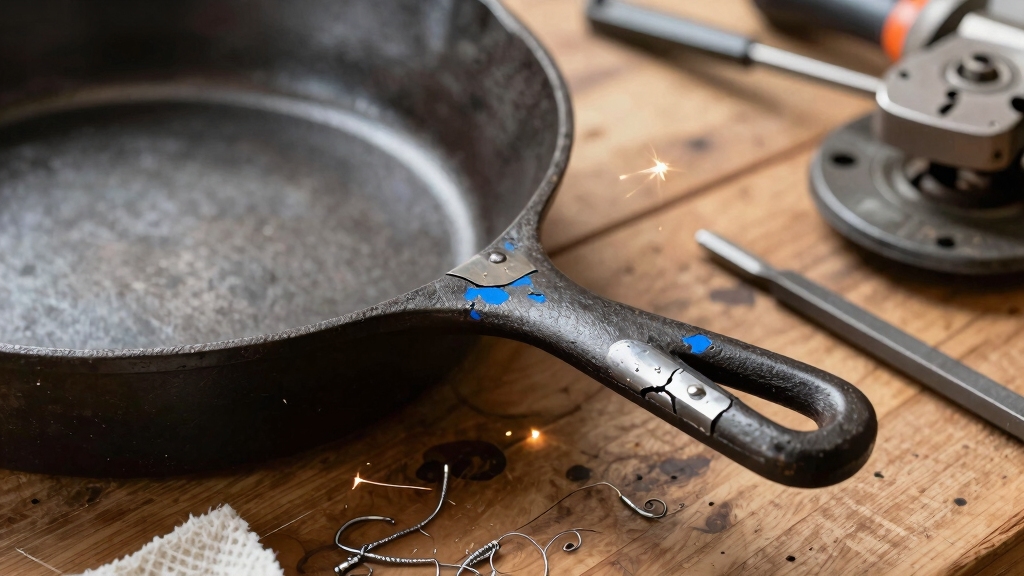
To fix cast iron without welding, first clean and roughen the crack area using sandpaper or a brush. Then wipe with acetone to remove grease.
Apply epoxy putty firmly into the crack, filling all voids, and smooth excess before it sets. Once cured, reinforce the repair with carbon fiber cloth saturated in epoxy for added strength.
Allow full curing time, then test gradually under load. Following these steps guarantees durable, heat-free repairs. Details on each process can help you secure strong results.
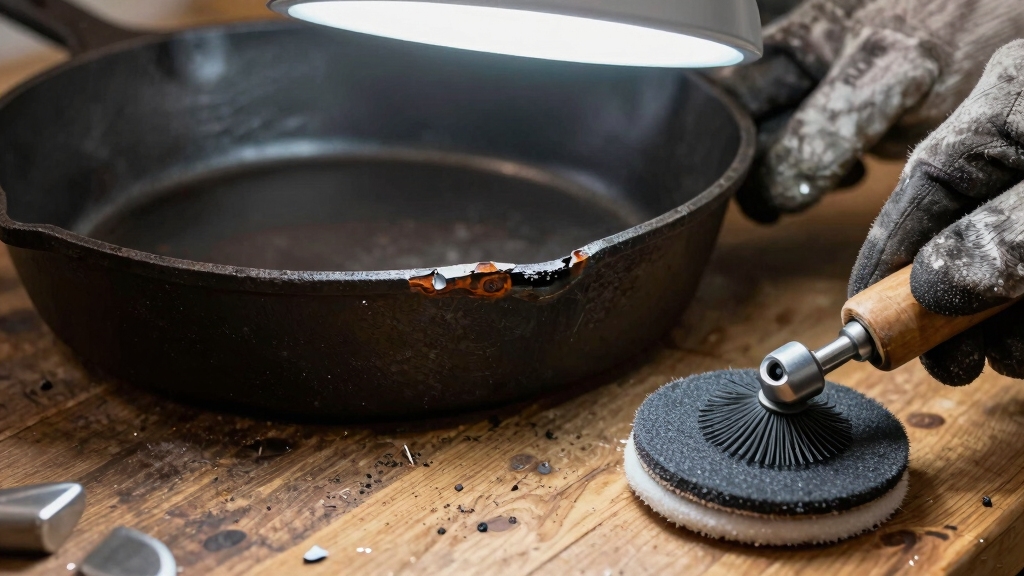
Anyone repairing cast iron should start by thoroughly cleaning and roughening the surfaces to guarantee a strong bond.
Begin by removing all loose material, rust, paint, and dirt using sandpaper, a file, or a stiff-bristle brush. You can also use acetone or rubbing alcohol to wipe the surfaces clean, ensuring no oil or grease remains.
Next, roughen the repair area through sanding or filing to create a textured surface that epoxy or adhesive can grip effectively. If cracks are present, consider drilling small holes at the ends to prevent further spreading, though this step isn’t always necessary.
Proper surface prep is essential; without it, the adhesive won’t adhere well, leading to weak repairs. Use temporary fixtures or superglue to hold parts aligned during this stage for precise application. For best results, controlling thermal expansion differences during repair helps prevent future cracking.
Start by kneading an epoxy putty like JB Weld SteelStik until its color is uniform, signaling the chemical activation necessary for bonding.
Make certain the cast iron crack is clean and roughened. Remove rust, paint, and oils with sandpaper or acetone beforehand.
Apply a thick layer of the putty directly onto the crack, pressing firmly to fill voids and bond edges. Smooth excess epoxy immediately for a neat finish, avoiding disturbance during curing.
Allow the epoxy to set for at least 5 minutes, then let it cure fully, typically between 1 to 24 hours depending on product specifications.
After curing, inspect the repair for complete adhesion and structural integrity before subjecting the cast iron to operational stress or load.
For optimal results, ensure the surface is thoroughly cleaned and mechanically roughened to achieve the rated 4000 PSI bond strength.
Once you’ve repaired a cast iron crack with epoxy putty, reinforcing the area with carbon fiber and additional epoxy can markedly enhance strength and durability.
Start by grinding the repair surface to create a rough texture for optimal epoxy adhesion. Cut carbon fiber cloth to size, ensuring it fully covers the repaired section without excess overlap.
Apply a generous layer of epoxy resin and lay the carbon fiber over it, pressing firmly to eliminate air pockets. Add more epoxy on top to saturate the fibers and cure as directed.
This composite method restores structural integrity without heat risks. However, for critical repairs, consider that welding cast iron requires careful preheating and filler selection to prevent cracking and brittleness, as detailed in preheat cast iron procedures.
Although the initial set of epoxy putty occurs in as little as five minutes, you should allow the full cure time, ranging from one to twenty-four hours, before subjecting the repair to any mechanical stress.
During curing, avoid smoothing or disturbing the epoxy to maintain bond integrity. Once fully cured, reconnect the components and apply gradual operational stress to test the repair’s strength.
If the repaired area permits, sand or file it for a smooth finish and apply paint to protect against corrosion. Proper curing guarantees optimal chemical bonding and mechanical performance.
Rushing this process risks weakening the repair, potentially leading to failure. Always follow the epoxy manufacturer’s recommended curing times and environmental conditions for best results.
For maximum durability, ensure the surface is thoroughly cleaned and roughened before applying the epoxy to create a strong mechanical interlocking bond.
Ensuring a strong bond without welding is often necessary when repairing cast iron, especially to avoid heat-induced distortion or cracking. You can rely on several effective non-welding alternatives that restore structural integrity while minimizing thermal damage.
First, epoxy putty like JB Weld SteelStik provides a durable chemical bond after thorough surface preparation and proper curing.
Second, carbon fiber composites combined with epoxy resin reinforce broken parts without introducing heat, ideal for complex shapes.
Third, cold stitching involves drilling interlocking holes and inserting metal pins mechanically to hold cracks securely without heat application.
Choose the method that best fits your repair’s size, load, and geometry requirements. Proper surface preparation and curing are critical to ensure maximum strength and durability in epoxy repairs.
You can repair cast iron for high-temperature use without welding, but it depends on the repair method and materials.
Epoxy putties like JB Weld SteelStik handle heat up to about 500°F, suitable for moderate temperatures.
For higher heat, carbon fiber composites with heat-resistant epoxy provide better strength and thermal stability.
Always ensure thorough surface prep and proper curing to maximize bond durability under thermal stress.
However, extreme temperatures may still require welding or specialized alloys.
Epoxy putty on cast iron can last like a steadfast guardian, holding strong for years if applied correctly.
Typically, it endures 5 to 10 years under normal conditions, resisting wear and stress well.
Proper surface prep, thorough curing, and avoiding excessive heat or mechanical shock prolong its lifespan.
Keep in mind, epoxy isn’t invincible; regular inspection guarantees your repair stays solid, saving you from unexpected failures down the road.
Yes, you face health risks working with epoxy putty and carbon fiber.
Epoxy fumes can irritate your skin, eyes, and respiratory system, so always wear gloves, safety goggles, and a mask.
Carbon fiber dust is harmful if inhaled; work in a well-ventilated area or use a respirator.
Avoid skin contact and wash thoroughly afterward.
Taking these precautions helps you minimize exposure and safely handle these materials during repairs.
Yes, you can paint or coat repaired cast iron parts once the epoxy or composite fully cures.
Make sure to sand or file the repaired area smooth first to guarantee good paint adhesion.
Clean the surface thoroughly, removing dust and oils.
Use primers designed for metal to enhance durability.
Applying paint or protective coatings not only improves appearance but also guards against corrosion and wear, extending the repair’s lifespan effectively.
You’ll want to have a solid toolkit to hit the ground running.
Essential tools include sandpaper or a file for surface prep, stiff bristle brushes to remove rust, and acetone or rubbing alcohol for cleaning.
Grab epoxy putty like JB Weld, a spatula or decorating knife for application, and gloves to protect your hands.
For precision, a drill and clamps help align parts.
These basics keep your repair work sharp and effective.
Just like a skilled blacksmith once shaped iron without fire, you can restore cast iron without welding.
By cleaning, roughening, and using epoxy putty reinforced with carbon fiber, you create a bond as strong as the original metal. Follow proper curing and testing to guarantee durability.
This method preserves integrity and extends life, proving that modern techniques can honor traditional strength without the need for heat or flame.