Phone:
(701)814-6992
Physical address:
6296 Donnelly Plaza
Ratkeville, Bahamas.

Phone:
(701)814-6992
Physical address:
6296 Donnelly Plaza
Ratkeville, Bahamas.

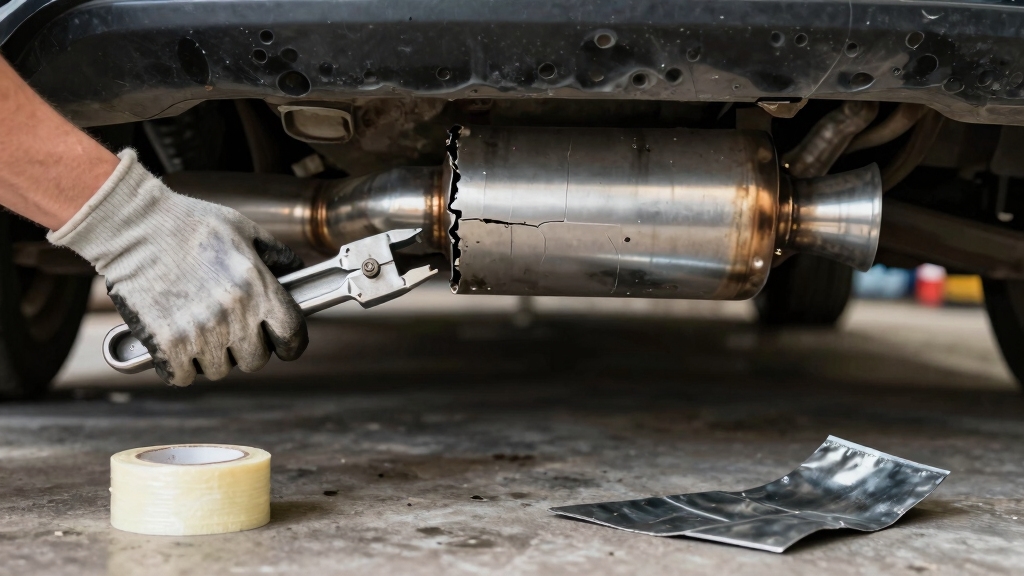
You can fix a broken exhaust pipe without welding by cutting the damaged section and fitting a half-shell sleeve over the break.
Secure it tightly with U-bolt or band clamps, applying muffler cement or exhaust paste to seal leaks effectively.
For small cracks, wrap stainless steel sheet metal around the area and clamp it with jubilee clips.
These methods offer durable, heat-resistant repairs using basic tools.
Explore these options further to choose the best non-welded fix for your exhaust issue.
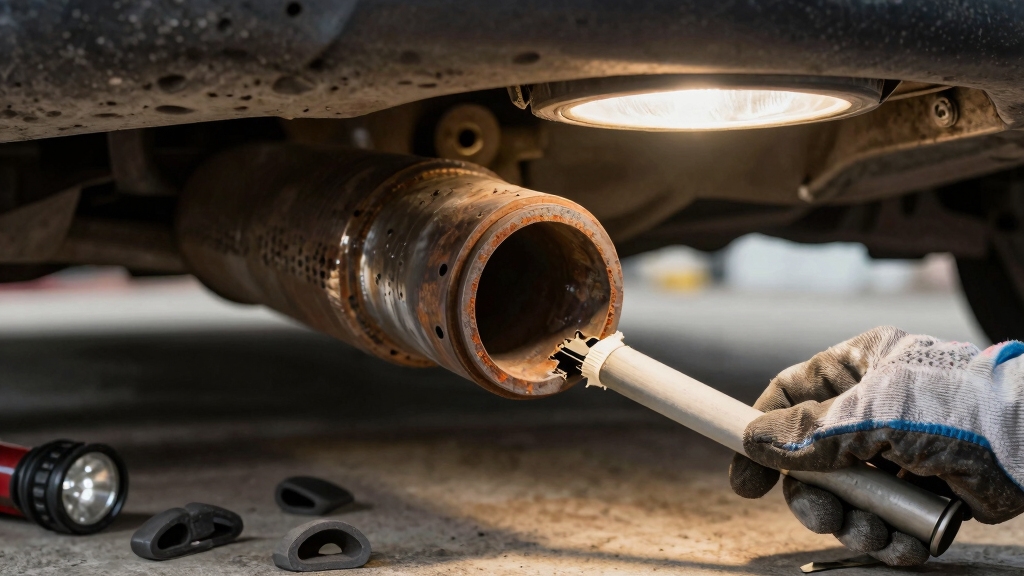
When you suspect a broken exhaust pipe, start by visually inspecting the entire length of the system for obvious signs like rust, holes, or cracks.
Focus on joints and bends, as these areas endure more stress and corrosion.
Listen for unusual sounds such as loud exhaust noise or hissing, which indicate leaks.
Use a flashlight and mirror to check hard-to-see spots beneath the vehicle.
Feel for escaping air while the engine runs—carefully, as the pipe can be hot.
Pay attention to sudden changes in exhaust sound or vibration, which often signal damage.
Mark the damaged section accurately; this precision helps when selecting repair methods.
Properly locating the break guarantees effective, targeted fixes without unnecessary disassembly or guesswork.
Applying penetrating lubricant to corroded areas can ease removal and replacement of damaged parts.
You know, fixing exhaust breaks doesn’t have to break the bank. Instead of diving into expensive welding, you can use clamps, sleeves, and even cement to get the job done affordably.
These methods not only save you money, but they also create durable, leak-proof seals that can handle all that heat and vibration. Pretty impressive, right?
And the best part? Installing these solutions is straightforward, requiring just some basic tools. So, if you’re into DIY repairs, this approach is perfect for you! Using clamp sleeve couplers ensures a strong mechanical bond without welding.
Several cost-effective repair options exist that let you fix broken exhaust pipes without welding, saving both time and money.
You can use U-bolt clamps combined with a pipe sleeve to secure leaks. This involves cutting the pipe at the break and slipping on a half-shell sleeve before tightening clamps.
Band clamps offer another low-cost solution, conforming tightly around pipe joints for a near-permanent fit without pipe modification.
For smaller cracks, wrapping the damaged section with flexible stainless steel sheet metal and securing it with jubilee clips provides a durable seal.
These methods require only basic hand tools like screwdrivers and wrenches, and materials are widely available at low cost.
It is important to choose clamps made from corrosion-resistant materials like stainless steel to ensure a secure and long-lasting repair.
Non-welded exhaust repairs consistently deliver durable, leak-proof seals that rival welded joints in strength and longevity.
Using band clamps or U-bolt clamps combined with exhaust pipe sleeves and muffler cement, you can create a tight, permanent seal without welding.
Band clamps conform closely to pipe contours, distributing clamping force evenly and preventing leaks during thermal cycling.
Sleeve repairs, reinforced with muffler cement or exhaust paste, fill gaps and secure broken sections effectively.
Applying multiple clamps or jubilee clips enhances seal integrity by reducing slippage and vibration-induced loosening.
These materials withstand exhaust temperatures and mechanical stress, ensuring lasting repairs.
For best results, proper surface preparation and clamp support are essential to maximize the repair’s durability and prevent premature failure.
Getting your exhaust pipe fixed without welding saves time, money, and the hassle of specialized tools. You can rely on band clamps or U-bolt clamps to secure sleeves or wraps around damaged sections quickly.
These clamps tighten firmly, creating leak-proof seals comparable to welded joints. Using muffler cement or exhaust paste enhances sealing, especially when combined with double clamping.
You’ll only need basic hand tools like screwdrivers and wrenches, avoiding expensive equipment. Metal sheets or half-shell sleeves conform to pipe shapes, allowing you to patch breaks externally or internally.
This DIY method prevents extended downtime and costly shop visits. Plus, clamps and sleeves are reusable, making future repairs easier. For best results, ensure proper joint fitup when positioning clamps to maximize seal effectiveness and durability.
To fix an exhaust break using U-bolt clamps, start by cutting the damaged section so it can fit a sleeve over the leak. Once you’ve done that, position the sleeve just right.
Next, grab your U-bolt clamps and secure everything in place. Make sure to tighten them evenly; this will help create a solid seal.
This approach isn’t only durable but also budget-friendly, and it doesn’t require any welding. Just remember, getting the alignment right and applying the right clamp tension is key to making it work!
For best results, ensure the gasket condition and clamp torque are properly managed to maintain a leak-proof mechanical seal.
When you tackle a broken exhaust pipe using a U-bolt clamp, you’ll first need to cut out the damaged section cleanly to fit a sleeve over the break.
Next, slide the sleeve onto one side of the pipe, guaranteeing it covers the gap entirely.
Then, position the U-bolt clamps around the sleeve and pipe junctions.
Finally, tighten the nuts evenly on both clamps to create a secure, leak-proof seal.
This method guarantees a tight coupling without welding, restoring exhaust integrity efficiently. Properly maintaining clamp tension is key to ensuring a long-lasting seal and preventing exhaust leaks.
Frequently, sleeve repair techniques provide a reliable, non-welded solution for broken exhaust pipes by combining a metal sleeve with U-bolt clamps.
First, you cut the damaged section to fit a half-shell or rolled metal sleeve around the break.
Position the sleeve so it overlaps evenly on both pipe ends.
Then, apply muffler cement generously to the joint for an airtight seal.
Secure the sleeve by tightening two U-bolt clamps, one on each side of the break, to compress the sleeve firmly against the pipe.
This method prevents leaks and withstands thermal expansion without welding.
Always make sure cuts have smooth edges and that the clamps are tightened uniformly.
Sleeve repairs offer durable, cost-effective fixes using basic tools and materials you can source affordably.
For best results, controlling heat input and maintaining proper cutting parameters helps avoid warping and ensures a precise fit during pipe preparation, as detailed in thermal distortion control.
Band clamps provide a reliable solution for creating leak-proof seals on exhaust pipes without welding. They conform tightly around pipe sections, eliminating leaks with minimal effort.
When you choose band clamps, follow these steps for an effective repair:
Band clamps create permanent seals that rival welded joints and can be reused for future repairs. Their design simplifies installation, making them an ideal choice for durable, no-weld exhaust fixes. Additionally, using band clamps avoids the need for specialized equipment and concerns related to welding power requirements.
You can wrap damaged exhaust sections with sheet metal and secure them firmly using jubilee clips to create a strong, non-welded repair.
Start by cutting a flexible stainless steel sheet to wrap 1.5 to 2 times around the affected area. Position the sheet evenly over the break, ensuring full coverage.
Then, place multiple jubilee clips over the wrap at spaced intervals. Gradually tighten each clip with a flat-head screwdriver, pulling the broken ends together and preventing slippage during thermal cycling and vibration.
Distributing the clamping force evenly along the repair stabilizes the joint and minimizes leaks. This method requires only basic tools and offers a durable, cost-effective fix without pipe cutting or welding.
It is ideal for straight sections of exhaust pipe with moderate damage. Proper equipment maintenance ensures the longevity and reliability of such non-welded repairs.
Many exhaust repairs benefit from generous application of muffler cement or exhaust paste, which create durable seals on patched areas. To guarantee a reliable fix, follow these steps:
Applying muffler cement generously ensures durable, reliable seals on exhaust repairs without specialized tools.
Proper application extends the lifespan of your repair and approaches the durability of welded joints without the need for specialized equipment.
When tackling a broken exhaust pipe, choosing between internal and external repair methods depends largely on the break’s location and shape.
For breaks in straight sections, external wrapping with flexible stainless steel sheets or half-shell sleeves combined with muffler cement offers a practical, leak-proof solution.
You’ll secure these repairs using band clamps or jubilee clips, ensuring tight, durable seals.
For odd-shaped or hard-to-access areas, internal sleeves provide a better fit by inserting rolled metal sheets inside the pipe, then clamping firmly with U-bolt clamps.
Internal repairs often require cutting the pipe to install sleeves, while external methods avoid cutting but need careful wrapping.
Both methods can achieve near-welded joint strength when combined with proper sealing materials and clamps.
Choose based on your pipe’s damage profile and available tools.
Before starting any exhaust pipe repair, assembling the right tools and safety gear is crucial to guarantee efficiency and protection.
You’ll need gear that safeguards against sharp edges, heat, and debris, plus tools that enable precise cuts and secure fittings without welding.
Having these essentials guarantees a safe, effective repair process.
If your non-welded exhaust repair methods don’t hold up, you’ll want to contemplate budget-friendly welding or pipe replacement options.
Welding at a muffler shop often costs around $20-$50, providing a permanent fix. Alternatively, replacing damaged pipe sections with pre-cut parts restores structural integrity.
When selecting between welding or replacement, consider damage extent, labor cost, and tool availability.
| Option | Cost Range | Pros |
|---|---|---|
| Muffler Shop Weld | $20 – $50 | Permanent, durable seal |
| DIY Pipe Replacement | $30 – $70 | Full section renewal |
| Band Clamp Repair | $10 – $25 | Quick, reusable |
| Exhaust Sleeve | $15 – $30 | Covers irregular breaks |
| Temporary Wrap | <$10 | Short-term, emergency fix |
Balancing cost and durability guarantees you choose the best repair path.
Non-welded exhaust repairs typically last several months to a few years, depending on repair quality and conditions.
If you use band clamps, muffler cement, and multiple jubilee clips correctly, you can expect durability close to welded joints.
Proper sealing and tight clamping prevent leaks and slipping.
Still, harsh environments or heavy vibration may shorten lifespan, so regular inspections are essential to catch wear early and maintain performance.
You shouldn’t drive immediately after applying muffler cement or paste.
Let the material cure fully to guarantee a durable, leak-proof seal. Rushing risks weakening the bond and causing leaks.
Follow manufacturer instructions for curing times, usually several hours. Patience here means a stronger repair, better performance, and longer-lasting results.
Avoid heat exposure or exhaust operation during curing to prevent premature failure and the need for costly rework.
Yes, band clamps don’t perform well on exhaust pipes made from extremely thin or highly flexible materials, as these can deform under clamp pressure, preventing a tight seal.
Pipes with heavy corrosion or flaky surfaces also reduce clamp effectiveness, since the clamp can’t grip securely.
You’ll have better results using band clamps on standard steel or stainless steel pipes with solid, uniform surfaces for a reliable, leak-proof fit.
When it comes to wrapped exhaust repairs, you know “what goes up must come down.” Temperature changes cause expansion and contraction, stressing the wrap material.
If you don’t use high-quality stainless steel sheets and secure multiple Jubilee clips, the wrap can loosen or crack over time.
Properly tightened clips prevent slipping during thermal cycling, ensuring your repair stays firm and leak-proof despite heat fluctuations.
Always let paste or cement cure fully before use.
It’s generally safe if you follow instructions carefully and use proper safety gear like eye protection.
You’ll need basic tools and patience, but avoid rushing.
Handling sharp edges and hot exhaust parts requires caution.
If you’re unsure about cutting or clamping or if the damage is complex, consult a professional.
Mistakes can cause leaks or hazards, so assess your skill level honestly before attempting non-welded repairs alone.
Fixing a broken exhaust pipe without welding is totally doable with the right tools and techniques. No need for a blacksmith’s forge.
By using clamps, sleeves, or exhaust paste, you can seal leaks effectively and get back on the road quickly. Just remember to assess damage carefully and wear safety gear.
If non-welded fixes don’t hold, consider budget welding or replacement. Stay practical, keep it tight, and avoid costly downtime.