Phone:
(701)814-6992
Physical address:
6296 Donnelly Plaza
Ratkeville, Bahamas.

Phone:
(701)814-6992
Physical address:
6296 Donnelly Plaza
Ratkeville, Bahamas.

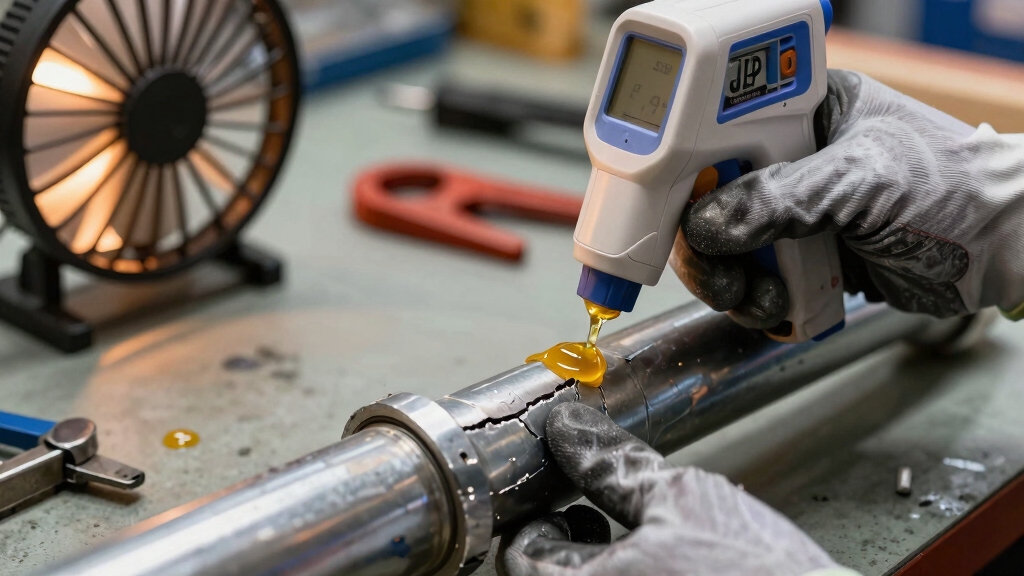
To dry J-B Weld faster, apply moderate heat after the initial six-hour set. Use heat lamps, a hair dryer, or a heat gun in short intervals.
Keep temperatures below 200°F to avoid bond softening. Maintain ambient temperatures above 50°F and relative humidity below 50% for optimal curing.
Ensure surfaces are dry and contaminant-free before application. Using faster-curing variants like KwikWeld also helps balance speed and strength.
Explore these techniques to optimize your epoxy’s curing time and bond quality.
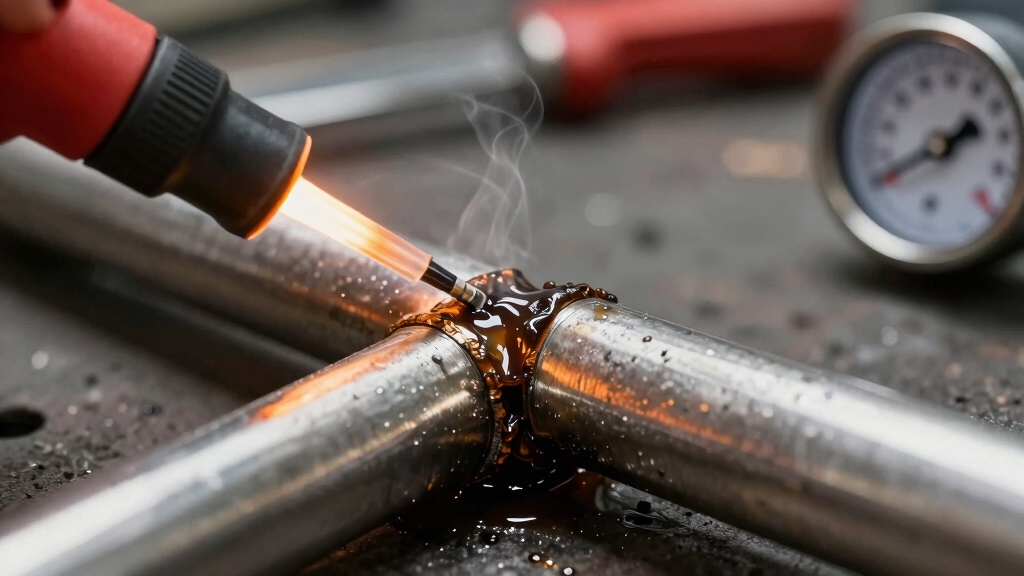
Applying heat effectively accelerates the chemical curing process of J-B Weld by increasing molecular activity within the epoxy.
Applying heat speeds J-B Weld curing by enhancing molecular activity within the epoxy.
When you apply heat, you boost the kinetic energy of molecules, which expedites the cross-linking reaction responsible for hardening.
Using heat lamps or light bulbs near the joint after an initial six-hour cure can reduce drying time.
Oven curing at 275°F for 15 minutes achieves a full cure rapidly by uniformly raising temperature.
A heat gun applied intermittently, with cooling periods, can harden the epoxy in about 30 seconds.
Even a hair dryer on high setting can hasten the process.
However, maintaining temperatures below 200°F is critical to prevent softening and structural compromise.
You optimize curing speed by controlling heat exposure precisely without exceeding thresholds that degrade bond integrity.
For best results, ensure the surface is properly prepared with cleaning and roughening before applying J-B Weld to maximize adhesion and curing effectiveness.
Choose the right J-B Weld product to markedly reduce curing time without sacrificing bond strength.
For rapid results, you’ll want J-B Weld SteelStik or ClearWeld, both setting in 5 minutes and fully curing within an hour.
KwikWeld offers a balanced option, setting in 6 minutes with a 4-6 hour cure, faster than the Original formula’s 16-24 hours.
If you can apply heat, J-B Weld HighHeat cures in just 1 hour at 250°F, greatly accelerating the process compared to room temperature curing.
Avoid the Original J-B Weld if speed is critical; it requires extended curing time.
Selecting these fast-curing products optimizes workflow without compromising the structural integrity essential for durable repairs.
Proper surface preparation is crucial to ensure the fastest and strongest bond.
To ensure the best adhesion with J-B Weld, it’s really important to remove all moisture from the surfaces you’re working with. This step is key for achieving strong bonds and speeding up the curing process.
One effective trick is to preheat the workpiece. Not only does this get rid of any leftover moisture, but it also helps the epoxy penetrate deeper into the surface pores.
Proper surface preparation, including cleaning and drying, maximizes high-temperature resistance and prevents weak seals caused by moisture.
Eliminating moisture from surfaces is essential for achieving peak adhesion with J-B Weld.
Moisture impedes epoxy bonding by creating a barrier that prevents proper penetration and curing.
To optimize moisture removal, follow these precise steps:
Proper surface preparation, including thorough cleaning and drying, is critical for durable adhesion and long-term performance.
By preheating the work surface before applying J-B Weld, you enhance epoxy penetration and adhesion through moisture removal and pore expansion.
The elevated temperature drives off residual surface moisture, preventing interference with the epoxy’s bonding process.
Simultaneously, thermal expansion of substrate pores increases microvoid accessibility, allowing the epoxy to infiltrate more deeply and form a stronger mechanical bond.
This dual effect accelerates cure times and improves structural integrity.
To optimize, maintain surface temperature above 50°F but below 200°F to avoid heat softening of the epoxy.
Use controlled heat sources like heat lamps or pre-warmed surfaces to guarantee uniform temperature distribution.
Proper surface preheating reduces cure variability caused by ambient humidity and temperature fluctuations, resulting in a more consistent and durable J-B Weld bond.
Additionally, just as proper drying techniques extend welding gloves’ lifespan, ensuring thorough drying of the preheated surface prevents moisture-related bond failures and enhances overall adhesion quality.
To get the best results with J-B Weld, aim for an ambient temperature of around 70°F. Keeping it in that sweet spot really helps speed up the curing process. If it’s too cold, you’ll notice that the reaction slows down quite a bit.
Also, don’t forget about humidity! High moisture levels can actually extend the cure times and weaken the bond. So, it’s a good idea to keep an eye on that.
For optimal results, maintain humidity below 50% RH to prevent bond degradation and ensure a strong adhesive cure.
Best possible controlling ambient temperature and humidity greatly influences how quickly J-B Weld dries and cures.
Maintaining an optimal temperature guarantees the epoxy’s chemical reaction progresses efficiently without compromising structural integrity.
You should aim for these conditions:
Proper storage conditions, such as maintaining temperature and humidity within optimal ranges, are essential to prevent moisture absorption that can negatively affect curing and strength.
When controlling the curing environment, managing humidity is as critical as maintaining the right temperature. High humidity introduces moisture that can interfere with the epoxy’s chemical bonding, prolonging set and cure times.
Ideally, you want relative humidity levels below 50% to guarantee a faster and stronger cure. Excess moisture on the surface reduces adhesion, so it’s essential to start with a dry substrate.
Conversely, very low humidity can accelerate surface drying too quickly, causing surface skinning that traps uncured material underneath. Maintaining moderate, stable humidity balances these effects, promoting uniform curing.
Additionally, ensuring proper surface preparation by removing dirt, grease, and rust is vital to maximize bond strength and curing efficiency.
Consistently maintaining warmth within the ideal temperature range markedly accelerates J-B Weld’s curing process.
You want to keep the ambient temperature around 70°F, as recommended, since temperatures below 50°F slow curing considerably.
Additionally, controlling humidity is vital; low humidity levels prevent moisture interference, which can weaken bond strength.
To optimize curing speed, follow these steps:
Proper ventilation and airflow are important to maintain optimal curing conditions and prevent issues related to temperature control.
Accelerating the curing process of J-B Weld often involves applying controlled heat through various methods like heat lamps, ovens, and heat guns.
Position heat lamps or light bulbs near the joint after an initial 6-hour cure to reduce drying time effectively.
For more rapid results, you can cure Original J-B Weld in an oven at 275°F for about 15 minutes, achieving full hardness quickly without compromising structural integrity.
Alternatively, apply a heat gun in 10-second intervals with cooling periods; this method hardens the epoxy in roughly 30 seconds.
While a hair dryer or rotating trouble light can also expedite curing, make sure you maintain ambient temperatures above 50°F and avoid overheating.
Temperatures above 200°F soften the bond, risking failure. Controlled, precise heat application optimizes cure speed without sacrificing strength.
Ensure the surface is thoroughly cleaned and sanded prior to application for the strongest adhesion and bond strength.
Although J-B Weld offers strong adhesion, it can sag or slump during curing if unsupported, especially on vertical or overhead surfaces. To prevent this, you need to stabilize the epoxy before it fully hardens.
Here’s how you can stop sagging effectively:
Preventing sagging during curing helps maintain the J-B Weld’s shape. However, even with proper support, certain errors can still slow its drying process.
Proper support prevents sagging, but some mistakes can still delay J-B Weld’s drying process.
One common mistake is applying J-B Weld in low ambient temperatures below 50°F. This delays chemical reactions essential for curing. Excessive humidity also hinders the epoxy’s polymerization, extending set times.
Another issue is using fan air circulation directly on the joint. This cools the surface and interrupts consistent heat transfer, slowing cure. Overapplying the epoxy beyond recommended thickness also creates internal moisture retention, prolonging dry time.
Finally, neglecting to remove surface moisture compromises adhesion and delays curing. Avoiding these errors guarantees more efficient hardening and reduces wait times without sacrificing bond integrity.
When you prioritize speed in curing J-B Weld, you risk compromising the bond’s ultimate strength and durability.
Accelerated curing methods often reduce molecular cross-linking, which weakens the epoxy’s structural integrity.
To balance speed and strength effectively, consider these points:
Maintaining consistent warm conditions throughout the curing process directly influences the strength and reliability of your J-B Weld bond.
You should keep ambient temperatures above 50°F, ideally around 70°F, to optimize curing speed without compromising structural integrity.
Use heat lamps or light bulbs positioned close to the joint after initial set, ensuring even heat distribution to prevent softening, which occurs above 200°F.
Avoid direct airflow from fans, as it cools the epoxy and slows curing.
Preheat your workpiece to remove moisture, improving epoxy penetration and adhesion.
For faster curing, consider controlled oven curing at 275°F for 15 minutes or intermittent heat gun application with 10-second bursts followed by cooling.
Consistency in temperature and humidity prevents cure delays and maximizes bond performance.
You shouldn’t use J-B Weld on food-contact surfaces because it’s not FDA-approved for direct food contact.
While it forms a strong bond and resists heat, the epoxy contains chemicals that may leach into food, posing safety risks.
For repairs involving utensils, containers, or pipes carrying potable water or food, select FDA-compliant adhesives specifically designed for such applications to guarantee safety and compliance with health standards.
You can expect J-B Weld to have a shelf life of about 2 to 3 years when stored properly.
Keep it in a cool, dry place, ideally below 70°F, with containers tightly sealed to prevent moisture exposure.
Over time, the epoxy’s chemical components degrade, reducing effectiveness.
Using expired J-B Weld risks poor bonding and incomplete curing, so always check the product date and storage conditions before application for peak performance.
Yes, you can paint over cured J-B Weld. Make sure the epoxy is fully cured, typically 16-24 hours for Original formula.
Sand the surface lightly to create a rough texture, which improves paint adhesion. Clean off dust and oils before applying primer if needed.
Use compatible paint types like acrylic or enamel for best results. Proper surface prep and curing maximize coating durability and maintain the repair’s structural integrity.
You can’t wait until J-B Weld cures to clean it. It gets much harder then.
For uncured J-B Weld, use a clean cloth or paper towel to wipe away excess immediately.
Acetone or isopropyl alcohol works well to dissolve and remove residues from tools or surfaces. Avoid water, which can interfere with bonding.
Act quickly and precisely to prevent hardened buildup that complicates cleanup and compromises your repair quality.
You can apply J-B Weld to wet or underwater surfaces, but you must prepare the area meticulously. Remove loose debris and excess moisture by drying or wiping as much as possible.
Use putty stick formulas, which adhere better in damp conditions. Full curing underwater is slower and weaker compared to dry conditions, so expect extended cure times and reduced bond strength.
Best results occur when surfaces are clean, slightly damp, but not submerged during application.
If you want to dry J-B Weld faster without sacrificing strength, controlling heat and surface prep is your secret weapon.
Applying consistent warmth using heat guns or ovens accelerates curing, but beware of sagging and avoid common mistakes like poor adhesion.
Remember, balancing speed with durability isn’t just important—it’s absolutely vital, like defusing a bomb with a paperclip. Follow these precise steps, and you’ll achieve a strong, reliable bond in record time.