Phone:
(701)814-6992
Physical address:
6296 Donnelly Plaza
Ratkeville, Bahamas.

Phone:
(701)814-6992
Physical address:
6296 Donnelly Plaza
Ratkeville, Bahamas.

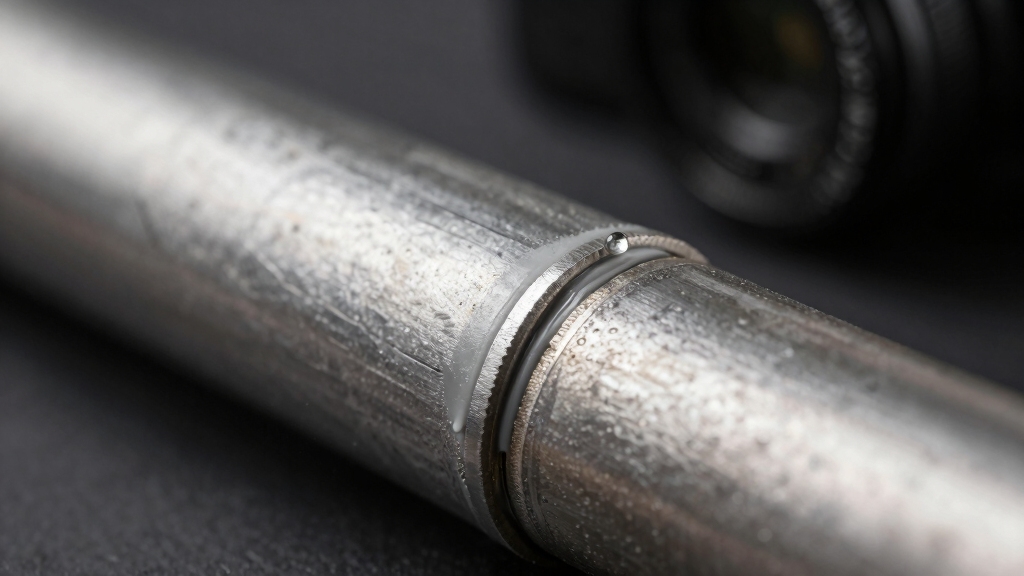
You can expect JB Weld to hold hydraulic pressures up to about 2,000 psi when applied correctly and fully cured, with tensile strength near 3,960 psi.
Thicker layers improve load distribution and increase static pressure resistance. However, temperatures above 550°F or poor surface prep can weaken its performance.
While JB Weld is reliable for moderate pressure repairs, it won’t match the strength of metal welds in high-pressure environments.
Explore deeper factors that influence its pressure limits and durability.
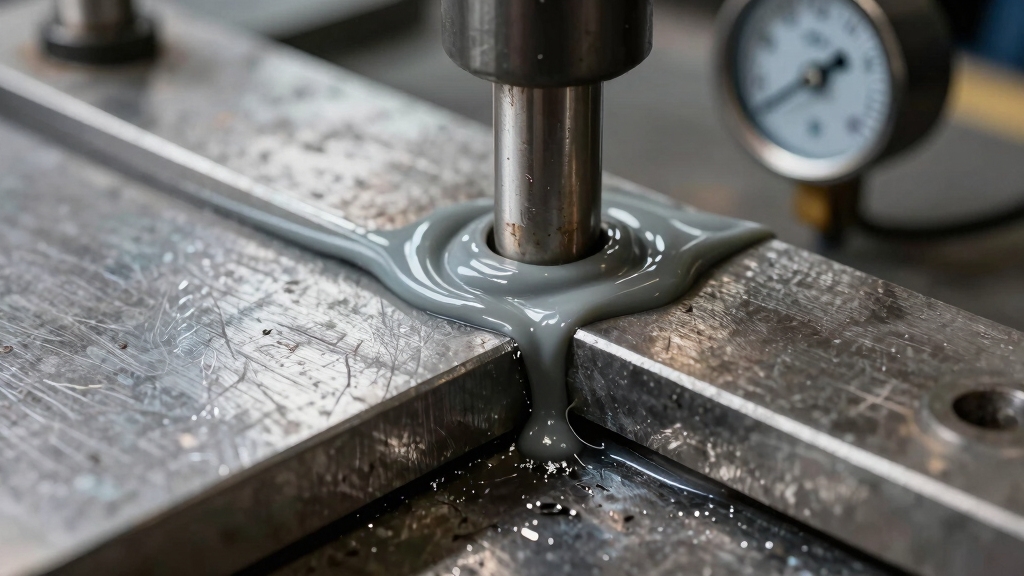
Although JB Weld’s exact strength varies by product and application, its tensile and shear capacities provide a reliable benchmark for structural repairs.
Standard JB Weld achieves a tensile strength of approximately 3,960 psi when fully cured, while the J-B Weld Twin Tube improves this to about 6,220 psi.
For high-temperature scenarios, the HighHeat Epoxy Putty maintains around 4,000 psi tensile strength.
Shear strength generally measures near 1,200 psi across typical formulations, indicating solid resistance to sliding forces.
These values highlight JB Weld’s suitability for metal, plastic, and composite bonding under tension.
However, achieving peak strength demands proper surface preparation, precise 1:1 mixing ratios, and adherence to curing times.
Understanding these parameters guarantees you can rely on JB Weld’s mechanical properties for demanding repair tasks.
Proper surface cleaning and roughening create a mechanical interlocking that significantly enhances the bond’s durability.
JB Weld is pretty impressive when it comes to handling pressure. In tests, it can withstand hydraulic pressures between 800 and 2000 pounds before it fails. The exact number really depends on how thick the application is.
When it comes to static pressure resistance, it typically peaks around 1000 pounds. That’s pretty solid, right? This shows that JB Weld performs reliably under steady loads. Overall, these results really highlight its ability to contain moderate pressure for practical repairs. Proper surface preparation, including roughening surfaces, is essential to achieve maximum bond strength.
Evaluating JB Weld’s hydraulic pressure capacity reveals its limitations and strengths under stress. In controlled hydraulic tests, a standard JB Weld application typically fails between 800 and 1,000 pounds of pressure, equivalent to roughly half a ton.
When applied thicker, it can withstand up to 1,800 to 2,000 pounds before failing, demonstrating that bond thickness markedly influences load tolerance. For context, TIG welds in similar conditions hold between 5,500 and 6,000 pounds, highlighting JB Weld’s weaker resistance under hydraulic load.
These results emphasize JB Weld’s suitability for medium-strength repairs where moderate hydraulic pressure is present. To maximize performance, ensure optimal surface preparation and curing time.
While JB Weld offers impressive versatility, expect it to fall short in high-pressure hydraulic environments demanding weld-level strength. Additionally, JB Weld’s mechanical strength of around 6220 PSI underlines its prioritization of mechanical strength over conductivity in demanding applications.
Static pressure tests reveal that JB Weld typically withstands around 1,000 pounds before failure, reflecting its moderate resistance under non-dynamic loads.
When applied correctly, thicker layers can increase this threshold to 1,800–2,000 pounds, demonstrating improved load distribution and structural reinforcement.
This performance is consistent with its tensile strength of approximately 3,960 psi and shear strength near 1,200 psi.
However, compared to TIG welds, which endure 5,500–6,000 pounds, JB Weld’s static pressure resistance remains lower, limiting its use for high-load structural repairs.
You should note that surface preparation and curing conditions critically influence static pressure durability.
For pressure containment applications, make certain JB Weld cures fully (15–24 hours) and is applied on clean, dry surfaces to maximize bond integrity under static loads.
Selecting the right welding consumables and ensuring compatibility with the base material can significantly affect the overall strength and durability of a bonded joint.
Although JB Weld demonstrates impressive pressure resistance when fully cured, its performance can vary markedly under different temperature conditions.
You need to keep in mind that elevated heat affects the epoxy’s mechanical properties, potentially reducing its tensile and shear strength.
For instance, the standard JB Weld withstands temperatures up to 550°F (287°C). However, exposure near this limit may weaken the bond under pressure.
The HighHeat variant improves thermal endurance, holding continuous heat up to 450°F and intermittent spikes to 500°F. This variant better sustains pressure resistance in high-temperature applications.
Key temperature effects on JB Weld’s pressure resistance include:
It is important to consider that welding processes like arc welding temperatures can exceed JB Weld’s heat tolerance, potentially compromising the adhesive bond if exposed directly.
Understanding how JB Weld performs under various temperature conditions sets the stage for recognizing how different materials and surface preparations influence its bond strength.
JB Weld bonds effectively to metals, plastics, ceramics, and concrete, but surface cleanliness critically impacts adhesion. You must remove oils, dirt, and rust since contaminants drastically weaken the bond.
Roughening the surface via sanding or abrasion improves mechanical interlocking, increasing shear and tensile strength. Ambient humidity and temperature during application also affect curing and ultimate bond integrity.
Properly mixed at a 1:1 ratio, JB Weld achieves its rated tensile strength (3,960 psi for standard), but poor substrate preparation can reduce this substantially.
Therefore, you should focus on thorough cleaning, surface roughening, and controlling environmental conditions to optimize JB Weld’s pressure-holding capacity.
When bonding galvanized steel, consider that the zinc coating can vaporize and compromise adhesion if not properly removed or controlled, highlighting the importance of zinc coating removal before application.
When you allow JB Weld adequate cure time, it develops its full strength and durability, reaching tensile strength ratings up to 3,960 psi for the standard formula.
The curing process is critical; insufficient cure time compromises bond integrity and pressure resistance.
Typically, JB Weld sets in 4-6 hours but requires 15-24 hours to fully cure and achieve maximum strength.
During this period, chemical cross-linking stabilizes, enhancing resistance to shear and tensile forces.
Key considerations include:
Maintaining optimal storage conditions during the curing process helps prevent moisture absorption that can weaken the bond.
While JB Weld offers impressive tensile and shear strength for an epoxy adhesive, its pressure limits fall short compared to traditional welding methods.
You can rely on JB Weld for pressures up to around 1 ton before failure in hydraulic tests. However, TIG welding withstands appreciably higher loads, typically 5,500 to 6,000 lbs.
This difference mainly stems from the metallurgical fusion in welding versus the adhesive bond in JB Weld.
It is important to note that welding procedures rely on WPS and PQR qualification to ensure consistent weld quality and structural performance.
| Method | Pressure Capacity (lbs) |
|---|---|
| JB Weld | 800 – 2000 |
| TIG Welding | 5500 – 6000 |
| Epoxy Putty | ~4000 psi tensile (est.) |
When pressure resistance is critical, welding remains superior to JB Weld’s epoxy bond.
To get the most out of JB Weld’s pressure holding ability, it’s all about preparation. First things first, you really need to clean those surfaces thoroughly. Make sure to remove any oils, dirt, or contaminants. This step is crucial because it ensures the best possible adhesion.
Once you’ve got everything prepped, don’t forget about the curing conditions. Keeping a stable ambient temperature and allowing enough time for the epoxy to cure is key. This will help it reach its full tensile strength.
Both of these factors play a significant role in how durable the epoxy will be under pressure, and they can really make a difference when it comes to resisting failure. So, take your time with the prep and curing, and you’ll see the benefits! Additionally, controlling heat input during curing can prevent weaknesses that reduce pressure resistance.
Because JB Weld’s pressure capacity depends heavily on bond strength, meticulous surface preparation is essential to maximize its effectiveness.
You need to make certain the surfaces are clean, dry, and roughened to promote peak adhesion.
Any contaminants like oil, grease, or rust will compromise the bond, reducing pressure resistance markedly.
A properly prepared surface allows the epoxy to penetrate micro-porosities, enhancing mechanical interlocking.
Follow these preparation steps:
Wearing protective gloves during surface preparation helps prevent skin irritation and exposure to harmful chemicals.
These techniques will help you achieve the maximum tensile and shear strength JB Weld can offer under pressure.
Although JB Weld begins to set within hours, achieving its maximum pressure resistance requires careful control of curing conditions, including temperature, humidity, and time.
You must cure JB Weld at room temperature (around 70°F) with low humidity to guarantee optimal polymerization and bond strength. Avoid high moisture levels, which can weaken the bond.
Full cure typically takes 15–24 hours, during which the epoxy attains its peak tensile strength of 3960 psi. Rushing this process compromises pressure capacity.
| Factor | Optimal Range | Impact on Strength |
|---|---|---|
| Temperature | 65–75°F (18–24°C) | Guarantees complete curing |
| Humidity | Below 50% RH | Prevents bond degradation |
| Cure Time | 15–24 hours | Achieves tensile max load |
Adhering to these conditions maximizes JB Weld’s pressure holding ability.
Engine and industrial repairs demand materials that can withstand extreme conditions without compromising structural integrity. When you use JB Weld in these scenarios, you rely on its ability to endure high pressure, temperature fluctuations, and chemical exposure.
For example, it withstands pressures up to 2500 psi in water tests and temperatures up to 550°F once fully cured. This makes it suitable for engine block repairs and industrial pipe sealing.
Consider these performance factors:
Knowing these capabilities helps you apply JB Weld where conventional welding or adhesives may fall short.
Yes, you can use JB Weld underwater for pressure repairs, but you need to act quickly and prepare the surface well.
JB Weld cures best on clean, dry surfaces, so underwater application requires removing debris and oils thoroughly.
The epoxy forms a water-resistant bond once cured, but curing time may extend underwater.
For reliable pressure repairs, guarantee proper mixing, apply thickly, and allow sufficient cure time to achieve maximum strength.
You can use JB Weld for potable water pipe repairs cautiously, but it’s not specifically certified for drinking water safety.
While it’s water-resistant and bonds well to metal and plastic, you should confirm the product’s FDA compliance or NSF certification for potable water use.
For temporary fixes, it holds under pressure, but long-term, consider approved plumbing epoxies designed explicitly for safe contact with drinking water to guarantee health and durability.
JB Weld handles cyclic pressure like a seasoned athlete pacing itself. It endures well but has limits.
Its tensile strength and water resistance let it withstand repeated stress cycles up to around 800-1000 lbs before microfractures develop.
However, fluctuating pressure can reduce long-term durability, especially if the bond isn’t perfectly cured or surfaces aren’t clean.
You’ll want thorough prep and full curing to maximize its resilience under cyclic loads.
You shouldn’t paint JB Weld immediately after curing. Although it fully cures within 15-24 hours, you need to wait until it’s completely hardened and surface-dry to guarantee proper adhesion.
Painting too soon risks poor bonding and uneven finish. For best results, lightly sand the cured surface to promote paint adhesion, then apply your paint. This process guarantees the paint adheres firmly without compromising the epoxy’s integrity or durability.
Wondering how long your opened JB Weld will last before it’s useless?
Once opened, you’ve got about 12 months to use it if you store it properly.
Keep the tubes tightly sealed and store them in a cool, dry place to maintain the epoxy’s integrity.
Exposure to air accelerates curing inside the tube, reducing shelf life.
Don’t let partially used material harden; mix only what you need.
When pressure mounts, JB Weld stands like a steel guardian, holding fast with impressive tensile and shear strength.
Yet, its grip hinges on temperature, surface prep, and cure time. Each factor is a vital gear in this mechanical symphony.
While it won’t replace traditional welding under extreme stress, JB Weld offers a reliable, calculated hold for many industrial and engine repairs. Master these variables, and you’ll release its full pressure-bearing potential.