Phone:
(701)814-6992
Physical address:
6296 Donnelly Plaza
Ratkeville, Bahamas.

Phone:
(701)814-6992
Physical address:
6296 Donnelly Plaza
Ratkeville, Bahamas.

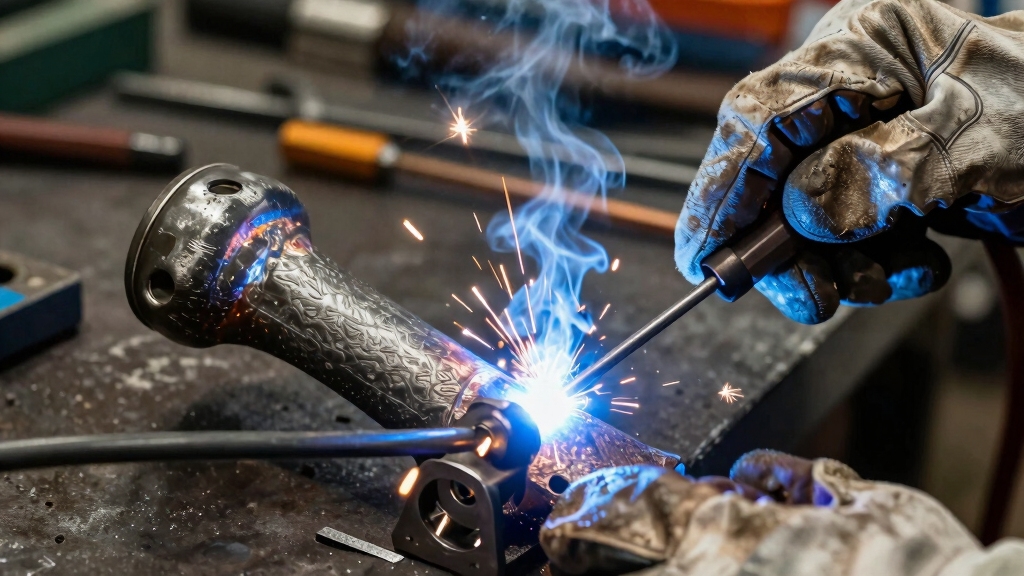
If you need a femoral welder, focus on models offering multi-process functionality: MIG, Pulse MIG, Stick, and Lift TIG to handle delicate femoral materials precisely.
Look for machines with up to 250A output, synergic MIG mode for ease, and spool gun compatibility for aluminum.
Pay attention to duty cycle limits on 110V power and essential safety features like overload protection.
Proper shielding gas and PPE are critical for quality and safety. An informed choice hinges on understanding these technical factors and user feedback.
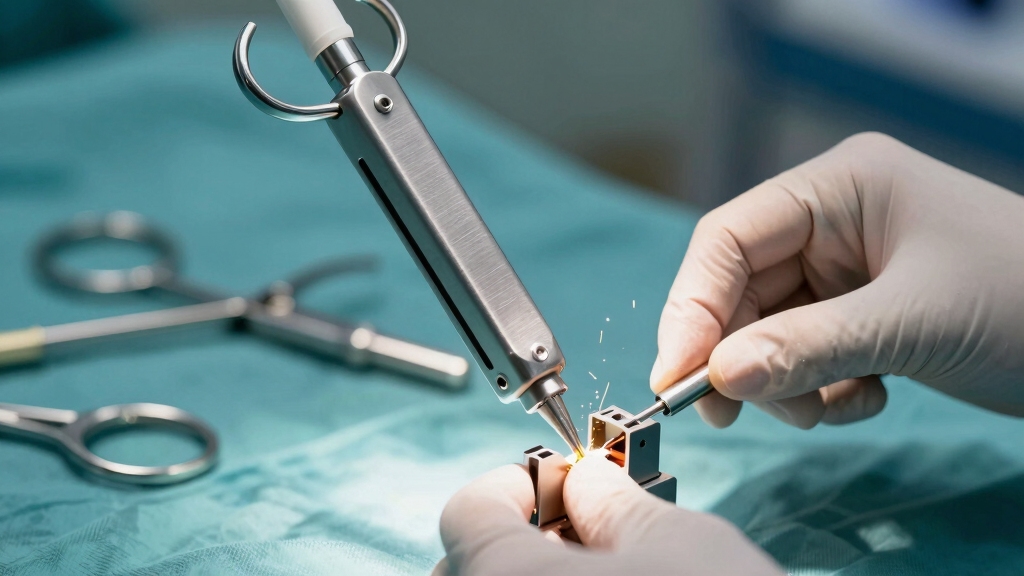
A Femoral Welder integrates multiple welding processes into a single machine, enabling you to perform Gas/Solid Wire MIG, Pulse MIG, Gasless Flux Core MIG, Stick/MMA, Spot welding, and Lift TIG with seamless switching.
A Femoral Welder combines multiple welding methods in one machine for versatile, seamless switching between processes.
It operates on DC power, compatible with 110V or 220V inputs, delivering up to 250A output current. You control voltage and wire feed speed manually or rely on synergic MIG mode, which automatically adjusts those settings based on wire diameter and gas type.
The device supports various wire diameters, including solid and flux core, and offers spool gun compatibility for aluminum welding. Its multi-process capability allows you to weld diverse metals and thicknesses, from thin gauge steel to aluminum plates up to ¼”.
You navigate functions via intuitive knobs and buttons, optimizing welding parameters for precision and efficiency. This versatility is powered by advanced inverter welding technology that ensures precise control and energy efficiency across all welding modes.
When looking at a femoral welder, one of the first things to consider is its power compatibility. It’s really important that it supports both 110V and 220V inputs. This flexibility allows you to use the welder in different settings, which is super handy!
Next up, let’s talk about the different welding modes it offers. You want to make sure it has a range of options, like Synergic MIG, Pulse MIG, and Stick modes. This variety helps you pick the right mode for your specific project needs, making your work more efficient and tailored to what you’re doing.
And of course, we can’t forget about safety features. Look for things like overload protection, which can really save you from potential mishaps. Plus, you want a welder that’s built to last, so focusing on durability is key. These aspects will ensure that your welder performs reliably, no matter the conditions you’re working in. Additionally, selecting the appropriate welding technique helps minimize distortion and ensures the joint integrity of your projects.
When selecting a femoral welder, understanding power specifications and compatibility is critical to guarantee peak performance across various applications.
You’ll want a unit with a robust power source, typically DC with dual voltage input (110V/220V), to assure flexibility and sufficient amperage, up to 250A max output, for thicker materials.
Compatibility with multiple wire diameters (.023″ to .045″) and spool capacities supports diverse welding tasks. Ensure the welder handles your target metals, from mild steel up to 3/8” thick to aluminum via spool gun up to ¼”, while supporting flux core and solid wires.
The duty cycle at rated amperage impacts continuous operation, so a 35% duty cycle at 160A is a practical benchmark.
Prioritize models with overload protection and versatile input compatibility to match your workshop’s power environment.
Selecting a machine with a higher duty cycle capacity enables longer continuous welding periods without overheating, which is especially important when working on thicker materials.
Power and compatibility set the foundation, but mastering welding requires flexible control over different modes tailored to specific materials and techniques.
The Femoral welder offers Synergic MIG, Manual MIG, Pulse MIG, MMA (Stick), and Lift TIG modes, selectable via the Weld Mode Button.
Synergic MIG simplifies setup by automatically adjusting voltage and wire feed speed based on wire diameter and gas type, ideal for beginners.
Pulse MIG mode enhances aluminum welding with fast, low-spatter performance.
Manual MIG lets you fine-tune parameters for expert control.
MMA mode includes hotstart and anti-stick features for reliable stick welding.
Lift TIG adds precision for thin metals.
This mode variety guarantees you can weld mild steel, aluminum, and flux core wires efficiently, adapting to diverse projects without switching machines or losing control.
Correct polarity selection, such as using DCEP for MIG welding, is essential to optimize heat distribution and weld quality across these modes.
Although advanced functionality drives welding performance, safety and durability remain critical factors to evaluate in Femoral welders.
You’ll appreciate that these welders incorporate overload protection, safeguarding the unit during high-demand tasks.
The inclusion of hotstart, anti-stick, and arc force features enhances Stick welding reliability, reducing electrode sticking and stabilizing the arc.
Operating temperature ranges from -10°C to +40°C guarantee consistent performance in varied environments, provided you shield the machine from direct sunlight and precipitation.
The two-year guarantee underscores the manufacturer’s confidence in durability.
Additionally, no adjustable settings are required for Stick welding, minimizing user error and enhancing safety.
When selecting your Femoral welder, prioritize these safety and durability features to ensure long-term operational reliability and secure user experience under demanding welding conditions.
For optimal eye and skin protection during Stick welding, always use a welding helmet with the correct shade number matched to your amperage and work conditions.
To zero in on the right Femoral Welder for your projects, you’ll need to assess the specific welding processes and materials you’ll handle most often.
If you weld aluminum frequently, prioritize models with Pulse MIG and spool gun compatibility for cleaner, low-spatter finishes.
For versatility, select a unit offering 7-in-1 functionality: Gas/Solid Wire MIG, Pulse MIG, Gasless Flux Core MIG, Stick/MMA, Spot welding, and Lift TIG.
Consider power compatibility (110V/220V) relative to your workspace and factor in output current, maxing at 250A for thicker metals.
Evaluate control schemes: synergic MIG suits beginners, while manual MIG accommodates experienced users fine-tuning voltage and wire feed speed.
Make certain the welder supports your target material thickness (up to 3/8” mild steel or 1/4” aluminum).
This analytical approach guarantees peak alignment between equipment capabilities and your welding demands.
Keep in mind that shielding gas selection plays a crucial role in weld quality and should be matched carefully to the materials and process you choose.
Evaluating Femoral welders requires balancing performance metrics like output current, welding modes, and material compatibility against price points.
You’ll find models with max output currents around 250A offer versatile applications, handling mild steel up to 3/8” thickness and aluminum up to ¼” with spool guns.
Multiprocess functionality, including Synergic MIG, Pulse MIG, MMA, and Lift TIG, enhances flexibility but often comes at higher cost.
Conversely, welders focused solely on MIG or Stick modes reduce complexity and expense but limit adaptability.
Pay attention to duty cycle specifications; 35% at 160A is typical for mid-range models, influencing sustained welding capability.
Consider the availability of advanced features like synergic controls for ease of setup versus manual adjustments for expert customization.
Ultimately, your choice hinges on matching these technical specs with your budget constraints to optimize value and performance.
Selecting the appropriate shielding gas mixture can significantly impact weld quality and spatter control during MIG welding.
When you plunge into user reviews of top Femoral welders, you’ll find consistent praise for their versatile 7-in-1 functionality and robust 250A output. This capability handles a broad range of metals and thicknesses effectively.
Users appreciate the synergic MIG mode for ease, while manual settings provide expert control. However, some note the duty cycle at 110V limits prolonged high-amperage use.
Portability and spool gun compatibility earn positive marks, but the absence of freebies and a learning curve for advanced modes receive critique.
Optimizing voltage and wire speed settings can significantly reduce spatter and improve welding quality for these machines.
| Pros | Cons |
|---|---|
| Multi-process versatility | Duty cycle limits |
| User-friendly synergic control | No bundled accessories |
| Strong 250A output | Requires skill for manual |
| Aluminum welding capability | Learning curve for advanced |
| Reliable build quality | Moderate portability |
When working with a femoral welder, it’s super important to wear the right protective gear. This gear helps protect you from sparks, UV radiation, and molten metal that can fly around during the welding process. Trust me, you don’t want to skip this step!
Also, make sure your workspace is well-ventilated. Good airflow is crucial to prevent any harmful fumes from building up while you’re welding. It’s all about keeping your environment safe for you.
And don’t forget about maintenance! Regularly checking and maintaining your femoral welder is key to ensuring it works consistently. Plus, it helps you avoid any unexpected equipment failures that could disrupt your work. So, stay safe and keep your gear in top shape!
Wearing proper gloves provides essential heat and burn protection that safeguards your hands from sparks and hot materials during welding.
Although the Femoral Welder offers advanced multifunctional capabilities, you must prioritize proper protective gear to guarantee safety during operation. Using customized gear minimizes exposure to UV radiation, sparks, and heat.
Select gear that matches the welder’s output and welding mode, ensuring maximum protection.
| Protective Gear | Function |
|---|---|
| Welding Helmet | Shields face and eyes from UV/IR |
| Flame-resistant Gloves | Protects hands from burns and sparks |
| Welding Jacket | Guards torso against heat and splatter |
| Safety Glasses | Provides secondary eye protection |
| Respirator Mask | Filters fumes and particulates |
Always verify your gear’s compliance with relevant safety standards. Proper fitting and inspection before use prevent accidents and enhance operational efficiency. Choosing gloves with heat-resistant stitching and appropriate insulation can greatly improve hand protection during welding tasks.
In confined or poorly ventilated areas, welding fumes and gases can accumulate rapidly, posing serious health hazards and compromising weld quality. To guarantee safety, always operate your Femoral welder in a well-ventilated space, ideally with cross-ventilation or local exhaust ventilation systems.
Position fans or extraction units to direct fumes away from your breathing zone. Additionally, maintain a clean, organized workspace free of flammable materials to reduce fire risk and improve maneuverability.
Make certain adequate lighting to monitor weld integrity and spot defects early. Keep the ambient temperature between -10°C and +40°C as recommended for peak equipment performance.
Regularly performing a thorough equipment maintenance routine guarantees your Femoral welder operates safely and at peak efficiency. Neglecting this can cause malfunctions, reduce weld quality, and increase safety risks.
Focus on these critical tasks:
Inspect cables and connectors for wear or damage; replace immediately if compromised. Clean the welding gun nozzle and contact tip to prevent spatter buildup, ensuring consistent arc stability.
Check wire feed mechanism for smooth operation; lubricate and adjust tension as needed. Verify cooling system function, especially in high-duty cycle operations, to prevent overheating.
Test safety features like overload protection and hotstart circuits regularly to confirm reliability. Adhering to these steps minimizes downtime and extends your welder’s lifespan while safeguarding your work environment.
When you encounter issues with your Femoral Welder, pinpointing the root cause quickly guarantees minimal downtime and consistent weld quality.
Start by checking power supply compatibility. Ensure 110V or 220V input matches your setup.
Begin troubleshooting by confirming your power supply matches the welder’s required 110V or 220V input.
Inspect the wire feed for jams or incorrect wire diameter. Use the left and right value knobs to verify voltage and wire feed speed settings.
If arc instability occurs, confirm gas flow and nozzle cleanliness, especially when using Pulse MIG for aluminum.
For Stick mode, verify hotstart and anti-stick functions activate properly.
Overload protection triggers indicate excessive duty cycle or thermal issues. Allow cooling time.
If synergic controls misbehave, reset weld mode and reselect parameters.
Regularly test spool gun connections and inspect cables for damage.
These steps address 90% of common Femoral Welder problems efficiently.
No, you can’t use Femoral welders for non-metal materials since they’re designed specifically for metals like steel and aluminum.
These machines rely on electric arcs and filler metals to join conductive materials, which non-metals don’t support.
You’ll need alternative methods like adhesive bonding or plastic welding for non-metals.
Femoral welders excel at handling various metal types and processes but won’t effectively or safely weld plastics, ceramics, or composites.
You’ll want to treat your welder like the heart of a spaceship. Constant care keeps it firing perfectly.
Regularly clean the wire feed system, inspect and replace worn contact tips, and check cables for damage.
Keep cooling fans and vents free from dust to avoid overheating. Calibrate controls periodically for accuracy, and make certain connections are tight.
Perform overload protection tests and store it in a dry, sheltered environment to maintain peak performance.
Yes, you can integrate Femoral welders with robotic welding systems, thanks to their versatile control interfaces and multi-process capabilities.
Their synergic MIG mode and adjustable parameters enable precise automation. However, you’ll need compatible communication protocols and possibly custom software to sync the welder’s functions with the robot’s motion controls.
Make sure your robotic system supports external device integration and can handle the welder’s power and trigger modes for seamless operation.
You know what they say: “A stitch in time saves nine.”
Environmental conditions like temperature and moisture greatly impact welder performance.
Operating between -10°C to +40°C guarantees peak function; extreme cold or heat can destabilize arcs and reduce duty cycles.
Exposure to sunlight or precipitation risks electrical faults and weld defects.
You should always shelter your equipment to maintain consistent voltage, wire feed speed, and reliable welding quality.
You should complete formal welding training covering safety protocols, machine setup, and operation.
Focus on understanding multi-process functions like MIG, TIG, and Stick welding modes.
Gain hands-on practice adjusting voltage, current, and wire feed speed to match materials and welding tasks.
Familiarize yourself with pulse MIG and synergic controls for aluminum welding.
Training must emphasize overload protection, hotstart, and anti-stick features to guarantee safe, effective operation under varying environmental conditions.
Now that you’ve dissected the key features and compared top femoral welders, you’re equipped to make a well-informed choice. There’s no need to rely on the whims of a bygone era’s trial-and-error.
By focusing on performance, price, and safety, you’ll optimize your welding outcomes efficiently. Remember to follow best practices and consult user feedback to avoid common pitfalls.
This analytical approach guarantees your investment yields precision and reliability every time.