Phone:
(701)814-6992
Physical address:
6296 Donnelly Plaza
Ratkeville, Bahamas.

Phone:
(701)814-6992
Physical address:
6296 Donnelly Plaza
Ratkeville, Bahamas.

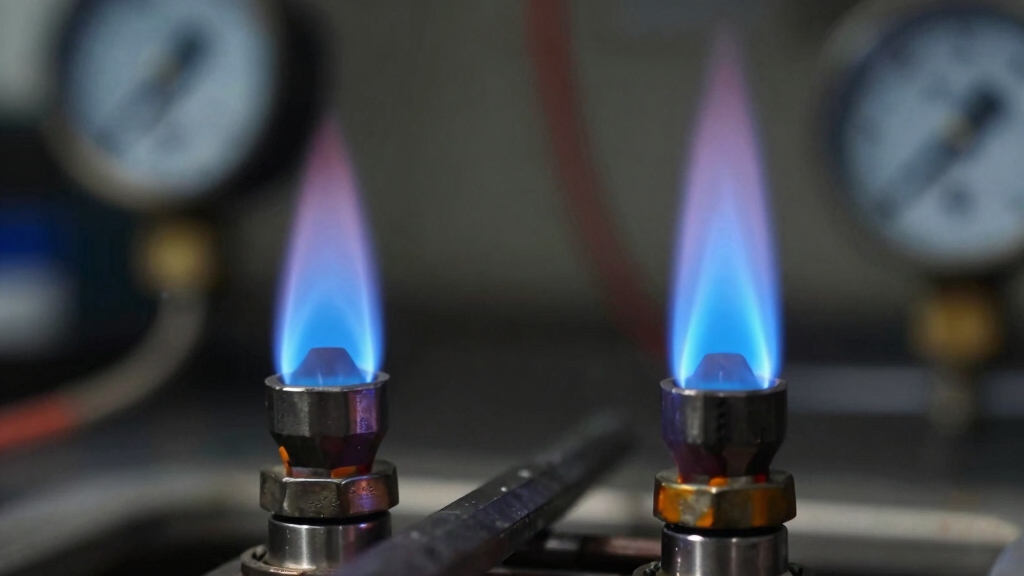
If you’re wondering whether natural gas burns hotter than propane, the answer is no. Propane burns slightly hotter, reaching about 3,573°F compared to natural gas at roughly 3,525°F.
Propane’s higher energy content, around 2,520 BTUs per cubic foot versus natural gas’s 1,012 BTUs, means it requires smaller volumes and orifices for the same heat output.
Plus, propane ignites more easily at lower temperatures, making it more efficient in many applications. Exploring these factors reveals why propane often edges out natural gas in heating performance.
When comparing flame temperatures, propane and natural gas burn at nearly the same high range, with propane reaching approximately 3,573°F and natural gas around 3,525°F.
This 48°F difference is minimal, indicating both fuels achieve similar peak combustion temperatures under ideal conditions.
The adiabatic flame temperature remains consistent, reflecting that the energy released per unit mass during combustion is closely matched.
Most sources report these maximum temperatures as fundamentally identical, emphasizing that neither fuel markedly outperforms the other in flame heat.
For practical purposes, the slight variance doesn’t impact applications requiring high-temperature combustion.
Understanding this parity helps you focus on other performance metrics, like energy content and efficiency, rather than flame temperature alone when choosing between propane and natural gas for heating or industrial uses.
Did you know that propane delivers around 2,520 BTUs per cubic foot? That’s more than double the energy you get from natural gas, which only offers about 1,012 BTUs. Pretty impressive, right? This higher energy density means that when you use propane, you need less volume to produce the same amount of heat.
So, it’s not just about heating your space; it’s about doing it more efficiently.
And here’s something interesting: because propane is more energy-dense, it often burns cleaner. This is why appliances that run on propane typically require smaller burners compared to those that use natural gas. Understanding these differences really sheds light on why many people prefer using propane for their heating applications.
Additionally, propane’s higher flame temperature allows it to transfer heat faster and achieve higher combustion efficiency compared to other common fuels.
Several factors explain why propane delivers more than twice the BTU content per cubic foot compared to natural gas.
Propane yields approximately 2,520 BTUs per cubic foot, while natural gas produces about 1,012 BTUs per cubic foot.
This stark difference results from propane’s molecular structure, consisting of three carbon and eight hydrogen atoms, allowing it to store and release markedly more energy during combustion.
In contrast, natural gas, primarily methane with one carbon and four hydrogen atoms, contains less stored chemical energy per volume.
As a result, when you burn propane, you get over twice the heat output per cubic foot than with natural gas.
This efficiency affects appliance design, requiring smaller orifices for propane to achieve comparable heat, whereas natural gas demands larger volumes to match the same energy delivery.
Building on propane’s higher BTU output, its superior energy density plays a significant role in why it delivers more heat per cubic foot than natural gas.
Propane yields about 2,520 BTUs per cubic foot, more than double natural gas’s 1,012 BTUs. This means propane requires less than half the volume to produce equivalent heat.
For example, a 100,000 BTU furnace burns roughly 40 cubic feet of propane per hour but 97 cubic feet of natural gas.
The molecular structure contributes: propane (C3H8) packs more combustible atoms than natural gas (CH4), increasing energy content per volume.
Consequently, appliances running on propane operate more efficiently with smaller fuel intake, reflecting propane’s higher energy density and compact storage advantages over natural gas.
Additionally, the thermal conductivity of gases like propane affects how efficiently heat is transferred during combustion, influencing overall heating performance.
Have you ever wondered why propane seems to burn hotter than natural gas? Well, it all comes down to their molecular structures. Propane has three carbon atoms and eight hydrogen atoms (C3H8). In contrast, natural gas is made up of just one carbon atom and four hydrogen atoms (CH4).
This difference in composition means propane packs a lot more chemical energy into its structure. Because of this higher carbon-to-hydrogen ratio, propane can produce more heat when it burns. In fact, it delivers over twice the BTUs per cubic foot compared to natural gas!
Although both propane and natural gas serve as common fuel sources, their molecular structures markedly influence their burning heat and efficiency.
Propane (C3H8) consists of three carbon atoms and eight hydrogen atoms, whereas natural gas primarily comprises methane (CH4) with one carbon and four hydrogen atoms.
This difference means propane’s molecular structure contains more chemical bonds, resulting in higher energy release per molecule during combustion.
You’ll notice propane delivers over twice the BTUs per cubic foot compared to natural gas, reflecting its denser energy content.
Although their adiabatic flame temperatures are similar, propane’s larger hydrocarbon chain allows it to ignite at lower temperatures and burn more efficiently in smaller volumes.
Understanding these structural distinctions clarifies why propane achieves superior heat output despite comparable flame temperatures with natural gas.
Since the ratio of carbon to hydrogen atoms in a fuel directly influences its combustion energy, understanding these molecular differences is key to comparing propane and natural gas burning heat.
Propane (C3H8) has a higher hydrogen-to-carbon ratio than natural gas (primarily methane, CH4). This means it releases more energy per molecule during combustion.
This higher hydrogen content contributes to propane’s greater BTU content per cubic foot.
| Fuel Type | Carbon Atoms | Hydrogen Atoms |
|---|---|---|
| Propane | 3 | 8 |
| Natural Gas | 1 | 4 |
| Hydrogen-to-Carbon Ratio | 2.67 | 4.0 |
| BTU per Cubic Foot | 2,520 | 1,012 |
| Molecular Formula | C3H8 | CH4 |
This ratio difference underpins propane’s higher energy density compared to natural gas.
When comparing propane and natural gas, their chemical compositions directly influence the heat produced during combustion. Propane (C3H8) contains more carbon and hydrogen atoms per molecule than natural gas (CH4), leading to significant differences in energy output.
Additionally, propane flames are typically broader and less focused compared to acetylene but still reach higher temperatures than natural gas in air-fed torches, which max near 2,000°C (3,600°F), emphasizing the importance of oxygen-fed combustion in achieving higher heat.
Understanding these factors helps you optimize fuel choice based on heat requirements and appliance compatibility.
Because propane ignites at a lower temperature range of 920°F to 1,120°F compared to natural gas’s higher ignition point around 1,150°F, propane flames start more readily from smaller or more distant heat sources.
This lower ignition threshold means propane requires less initial thermal energy to combust, enhancing flame reliability in varied conditions.
Natural gas, needing slightly more heat to ignite, may demand a more concentrated source.
| Fuel Type | Ignition Temperature (°F) |
|---|---|
| Propane | 920 – 1,120 |
| Natural Gas | ~1,150 |
| Difference | 30 – 230 |
Lower ignition temperatures allow propane flames to start with less heat, but the fuel’s higher energy density primarily drives the need for smaller orifices in propane burners compared to natural gas.
Propane’s higher energy density chiefly necessitates smaller burner orifices despite its lower ignition temperature.
Since propane delivers over twice the BTUs per cubic foot (2,520 vs. 1,012), you need less volume to achieve the same heat output. This impacts orifice sizing directly:
The importance of precise flow control is similar to how gas flow rates must be meticulously monitored in welding applications to maintain optimal performance and prevent instability.
Although natural gas and propane flames burn at very similar temperatures, around 3,560°F, the slight difference in peak flame temperature can influence appliance efficiency and performance.
Propane’s flame, roughly 48°F hotter, enables more complete combustion and higher heat transfer rates. This means you can achieve the same heating output with less fuel volume, improving efficiency.
Natural gas appliances often require larger orifices and longer burn times to match propane’s heat delivery, impacting performance consistency.
| Feature | Propane | Natural Gas |
|---|---|---|
| Peak Flame Temp (°F) | ~3,573 | ~3,525 |
| BTU per Cubic Foot | 2,520 | 1,012 |
| Burner Orifice Size | Smaller | Larger |
| Combustion Efficiency | Higher | Moderate |
| Heat Transfer Rate | Faster | Slower |
This data-driven comparison clarifies why flame temperature nuances affect appliance operation. Proper heat transfer is essential for maximizing efficiency in combustion applications.
Did you know that propane delivers over 2,500 BTUs per cubic foot? That’s more than double the 1,000 BTUs you get from natural gas! This means propane has a higher heat density. Pretty interesting, right?
With that greater energy concentration, you actually need less fuel to produce the same heat output. This can really influence things like burner size and how much fuel you consume overall.
Choosing the right fuel also depends on factors like heat resistance levels, which affect how equipment and gloves perform under high temperatures.
Several factors make propane a more energy-dense fuel compared to natural gas, which directly impacts heating and cooking performance.
You’ll notice propane delivers over twice the BTUs per cubic foot, meaning it requires less volume to generate equivalent heat. This difference affects appliance efficiency and fuel consumption rates.
Consider these key points:
When comparing heat output, propane delivers substantially more BTUs per cubic foot than natural gas, directly influencing heating and cooking efficiency.
Propane produces about 2,520 BTUs per cubic foot, while natural gas only generates around 1,012 BTUs. This means propane provides over twice the energy content in the same volume, allowing appliances to operate more efficiently and with smaller burners.
| Fuel Type | BTUs per Cubic Foot |
|---|---|
| Propane | 2,520 |
| Natural Gas | 1,012 |
| Ratio (Propane/Natural Gas) | ~2.5 |
This higher BTU density means you’ll need less propane to achieve the same heat output, making it ideal for applications demanding compact, high-intensity flames.
Because propane has a markedly higher energy density than natural gas, it requires substantially less volume to produce the same heat output. This difference materially impacts how you manage heating and cooking systems.
Consider these key points:
Understanding the BTU output of propane and natural gas is essential for accurately sizing your heating system and managing fuel consumption.
Propane delivers about 2,520 BTUs per cubic foot, more than twice the 1,012 BTUs from natural gas. This means propane requires less volume to produce the same heat, allowing smaller burners and more compact systems.
For example, a 100,000 BTU propane furnace consumes roughly 40 cubic feet of fuel per hour, while a natural gas equivalent burns 97 cubic feet. When selecting appliances or heating units, you must account for these differences to optimize efficiency and fuel use.
Additionally, propane’s higher energy density translates to fewer fuel deliveries and lower storage requirements. This directly impacts system design and operational logistics.
Although propane generally costs more per unit than natural gas, its higher energy density and efficiency often translate into significant cost and energy savings for users.
Propane’s higher energy density and efficiency can lead to notable cost and energy savings despite higher prices.
Propane delivers over twice the BTUs per cubic foot compared to natural gas, meaning you need less volume to achieve the same heat output. This efficiency reduces consumption and lowers operational costs.
Consider these points:
When deciding between natural gas and propane for your home heating, you should weigh factors like energy density, combustion efficiency, and fuel consumption.
Propane offers over twice the BTUs per cubic foot compared to natural gas, meaning smaller volumes deliver equivalent heat. Its lower ignition temperature also provides quicker combustion.
Conversely, natural gas is measured in therms and requires larger burner orifices due to lower heat content.
| Factor | Natural Gas | Propane |
|---|---|---|
| BTUs per cubic foot | ~1,012 BTUs | ~2,520 BTUs |
| Combustion Temp. | ~3,525°F | ~3,573°F |
| Fuel Volume Needed | Larger | Smaller |
| Ignition Temp. | 1,150°F | 920–1,120°F |
Choose propane if efficiency and volume matter; choose natural gas if supply convenience dominates. Maintaining proper operating conditions such as temperature control is essential to ensure optimal combustion efficiency and safety when using either fuel.
You should know propane poses higher explosion risks due to its heavier-than-air nature, causing it to accumulate near the floor.
Natural gas is lighter and disperses upward, reducing buildup.
Propane ignites at lower temperatures (920–1,120°F) than natural gas (1,150°F), so it can catch fire more easily from distant heat sources.
Both require proper ventilation and leak detection, but propane demands stricter handling because of its energy density and storage as a compressed liquid.
You’ll find that burning propane emits less carbon dioxide per unit of energy than natural gas, thanks to its higher hydrogen content.
Propane produces fewer greenhouse gases and particulates, reducing its environmental footprint.
However, natural gas leaks methane, a potent greenhouse gas, during extraction and distribution, which can offset its cleaner combustion benefits.
You’ll find propane stored as a compressed liquid in tanks, measured in gallons. This makes it portable and easy for delivery via trucks.
Natural gas, however, is delivered through pipelines as a gas, measured in therms (100 cubic feet per therm). Because natural gas is lighter and less dense, it requires continuous pipeline infrastructure.
In contrast, propane’s liquid form allows flexible, on-site tank storage, which is ideal for areas without pipeline access.
You might think you can swap natural gas and propane appliances easily, but you can’t.
Propane delivers over twice the BTUs per cubic foot compared to natural gas, so burners and orifices differ markedly.
Using natural gas appliances with propane or vice versa risks inefficient combustion and safety issues.
Each appliance is calibrated for its specific fuel, so you need proper conversion kits or dedicated units to guarantee safe, peak performance.
You’ll find propane systems require more frequent inspections due to their higher energy content and storage as compressed liquid, increasing leak risks.
Natural gas systems, being lighter and less dense, need regular vent and line checks but generally demand less intensive maintenance.
Propane appliances often need adjustments for orifice size and pressure regulators.
Natural gas systems focus on ensuring proper ventilation and monitoring gas flow consistency for safety and efficiency.
Think of propane and natural gas like two athletes racing a mile: propane sprints with higher energy per cubic foot, reaching flame temperatures around 3,600°F, while natural gas jogs at about 3,500°F.
You’ll get more intense heat from propane’s denser energy, which explains why its burners have smaller orifices.
So, if you need efficient, high-heat performance, propane’s your go-to. Natural gas offers steady, cost-effective warmth but won’t quite match propane’s fiery pace.