Phone:
(701)814-6992
Physical address:
6296 Donnelly Plaza
Ratkeville, Bahamas.

Phone:
(701)814-6992
Physical address:
6296 Donnelly Plaza
Ratkeville, Bahamas.

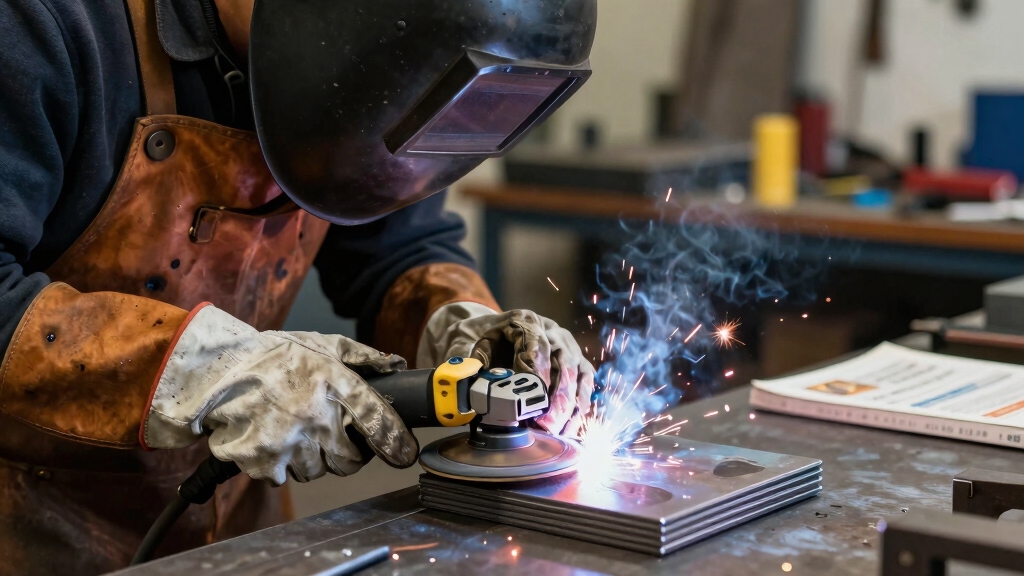
You don’t need prior welding experience to become an apprentice welder, as many programs accept beginners and teach hands-on skills alongside classroom instruction.
Some apprenticeships may prefer up to two years of experience, but formal welding education often substitutes for that.
This education covers blueprint reading, techniques, and safety protocols.
You’ll also need physical fitness, basic math, and good vision.
Apprenticeships include paid training and certifications.
Keep exploring to understand the full training structure and requirements.
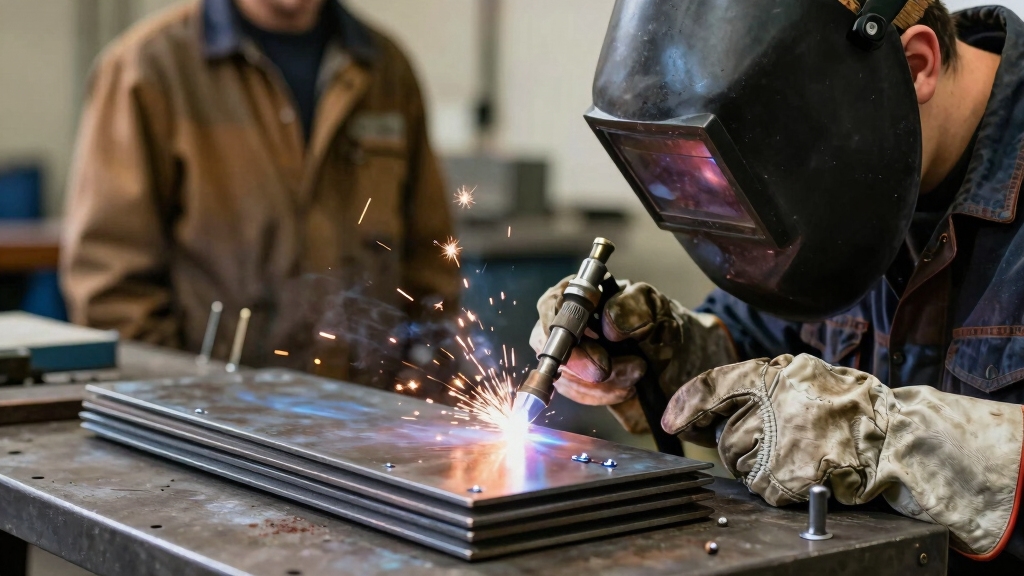
Meeting welding apprenticeship experience requirements varies depending on the program and location. You typically need a high school diploma or GED and must be at least 18 years old for safety and legal compliance.
While some apprenticeships require prior welding experience or completion of a formal training program with up to two years of hands-on work, many entry-level positions accept candidates without any previous welding background. Your chances improve if you’ve held related manual roles, but in certain areas like Denver, CO, no experience is necessary.
You’ll also undergo drug testing and background checks. Basic math skills are essential for precise measurements. Overall, you’ll find that some programs emphasize prior experience, while others focus primarily on your physical fitness and aptitude to learn technical skills on the job.
Additionally, understanding basic welding techniques can significantly enhance your ability to succeed during the apprenticeship.
While some apprenticeship programs prioritize prior welding experience, many recognize formal education as a valid substitute.
Many apprenticeship programs accept formal welding education in place of prior hands-on experience.
Completing an accredited welding training program equips you with essential skills like blueprint reading, welding techniques, and safety protocols, which can offset the lack of hands-on experience.
These programs incorporate lab-based practical exercises, simulating real-world welding tasks, ensuring you develop manual dexterity and precision.
Additionally, certifications such as AWS or OSHA obtained through education demonstrate your technical competence and safety awareness, boosting your apprenticeship eligibility.
Post-secondary education often includes rigorous assessments that validate your welding proficiency, enabling employers to trust your capabilities despite limited fieldwork.
Consequently, investing in formal welding education can effectively replace prior hands-on experience, positioning you strongly for entry into apprenticeship opportunities.
Understanding the importance of WPS and PQR documentation further enhances your welding knowledge and adherence to industry standards.
Developing essential skills and maintaining physical fitness are critical for success as a welding apprentice.
You need manual dexterity and sharp hand-eye coordination to achieve precise welds. Blueprint reading and spatial reasoning skills enable you to interpret technical drawings accurately.
Strong problem-solving capabilities help you troubleshoot weld defects and adapt to site challenges effectively. Familiarity with welding techniques, tools, and mandatory safety equipment is non-negotiable.
Physically, you must sustain long periods of standing and frequently lift 25-50 pounds. Excellent vision, including close, distance, and depth perception, is essential to maintain accuracy and safety.
Your fitness level should support work in confined spaces and outdoor environments up to 75% of the day. Prior mechanical or automotive experience can enhance your readiness, but focus on building these core technical and physical competencies to excel in your apprenticeship.
Additionally, understanding and practicing safety protocols is essential to prevent accidents and ensure a safe working environment.
Entering an apprentice welder training program immerses you in a structured blend of classroom instruction and hands-on experience. You’ll complete about 144 hours of technical classes paired with 2,000 hours of supervised on-the-job training.
Expect to develop skills in welding techniques, blueprint reading, and safety protocols while working under licensed welders. Your progress depends on passing welding exams and mastering practical tasks.
This paid program spans 3-4 years, preparing you for certification and licensure. Maintaining continuous skill maintenance during training is essential for building strong, professional welds that meet industry standards.
| Component | Details |
|---|---|
| Duration | 3-4 years |
| Classroom Hours | 144 hours |
| On-the-Job Training | 2,000 hours |
| Supervision | Licensed welders |
| Certification Exams | Required for progression |
Because safety and reliability are paramount in welding, apprenticeship programs require candidates to undergo background checks and drug testing before acceptance.
Welding apprenticeships prioritize safety by requiring background checks and drug testing for all candidates.
These measures guarantee a safe work environment and compliance with industry standards.
Additionally, possessing certifications like OSHA 10-Hour or 30-Hour safety training can markedly strengthen your application by demonstrating your commitment to safety protocols.
While a high school diploma or GED is typically sufficient, completing an accredited welder training program provides a competitive edge.
AWS certification during your training further validates your welding skills and knowledge.
Be prepared to meet physical and safety prerequisites, including passing any required physical examinations.
Receiving comprehensive welding training not only improves your skills but also reduces injury risk by up to 70% through hazard recognition and adherence to safety protocols, which is crucial for apprentices entering the field and embracing a safety mindset.
Meeting these certification and background requirements positions you as a reliable, qualified candidate ready for the demands of a welding apprenticeship.
For beginners, brands like Lincoln Electric, Miller, and Hobart offer reliable, user-friendly welding equipment.
Lincoln Electric provides durable machines with intuitive controls, perfect for learning.
Miller’s welders are known for consistent performance and excellent support.
Hobart combines affordability with solid build quality, ideal for newcomers.
You’ll want equipment that’s easy to adjust, safe, and versatile for different welding types.
This ensures you build skills confidently and efficiently from the start.
Weather conditions markedly impact outdoor welding. You’ll face challenges like wind disrupting shielding gas, causing weld defects.
Rain or moisture can lead to poor weld quality and electrical hazards.
Extreme cold affects metal brittleness and your dexterity, while heat can cause overheating or fatigue.
To guarantee safety and weld integrity, you must monitor weather closely, use protective covers, select appropriate welding techniques, and wear weather-suitable PPE during outdoor jobs.
Wondering if you can work part-time as a welding apprentice?
Yes, many programs allow it, but it depends on the employer and training structure.
Apprenticeships typically involve 3-4 years with 2000+ on-the-job hours and 144 classroom hours.
You’ll need to balance hands-on training with your schedule, ensuring safety and skill development aren’t compromised.
Confirm with your specific program for flexibility and time commitments before committing.
After your apprenticeship, you can advance to a licensed welder, increasing your earning potential. You might specialize in areas like underwater, robotic, or structural welding.
Supervisory roles, welding inspection, or quality control positions become accessible with experience and certifications. Pursuing AWS or OSHA certifications further enhances your credentials.
Additionally, you could shift into welding education or sales for welding equipment, broadening your career scope beyond direct welding tasks.
Yes, welding specialties like underwater welding, aerospace welding, and pipefitting require additional training beyond basic apprenticeship.
You’ll need certifications specific to these fields, often involving advanced techniques, safety protocols, and specialized equipment.
For example, underwater welding demands diving certification plus welding expertise.
Pursuing such specialties means investing in targeted courses and hands-on practice, ensuring you meet industry standards and operate safely in complex environments.
You don’t need prior welding experience to start an apprenticeship, but a solid foundation in welding education can give you a head start.
Remember, practice makes perfect; your skills will develop through hands-on training and guided practice. Stay physically fit, focus on essential skills, and be prepared for certifications and background checks.
With dedication and the right mindset, you’ll build the expertise required to succeed in your welding career.