Phone:
(701)814-6992
Physical address:
6296 Donnelly Plaza
Ratkeville, Bahamas.

Phone:
(701)814-6992
Physical address:
6296 Donnelly Plaza
Ratkeville, Bahamas.

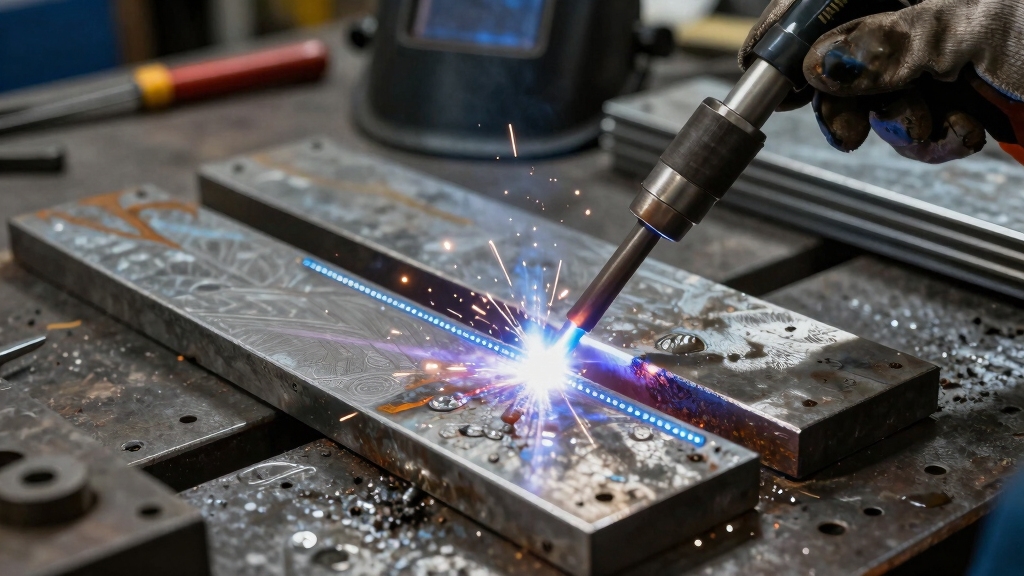
You can’t weld with a plasma cutter itself, but you can weld on plasma-cut metal if you prepare the edges correctly.
Plasma cutting leaves oxidized, brittle surfaces with dross and nitrides that cause porosity and cracking in welds.
Proper cleaning, grinding, and using suitable welding methods like TIG or Stick with deoxidizing electrodes improve joint quality.
Your choice of plasma gas and metal type also impacts weld integrity. Understanding these factors guarantees strong, reliable fusion beyond just cutting.
Although welding directly on plasma-cut metal is possible using Stick or TIG methods, you should be aware that the resulting welds tend to be brittle and prone to porosity.
The plasma cutting process exposes the metal edges to extreme temperatures, creating oxidation and nitriding layers that compromise weld integrity.
When you weld without proper edge preparation, inconsistencies such as dross and surface contaminants disrupt fusion, increasing failure risk.
While Stick and TIG welding provide solid bead formation, the microstructure of plasma-cut edges inherently reduces ductility.
Therefore, welding immediately after plasma cutting demands rigorous cleaning and surface conditioning to mitigate brittleness and porosity.
If you want reliable, high-quality welds, you must recognize these metallurgical challenges and address them before proceeding with your welding operations.
The plasma arc’s extreme temperatures cause rapid melting and oxidation at cut edges, which can necessitate additional post-cut treatments before welding.
When you weld plasma-cut edges without proper preparation, you risk introducing defects that compromise weld quality and strength.
Plasma cutting generates oxidation and nitriding on the edges due to the high-temperature plasma jet and the reactive gases involved.
These surface contaminants, combined with residual dross, impair weld bead consistency and promote porosity.
Ignoring these issues results in welds prone to cracking, reduced mechanical properties, and failure under stress. Proper surface cleaning methods such as using a stainless-steel wire brush or light mechanical abrasion on the cut zone are essential to ensure reliable arc initiation and improve weld quality by removing oxides and contaminants from the plasma-cut edges surface cleaning.
Start by thoroughly removing dross, slag, and oxidation from plasma-cut edges to guarantee a clean welding surface. These residues create inconsistencies that promote porosity and brittle welds.
Use a grinder or wire brush to mechanically clean the joint, ensuring you eliminate all oxidized layers caused by air plasma cutting. Since plasma cutting with shop air introduces nitrogen and oxygen, expect nitriding and oxidation on the edges.
Selecting deoxidizer welding wires like AWS ER70S-4 or ER70S-6 compensates for residual contaminants. After surface cleaning, inspect edges for irregularities or deformation. If present, consider back-gouging with the plasma torch to enhance joint penetration and fusion.
Proper edge preparation reduces weld defects and increases the structural integrity of the final assembly. Implementing local exhaust ventilation during welding minimizes hazardous fumes created from residual contaminants and improves welder safety.
You can definitely use Stick welding directly on plasma-cut metal.
Just keep in mind that if you don’t clean the edges thoroughly, your welds might end up being brittle.
Now, if you’re looking for better control and cleaner beads, TIG welding is the way to go.
It really shines when you take the time to prepare the joint by removing any dross and oxidation.
And don’t forget, proper surface prep is crucial!
Choosing the right deoxidizing filler metals can make a big difference in achieving strong and consistent welds.
Additionally, controlling heat input during welding helps maintain the integrity of the heat-affected zone and prevents defects.
Although plasma cutting creates clean edges, welding directly over plasma-cut metal presents challenges that affect weld quality.
Stick welding can be used on plasma-cut surfaces, but you must address surface contaminants like dross and oxidation to avoid brittle, porous welds.
Proper preparation is critical for consistent results.
When using Stick welding on plasma-cut metal, consider these factors:
Additionally, using electrodes with a low-hydrogen iron-powder coating like E7018 helps reduce hydrogen-induced cracking and improves weld strength on plasma-cut surfaces.
While Stick welding offers compatibility with plasma-cut edges, TIG welding provides distinct advantages that enhance weld quality on these surfaces.
TIG delivers precise heat control, minimizing distortion and reducing the risk of cracking on plasma-cut metal, which often has oxidation and dross residues.
Its inert gas shielding, usually argon, protects the weld pool from atmospheric contamination better than Stick welding, leading to cleaner, stronger joints.
TIG’s ability to produce narrow, consistent beads allows you to weld thinner sections and complex geometries with superior penetration and aesthetic finish.
However, TIG requires cleaner surfaces and skilled operation to avoid porosity caused by plasma cutting oxidation.
Additionally, controlling heat input during TIG welding is essential to minimize distortion and maintain the integrity of plasma-cut metal joints.
Building on the advantages TIG welding offers for plasma-cut metals, proper preparation of the cut edges remains key to achieving durable welds.
Plasma cutting leaves dross and oxidation that impair weld integrity, especially with Stick and TIG methods. To optimize weld quality, you must:
These steps minimize brittleness and porosity, enhancing weld consistency and strength. Skipping edge preparation increases failure risk, negating plasma cutting’s precision benefits.
Using electrodes with deep penetration capability, like 6010 rods, can further improve root pass quality on plasma-cut joints.
Adhering to these protocols lets you guarantee plasma cutting’s speed and accuracy alongside superior weld performance.
When you weld over plasma-cut edges, the type of metal you’re working with really makes a difference in how strong and reliable your welds will be. For instance, steel, aluminum, and copper all react differently to heat and can be affected by oxidation in unique ways. It’s interesting how each metal has its quirks, right?
Now, let’s talk about plasma gases. The gas you choose—whether it’s oxygen, nitrogen, or argon—plays a crucial role too. It can impact the plasma arc temperature and how much oxidation occurs on that cut surface.
This, in turn, can affect things like porosity and overall weld strength. Pretty fascinating stuff. Choosing the right plasma gas combination is essential for minimizing oxidation and achieving the best weld quality on plasma-cut stainless steel.
Understanding metal types and plasma gases is essential for optimizing weld quality in plasma cutting applications. Your success depends on matching the plasma cutter settings with the metal’s properties to minimize defects like porosity and brittleness.
Here’s what you should consider:
For aluminum welding, using 100% argon as a shielding gas provides excellent arc stability and prevents contamination, which is critical for achieving clean welds after plasma cutting.
Although plasma cutting offers versatility across various metals, selecting the appropriate plasma gas critically influences weld quality by affecting arc stability, oxidation levels, and resultant metallurgical properties.
For example, argon and argon-hydrogen mixtures provide a stable arc and minimal oxidation, ideal for stainless steel and aluminum, ensuring clean edges for welding.
Nitrogen suits cutting mild steel but can introduce nitriding effects that compromise weld integrity if not managed.
Oxygen enhances cutting speed on carbon steels but promotes oxidation, requiring thorough edge cleaning before welding.
Using compressed air is economical but introduces moisture and contaminants that increase porosity risk in welds.
Consequently, you must match plasma gases to metal types and welding requirements to minimize defects and optimize metallurgical outcomes.
This ensures stronger, more reliable weld joints.
Adjusting welding parameters is essential to maintain arc stability and prevent defects when transitioning between plasma cutting and welding processes.
Since oxidation directly influences weld integrity, you need to take into account both the metal type and plasma gas used during cutting.
Oxidation forms a brittle oxide layer that weakens weld quality and promotes porosity.
Here’s what you should consider:
When welding over plasma-cut edges, you’ll need to address the inherent oxidation and nitriding caused by the plasma arc to prevent porosity and brittleness in your welds.
Begin by thoroughly cleaning the edges. Grind or wire brush to remove dross and oxides. Use deoxidizing filler metals like AWS ER70S-4 to counteract nitrogen contamination. Control your shielding gas and maintain proper torch angle to minimize atmospheric exposure.
| Issue | Cause | Solution |
|---|---|---|
| Porosity | Nitrogen & oxidation | Use deoxidizing filler metal |
| Brittle welds | Nitrides formation | Thorough edge cleaning |
| Inconsistent fusion | Surface contamination | Proper gas shielding & prep |
| Weld cracking | Residual stresses | Controlled heat input |
Applying these steps guarantees stronger, defect-free welds on plasma-cut edges.
Deciding between plasma cutting and welding depends on your project’s specific requirements for material type, thickness, and joint integrity.
Choosing plasma cutting or welding hinges on your project’s material, thickness, and desired joint strength.
You should choose plasma cutting when you need fast, precise cuts on electrically conductive metals like steel or aluminum, especially for thicknesses up to 12mm.
Welding is preferable when you require strong, continuous joins with high structural integrity.
Consider these factors:
Match these criteria to your project to optimize efficiency and durability.
Yes, you can use plasma cutters for gouging and metal removal. The plasma jet’s intense heat melts the metal, allowing you to blow away unwanted material efficiently.
This makes it ideal for removing faulty welds, slag, or damaged sections.
Keep in mind the plasma torch’s settings and gas flow must be adjusted properly to achieve precise gouging without excessive damage to surrounding areas, ensuring clean and controlled metal removal.
You’ll want to match gases to metals for peak plasma cutting.
For steel, shop air or nitrogen works well, providing clean cuts cost-effectively.
Aluminum and copper benefit from argon or argon-hydrogen mixes to improve arc stability and cut quality.
Oxygen enhances speed and edge quality on mild and stainless steels but causes oxidation on aluminum.
Nitrogen suits stainless steel for minimal oxidation and sharper edges.
Selecting the right gas guarantees precise, efficient cuts.
Pilot arc technology improves plasma cutting by allowing you to initiate the arc without touching the torch tip to the metal.
This prevents contamination and tip wear, especially on painted or rusted surfaces.
By maintaining a stable pilot arc, you get cleaner starts, reduced slag, and consistent cutting quality.
Fundamentally, it enhances your cut precision and torch longevity, enabling you to work efficiently on challenging materials without compromising performance.
Yes, plasma cutting is safe for robotic or automated welding systems, but you need to address specific considerations.
You must implement additional safety barriers to protect sensitive components from intense heat and sparks.
Also, make sure your shop air is properly filtered to remove oils, moisture, and dust, preventing contamination.
With these measures, plasma cutting’s precision and speed integrate well into automated setups, enhancing productivity without compromising safety or equipment longevity.
You need to regularly inspect and clean the torch consumables: electrodes, nozzles, and shields to maintain cutting quality.
Replace worn parts promptly to prevent arc instability. Check gas supply lines for leaks and make certain filters remove oils and moisture from shop air.
Clean or replace air filters periodically. Monitor and calibrate system settings for consistent plasma arc performance.
Proper maintenance extends equipment life and ensures precise, efficient plasma cutting operations.
You might think plasma cutting and welding are like oil and water, but with the right prep, you can weld plasma-cut metal without turning your project into a disaster zone.
Ignoring edge cleanliness or metal type can lead to welds so brittle they’d snap under a butterfly’s sneeze.
Choose your welding method wisely, control gases, and prepare edges meticulously. Otherwise, you’re inviting porosity and failure. Master these steps, and you’ll weld plasma-cut metal like a pro every time.