Phone:
(701)814-6992
Physical address:
6296 Donnelly Plaza
Ratkeville, Bahamas.

Phone:
(701)814-6992
Physical address:
6296 Donnelly Plaza
Ratkeville, Bahamas.

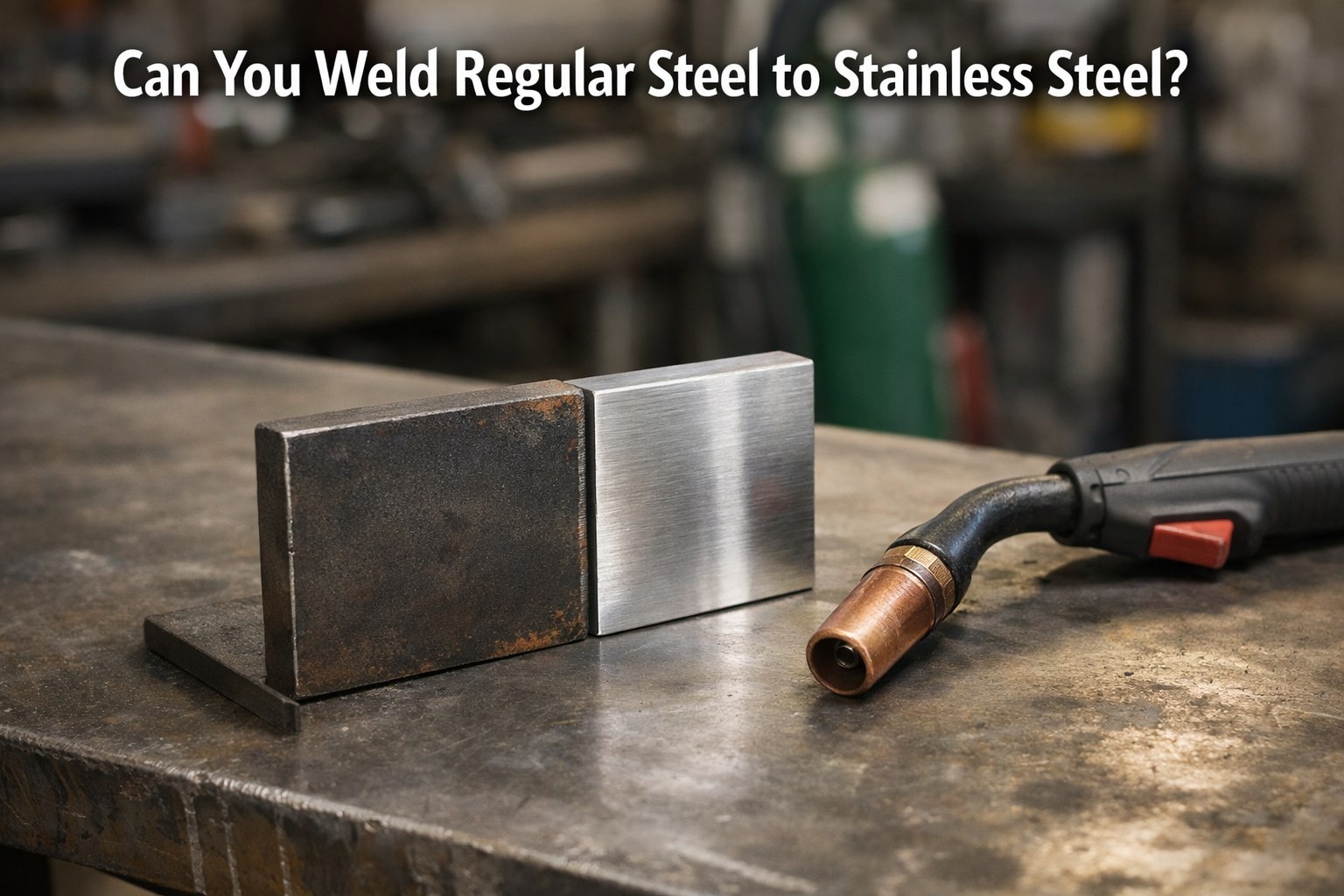
Yes, you can weld regular carbon steel to stainless steel, but it demands careful control of heat input and precise surface preparation to prevent distortion, brittle phases, and corrosion.
You’ll need specialized filler metals like ER309L to balance thermal expansion and maintain joint strength. Proper welding techniques, such as TIG or pulsed MIG with shielding gas, minimize defects and preserve corrosion resistance.
Managing these factors is essential for a reliable, durable weld. Understanding the full process will help you achieve the best results.
When welding carbon steel to stainless steel, you must address significant challenges stemming from their differing thermal expansion rates and heat conductivities.
Carbon steel’s thermal expansion coefficient is around 12 μm/m/°C, while austenitic stainless steel’s is higher, about 17 μm/m/°C. This difference causes distortion and thermal stress during welding. Additionally, localized heating can generate hazardous fumes requiring proper ventilation controls.
Additionally, stainless steel’s lower heat conductivity (approximately 15 W/m·K) leads to slower cooling and contraction than carbon steel (around 49 W/m·K). This increases residual stress and distortion risks.
Uneven heat distribution can cause warping, burn-through, and heat-affected zone problems in stainless steel near the weld. Excessive heat input further damages microstructure, reducing corrosion resistance and mechanical properties.
You must carefully control welding parameters to manage heat input and cooling rates. This minimizes thermal stresses and distortion for a sound weld.
Furthermore, differences in chemical composition mean carbon from the steel can combine with chromium in stainless steel, forming brittle compounds that compromise corrosion resistance in the weld area, especially in the heat-affected zone (chemical composition differences).
Managing heat input and controlling thermal stresses rely heavily on the condition of the steel surfaces before welding. You must remove all oil, grease, rust, paint, and burrs to prevent porosity and weak fusion. Surface cleanliness guarantees weld strength and durability, especially when joining carbon steel to stainless steel.
The Surface Preparation Scale provides a structured framework to evaluate and improve surface conditions, ensuring optimal welding results. Proper surface preparation is a critical step before applying heat to dissimilar metals to avoid defects such as porosity and contamination.
Properly cleaning steel surfaces before welding is crucial to avoid defects and ensure strong, durable joints.
Mechanical cleaning methods like abrasive blasting or wire brushing are essential, complemented by chemical treatments such as solvent degreasing or pickling. Employing pre-cleaning techniques reduces fume generation and improves weld quality, which is vital when working with coated or plated steels.
Key preparation steps include:
This preparation minimizes defects and improves joint integrity across dissimilar metals.
Selecting the right filler metal is essential to achieving a reliable weld between regular steel and stainless steel. You need a filler that complements both metals’ chemical and mechanical properties to prevent cracking, corrosion, or strength loss.
ER309L is the standard choice due to its balanced chromium (~24%) and nickel (~13%) content, which provides corrosion resistance and mitigates thermal expansion differences. Using ER308L alone isn’t advisable for mixed joints because its alloy content suits only stainless-to-stainless welds.
The filler metal must also match or exceed the weaker base metal’s strength, typically carbon steel, and possess an austenitic matrix with some delta ferrite to reduce hot cracking risks. Selecting a filler metal compliant with AWS standards further ensures compatibility and performance. Choosing the right filler metal is crucial since it determines the overall weld performance and durability by ensuring a strong, metallurgically sound joint joint strength.
Prioritizing these factors guarantees weld integrity, durability, and mechanical performance in dissimilar steel joints.
To achieve strong and durable welds between regular steel and stainless steel, you must carefully choose welding techniques that address their differing thermal and metallurgical properties.
TIG welding’s low heat input suits thin materials, reducing distortion and oxidation risk. It uses argon gas, often mixed with other gases, to protect the weld area from oxidation. However, the use of improper shielding gases like 75/25 argon-CO2 can compromise weld quality and corrosion resistance in stainless steel.
MIG welding, with pulsed current, handles thicker sections effectively, ensuring joint strength.
Stick welding demands stainless-specific electrodes to avoid contamination, while resistance spot welding remains less common for structural joints. Proper joint design and cleaning are essential to prevent defects and minimize the risk of carbide precipitation that weakens corrosion resistance.
Select filler metals like type 309 stainless to accommodate thermal expansion differences. Use shielding gas on both sides during TIG welding to protect the weld pool.
Control welding sequence to minimize residual stresses. Preheat carbon steel to balance cooling rates and reduce cracking risk.
When it comes to welding stainless steel, managing heat input is super important. You want to make sure that you control that heat to avoid any issues like carbide precipitation, which can mess with the corrosion resistance of your welds. So, keeping an eye on things like amperage and travel speed is key. Controlling heat input also helps prevent thermal distortion caused by uneven expansion and contraction during welding.
By minimizing the heat-affected zones, you’re also reducing the chances of distortion and cracking. It’s all about making those precise adjustments! Excessive localized heating during welding can cause distortion and damage mechanical strength, so controlling heat input is crucial for weld quality. localized heating
Plus, using techniques like pulsed TIG welding can really help maintain weld integrity. And don’t forget about cooling – it’s crucial for ensuring that your joints end up being defect-free.
Controlling heat input plays a critical role when welding regular steel to stainless steel. Excessive heat can compromise the chromium layer in stainless steel and lead to weld decay or distortion.
You need to carefully adjust welding parameters and select appropriate techniques to manage localized heat and prevent damage. Maintaining a narrow heat-affected zone helps preserve the stainless steel’s corrosion resistance and structural integrity.
To control heat input effectively, consider these strategies:
Fine-tune voltage, amperage, wire feed, and travel speed to minimize thermal stress and avoid burn-through.
Employ pulsed welding and intermittent stitch welding to reduce heat concentration and allow cooling intervals.
Use smaller diameter filler wires and TIG welding for superior heat control, especially on thin stainless sheets.
MIG welding, which uses a continuously fed consumable electrode wire, can simplify control of heat input when properly adjusted.
Apply heat sinks and proper workpiece clamping to dissipate heat evenly and maintain alignment.
Managing heat input effectively lays the groundwork for minimizing weld defects when joining regular steel to stainless steel. Selecting the appropriate welding shade based on amperage and electrode type enhances operator precision and reduces eye strain during this process.
You must make certain thorough joint cleaning with dedicated stainless steel tools to prevent contamination and hydrogen-induced porosity.
Proper fit-up guarantees adequate fusion, reducing incomplete fusion and cracking risk. Using an auto-darkening helmet with adjustable sensitivity settings can improve weld quality by maintaining optimal visibility throughout the weld.
Use correct shielding gas mixtures and maintain consistent flow rates to avoid oxygen intrusion, porosity, and embrittlement.
Back purging is essential when welding stainless steel tubing to prevent oxidation. Ensuring the use of helmets and lenses that meet ANSI standards provides necessary UV and IR protection during welding.
Select filler metals compatible with both steels, controlling ferrite content to mitigate cracking and avoid brittle phases. Ensuring the use of low-impurity stainless steel and filler metal that produces controlled ferrite content (ideally 5–10%) helps prevent hot cracking.
Employ precise welding parameters, including correct electrode angle, arc length, travel speed, and current, to maintain molten pool stability and full penetration. Starting with a darker shade lens and adjusting one level at a time helps balance weld pool visibility with eye protection.
Test welds validate settings.
Post-weld cleaning and passivation restore corrosion resistance, ensuring weld integrity and longevity. Regular inspection and replacement of helmet lenses reduce the risk of UV exposure and maintain operator safety.
When it comes to welding regular steel to stainless steel, there are some mechanical strength challenges we really need to keep in mind. One of the main issues is the microstructural changes that occur during the welding process.
Not to mention, the differences in thermal expansion between the two materials can create additional complications. So, it’s crucial to consider these factors for a successful weld. Additionally, the formation of residual stresses during welding can cause distortion and affect the integrity of the joint, making careful heat control essential to minimize these effects. residual stresses Proper surface preparation and controlling heat input are key steps to reduce weld defects and maintain joint strength.
Now, let’s talk about corrosion resistance. This is another area that requires careful attention. If we’re not careful with our choice of filler metals or the amount of heat we apply, we could end up promoting some unwanted phases or even galvanic effects. That’s definitely something we want to avoid! Using corrosion-resistant primers and proper post-weld treatment can help protect the weld area from rust and oxidation, especially in hard-to-protect joint areas.
Although welding dissimilar steels like regular and stainless steel presents challenges, understanding the mechanical strength and corrosion resistance of these joints is essential for reliable performance. Proper welding parameters and technique are vital since minor mistakes can significantly degrade weld quality due to the complexity of TIG welding.
You’ll find that tensile strength in these welds is typically lower than the base metals, with weld efficiency varying based on steel types, for example, around 82% for medium-Mn stainless to NiCr stainless.
Microstructural changes during welding can reduce ductility and toughness, necessitating precise control of welding parameters and heat treatments to optimize strength and prevent brittleness.
Fusion welding induces grain coarsening and phase transformations affecting joint integrity.
Pre- and post-weld heat treatments improve strength and toughness, especially in precipitation-hardening grades.
Residual stresses from welding can compromise mechanical performance if unmanaged.
Appropriate filler metal selection is critical to maintain metallurgical compatibility and weld strength. Additionally, allowable fusion weld-metal strengths are generally based on approximately 85% of minimum tensile ultimate values, and applying a recommended 15% engineering margin is important when designing joints using experimental data to ensure durability and safety allowable fusion weld-metal strengths.
When welding regular steel to stainless steel, corrosion resistance challenges arise primarily from the disruption of the protective chromium oxide film. The welding heat damages this film through oxidation, shown by heat tinting, which compromises corrosion resistance.
You must control heat input to limit grain growth and sensitization caused by chromium carbide precipitation in the heat-affected zone. This depletion of chromium increases intergranular corrosion risk.
Using low-carbon stainless grades and proper shielding gases helps reduce carbide formation. Additionally, iron contamination from regular steel during welding embeds into the oxide layer, undermining corrosion resistance. You should prevent cross contamination and thoroughly clean surfaces pre- and post-weld.
Employing inert atmospheres or trailing shields limits oxidation, preserving the stainless steel’s passive layer and enhancing the weld’s corrosion performance. Controlled heating is critical to avoid damaging protective coatings and minimize fume hazards associated with metal vaporization, as seen in processes involving heat sensitivity. Inspection and testing after welding are essential to confirm restoration of the surface’s corrosion resistance.
Selecting the right filler metal critically influences both the mechanical strength and corrosion resistance of welds joining regular steel to stainless steel.
You’ll find 309L filler metal is preferred because its balanced chromium (~24%) and nickel (~13%) content accommodates differences in thermal expansion and enhances joint toughness.
Using inappropriate fillers like ER70S-6 carbon steel compromises corrosion resistance and can induce brittleness or cracking.
The filler metal also plays an essential role in mitigating galvanic corrosion by forming a compatible weld matrix.
309L filler’s composition optimizes strength and corrosion resistance in dissimilar welds.
Austenitic fillers (308L, 309L) provide ductility and tensile strength essential for thermal cycling.
Specialized fillers prevent weld defects in martensitic stainless steel joints.
Incorrect filler selection risks localized corrosion and mechanical failure at the weld interface.
These filler metals are commonly available in various forms including stick electrodes, spools, and cut lengths to suit different welding applications and preferences, ensuring versatile product forms.
You must wear flame-resistant clothing, insulated gloves, and a welding helmet with proper eye protection.
Make certain thorough cleaning of surfaces to remove coatings and contaminants.
Use local exhaust ventilation or fume extractors to minimize toxic fume exposure, especially chromium and nickel compounds.
Stand on insulated mats and avoid contact with live parts to prevent electric shock.
Always inspect electrical equipment before use and position yourself upwind to reduce inhalation risks during stainless to carbon steel welding.
When you weld stainless to regular steel, you’ll notice the magnetic properties shift dramatically.
The ferromagnetic carbon steel retains strong magnetism, while the austenitic stainless steel near the weld can develop magnetic zones due to phase changes like ferrite or martensite forming in the heat-affected zone.
This mixed microstructure creates complex magnetic behavior, potentially affecting sensitive equipment.
Cooling rates and alloy composition influence how pronounced these magnetic changes become.
Yes, you can paint or coat stainless-to-carbon steel welds, but you must prepare the surfaces meticulously to guarantee adhesion.
Use coatings compatible with both steels to prevent differential adhesion and galvanic corrosion.
Apply specialized primers or barrier coatings near the weld zone to manage corrosion differences.
Maintain coating integrity through regular inspections, as any damage can expose carbon steel, accelerating corrosion.
Proper welding and post-weld treatments also enhance coating performance.
You can expect welding mixed steel joints to cost 20%-50% more than welding pure carbon steel. This increase results from pricier filler metals, specialized shielding gases, and higher labor demands due to skill-intensive heat control and preparation.
Additionally, equipment costs rise with the need for precision welding machines and maintenance. Consumables and post-weld treatments add further expenses, making your overall project budget markedly higher when dealing with mixed steel welding.
Oh sure, go ahead and weld dissimilar metals without a care, just as long as you love violating APCD Rule 67.17 and ignoring hexavalent chromium dangers.
In reality, you must follow strict regulations limiting emissions, ban certain welding methods like SMAW on stainless steel, and keep meticulous records of consumables.
You’re required to use approved chemicals, maintain ventilation, and train workers to prevent hazardous fume exposure, ensuring environmental and health compliance.
Welding regular steel to stainless steel requires precision, like fitting two puzzle pieces from different sets.
You’ll need to carefully prepare surfaces, select compatible filler metals, and control heat input to avoid defects.
By mastering these technical steps, you make certain strong, corrosion-resistant joints.
With attention to detail and proper technique, you can reliably join these dissimilar metals to meet demanding mechanical and environmental requirements.