Phone:
(701)814-6992
Physical address:
6296 Donnelly Plaza
Ratkeville, Bahamas.

Phone:
(701)814-6992
Physical address:
6296 Donnelly Plaza
Ratkeville, Bahamas.

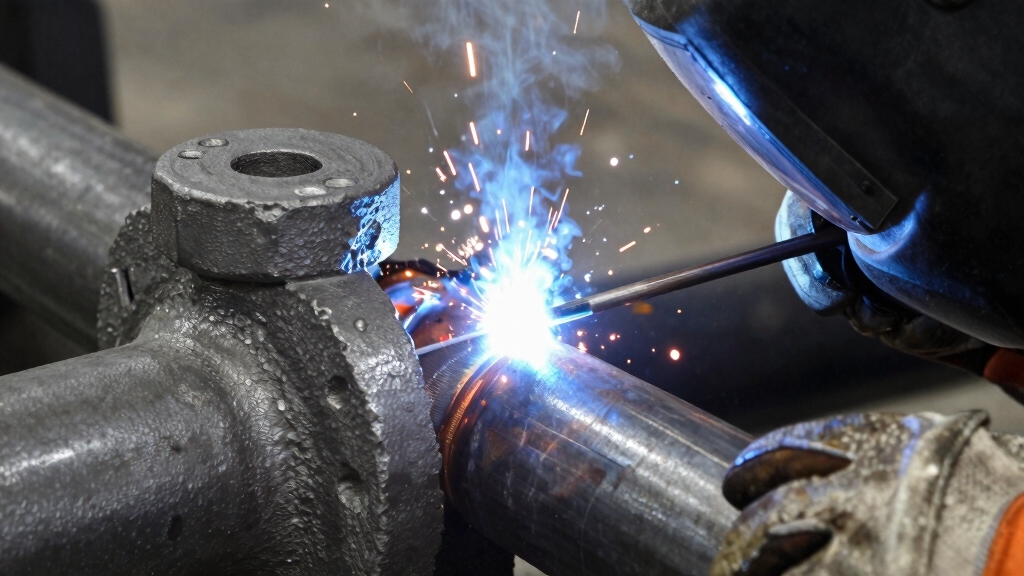
You can weld cast iron to steel by carefully managing heat input and using appropriate filler metals like nickel alloys to reduce brittleness and cracking risks.
Preheating the cast iron and controlling cooling rates minimize thermal stresses caused by differing expansion rates.
Proper surface preparation and welding techniques, such as using short weld passes and peening, further improve joint integrity.
Understanding these specialized procedures helps guarantee a durable bond between dissimilar metals and addresses common challenges effectively.
Although cast iron and steel are both iron-based materials, their chemical compositions and resulting microstructures differ markedly. This influences their mechanical properties and weldability.
The challenges in joining dissimilar metals with differing thermal and mechanical properties are well documented, particularly concerning the formation of brittle intermetallic compounds and differential thermal expansion.
Cast iron and steel differ significantly in composition and microstructure, affecting their strength and weldability.
Cast iron contains 2–4% carbon and 1–3% silicon, promoting graphite or cementite formation. In contrast, steel holds under 2% carbon, often with alloying elements like manganese or chromium, creating a more uniform ferrite/pearlite or martensitic matrix.
These differences yield cast iron’s heterogeneous microstructures with graphite flakes or nodules. These structures act as stress concentrators, reducing tensile strength and ductility compared to steel’s more homogeneous and tougher phases.
Cast iron’s higher carbon and silicon also alter melting behavior and castability. Mechanically, steel exhibits superior tensile strength, toughness, and fatigue resistance.
Additionally, cast iron generally has excellent wear resistance due to its higher graphite content and hardness. When joining cast iron to steel, special consideration is needed to accommodate differential thermal expansion and to minimize residual stresses and cracking risk.
Welding cast iron to steel can be quite a challenge, mainly because these two materials have different chemical compositions and microstructures. Have you ever thought about how that affects the welding process? Managing heat input carefully is critical to avoid excessive thermal stresses and minimize weld defects.
The mismatch in their thermal expansion rates is a big deal, especially when you consider how much stress it can create during heating and cooling cycles. Additionally, the high carbon content in cast iron leads to potential formation of brittle martensite, increasing the risk of cracking if not properly managed with preheating and post-weld heat treatment.
It’s really important to keep an eye on those residual stresses. If they aren’t managed properly, you could end up with cracking, which would compromise the integrity of the joint. Proper preheating and PWHT are essential to slow cooling and relieve stresses, improving weld quality and durability.
Because cast iron contains markedly higher carbon levels than steel, welding these materials poses serious compatibility challenges that affect weld integrity. Proper preparation and cleaning of the joint area is essential to reduce defects and improve weld quality.
The elevated carbon in cast iron leads to brittle graphite or carbide phases, raising crack susceptibility.
You must manage carbon migration and control fusion zone microstructures to avoid hard, brittle interfaces.
Residual stresses from mechanical property mismatch further increase fracture risks. Selecting appropriate filler metals and welding procedures is critical to mitigate these issues.
Additionally, maintaining a controlled temperature during welding is essential because the temperature plays a critical role in preventing cracking in cast iron components.
| Issue | Effect on Weld |
|---|---|
| High Carbon Content | Brittle graphite/carbide phases |
| Carbon Migration | Hardened martensitic zones |
| Mechanical Property Mismatch | Stress concentration, cracking |
| Heat-Affected Zone Changes | Reduced toughness, cracking |
| Filler Metal Selection | Controls hardness, ductility |
Since cast iron and steel expand at different rates under heat, welding these materials demands careful control of thermal expansion to prevent cracking.
Cast iron’s thermal expansion rate is slightly less than steel’s, but poor thermal conductivity in cast iron causes localized heating, creating uneven expansion. Proper heat input management is crucial to avoid warping and maintain weld integrity.
This differential expansion generates stress in the heat-affected zone, increasing the risk of cracking, particularly due to carbon inclusions and graphite precipitation.
You must preheat cast iron adequately, typically between 250°F and 600°C depending on casting size, to minimize thermal gradients.
Maintaining uniform temperature during welding and employing slow cooling techniques reduces tensile stress from rapid contraction.
Controlling heat input with low amperage and fast travel speed also limits expansion mismatch effects, making thermal management essential for a sound cast-to-steel weld.
Before welding, it is critical to clean weld area of paint, grease, oil, and other contaminants to ensure optimal weld quality and reduce porosity.
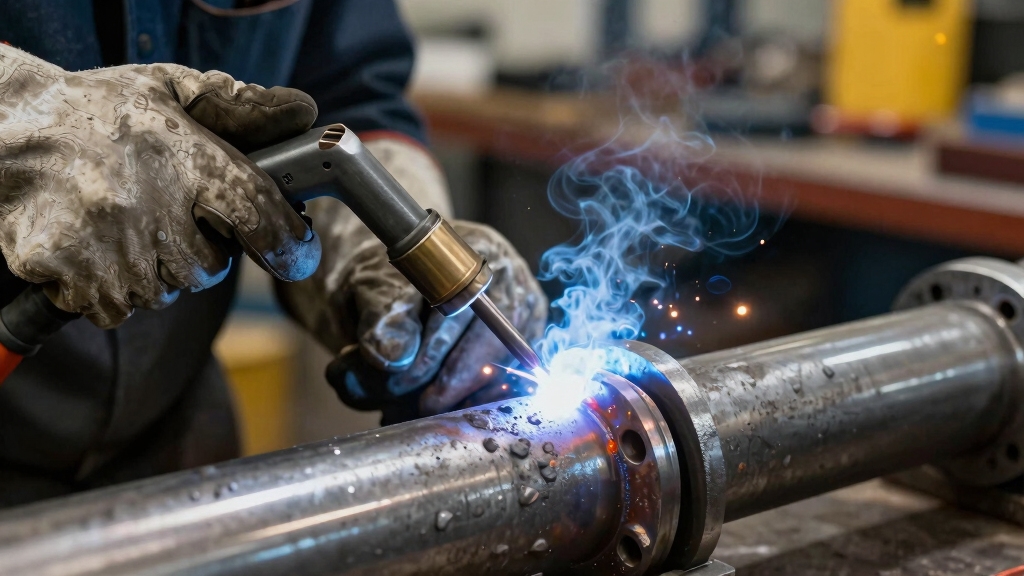
Selecting the right welding process for joining cast components to steel critically influences joint integrity and service performance.
You’ll often use Shielded Metal Arc Welding (SMAW) for repairs, as flux coatings mitigate carbon migration and reduce cracking. Additionally, using an argon shielding gas can improve arc stability and reduce defects in some SMAW applications.
For precise control, Gas Tungsten Arc Welding (GTAW) suits small, detailed joints, provided you manage preheat carefully. Argon’s inert atmosphere also prevents oxidation and porosity, enhancing weld quality in GTAW.
Gas Metal Arc Welding (GMAW) works when access and deposition rates matter, but you must control dilution and thermal stresses to prevent brittle zones. Using argon or argon/CO2 blends as shielding gas can produce smoother weld beads and minimize spatter in GMAW.
Oxy-acetylene or braze welding offers low-stress, cosmetic joins with minimal carbon migration but lower strength.
Combining methods, such as TIG root with SMAW or GMAW fill plus post-heat, balances fusion control, metallurgy, and speed.
Proper joint prep, preheat, and interpass temperature control remain essential across all these processes to avoid cracking and guarantee metallurgical stability. It is also critical to remove casting skin before welding to ensure a clean base metal and prevent defects such as gas porosity.
When you’re welding cast iron to steel, it’s super important to pick the right filler materials. You want to manage those differences in thermal expansion and keep cracking risks at bay. Selecting compatible filler metals also helps mitigate thermal stresses that can arise during welding.
One solid option is nickel alloy electrodes, especially the ones with a high nickel content. They really help stabilize the weld deposits and boost ductility in those joints, which is a big plus! Using the correct filler ensures strong, metallurgically sound joints that withstand stress.
Now, don’t forget about copper-based fillers, either. These can be a great fit for certain types of cast iron. They offer good thermal conductivity and work well with the base metals. So, depending on what you’re working with, you’ve got some solid choices to consider!
Nickel alloy electrodes offer a critical balance of ductility and strength essential for welding cast iron to steel.
When selecting electrodes, consider ENi-CI for pure nickel’s high ductility and machinability, ideal for gray cast iron and thin sections, with tensile strength around 55,000 PSI. Maintaining controlled heat input during welding is crucial to prevent brittleness and cracking in the weld zone.
For enhanced strength, ENiFe-CI electrodes provide a nickel-iron blend, reducing cracking risk across gray, ductile, and malleable cast irons.
The high percentage of nickel in these electrodes ensures excellent corrosion and oxidation resistance, enhancing the longevity of the weld.
Use appropriate amperage (80-120) and maintain a close arc gap with controlled heat to avoid defects.
These electrodes prevent graphite pickup and maintain low carbon levels, ensuring weld flexibility and durability.
Post-weld heat treatment and matching electrode type to cast iron grade further minimize cracking.
Employing these electrodes in SMAW or GTAW processes delivers reliable, strong bonds between cast iron and steel components, especially when combined with preheating and cooling techniques to manage thermal stresses.
Copper-alloy filler metals play a pivotal role in joining cast iron components, especially when dissimilar metals are involved. You’ll often select silicon bronze or aluminum bronze alloys for welding or brazing cast iron to steel or copper alloys. These alloys benefit from their compatibility and corrosion resistance.
Applying a suitable weld-through primer can further protect joints from corrosion during and after welding. Silver-based rods offer strong bonds at lower temperatures, minimizing base metal melting. Consider flux-coated rods to prevent impurities and guarantee clean joints. Since cast iron brazing almost always requires flux, using flux-coated filler metals or applying flux separately is crucial to ensure joint integrity.
Here’s a concise comparison:
| Filler Metal Type | Application | Key Feature |
|---|---|---|
| Silicon Bronze | TIG welding, brazing | Good ductility, AWS-ERCuSi-A |
| Silver-Based Rods | Brazing cast iron | High strength, low heat input |
| Aluminum Bronze | Overlay, dissimilar weld | Corrosion resistance, versatile |
Choose filler metals based on joint requirements and thermal compatibility for peak results.
Proper surface preparation plays a critical role in guaranteeing a strong, defect-free weld between cast iron and steel components.
You need to thoroughly clean both surfaces by removing oils, grease, paint, and machining lubricants using solvent degreasers. Mechanical cleaning methods such as wire brushing or grinding should eliminate rust, casting skin, and graphite smears to expose bare metal, ensuring the removal of contaminants that compromise weld quality.
Joint geometry must be carefully prepared by designing appropriate weld grooves and controlling fit-up to reduce thermal stresses and secure full fusion.
Key preparation steps include:
After preparing the surfaces and ensuring sound metal contact, managing heat effectively becomes your next focus to prevent weld defects.
Preheating reduces the thermal gradient between cast iron and steel, minimizing residual tensile stresses that cause cracking.
Target preheat temperatures typically range from 150–400°C, adjusted for alloy type, thickness, and carbon equivalence.
Apply localized heating methods like induction or torch heating to limit distortion, matching preheat zones to the thermal mass of each component.
Maintain slow, controlled cooling using blankets or furnaces to prevent rapid contraction-induced cracking.
During welding, monitor and maintain interpass temperatures within specified ranges to avoid microstructural damage.
Use thermocouples or infrared tools for precise temperature verification.
Following these heat management protocols guarantees a stable thermal environment that reduces weld defects and improves joint integrity.
To ensure welders maintain qualification for such specialized procedures, it is crucial to keep detailed continuity records documenting welding activity within every six-month interval.
Controlling weld parameters and employing specific techniques are essential to minimizing cracking when joining cast iron to steel. You need to carefully manage heat input and stress distribution to prevent brittle welds and cracking.
Key techniques include:
Short Weld Passes: Limit each pass to about 1 inch, welding from crack edges toward the center and staggering passes to reduce heat buildup and martensite formation in the heat-affected zone (HAZ). This helps avoid the rapid cooling that causes immediate cracking and audible indications due to the brittle martensitic structure.
Peening: Apply perpendicular blows with a ball-peen hammer during cooling to relieve stress and counteract shrinkage, pushing weld metal into the base material effectively.
Electrode Choice & Polarity: Use nickel rods with DCEN polarity to reduce dilution and brittleness, increasing weld volume and minimizing hydrogen-induced cracking.
When joining cast iron to steel, you can turn to several alternatives that bypass the challenges of fusion welding.
Mechanical fasteners offer quick, reversible joints requiring minimal prep, but risk point loading and debris generation. However, mechanical fasteners may lack sufficient strength and are likely to weaken over time, so expert assessment is recommended to ensure suitability.
Structural adhesives provide even load distribution without heat input, often matching weld strength economically, though surface prep is needed.
Braise welding uses filler metals like SSF-6 silver solder at 1150°F, producing weaker bonds suitable for low-stress or cosmetic repairs while minimizing base metal impact.
Gas welding applies localized heat at lower temperatures, reducing carbon migration and cracking risk but is slower, especially for large parts.
Nickel rod brazing, using 55% or 99% nickel rods, yields machinable, low-expansion joints ideal for cast iron to steel, though at higher cost.
Each method balances strength, cost, and thermal effects differently.
Although welding cast iron to steel creates strong joints, managing post-weld cooling and stress relief is critical to maintain integrity and prevent cracking.
You need to apply controlled post-weld heat treatment (PWHT) with conservative temperatures, especially on cast iron, to minimize thermal gradients and avoid brittle microstructures. This process involves heating the welded area to a specific temperature, holding it to reduce residual stresses, and then cooling slowly to prevent re-development of stress.
Slow, uniform cooling, often in a furnace or with insulation, prevents residual stresses that cause distortion or cracking.
Selecting the right stress relief method, whether thermal, vibration, or cryogenic, depends on the part’s size and metallurgical requirements.
Key considerations include:
Welding cast iron to steel reduces corrosion resistance by creating heterogeneous microstructures and galvanic couples at the joint.
You’ll face carbon transfer-induced carbide formation and residual stresses that promote localized corrosion like crevice or stress-corrosion cracking.
The dissimilar metals’ electrochemical potentials accelerate anodic dissolution in corrosive environments.
To mitigate this, you should use corrosion-resistant filler metals and apply protective coatings carefully, as weld geometry and environmental factors markedly influence corrosion behavior.
Sure, you can scrutinize cast-to-steel welds using several non-destructive methods.
Visual inspection (VT) and dye penetrant testing (PT) catch surface cracks and porosity, while radiographic (RT) and ultrasonic testing (UT) detect internal flaws.
However, graphite in cast iron scatters signals, complicating UT and magnetic particle testing (MT).
To guarantee accuracy, you’ll need combined techniques, meticulous cleaning, calibration with similar specimens, and thorough documentation adhering to standards like AWS D11.
You need specialized PPE like welding helmets with UV/IR filters and fire-resistant clothing to handle cast iron’s intense heat and spatter.
Preheat cast iron to 500–600°F to prevent cracking and control cooling rates carefully.
Make sure proper ventilation to avoid toxic fumes and use respiratory protection if ventilation is insufficient.
Clear combustibles within 35 feet, ground equipment securely, and maintain strict electrical safety due to cast iron’s irregular surface and thermal stresses.
Welding cast iron to steel reduces electrical conductivity across the joint due to differing resistivities and microstructures.
You’ll see increased resistivity from graphite in cast iron and carbide formation in the heat-affected zone, causing non-uniform current flow.
Using nickel-based fillers lowers conductivity further.
To maintain electrical performance, you must optimize welding parameters, apply buttering layers, and consider supplemental conductive paths to mitigate increased joint resistance and localized heating effects.
Yes, you’ll find industry standards guiding cast iron-to-steel welding, primarily ANSI/AWS D11.2 and ASTM specifications like A488.
These standards cover metallurgy, joint design, procedure qualification, and quality control. They recommend preheat, suitable filler metals, and post-weld heat treatment to mitigate cracking risks.
You must follow documented procedures, welding maps, and non-destructive testing per project specs, which often blend AWS and ASTM requirements for reliable, compliant cast-to-steel joints.
You can weld cast iron to steel, but you must understand their differences, manage heat precisely, and choose appropriate filler materials.
You need to prepare surfaces carefully, preheat adequately, and control cooling rates to minimize cracking.
You should apply suitable welding techniques and consider alternatives when necessary.
By balancing these factors, you’ll achieve strong, reliable joints, reduce residual stress, and guarantee structural integrity in your cast-to-steel welds.