Phone:
(701)814-6992
Physical address:
6296 Donnelly Plaza
Ratkeville, Bahamas.

Phone:
(701)814-6992
Physical address:
6296 Donnelly Plaza
Ratkeville, Bahamas.

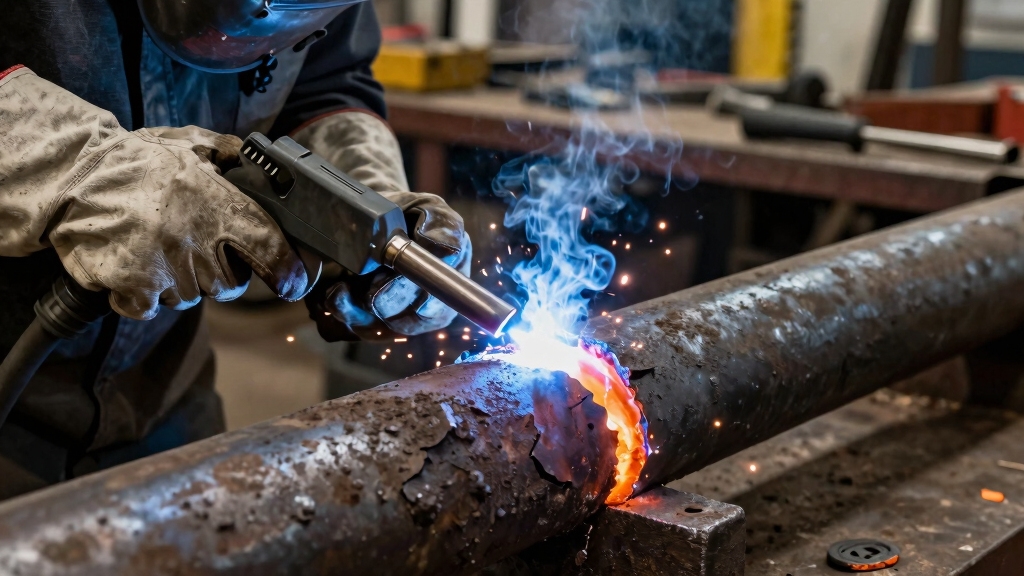
Yes, you can weld cast iron with flux core welding effectively.
Flux core’s flux-generated gases and slag shield the weld pool from contaminants and oxidation, even on rusted or rough surfaces. Its tolerance for impurities reduces cleaning time.
Preheating helps prevent cracking by controlling thermal stress. Selecting the right nickel-rich wire and proper polarity guarantees strong, crack-resistant welds.
Managing slag and cooling rates further improves results. Exploring these methods will enhance your cast iron repair skills markedly.
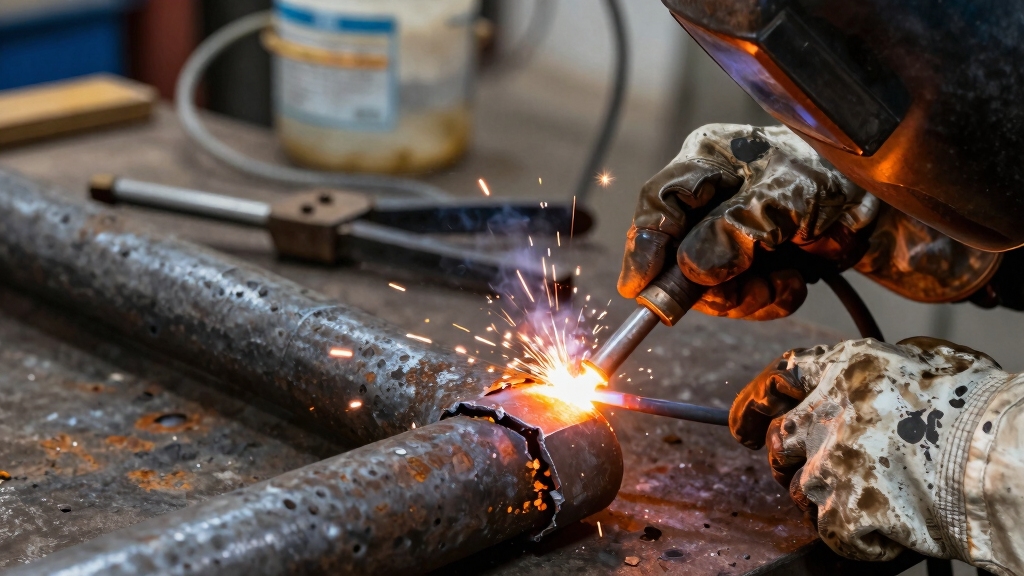
Although cast iron presents welding challenges due to its brittleness and thermal sensitivity, flux core welding works well for repairs because its flux-generated gases and slag provide effective shielding even on contaminated or rough surfaces.
You’ll find flux core’s ability to tolerate surface impurities critical, as cast iron often can’t be perfectly cleaned before welding. The flux’s protective gases prevent oxidation at the weld pool, while slag solidifies to shield the molten metal during cooling, reducing porosity and cracks.
Additionally, flux core’s self-shielded variant eliminates the need for external gas, making field repairs practical. This method also delivers higher deposition rates, enabling efficient buildup on cast iron’s irregular or worn sections.
Its ability to generate shielding gases and slag internally ensures consistent weld quality even in challenging environmental conditions.
Since cast iron’s brittleness and thermal sensitivity increase the risk of cracking, you must prepare the surface and workpiece carefully before flux core welding.
Begin by cleaning the weld area thoroughly to remove oil, rust, paint, and dirt. This ensures optimal arc stability and weld quality. Use a wire brush or grinder to expose clean metal.
Next, create a bevel or chamfer on thick sections to promote proper fusion and minimize stress concentration. Preheating the cast iron to around 300-400°F reduces thermal shock and internal stresses during welding.
Secure the workpiece to prevent movement, which could cause incomplete fusion or cracking. Maintain consistent joint fit-up to avoid gaps or misalignment.
Proper preparation directly impacts weld integrity, reduces porosity, and mitigates cracking risks inherent to cast iron’s metallurgy. Additionally, using local exhaust ventilation during preparation and welding helps minimize exposure to harmful fumes.
When selecting flux core wire for cast iron repairs, you need to focus on wire composition and diameter to guarantee compatibility with cast iron’s unique properties.
Opt for wires specifically formulated for cast iron or those containing a high nickel content. Nickel enhances ductility and reduces cracking susceptibility in the weld zone.
Choose wires high in nickel to improve ductility and minimize cracking in cast iron welds.
A diameter of around .030 inches balances penetration depth and weld control, essential for the brittle nature of cast iron.
Avoid standard carbon steel flux core wires, as they lack adequate thermal expansion compatibility and can cause weld failure.
Also, consider self-shielded flux core wires for field repairs where gas shielding is impractical.
Proper surface preparation and preheating of cast iron are critical to reducing thermal stresses and ensuring a durable weld with flux core wire, especially when managing the thermal expansion differences.
When it comes to welding cast iron, preheating is essential to prevent cracking. You see, when you heat cast iron quickly, it can create a lot of thermal stress due to those rapid temperature changes. By preheating, you’re really helping to reduce that stress.
Preheating slows down the cooling rate, which is super important. This means the metal can contract more evenly, minimizing any internal strain that could lead to cracks. It’s kind of like giving the metal a gentle introduction to the heat.
And don’t forget about controlled cooling after welding! This step is crucial for stabilizing the microstructure of the weld. It helps ensure that the joint isn’t just durable but also crack-resistant. It’s all about taking those extra steps to make your welds strong and reliable!
Proper preheat temperatures between 250–450°F are recommended to reduce thermal shock and improve weld-zone brittleness.
Although cast iron’s inherent brittleness challenges welding, preheating effectively reduces thermal stress by slowing the cooling rate.
When you preheat the metal, you minimize the temperature gradient between the weld zone and the surrounding base material.
This gradual temperature change lowers the likelihood of rapid contraction, which is a primary cause of cracking.
By elevating the initial temperature, you also reduce residual stresses that develop as the metal cools unevenly.
This controlled thermal environment allows the weld and base metal to expand and contract more uniformly.
Consequently, the mechanical stresses that induce micro-cracks or fractures are markedly diminished.
Preheating therefore stabilizes the weld area, ensuring stronger joint integrity and reducing the risk of failure due to thermal shock during the flux core welding process.
Maintaining a preheat temperature between 300–350°F is critical to effectively reducing cracking and residual stresses during welding.
Since cast iron’s susceptibility to cracking stems largely from rapid thermal contraction, controlled cooling plays a critical role in preserving weld integrity.
When you preheat cast iron before welding, you reduce temperature gradients between the weld zone and the base metal.
This slows cooling rates, minimizing internal stresses that cause brittle fracture.
By maintaining elevated temperatures during welding and gradually cooling afterward, often by burying the workpiece in dry sand, you allow the weld and surrounding metal to contract uniformly.
This controlled thermal contraction prevents microcracks and macrocracks from forming.
Without preheating, rapid cooling creates tensile stresses that exceed cast iron’s limited ductility, leading to cracking.
Consequently, implementing controlled cooling through preheating is essential to secure a sound, crack-free weld when using flux core techniques on cast iron.
Additionally, managing heat input and welding speed is crucial to avoid defects such as porosity and cracking, as excessive heat can compromise the metal’s structure and weld quality through thermal stress management.
When you’re getting ready to weld cast iron with flux core, the first thing you’ll want to do is set your power supply to constant voltage. It’s crucial to adjust the wire feed speed just right so you can keep a stable arc.
Now, if you’re using self-shielded flux core, you’ll need to go with DC electrode negative (DCEN) polarity. On the other hand, if you’re using gas-shielded flux core, you’ll want to switch to direct current electrode positive (DCEP) polarity for the best penetration.
Balancing these settings is really important. It helps ensure you get consistent fusion and minimizes any defects in your cast iron welds. So take your time to fine-tune those adjustments, and you’ll set yourself up for success!
Additionally, selecting the appropriate shielding gas, such as a carbon dioxide blend, can significantly improve arc stability and penetration during gas-shielded flux core welding.
When setting up your equipment for welding cast iron with flux core wire, selecting the correct polarity is vital for achieving ideal weld quality.
For gas-shielded flux core wires, you’ll use Direct Current Electrode Positive (DCEP). This enhances penetration and stabilizes the arc, ensuring deeper fusion into cast iron’s dense structure.
Conversely, self-shielded flux core wires require Direct Current Electrode Negative (DCEN) polarity to maintain proper arc characteristics and effective slag formation without external shielding gas.
Using the wrong polarity risks poor weld fusion, excessive spatter, and weak mechanical properties. Your constant-voltage power supply must be adjusted to deliver the correct polarity and most favorable amperage.
This promotes consistent wire feed and arc stability, which is critical for cast iron’s brittle nature. Precision in polarity settings directly influences weld integrity and reduces cracking.
Always monitor and adjust voltage and wire feed settings to maintain arc stability and achieve the best bead profile for cast iron welding.
Correct polarity selection sets the stage for configuring your power supply to match the demands of flux core welding on cast iron.
For gas-shielded flux core wires, set your power supply to DCEP (Direct Current Electrode Positive) to guarantee optimal arc stability and penetration.
With self-shielded flux core wires, DCEN (Direct Current Electrode Negative) is essential for proper wire melting and slag formation.
Use a constant-voltage power source paired with a reliable wire-feed mechanism to maintain consistent arc characteristics.
Confirm your equipment can handle the specific wire diameter used for cast iron repairs, typically .030 inches.
Ensure your machine’s amperage range aligns with the flux core wire’s recommended settings to prevent burn-through or insufficient fusion.
Proper power supply configuration minimizes weld defects and enhances joint integrity.
Additionally, connecting the workpiece lead and ground clamp securely to the base metal ensures a stable electrical circuit for consistent welding performance.
Adjusting the wire feed speed precisely is critical to achieving a stable arc and consistent weld bead quality when welding cast iron with flux core.
Too high a feed rate causes excessive spatter and an unstable arc, while too low results in arc interruptions and poor fusion.
You’ll typically set the feed speed between 200 and 300 inches per minute depending on wire diameter and material thickness.
For polarity, use DC electrode negative (DCEN) with self-shielded flux core wire to guarantee proper melting and slag formation.
If gas-shielded flux core wire is used, switch to DC electrode positive (DCEP) for deeper penetration.
Always verify your constant-voltage power supply matches these settings and fine-tune feed speed incrementally to optimize bead shape and minimize defects on cast iron welds.
Flux-cored wires are preferred for high deposition rates and deep penetration in outdoor and heavy-duty applications, which benefits cast iron welding performance.
Although flux core welding offers advantages for cast iron repairs, mastering specific techniques is essential to guarantee strong, crack-resistant joints.
You should start with proper preheating of the cast iron to minimize thermal stresses that cause cracking.
Maintain a steady travel angle of 5-15 degrees and a work angle near 90 degrees for flat position butt welds, ensuring consistent penetration.
Use a controlled, moderate travel speed to avoid burn-through and allow adequate fusion without overheating.
Employ stringer or zigzag bead patterns to control heat input and manage weld pool fluidity.
Always weld with the correct polarity: DCEP for gas-shielded flux core and DCEN for self-shielded to optimize arc stability and penetration.
These precise techniques help you produce durable, high-integrity welds on cast iron using flux core wire.
Removing slag promptly between passes plays a critical role in ensuring weld integrity when working with cast iron using flux core wire.
You must use a chipping hammer or wire brush to eliminate slag deposits thoroughly after each pass.
Residual slag can trap impurities, causing porosity and inclusions that weaken the weld.
Interpass cleaning also promotes optimal fusion by exposing clean metal surfaces, improving bead adhesion.
Pay close attention to corners and overlapping areas where slag tends to accumulate.
Avoid grinding too aggressively, as excessive base metal removal risks altering joint geometry and reducing strength.
Efficient slag removal minimizes defects and facilitates consistent weld bead profiles across multiple passes.
This is essential for maintaining the structural performance of cast iron joints repaired with flux core welding.
This disciplined approach directly impacts the durability and longevity of your welds.
When welding cast iron with flux core wire, controlling the cooling rate is essential to prevent thermal stress that can cause cracking.
You need to manage heat dissipation carefully since cast iron’s low thermal conductivity and high carbon content make it prone to brittle fractures during rapid cooling.
Preheating the workpiece to approximately 300–400°F evens out temperature gradients, reducing residual stresses.
After welding, slow cooling is critical; burying the weld area in dry sand or insulating blankets helps maintain a uniform temperature drop.
This controlled cooling minimizes microstructural changes that induce shrinkage and cracking.
Avoid quenching or abrupt cooling methods, as they increase thermal shock risks.
Because cast iron presents unique metallurgical and thermal characteristics, welding it with flux core wire introduces specific challenges you must address to achieve sound repairs.
Cracking is a primary issue due to cast iron’s brittleness and rapid cooling. Preheating the workpiece and controlled cooling mitigate this risk.
Porosity often arises from improper shielding or contaminated surfaces. Maintain clean joints and guarantee correct flux core wire selection.
Slag entrapment can weaken weld integrity. Removing slag between passes is essential.
Inconsistent penetration may occur if polarity or travel speed is incorrect. Use recommended DCEP for gas-shielded or DCEN for self-shielded flux core, and maintain steady travel speed.
Addressing these factors systematically enhances weld quality and durability on cast iron components.
You should really opt for flux core welding when you’re dealing with cast iron surfaces that are contaminated or rusted. The great thing about flux core is that its flux does a fantastic job of cleaning and providing shielding.
Plus, if you’re working outdoors or in windy conditions, flux core is your best bet. Unlike gas-shielded methods, which can get disrupted by the wind, flux core holds its ground.
And let’s not forget about the higher deposition rates it offers. This means you can produce faster without compromising on weld quality.
Although cast iron surfaces often present challenges due to contamination, flux core welding offers a distinct advantage by tolerating rust, dirt, and oxidation without compromising weld quality.
The flux core’s inherent cleaning action neutralizes surface impurities, reducing the need for extensive pre-cleaning. This makes flux core ideal when working with cast iron that’s not perfectly prepared, saving time while maintaining strong, defect-free welds.
| Contaminant Type | Flux Core Performance |
|---|---|
| Rust | Effective cleaning and shielding |
| Dirt | Flux action tolerates minor dirt |
| Oxidation | Flux protects molten weld pool |
| Oil/Grease | Requires minimal cleaning pre-weld |
| Scale | Flux reduces impact on weld integrity |
Choosing flux core improves productivity on contaminated cast iron surfaces without sacrificing weld strength or durability.
When welding cast iron outdoors, especially in windy environments, flux-cored arc welding (FCAW) offers clear advantages over other methods. Its self-shielded flux core wire eliminates the need for external gas, preventing shielding gas disruption by wind, a common problem in MIG or TIG.
You’ll appreciate FCAW’s reliable arc stability in gusty conditions, ensuring consistent fusion. The flux-generated slag protects the weld pool from oxidation and contaminants.
Portability without bulky gas cylinders enhances fieldwork flexibility. FCAW also has an enhanced tolerance to surface contamination, reducing prep time outdoors.
Gas-shielded FCAW and TIG require stable gas coverage, which wind easily compromises, causing porosity and weak welds. FCAW’s self-contained shielding mechanism makes it your best choice for cast iron repairs exposed to unpredictable weather, maintaining weld integrity where other methods fail.
Since flux-cored arc welding (FCAW) delivers higher deposition rates than stick or solid wire methods, it markedly reduces welding time on cast iron repairs.
You’ll benefit from FCAW when speed and efficiency are priorities, especially in production environments demanding rapid turnaround.
Flux core’s continuous wire feed minimizes downtime for electrode changes, unlike stick welding, boosting your throughput.
Additionally, its flux shielding tolerates surface contaminants, reducing prep time compared to TIG or MIG processes that require cleaner metal.
When handling medium-thickness cast iron, gas-shielded FCAW enhances penetration and weld quality without sacrificing speed.
However, you should weigh the added slag removal time, which slightly offsets efficiency gains in multi-pass welds.
Yes, you can use flux core welding for cast iron pipe repairs.
You’ll want to preheat the pipe to minimize cracking and control cooling by burying the weld in dry sand.
Flux core wire tolerates contaminated surfaces well, making it suitable for cast iron’s challenges.
Use a specific .030 flux core wire and guarantee proper technique to achieve strong, durable welds while managing thermal stress during the process.
You’ll find self-shielded flux core welding performs well outdoors despite weather challenges.
Its flux core generates protective gases and slag without external shielding, so wind won’t disrupt your weld’s shield.
However, heavy rain or high humidity can still affect arc stability and slag quality.
This can potentially cause porosity or weak fusion.
You should avoid welding in direct rain and consider windbreaks for peak results.
This will ensure consistent weld integrity in variable conditions.
Back in the days of knights and castles, post-weld heat treatment was just as vital as it’s today.
Yes, you need it after flux core welding cast iron to prevent cracking and reduce residual stress.
Preheating and controlled cooling, like burying the piece in dry sand, help manage thermal gradients.
This treatment minimizes brittleness and guarantees structural integrity.
You must wear respiratory protection due to flux core’s flux-generated gases and slag fumes, which can be more intense when welding cast iron.
Preheating cast iron calls for insulated gloves and heat-resistant clothing to handle hot workpieces safely.
Assure good ventilation to avoid toxic fumes from flux decomposition.
Also, manage slag removal carefully to prevent burns.
Unique to cast iron, control cooling rates to avoid thermal shock, using dry sand or insulation methods.
Yes, you can repair cast iron automotive engine blocks using flux core welding.
You’ll need to preheat the block to minimize cracking and control cooling by burying it in dry sand to reduce thermal stress.
Using a specific .030 flux core wire designed for cast iron guarantees proper fusion.
Flux core’s tolerance for contaminated surfaces helps address engine block repairs.
Precise technique and temperature control are vital for durability and structural integrity.
You can weld cast iron with flux core wire effectively if you follow the right steps. Did you know flux core welding reduces repair time by up to 30% compared to traditional stick welding?
By properly preparing the surface, preheating the metal, and controlling cooling, you minimize cracking risks and guarantee strong joins.
Understanding wire selection, polarity, and slag management lets you tackle common challenges with precision. This makes flux core welding a practical choice for cast iron repairs.