Phone:
(701)814-6992
Physical address:
6296 Donnelly Plaza
Ratkeville, Bahamas.

Phone:
(701)814-6992
Physical address:
6296 Donnelly Plaza
Ratkeville, Bahamas.

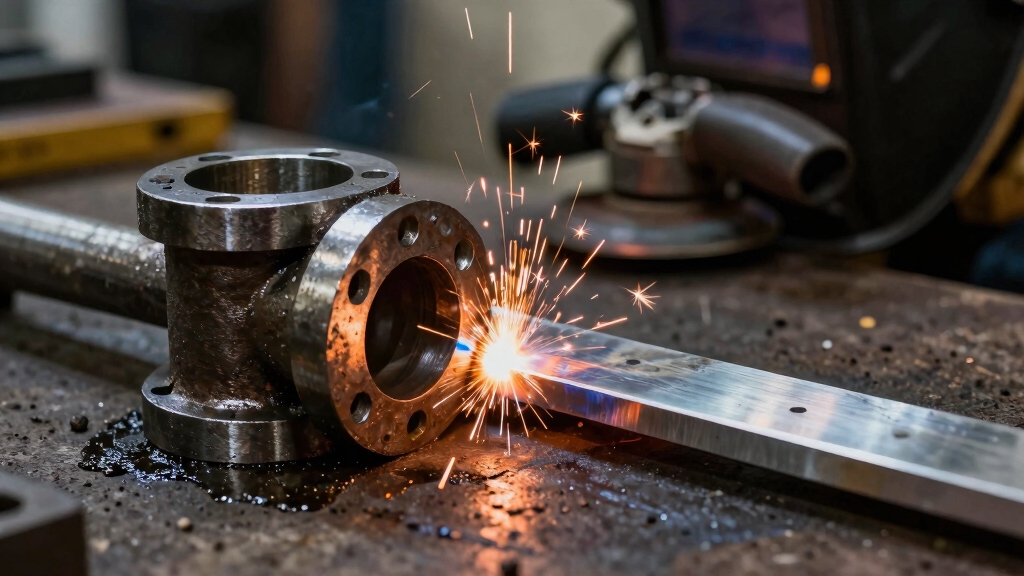
Yes, you can weld cast iron to steel, but it requires careful technique due to cast iron’s high carbon content and differing thermal properties.
Using nickel-based filler materials helps control carbon migration and reduces cracking.
Preheating cast iron, controlling heat input with tack welds and tab-and-slot joints, and managing slow cooling are critical to avoid brittle weld zones.
Employing these methods guarantees durable, crack-resistant joints.
Additional details on preparation, filler choices, and methods can enhance your understanding.
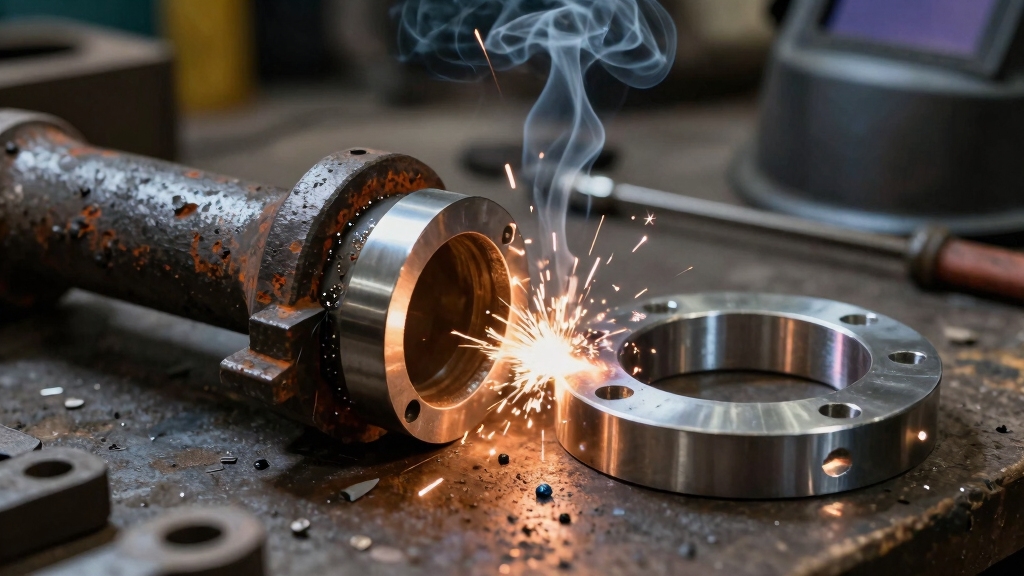
Although welding cast iron to steel presents challenges due to the high carbon content in cast iron, you can achieve a strong, crack-resistant joint with proper technique.
Welding cast iron to steel is challenging but yields durable, crack-resistant joints with the right technique.
The key lies in selecting compatible filler materials, such as nickel alloys, which accommodate differing thermal expansion rates and reduce stress.
You need to preheat the cast iron component between 250°F and 450°F to minimize thermal shock and control cooling rates carefully to prevent cracking.
Stick welding is the most effective process for this dissimilar metal combination, offering superior control over heat input compared to MIG or TIG methods.
With meticulous preparation—including cleaning and crack removal—and controlled heating and cooling, you can produce structurally sound welds suitable for demanding applications.
Using nickel-based filler metals helps prevent brittleness and carbon migration at the cast-to-steel interface, ensuring weld durability.
Welding cast iron to steel can be a bit tricky, mainly because of the differences in material properties. You see, cast iron and steel have varying carbon contents and alloy compositions, which can lead to compatibility issues during the welding process. It’s important to be aware of this right from the start.
Now, another challenge you’ll face is managing thermal expansion differences. When the materials heat up and cool down, they behave differently, and this can create residual stresses. Those stresses are often the culprits behind cracking, so it’s crucial to keep an eye on them.
To tackle these issues, using effective crack prevention techniques is key. Proper preheating of the materials can really help, along with controlled cooling after the weld. These steps are essential to maintain joint integrity and ensure that your weld is durable over time. So, taking the time to implement these practices can make a big difference in the success of your welding project! Additionally, selecting the right nickel-based filler wires can significantly improve weld ductility and reduce cracking risk when joining cast iron to steel.
Because cast iron contains a high carbon content, welding it to steel poses significant challenges related to cracking and joint integrity.
You must address differences in chemical composition and mechanical properties to guarantee a reliable bond. The carbon diffusion from cast iron into steel can form brittle microstructures, increasing crack susceptibility.
Additionally, selecting compatible filler materials is critical to manage stress and metallurgical compatibility at the interface. Without proper control, residual stresses and metallurgical incompatibility can lead to joint failure.
Key material compatibility issues include:
Understanding these factors helps you achieve durable cast iron-to-steel welds. Proper surface preparation, preheating, and controlled cooling are essential to minimize thermal stresses and prevent cracking in dissimilar metal joints like cast iron to steel, as emphasized in thermal stress management.
Managing carbon migration and selecting compatible fillers address some metallurgical challenges. However, differences in thermal expansion between cast iron and steel present another significant hurdle. Cast iron expands less than steel when heated, causing stress concentrations at the weld interface during cooling.
You must account for this mismatch to prevent distortion or cracking. Using low heat input welding methods can help minimize residual stresses and distortion when welding dissimilar metals.
| Property | Cast Iron | Steel |
|---|---|---|
| Coefficient of Thermal Expansion (×10⁻⁶ /°C) | 10–12 | 12–15 |
| Thermal Conductivity (W/m·K) | 50–80 | 45–60 |
| Melting Point (°C) | 1150–1200 | 1370–1510 |
| Hardness (Brinell) | 150–300 | 120–200 |
| Elastic Modulus (GPa) | 100–160 | 200 |
Understanding these differences guides your welding parameters and filler material choices to minimize residual stress.
Although welding cast iron to steel offers structural advantages, preventing cracks requires meticulous control over thermal and mechanical stresses.
You must carefully manage heat input, preheat temperatures, and cooling rates to minimize stress concentrations caused by differing thermal expansion. Choosing appropriate filler materials and welding techniques is critical to enhance joint toughness and reduce brittleness.
Proper preparation and post-weld treatment further mitigate cracking risks.
To effectively prevent cracks, focus on:
These steps help produce durable, crack-resistant joints in dissimilar metal welds.
Additionally, controlling heat input through short, controlled passes is essential to minimize thermal stress and avoid cracking and distortion.
Which welding method suits best when joining cast iron to steel depends largely on the application’s stress requirements and thermal considerations.
Stick welding stands out as the most reliable for structural integrity, especially using nickel alloy electrodes that balance strength with low thermal expansion. This reduces crack risks.
Stick welding with nickel alloy electrodes ensures strong, crack-resistant joints by balancing strength and thermal expansion.
MIG and TIG welding can be effective but require tabs and slots to control heat input, minimizing thermal distortion.
Braze welding offers a lower-stress alternative but results in weaker joints, suitable only for minor repairs.
Oxy-acetylene welding remains less common for steel but can be employed for cast iron with careful heat management.
Implementing proper heat control and welding technique is critical to reduce defects and ensure joint quality during the weld process.
Ultimately, you’ll select a method that guarantees minimal thermal stress, controlled heat distribution, and mechanical compatibility to achieve a durable, crack-resistant cast iron-to-steel joint.
When you’re welding cast iron to steel, it’s a good idea to consider nickel alloy filler materials. They can really help to reduce thermal stresses and boost crack resistance, which is super important for a strong joint.
But hey, don’t forget there are other options out there! Steel rods, copper alloys, and specialized rods like Muggy Weld can also do the trick, depending on what your joint needs and the preheat conditions you’re working with.
Proper selection of filler metals ensures compatibility with base metals, which is crucial to avoid defects and maintain weld integrity.
Many welders prefer nickel alloy electrodes for joining cast iron to steel due to their superior ability to minimize thermal stresses and reduce cracking risks.
You’ll find that nickel alloys offer excellent ductility, accommodating the differential expansion between cast iron and steel. They also promote strong metallurgical bonding, essential for durable joints under stress.
Additionally, nickel’s corrosion resistance enhances joint longevity, especially in harsh environments. The low thermal expansion coefficient of nickel alloys further lessens distortion during cooling.
Key advantages include:
Using nickel alloys optimizes joint integrity, making them a top choice in cast iron-steel welding. Proper selection of filler metals is essential to ensure compatibility and performance in dissimilar metal welding.
Welders often explore alternative filler materials beyond nickel alloys to balance cost, mechanical properties, and ease of use when joining cast iron to steel.
Steel rods, such as E7018, offer a cost-effective option but produce harder welds prone to cracking and require careful finishing.
Copper alloy fillers provide better thermal conductivity and reduced stress but may lack sufficient strength for structural joints.
Cast iron-covered electrodes cater to repairs on cast iron surfaces but demand strict preheat and cooling control.
Special rods like Muggy Weld handle contaminated cast iron without preheating, simplifying repairs but sacrificing joint strength.
Selecting the right filler involves analyzing the joint’s mechanical demands, thermal expansion compatibility, and welding process. This ensures minimized cracking risk and adequate bond integrity for the application.
Additionally, considering the thermal expansion differences between cast iron and steel is crucial to prevent residual stresses and joint failure.
Although welding cast iron to steel poses challenges due to the high carbon content and risk of cracking, thorough preparation and controlled preheating greatly improve joint integrity.
You must begin by cleaning the cast iron surface to bare metal, removing contaminants and any existing cracks. Preheat the cast iron evenly to 250–450°F, depending on thickness, using an induction heater, torch, or oven.
This reduces thermal gradients and residual stresses. Focus heat on thicker sections to prevent distortion. Matching the temperature of the steel workpiece during welding minimizes stress at the interface.
Key preparation and preheating steps include:
Additionally, careful arc initiation and electrode control help prevent arc strikes, which can weaken the joint and cause cracks.
To prevent cracking when welding cast iron to steel, you need to control heat input carefully and select appropriate filler materials.
Careful heat control and proper filler selection are key to preventing cracks when welding cast iron to steel.
Use nickel alloy electrodes, which accommodate thermal expansion differences and reduce residual stress.
Preheat the cast iron to 250-450°F to minimize thermal shock, ensuring even temperature distribution.
Clean the joint thoroughly, grind out cracks, and drill crack stops to prevent propagation.
During welding, maintain low amperage and use tack welds frequently to control heat and prevent distortion.
Employ techniques like tab-and-slot joints or jack bolt assemblies to distribute stress evenly.
Avoid rapid, high-heat passes; instead, use short, controlled weld beads.
These methods collectively minimize the risk of crack initiation and propagation, ensuring a durable bond between cast iron and steel.
Because the cooling phase critically influences weld integrity, you must control the cooling rate carefully to prevent cracks when joining cast iron to steel.
Rapid cooling creates thermal stresses that lead to cracking due to the differing expansion rates and carbon content. To guarantee a strong, crack-resistant weld, slow and uniform cooling is essential.
You can achieve this by managing heat dissipation and mechanical stress during solidification. Key techniques include:
Use welding blankets or sand burial to slow the cooldown.
Peen the weld at about 450°F to relieve residual stresses.
Minimize heat input by reducing passes and increasing travel speed.
Wrap corners partially to prevent stress concentration.
Avoid abrupt temperature changes to maintain uniform contraction.
These steps help maintain joint integrity by controlling thermal gradients and reducing crack formation risk.
When welding cast iron to steel isn’t feasible or practical, you can turn to alternative joining methods that address challenges like cracking and thermal stress.
Mechanical fastening, such as bolting or clamping, provides a reliable, non-thermal solution that avoids metallurgical incompatibility.
Adhesive bonding, using high-strength epoxies or specialized metal adhesives, offers a uniform load distribution without introducing heat. However, it requires surface preparation for ideal adhesion.
Brazing is another option; it operates at lower temperatures than welding, reducing thermal distortion and residual stress.
Though it yields weaker joints suitable only for low-stress applications, each method demands careful consideration of joint design, load requirements, and environmental exposure.
These alternatives let you bypass welding’s challenges while maintaining structural integrity.
Although welding cast iron to steel presents inherent challenges due to differences in thermal expansion and carbon content, you can achieve strong, crack-resistant joints by following specific best practices. Proper preparation, controlled heat input, and appropriate filler materials are critical to success.
Preheat cast iron to 250-450°F to minimize thermal stress and cracking.
Use nickel alloy electrodes for their compatible thermal expansion and ductility.
Clean and prepare joint edges meticulously; drill out crack tips to prevent propagation.
Employ slow, controlled cooling methods like welding blankets or sand burial to reduce residual stresses.
Use tack welds and tab-and-slot techniques to concentrate heat and prevent distortion.
Following these steps guarantees a durable weld with minimal microstructural damage and enhanced joint integrity.
Welding cast iron to steel can create galvanic corrosion risks due to differing electrochemical properties.
You’ll need to select compatible filler metals, like nickel alloys, to minimize corrosion potential.
Proper preheating and slow cooling reduce microcracks where moisture accumulates.
Post-weld treatments, such as coatings or sealants, further protect the joint.
If you neglect these steps, the dissimilar metal interface can accelerate corrosion, compromising joint durability over time.
Of course, you can just stare at the joint and hope for the best. Luckily, non-destructive inspection methods save you from that gamble.
Techniques like ultrasonic testing, magnetic particle inspection, and dye penetrant testing let you detect cracks or flaws beneath the surface without wrecking your repair.
These precise, analytical methods guarantee weld integrity in cast iron-steel joints. You can confidently ensure safety and performance without tearing anything apart.
You’ll need to control heat carefully to avoid cracking due to cast iron’s brittleness. Preheat and cool slowly.
Use proper ventilation since cast iron welding releases hazardous fumes, especially with nickel electrodes.
Wear heat-resistant gloves and eye protection to handle hot, heavy parts.
Avoid sudden cooling to prevent thermal shock.
Also, make certain your workspace is free of combustible materials. High heat and sparks can cause fires unique to cast iron-steel welding.
When designing weld joints for cast iron to steel, you’ll prioritize minimizing stress and controlling heat flow.
Use tab-and-slot or rosette welds to concentrate heat away from brittle cast iron.
You’ll avoid full penetration grooves; instead, choose fillet or partial penetration joints.
Pre-drilling crack stops and applying jack bolts help manage distortion.
Your design must allow slow cooling and accommodate differential expansion to reduce cracking risks effectively.
You’ll want to treat your cast iron-steel welds with gentle post-weld heat treatments to avoid unwelcome surprises like cracking.
Slow cooling using welding blankets or burying the weld in sand helps relieve residual stresses.
Peening the weld at around 450°F while still hot encourages toughness.
Avoid rapid cooling and excessive heat input by using fewer passes and fast travel.
These steps guarantee a durable, crack-resistant joint that stands the test of time.
So, you want to weld cast iron to steel? Sure, why not invite cracks, warping, and a metallurgical headache to your next project?
But hey, with the right prep, filler, and cooling finesse, you might just convince those stubborn metals to play nice.
Just remember: skip the shortcuts, or your “perfect” weld will look like modern art, abstract and full of stress fractures. Welding cast iron to steel isn’t magic; it’s meticulous science. Choose wisely.