Phone:
(701)814-6992
Physical address:
6296 Donnelly Plaza
Ratkeville, Bahamas.

Phone:
(701)814-6992
Physical address:
6296 Donnelly Plaza
Ratkeville, Bahamas.

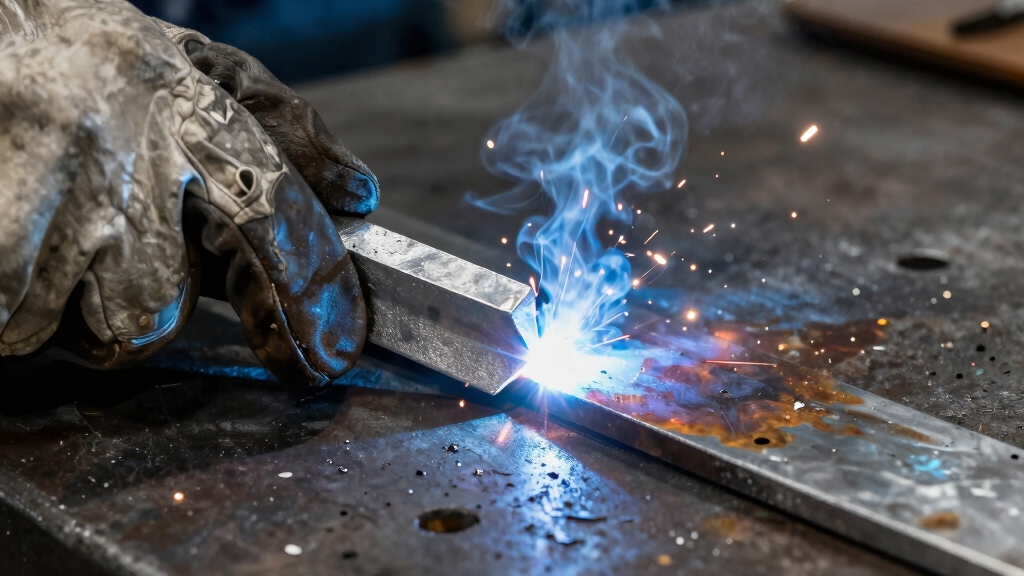
Yes, you can weld aluminum to steel, but it requires specialized techniques to address their differing thermal conductivities and metallurgical incompatibilities.
Using bimetallic inserts or solid-state methods like friction welding helps avoid brittle Fe-Al intermetallics, ensuring strong joints.
Specialized TIG rods also enable direct welding with controlled heat and contamination management.
Proper equipment and precise arc control are essential to achieve durable, high-strength bonds.
Understanding these approaches lets you optimize joint performance and reliability.
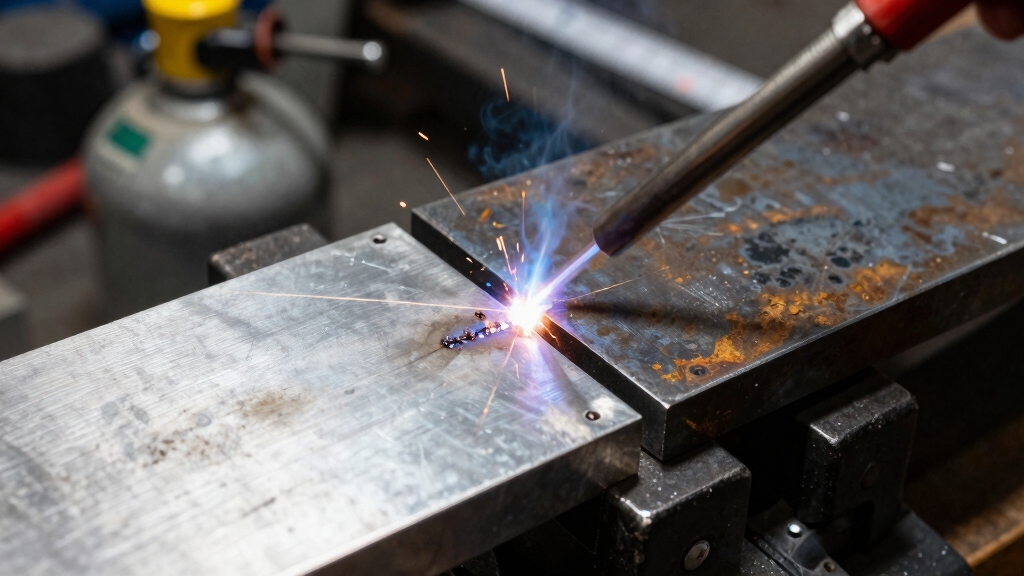
Although welding aluminum directly to steel might seem straightforward, you quickly face significant challenges due to their differing physical and chemical properties.
Aluminum’s high thermal conductivity demands precise heat control to prevent burn-through, while steel’s lower conductivity causes uneven heating and stress concentration.
Aluminum’s high thermal conductivity requires careful heat management; steel’s low conductivity leads to uneven heating and stress points.
When fusion welding, brittle intermetallic Fe-Al compounds form at the interface, severely weakening the joint.
Direct arc welding pulls aluminum away without proper fusion, resulting in poor mechanical bonding and easy separation.
Additionally, conventional MIG setups without spool guns cause erratic wire feeding and globby beads, further compromising weld quality.
These factors make direct aluminum-to-steel welding unreliable unless you employ specialized techniques or materials designed to address these metallurgical and thermal incompatibilities.
Effective surface preparation and controlling heat input are critical steps to improve bonding and reduce defects in dissimilar metal welding.
Bimetallic inserts are pretty fascinating because they effectively bridge the gap between aluminum and steel. By combining these two dissimilar metals into a transitional layer, they create a strong connection. But here’s the catch—getting the insert design right and using controlled welding techniques is crucial. If not, you might end up with brittle intermetallics, which is definitely something you want to avoid.
When done properly, these joints can achieve strength levels that are on par with solid aluminum or steel welds. This makes them not just reliable, but also a great choice for various structural applications. So, if you’re looking for a strong and dependable joint, bimetallic inserts are worth considering!
Careful control of heat input and surface preparation is essential to minimize distortion and ensure joint integrity in aluminum-steel welding.
Bimetallic inserts serve as engineered intermediary layers that enable robust aluminum-to-steel joints by eliminating direct metal-to-metal contact and preventing brittle intermetallic formation.
You design these inserts with one side metallurgically compatible with steel and the other with aluminum, often achieved through rolling or solid-state joining processes.
This dual-metal construction allows you to perform conventional arc welding on each side separately: steel-to-steel and aluminum-to-aluminum, thereby maintaining weld integrity.
Precise control over insert thickness and interface quality is critical to avoid weak spots and guarantee load transfer efficiency.
When implemented correctly, bimetallic inserts provide structural weld strength comparable to similar metal bonds, effectively mitigating thermal mismatch and intermetallic brittleness.
Your design choices directly influence joint durability, making inserts indispensable for reliable aluminum-steel fusion.
Additionally, employing controlled heating and cooling techniques during welding helps minimize residual stresses and prevents cracking at the aluminum-steel interface.
When welding aluminum to steel using bimetallic inserts, the process centers on joining each metal to its compatible side of the insert. This prevents direct fusion between aluminum and steel.
You weld the aluminum side using GTAW or GMAW, carefully controlling heat input to avoid burn-through. The steel side is welded separately with parameters suited to its thermal properties.
The insert acts as a metallurgical bridge, eliminating brittle Fe-Al intermetallics by confining fusion within homogeneous interfaces. You must sequence welds properly, starting with aluminum, to minimize thermal distortion on steel.
Precision in arc placement guarantees the arc contacts only the aluminum or steel side, not the interface. This controlled approach maintains insert integrity and produces joints with strength comparable to like-to-like welds.
This enables reliable structural performance without the weaknesses typical of direct aluminum-steel fusion. Additionally, managing thermal conductivity mismatch during welding is critical to prevent distortion and cracking in the joint.
Achieving strong aluminum-steel joints depends heavily on how well the bimetallic insert manages the metallurgical challenges between dissimilar metals.
The insert acts as a bridge, enabling you to weld aluminum-to-aluminum and steel-to-steel sides separately, thereby preventing brittle Fe-Al intermetallic compounds.
This approach guarantees joint strength comparable to like-metal welds.
To optimize joint strength:
Following these steps, you’ll create durable, high-strength aluminum-steel joints suitable for structural applications.
For welding the aluminum side, choosing an AC/DC TIG welder is essential to ensure proper oxide layer penetration and strong weld quality.
Although welding aluminum directly to steel often leads to brittle intermetallic compounds, you can rely on solid-state welding methods like friction, explosion, and hot pressure welding to create strong, diffusionless bonds.
Friction welding generates heat through mechanical rubbing under pressure, enabling atomic diffusion without melting and yielding robust joints.
Explosion welding uses controlled high-velocity impact to bond metals at the interface without forming brittle phases, producing a metallurgical bond with minimal heat-affected zones.
Hot pressure welding applies elevated temperature and pressure below melting points, promoting plastic deformation and intimate contact for durable adhesion.
These methods avoid the formation of fragile Fe-Al intermetallics common in fusion welding, delivering superior mechanical strength.
Additionally, selecting appropriate filler materials and controlling heat input are critical to prevent brittleness and ensure joint durability in dissimilar metal welding.
When it comes to welding aluminum to steel, you’ll want to use specialized TIG rods like Aluma Steel. These rods are specifically engineered to balance melting points, which helps minimize those pesky brittle intermetallics that can cause problems in the joint.
Now, it’s not just about the rods; adjusting your welding parameters is super important, too. Things like heat input and arc positioning play a big role in controlling fusion and preventing defects.
And here’s a fun fact: if you follow the proper techniques, pull tests on thin sections can exceed 700 pounds! That’s some serious joint strength you can achieve.
Effective temperature management and controlled cooling are also crucial to reduce thermal stresses and improve joint integrity during the welding process, especially when working with dissimilar metals like aluminum and steel, making thermal management a key factor in successful welds.
Several specialized TIG rods, such as Aluma Steel, have been engineered to overcome the inherent challenges of welding aluminum directly to steel.
You’ll find these rods uniquely formulated to minimize brittle Fe-Al intermetallic compound formation, ensuring stronger joints. Their alloy composition and melting characteristics promote effective wetting on both metals, facilitating fusion without excessive dilution.
When you use Aluma Steel rods, consider these key properties:
These factors make Aluma Steel rods a precise solution for direct aluminum-to-steel TIG welding.
Strict control of heat input and continuous inert gas shielding are essential to prevent contamination and ensure joint reliability when welding dissimilar metals like aluminum and steel, similar to the precautions used in titanium-steel welding heat input control.
Building on the unique properties of specialized TIG rods like Aluma Steel, adapting your welding technique is key to achieving strong aluminum-to-steel joints.
You must control heat input precisely to prevent brittle Fe-Al intermetallics and avoid burn-through on aluminum. Use a pulsed current to stabilize the arc and maintain a narrow heat-affected zone.
Position the tungsten electrode close for focused energy and feed the rod steadily to guarantee proper fusion without overheating steel.
| Adjustment | Purpose |
|---|---|
| Pulsed current | Controls heat, reduces defects |
| Electrode proximity | Focuses arc on joint interface |
| Steady filler feed | Promotes consistent fusion |
| Controlled travel speed | Limits thermal distortion |
These technique tweaks maximize the Aluma Steel rod’s alloying action. They enable durable direct welds without inserts. Precise arc intensity control and consistent electrode-to-workpiece gap are essential for producing clean, high-quality welds in these challenging dissimilar metal joints with controlled current management.
Achieving reliable pull test strength with specialized TIG rods like Aluma Steel hinges on their unique metallurgical properties that mitigate brittle Fe-Al intermetallic formation.
When you weld aluminum directly to steel using these rods, you benefit from:
Careful heat management and pre/post-weld treatments ensure the joint maintains microstructure integrity and prevents brittleness.
When you coat steel with a layer of aluminum through hot dip aluminizing, you create a barrier that prevents the fragile Fe-Al intermetallic compounds from forming during welding.
This aluminum coating acts as an intermediate layer, enabling the aluminum weld metal to fuse onto the coated steel surface without direct Fe-Al interaction.
By directing the welding arc exclusively on the aluminum side, you avoid overheating the steel and minimize brittle phase formation.
The result is a joint with improved mechanical integritydcompared to direct fusion welds.
However, to maximize bond strength, you must control heat input carefully and maintain consistent coverage of the aluminized layer.
Hot dip aluminizing therefore enhances weld reliability by mitigating metallurgical incompatibilities inherent in aluminum-to-steel fusion welding.
Selecting the right equipment is critical for welding aluminum to steel. Each method demands specific tools to address the distinct thermal and metallurgical challenges involved. You’ll need to carefully choose gear that manages aluminum’s high conductivity and prevents brittle intermetallic formation.
Key equipment includes:
Using this equipment properly ensures controlled, reliable joints by minimizing defects and accommodating material differences.
Mastering heat control is essential to prevent defects when welding aluminum to steel, as their differing thermal properties create significant challenges.
Aluminum’s high thermal conductivity demands precise heat input to avoid burn-through, while steel’s lower conductivity risks uneven heating and cracking.
You should focus heat primarily on the aluminum side, especially when using bimetallic inserts, to protect the steel from overheating.
Employ techniques like pulsed TIG welding or controlled laser heat to restrict the heat-affected zone.
Using copper backing can prevent aluminum burn-through on thin sections.
Avoid direct arc contact on steel’s surface if it’s coated with aluminum to prevent fragile intermetallic formation.
Controlling heat input directly influences the strength and durability of aluminum-steel welds by minimizing brittle Fe-Al intermetallic compounds and distortion.
When comparing weld methods, you must evaluate how the joint withstands mechanical stresses and environmental exposure. Key considerations include:
You’ll need to wear protective gear like welding helmets with appropriate shade, flame-resistant gloves, and clothing to guard against UV radiation and sparks.
Make certain proper ventilation to avoid inhaling aluminum and steel fumes, which can be toxic.
Use inert gas shielding to prevent oxidation.
Maintain clean surfaces to avoid contamination.
Control heat precisely to prevent burn-through or cracking.
Finally, inspect equipment regularly to avoid malfunctions during TIG or friction welding processes.
Welding aluminum to steel often reduces corrosion resistance due to brittle Fe-Al intermetallics forming at the interface. These intermetallics act as galvanic corrosion sites.
You can improve resistance by using bimetallic intermediary inserts or hot dip aluminizing steel before welding. This minimizes direct contact and galvanic coupling. Proper coating and joint design also help.
Without these measures, the dissimilar metals’ electrochemical differences accelerate corrosion, weakening the joint over time.
You can paint or coat aluminum-steel welds, but you have to prepare carefully.
The dissimilar metals create unique surface conditions that affect adhesion.
You’ll need thorough cleaning to remove oxides and any intermetallic layers formed during welding.
Applying compatible primers designed for mixed metals enhances coating durability.
Without this, you risk peeling or corrosion beneath the paint.
You’ll find aluminum-steel welded joints common in automotive frames to reduce weight while maintaining strength.
Aerospace structures use them for corrosion resistance plus durability.
You’ll see them in marine applications where lightweight, rust-resistant parts join steel hulls.
Electrical enclosures and heat exchangers leverage these joints for thermal management and conductivity.
Welding aluminum to steel typically takes between 10 to 30 minutes per joint, depending on the method.
Using bimetallic inserts or specialized TIG rods like Aluma Steel speeds the process.
This requires precise heat control to avoid burn-through or cracking.
Solid-state methods like friction welding may take longer due to setup and pressure application.
Your exact time depends on joint complexity, thickness, and equipment.
Expect careful preparation and controlled welding for reliable bonds.
Welding aluminum to steel is complex, but advancements like bimetallic inserts and solid-state methods have increased joint strength by up to 30%.
You need precise heat control and specialized equipment to avoid defects, ensuring durability.
Understanding these techniques lets you create reliable aluminum-steel bonds, critical in industries demanding lightweight, strong materials.
Mastering this process not only expands your fabrication capabilities but also enhances structural performance in mixed-metal applications.