Phone:
(701)814-6992
Physical address:
6296 Donnelly Plaza
Ratkeville, Bahamas.

Phone:
(701)814-6992
Physical address:
6296 Donnelly Plaza
Ratkeville, Bahamas.

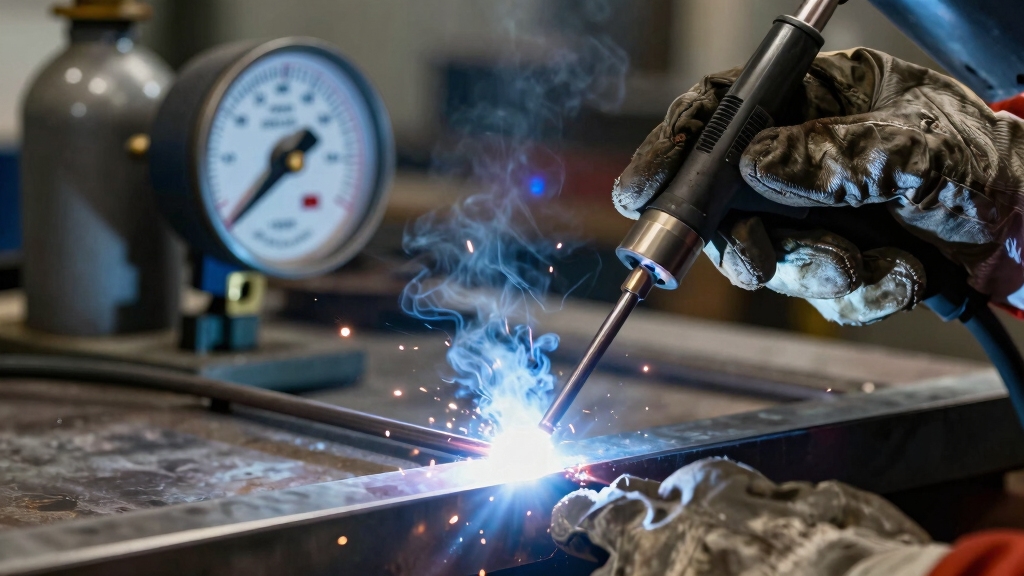
You can’t TIG weld effectively with 75/25 gas because its 25% carbon dioxide content disrupts the necessary inert atmosphere.
CO2 causes arc instability, promotes oxidation, and deteriorates weld quality through discoloration, porosity, and embrittlement.
TIG welding requires 100% argon or argon-helium blends to maintain a stable, uncontaminated arc and prevent chemical reactions at the weld site.
Understanding these gas differences is key to optimizing weld performance and avoiding costly defects.
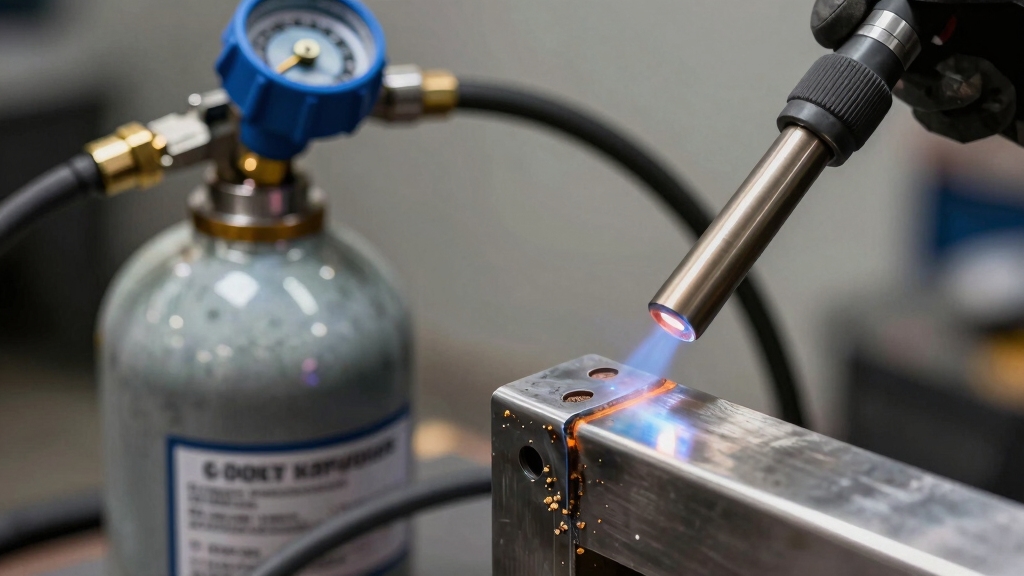
Although 75/25 gas mixtures work well for MIG welding, you shouldn’t use them for TIG welding. The 25% carbon dioxide component causes oxidation and degrades weld quality.
When you apply TIG welding with this mixture, the reactive CO2 interacts negatively with the arc. This causes instability and promotes oxidation on the weld surface.
As a result, you may experience discoloration, material burning, and compromised structural integrity. You need an inert atmosphere to maintain a stable arc and prevent chemical reactions in the weld puddle.
Since 75/25 contains a reactive gas, it fails to provide the necessary shielding environment for TIG welding. Using this mixture directly results in poor arc control and deteriorated weld appearance, making 75/25 unsuitable for TIG welding applications.
TIG welding demands 100% argon shielding to maintain arc cleanliness and avoid oxidation risk.
Because TIG welding relies on a stable and uncontaminated arc, you need 100% argon gas to provide an inert shielding environment. This prevents oxidation and chemical reactions at the weld site.
Argon’s inert nature guarantees consistent arc stability, critical for precise heat control and clean weld puddles. Introducing reactive gases like carbon dioxide disrupts the arc’s stability, causing weld contamination and oxidation.
You rely on argon to maintain a chemically neutral atmosphere, preserving the base and filler metals’ properties during fusion. This inert environment minimizes defects such as porosity and discoloration, assuring peak metallurgical integrity.
Using 100% argon aligns with industry standards to achieve superior surface finish, mechanical strength, and repeatability. This makes it indispensable for TIG welding applications across various metals.
Additionally, argon’s exceptional arc stability ensures reliable arc initiation and consistent heat transfer necessary for high-quality welds.
When you introduce carbon dioxide into the TIG welding environment via a 75/25 gas mixture, it triggers chemical reactions that destabilize the arc and promote oxidation.
CO2, being a reactive gas, interacts with the molten weld pool, causing unwanted oxidation of the base and filler metals.
CO2 reacts with the molten weld pool, leading to detrimental oxidation of both base and filler metals.
This reaction alters the weld puddle’s chemical composition, leading to increased porosity and embrittlement.
Additionally, the presence of CO2 disrupts the arc’s stability by generating carbon monoxide and other reactive species.
These interfere with the controlled heat input essential for TIG welding.
These effects compromise the shielding gas’s inertness, critical for maintaining a clean, precise weld.
Consequently, the carbon dioxide in 75/25 gas fundamentally undermines the TIG process, making it unsuitable for applications requiring high-quality, oxidation-free welds.
Using CO2 in TIG welding also increases spatter and changes the bead profile, which negatively affects weld quality and appearance, as detailed in Reactive Shielding Gases.
If you use 75/25 gas for TIG welding, you’ll encounter significant degradation in weld quality. The 25% carbon dioxide content introduces oxidation, causing gray discoloration and surface burning on the weld bead.
This reactive gas disrupts the inert shielding environment needed for TIG, leading to unstable arc characteristics and inconsistent heat input. Consequently, you’ll see compromised structural integrity due to increased porosity and embrittlement in the weld zone.
The weld’s appearance deteriorates, showing rough textures and oxidation stains, which are unacceptable in TIG applications requiring precision and cleanliness. Using 75/25 also results in excessive spatter and material degradation, undermining joint strength.
To maintain peak weld quality, you must use pure argon or argon-helium blends tailored to TIG’s precise shielding needs. Pure argon is recommended because it provides excellent arc stability and inert shielding essential for TIG welding aluminum and other metals.
Although both MIG and TIG welding rely on shielding gases to protect the weld pool, their gas composition requirements differ fundamentally due to the distinct welding mechanisms involved.
MIG welding uses a 75/25 argon-carbon dioxide mix to enhance arc stability and penetration through a semi-active gas.
In contrast, TIG welding demands 100% inert argon to maintain a chemically neutral environment.
The carbon dioxide in 75/25 reacts negatively with the TIG arc, causing oxidation and arc instability.
You’ll find that TIG’s reliance on pure argon guarantees precise heat control and prevents contamination, essential for producing clean, high-quality welds.
MIG’s reactive gas blend promotes efficient metal transfer but compromises the chemical purity TIG welding requires.
Understanding these differences is critical to selecting the correct shielding gas for each process.
For TIG welding, pure argon provides stable arc control and shields the weld pool from oxidation, ensuring defect-free welds across various metals.
You’ll find that 75/25 gas excels in MIG welding because its 25% carbon dioxide content actively stabilizes the arc and improves penetration on mild steel.
The CO2 reacts in the MIG arc, enhancing heat input and providing a more robust weld pool.
However, in TIG welding, you rely on an inert atmosphere: 100% argon.
This maintains a stable arc and prevents oxidation.
The reactive CO2 in 75/25 disrupts this delicate balance, causing oxidation, arc instability, and weld contamination.
Consequently, while 75/25 gas optimizes MIG welds by increasing heat and arc stability, it fundamentally conflicts with TIG’s need for an inert, uncontaminated shielding environment.
This makes 75/25 unsuitable for TIG welding.
Argon’s inert atmosphere is essential in TIG welding to shield the molten metal from contaminants and ensure weld integrity.
Understanding the distinct roles of 75/25 gas in MIG welding and 100% argon in TIG welding highlights the importance of proper gas handling in welding shops.
You must clearly label and segregate gas cylinders to prevent accidental mix-ups.
Since 75/25 contains reactive CO2 unsuitable for TIG, confusing it with argon can cause oxidation and weld defects.
Implement strict inventory controls and verify gas composition before connecting to welding equipment.
Use dedicated regulators and hoses for each gas type to avoid cross-contamination.
Train staff to recognize the functional differences and hazards of incorrect gas use.
By maintaining rigorous protocols, you guarantee weld integrity, process efficiency, and compliance with industry standards.
This prevents costly rework and material degradation linked to gas mix-ups.
Additionally, understanding the role of CO2 and O2 in gas blends is crucial for selecting the right shielding gas for each welding process.
Selecting the appropriate TIG shielding gas depends directly on the material you’re welding, as different metals require specific gas compositions to guarantee peak arc stability, penetration, and weld quality.
For most metals like carbon steel and stainless steel, 100% argon provides the inert atmosphere essential for preventing oxidation and maintaining arc stability.
When welding aluminum or magnesium, pure argon remains the standard due to its excellent ionization potential and shielding properties.
In specialized cases, adding helium to argon enhances heat input and penetration, particularly for thicker sections of stainless steel or copper alloys.
Avoid reactive gases like carbon dioxide or oxygen in TIG welding, as they induce oxidation and degrade weld integrity.
Your gas choice must align precisely with the metal and thickness to optimize weld quality and structural performance.
Helium blends are beneficial for thicker materials because they increase arc temperature and improve penetration and weld quality.
Yes, you can safely store 75/25 gas cylinders alongside TIG gas cylinders if you maintain proper segregation and labeling.
Keep them upright, secured, and away from heat sources. Use separate regulators and hoses to avoid cross-contamination.
Make sure the storage area is well-ventilated and complies with safety standards. Mixing or using the gases interchangeably isn’t safe, but proper storage practices allow coexistence without risk to equipment or personnel.
Yes, using 75/25 gas in TIG welding negatively affects machine maintenance.
The carbon dioxide in the mixture causes increased oxidation inside the torch and consumables, accelerating wear and corrosion.
You’ll face more frequent cleaning, replacement of tungsten electrodes, and potential damage to gas lines.
This reactive gas compromises the torch’s internal components, reducing overall equipment lifespan and increasing downtime for repairs.
Sticking to 100% argon is vital for ideal maintenance.
You might find 75/25 gas more budget-friendly upfront due to its mixture containing carbon dioxide, which is cheaper than pure argon.
However, 100% argon typically costs more but guarantees superior weld quality and process stability.
When you weigh initial savings against potential rework, material waste, and compromised weld integrity, investing in pure argon for TIG welding proves more cost-effective in the long run, delivering precision and reliability you can trust.
Yes, using 75/25 gas during TIG welding can cause health hazards.
The carbon dioxide component can produce harmful fumes and increase the risk of respiratory irritation or toxicity.
You’ll also face greater oxidation, generating potentially hazardous byproducts.
Always ensure proper ventilation and use the correct shielding gas, 100% argon, to minimize exposure to dangerous gases and maintain a safer welding environment.
Neglecting this elevates health risks markedly.
You typically set your TIG gas flow rate around 15-20 cubic feet per hour (CFH), while MIG with 75/25 usually runs higher, about 25-35 CFH.
This difference matters because TIG demands a more precise, lower flow to maintain arc stability and prevent oxidation.
MIG’s higher flow compensates for the reactive CO2 in 75/25, ensuring proper shielding.
Using incorrect flow rates risks weld defects and gas wastage.
Imagine trying to paint a delicate portrait with spray paint. You wouldn’t get the precision you need.
Using 75/25 gas for TIG welding is just like that: the 25% CO2 disrupts your weld’s purity, causing oxidation and defects.
TIG demands 100% argon to maintain a clean, stable arc and flawless welds. Stick to the right gas, or your weld quality will suffer. Precision in shielding gas is as critical as in your technique.