Phone:
(701)814-6992
Physical address:
6296 Donnelly Plaza
Ratkeville, Bahamas.

Phone:
(701)814-6992
Physical address:
6296 Donnelly Plaza
Ratkeville, Bahamas.

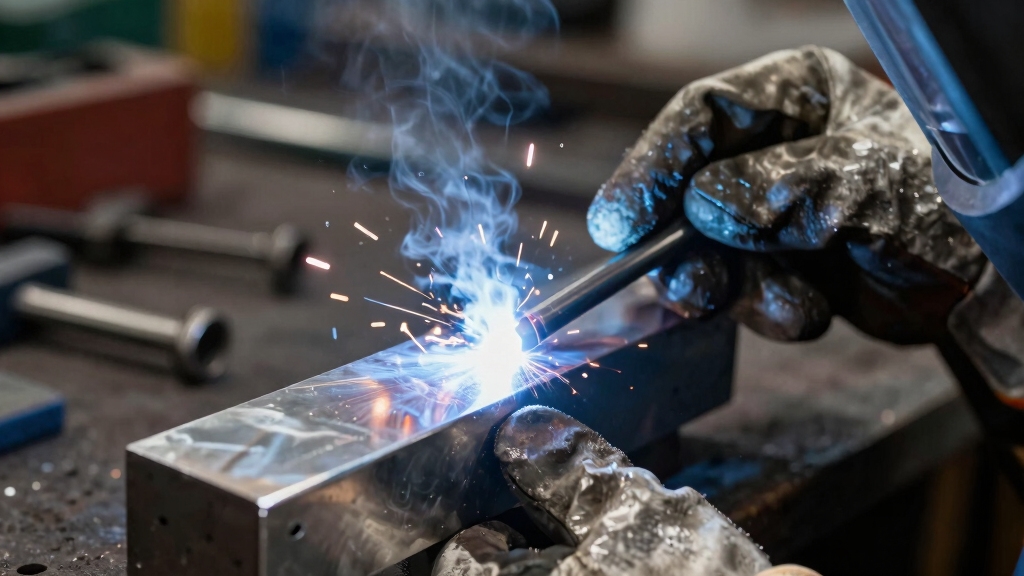
You can stick weld aluminum, but it’s best for rough repairs or situations without shielding gas. It struggles with heat control, oxide management, and slag removal.
Preparation, including thorough cleaning and preheating to around 250°F, is critical to prevent porosity and lack of fusion.
Stick welding offers portability but less precision and weld quality than TIG or MIG, which are preferred for structural or thin sections.
Exploring these factors can help you optimize your aluminum welding approach.
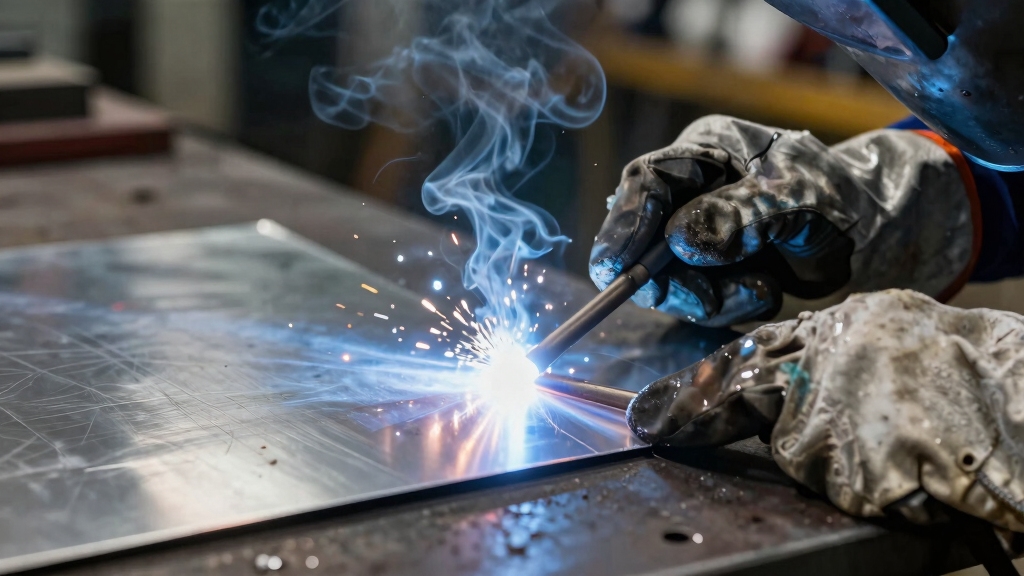
Although stick welding aluminum is possible, you should only use it in specific situations where other methods like TIG or MIG aren’t practical.
Stick welding aluminum works but is best saved for when TIG or MIG aren’t feasible options.
You’ll find stick welding useful when working on rusted or painted surfaces, as it doesn’t require shielding gas.
It’s ideal for repairs, such as broken castings or temporary fixes, where portability and minimal equipment are priorities.
However, stick welding demands extensive practice to achieve acceptable weld quality because aluminum’s oxide layer and high thermal conductivity complicate the process.
You must prepare thoroughly and use aluminum-specific electrodes with the correct polarity settings.
While stick welding aluminum can be done, it’s reserved for scenarios where the environment or equipment constraints make alternative methods unfeasible.
This ensures the best compromise between accessibility and weld integrity.
Proper surface preparation and careful temperature control are crucial to minimize defects when stick welding aluminum, similar to the precautions needed for cast iron welding.
When you choose stick welding for aluminum, you face inherent challenges that limit its effectiveness compared to TIG or MIG methods.
Aluminum’s rapid heat dissipation demands precise arc control, which stick welding lacks. This leads to inconsistent penetration and frequent lack of fusion.
The oxide layer reforms instantly, causing porosity and spatter that are difficult to manage without shielding gas.
Stick welding’s slower travel speed increases the risk of burn-through, especially on thin sections.
Additionally, slag removal is cumbersome, requiring acid treatment to avoid contamination.
Without preheating, the weld puddle solidifies too quickly, compromising weld quality.
While stick welding can work for quick repairs, its limited control over heat input and weld integrity makes it a poor choice for most aluminum projects.
Compared to the cleaner, more controlled TIG or MIG processes, stick welding falls short.
Moreover, the persistent aluminum oxide barrier fundamentally limits the effectiveness of stick welding on aluminum, leading to poor fusion and weld defects.
Before you dive into stick welding aluminum, it’s really important to get that oxide layer off. A stainless steel brush works wonders for this, ensuring you have proper arc stability.
Once you’ve done that, give the surface a good clean with acetone. Just steer clear of grinders or wire wheels—those can leave behind contaminants that you definitely don’t want.
Also, take a moment to check your fit-up. Make sure everything is tight and has minimal gaps. This helps promote consistent weld penetration and cuts down on defects. It’s those little details that really make a difference!
Maintaining arc stability during welding is crucial for a clean, strong bond and to reduce defects.
Removing the oxide layer is critical for achieving a sound aluminum stick weld. Aluminum oxide has a melting point around 3,700°F, much higher than aluminum’s 1,220°F. This prevents proper fusion if not removed.
You should use a dedicated stainless steel wire brush to mechanically strip the oxide without embedding contaminants. Avoid grinders or high-speed wire wheels, as they can smear oxide particles into the surface, causing weld defects.
After brushing, clean the surface with acetone to eliminate oils and residues that interfere with arc stability. Because aluminum oxide reforms rapidly when exposed to air, perform welding immediately after cleaning.
Proper oxide removal guarantees better arc initiation, consistent electrode flux activation, and ultimately reduces porosity and lack of fusion in your stick welds.
Using the right tools and techniques during surface preparation is essential to prevent contamination and ensure weld quality, especially when working with aluminum’s sensitive surface layer and electrode handling contamination prevention.
Ensuring a contaminant-free surface is essential for successful stick welding of aluminum. After thoroughly removing the oxide layer with a stainless steel brush, you must clean the surface with acetone to eliminate oils, dirt, and residual particles.
Avoid using grinders or high-speed wire wheels, as they embed oxide into the metal, compromising weld integrity. Focus on achieving a clean, matte finish without visible contaminants.
Proper cleaning minimizes porosity and lack of fusion caused by surface impurities. Remember, aluminum oxide reforms rapidly upon air exposure, so clean immediately before welding.
This precise cleaning routine sets the foundation for stable arc initiation and consistent weld pool behavior. This is critical for controlling heat flow and penetration during stick welding, where precision is limited compared to TIG or MIG methods.
Additionally, using non-abrasive cleaning tools helps prevent damage to the aluminum’s protective oxide layer, preserving the metal’s structural integrity before welding.
Achieving a proper fit-up is critical for stick welding aluminum, as even small gaps can cause poor fusion and weak joints.
You need to ensure tight, uniform contact between parts before welding, minimizing any gaps or misalignment.
Use clamps or fixtures to hold components securely in place, preventing movement during welding.
Verify fit-up visually and with feeler gauges if necessary; gaps larger than 1/32 inch increase the risk of incomplete fusion.
Preheating parts to around 250°F helps reduce thermal shock and improves weld flow.
Avoid excessive grinding, which embeds oxides and compromises fit.
Remember, aluminum’s rapid oxide reformation demands quick assembly after cleaning.
Controlling heat input and using inert gas shielding can significantly enhance weld quality and reduce defects during stick welding aluminum.
Preheating plays a critical role in aluminum stick welding by addressing the metal’s high thermal conductivity and rapid oxide layer formation.
When you preheat aluminum to around 250°F, you slow heat dissipation, allowing for a stable weld puddle and better electrode flux activation.
This reduces issues like lack of fusion and porosity, common due to aluminum’s quick solidification.
Preheating also helps break down the stubborn oxide layer, improving weld penetration and fusion.
Without it, you risk poor arc stability and incomplete fusion, leading to weak joints.
By preheating, you enhance puddle fluidity and control, making your welds more consistent despite aluminum’s challenging thermal properties.
It’s essential for ensuring quality results when stick welding aluminum under less-than-ideal conditions.
Similar to welding cast iron to steel, controlling heat input during preheating and welding is crucial to prevent cracking and ensure joint integrity.
When it comes to welding aluminum, it’s super important to use electrodes that are specifically designed for this metal. Aluminum has some unique properties and oxide layers that can make welding a bit tricky.
So, what’s the deal with polarity? Well, if you want deeper penetration, you’ll want to set your machine to DC negative.
On the other hand, if you’re aiming for cleaner welds, AC polarity is the way to go. It really depends on what you’re trying to achieve with your project.
Getting a handle on these settings is essential for producing consistent and high-quality welds. Trust me, it can make all the difference! Using proper heat control techniques is critical to avoid distortion and ensure strong welds when working with aluminum.
Choosing the right aluminum-specific electrode and polarity is critical for effective stick welding on aluminum.
You should select electrodes designed with a flux coating that activates only after arc initiation, ensuring proper oxide layer disruption. Commonly, aluminum electrodes require AC or DC negative polarity settings to balance penetration and cleaning action.
Avoid generic electrodes, as they won’t adequately handle aluminum’s rapid oxide formation and high thermal conductivity. Additionally, pure tungsten rods may be used in specific contexts for arc stability but aren’t typical in stick welding.
Keep in mind that slag removal is challenging. Manufacturers often recommend specific acid treatments combined with brushing to clean welds thoroughly.
Selecting electrodes according to manufacturer specifications and matching polarity improves arc stability, weld quality, and reduces defects inherent to aluminum stick welding.
Proper surface preparation, including cleaning and degreasing, is essential to prevent porosity and ensure weld integrity when working with aluminum.
Although stick welding aluminum is less common, setting the correct polarity is vital for achieving adequate penetration and cleaning action. You’ll want to configure your welder to DC negative (DCEN) or AC polarity.
DCEN directs electrons toward the workpiece, increasing heat input and penetration, which is indispensable for thicker aluminum sections. AC polarity, on the other hand, alternates current flow, providing better cleaning action by breaking up the oxide layer but sacrificing some penetration.
Pairing these settings with aluminum-specific electrodes guarantees the flux activates properly, stabilizing the arc. Keep in mind that slag removal remains challenging regardless of polarity, so follow manufacturer recommendations closely.
Optimizing polarity balances penetration depth and oxide removal, critical for sound welds given aluminum’s high thermal conductivity and rapid oxide reformation. Using a non-consumable tungsten electrode along with proper shielding gas can further improve weld quality by protecting the weld pool from contamination.
Mastering stick welding aluminum demands controlling arc length and travel speed to combat rapid heat loss and prevent defects like burn-through or electrode sticking.
You need to maintain a short arc length and move quickly to avoid puddle solidification and slag entrapment. Focus on consistent technique to keep the weld clean and fused.
Key techniques include:
Controlling arc length and travel speed helps improve stick welding aluminum, but you’ll still face inherent difficulties due to the metal’s properties.
Aluminum’s oxide layer reforms instantly, demanding meticulous cleaning prior to welding. Its high thermal conductivity rapidly dissipates heat, causing the weld puddle to solidify quickly. This increases the risk of lack of fusion and porosity.
Aluminum’s instant oxide layer and rapid heat dissipation increase fusion and porosity challenges during welding.
Without shielding gas, controlling the arc’s stability becomes tricky. This leads to inconsistent weld quality and excessive spatter. Additionally, the electrode flux activates only after arc initiation, complicating the start and increasing slag formation.
Precise heat input control is limited compared to TIG or MIG, making uniform penetration and bead appearance challenging. These factors combined require advanced technique and preheating to minimize defects and achieve acceptable weld integrity.
To steer clear of those pesky stick welding problems, it’s super important to keep that oxide layer in check. Start by giving your aluminum a good clean and a thorough brushing before you even think about welding. Trust me, it makes a difference!
Next up, let’s talk about heat input. You really want to preheat the material and keep your arc length short. This helps prevent rapid solidification, which can lead to a lack of fusion.
When stick welding aluminum, preventing the rapid reformation of the oxide layer is critical to achieving a clean, strong weld. Aluminum oxide melts at a much higher temperature than the base metal, causing poor fusion and porosity if not properly removed.
To avoid this, start by thoroughly cleaning the surface:
Use a dedicated stainless steel brush to remove oxide without embedding impurities. Wipe the area with acetone to eliminate oils and residues. Avoid grinders or high-speed wire wheels that can embed oxide particles into the surface.
Since the oxide layer reforms quickly upon air exposure, clean the weld area immediately before striking the arc.
Proper preparation minimizes weld defects and improves penetration, essential for quality stick welding on aluminum.
Although stick welding aluminum poses unique heat management challenges, mastering precise temperature control is essential to prevent common defects like burn-through, lack of fusion, and excessive spatter.
You must preheat the material to about 250°F to improve flow and reduce rapid puddle solidification. Maintain a short arc length and a fast travel speed to avoid overheating thin sections.
Using DCEN polarity enhances penetration, while AC polarity produces cleaner welds. Heat sinks can help minimize warping during welding.
| Parameter | Recommendation |
|---|---|
| Preheat Temperature | 250°F (120°C) |
| Arc Length | Short |
| Travel Speed | Fast |
| Polarity | DCEN for penetration, AC for cleanliness |
| Heat Control Aid | Heat sinks to prevent warping |
Selecting TIG or MIG welding over stick welding hinges on the demand for precision and weld quality in aluminum projects. You’ll want to choose TIG or MIG when the weld requires superior cleanliness, controlled heat input, and minimal porosity.
Choose TIG or MIG welding for aluminum when precision, cleanliness, and controlled heat are essential.
Stick welding often falls short due to inconsistent heat control and slag removal challenges. Consider TIG or MIG if you need to:
Achieve high-quality, clean welds with minimal post-weld cleanup.
Weld thin sections where precise heat input prevents burn-through.
Secure consistent fusion and penetration on critical structural components.
In contrast, stick welding suits rough repairs or situations lacking shielding gas.
But when precision and weld integrity are paramount, TIG and MIG provide superior control, resulting in stronger, more aesthetically pleasing aluminum welds.
Removing slag and thoroughly cleaning aluminum stick welds demands careful attention, as the flux residue adheres strongly and oxide layers reform rapidly. You must use a stainless steel wire brush specifically for aluminum immediately after welding. Avoid grinders that embed oxides.
After brushing, apply a manufacturer-recommended acid solution to dissolve stubborn flux remnants. Clean with acetone for a contaminant-free finish.
| Cleaning Step | Purpose |
|---|---|
| Wire brushing | Removes slag and loose oxides |
| Acid application | Dissolves flux residue |
| Acetone wipe | Removes oils and contaminants |
| Quick re-brushing | Prevents oxide layer reformation |
| Visual inspection | Guarantees weld integrity and cleanliness |
This precise routine prevents defects and prepares the weld for subsequent finishing or inspection phases.
You need to wear a proper welding helmet with a shade suitable for aluminum’s bright arc to protect your eyes.
Use flame-resistant gloves and clothing to shield your skin from sparks and spatter.
Ensure good ventilation because aluminum welding fumes can be hazardous.
Avoid inhaling flux particles by working in a well-ventilated area or using a fume extractor.
Also, inspect your workspace for flammable materials to prevent fire hazards.
Yes, aluminum alloys markedly affect stick welding outcomes.
Different alloy compositions impact weldability, thermal conductivity, and oxide formation rates.
You’ll notice harder alloys resist fusion and crack more easily, while softer ones weld cleaner but require precise preheat and amperage control.
Choosing the correct electrode for your specific alloy is vital, as mismatches cause porosity and weak bonds.
Understanding alloy properties helps you optimize technique and minimize defects during stick welding.
Humidity affects aluminum stick welding by increasing the risk of hydrogen contamination, which causes porosity in the weld.
You’ll notice more spatter and inconsistent arc stability in high humidity.
Moisture on the electrode or base metal leads to oxide layer formation and poor fusion.
To minimize this, store electrodes in dry conditions, preheat the workpiece, and maintain a controlled environment during welding for better penetration and cleaner welds.
Think of slag removal like peeling a stubborn sticker. Using the right tools makes all the difference.
You’ll want a stainless steel wire brush to scrub away slag without embedding oxides. Pair it with manufacturer-recommended acid for stubborn residues.
Avoid grinders that can damage the weld. A dedicated slag hammer helps chip off larger chunks cleanly.
Combining these tools guarantees your aluminum welds remain strong and clean for peak performance.
You should let aluminum cool naturally to room temperature before finishing, typically allowing 30 to 60 minutes depending on thickness.
Rapid cooling risks warping or residual stresses, so avoid quenching.
For thicker sections, extended cooling times guarantee stable microstructure and dimensional accuracy.
Use heat sinks during welding to minimize distortion.
Only proceed with grinding, machining, or coating once the metal is fully cooled to prevent defects and guarantee peak finish quality.
Stick welding aluminum can be like chasing shadows: possible but tricky. You’ll need proper preparation, preheating, and the right electrodes to get a decent weld.
However, its challenges often outweigh the benefits, making TIG or MIG welding a smarter choice for cleaner, stronger results. If you decide to stick weld, meticulous cleaning and technique are your best allies.
Remember, choosing the right method can turn a tough job into a smooth operation.