Phone:
(701)814-6992
Physical address:
6296 Donnelly Plaza
Ratkeville, Bahamas.

Phone:
(701)814-6992
Physical address:
6296 Donnelly Plaza
Ratkeville, Bahamas.

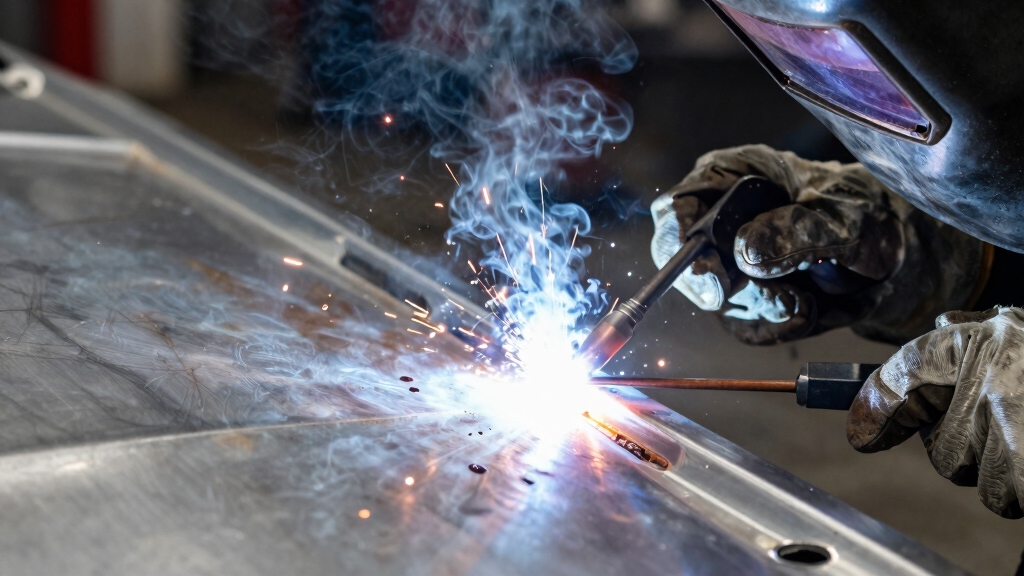
You can’t practically flux core weld aluminum due to its high thermal conductivity, oxide layer, and softness. These factors cause poor weld quality, excessive spatter, and unreliable wire feeding.
Standard fluxes don’t disrupt aluminum’s tough oxide barrier. Additionally, steel flux core wires chemically weaken joints and promote corrosion. Equipment struggles to maintain a stable arc and proper fusion.
Because of these issues, no AWS-approved aluminum flux core wire exists. Exploring these challenges further reveals why alternatives outperform flux core welding for aluminum.
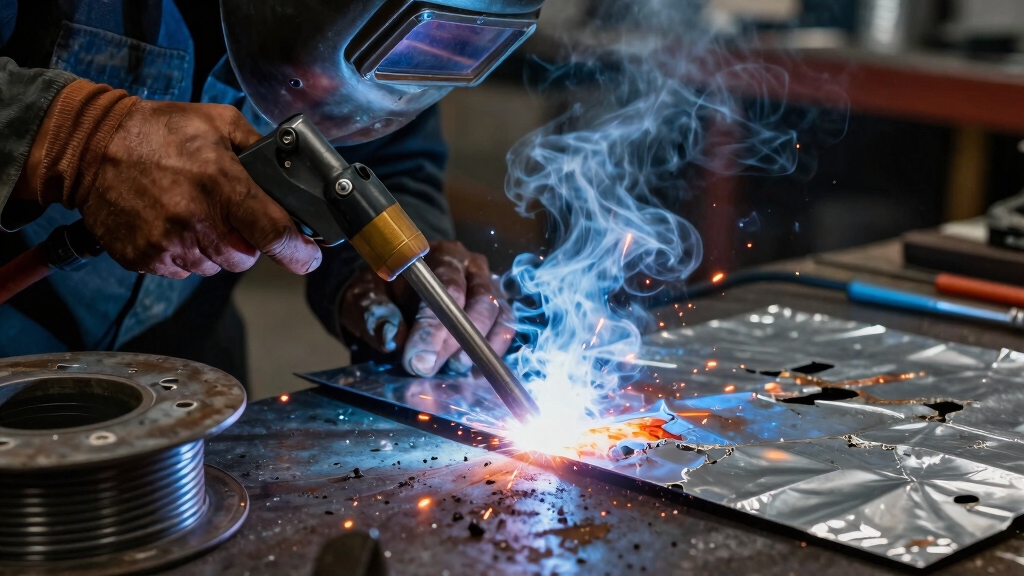
Although flux core arc welding (FCAW) can theoretically join aluminum, you’ll find it impractical due to significant material and equipment challenges.
Flux core arc welding may join aluminum in theory, but practical challenges make it unfeasible.
Aluminum’s high thermal conductivity demands excessive heat input. Its softness complicates wire feeding and promotes porosity.
No commercially available flux-cored aluminum wire meets AWS standards. Existing flux formulations fail to adequately penetrate aluminum oxide layers, causing spatter and inconsistent fusion.
Standard FCAW equipment struggles to handle the softness and feeding of aluminum wires. This results in wire tangling, burnthrough, and unreliable welds.
Combined, these factors produce unpredictable weld quality with poor consistency and excessive spatter. Despite decades of research, the gap between theoretical feasibility and practical application remains vast.
This makes FCAW unsuitable for aluminum outside specialized laboratory environments. Proper shielding with 100% argon is essential for consistent aluminum weld quality, which FCAW processes fail to provide.
Welding aluminum with flux core can be quite a challenge. One of the main issues is aluminum’s high thermal conductivity. This property causes heat to dissipate quickly, meaning you need to put in a lot more energy to achieve proper fusion. It’s definitely a factor to keep in mind.
Another thing to consider is aluminum’s softness. This characteristic can lead to increased porosity during the welding process, which can really compromise the integrity of your welds. It’s frustrating when you put in the effort, only to worry about the strength of your work.
And let’s not forget about spatter. With flux core welding, you often end up with a lot of excess spatter, which can make your welds look inconsistent and of lower quality. Managing that spatter can be tricky and definitely adds to the complexity of the process. Overall, it’s important to be aware of these challenges when welding aluminum! Additionally, aluminum’s tendency for thermal distortion requires precise heat input control to avoid warping and ensure weld quality.
Because aluminum has exceptionally high thermal conductivity, it rapidly disperses heat away from the weld zone. This forces you to apply substantially more energy to achieve proper fusion.
This rapid heat dissipation challenges flux core welding, as the process struggles to maintain the elevated temperature required to melt aluminum adequately. You must compensate by increasing amperage or slowing travel speed, but these adjustments risk overheating or distorting the workpiece.
Additionally, flux core welding’s inherent heat input limitations make sustaining a stable molten pool difficult, leading to incomplete fusion. The high thermal conductivity also exacerbates cooling rates, promoting rapid solidification that can induce weld defects.
Consequently, controlling heat input precisely becomes critical but challenging. This reduces flux core welding’s effectiveness and reliability for aluminum compared to alternative methods.
Using cutting fluids during operations can help reduce heat and burr formation, which is crucial in maintaining material flexibility during welding and fabrication processes.
When you weld aluminum using flux core techniques, its inherent softness presents a significant challenge by promoting porosity within the weld.
Aluminum’s low hardness allows gas pockets to form and become trapped easily during solidification. This softness reduces the metal’s ability to contain expanding gases, resulting in porous weld beads that compromise structural integrity.
Additionally, the flux core’s chemical activity struggles to fully remove aluminum oxide films, further exacerbating gas entrapment. Porosity decreases the weld’s mechanical strength and increases susceptibility to cracking.
You must recognize that flux core welding, with its higher spatter and inconsistent heat input, intensifies these porosity issues. Consequently, achieving dense, defect-free welds with flux core aluminum remains impractical and highlights why alternative methods like TIG are preferred for aluminum joining.
Proper surface preparation and shielding gas control are critical to minimize contamination and achieve quality welds, as emphasized in surface preparation.
Aluminum’s high fluidity causes molten metal to blow off the weld pool rapidly, creating excessive spatter that seriously undermines weld quality during flux core arc welding.
When you attempt FCAW on aluminum, the molten droplets don’t remain stable; instead, they scatter due to aluminum’s low melting point combined with the higher spatter characteristics inherent to flux-cored wire.
This results in material loss and irregular bead formation.
Additionally, the flux chemistry used in conventional FCAW fails to adequately control aluminum oxide, further aggravating spatter.
You’ll find that excessive spatter not only contaminates the work area but also reduces deposition efficiency, making consistent fusion difficult.
Ultimately, this spatter problem is a critical barrier, limiting flux core welding’s practical application on aluminum despite its theoretical feasibility.
Controlling arc stability is especially challenging with aluminum FCAW due to its unique molten metal behavior and oxide layer.
You can’t really rely on standard fluxes when it comes to aluminum. Why? Well, they just don’t chemically interact with aluminum oxide, which is that pesky layer that forms on the metal’s surface.
This oxide layer acts like a barrier, stopping the flux from doing its job and compromising weld quality and consistency.
To get around this issue, fluxes need specialized cleaning agents designed specifically to tackle that oxide. Unfortunately, those formulations aren’t fully developed yet.
Additionally, the aluminum oxide layer inhibits fusion and promotes porosity and bubbling, further complicating the welding process.
The persistent formation of an aluminum oxide layer poses a significant obstacle to effective welding with standard fluxes. This oxide forms instantly upon exposure to air, creating a dense, stable barrier that standard fluxes can’t penetrate or dissolve.
Because aluminum oxide has a melting point around 2,000°C, much higher than aluminum’s 660°C, it remains solid during welding. This prevents proper fusion and flux interaction. When you apply typical fluxes designed for steel, they fail to disrupt this oxide layer, leading to poor wetting and incomplete joint fusion.
Without specialized flux chemistry capable of breaking down or removing the oxide, the weld pool remains contaminated and prone to defects. Consequently, the aluminum oxide barrier fundamentally limits the efficacy of conventional flux core welding on aluminum alloys. Proper surface preparation and cleaning methods to remove or minimize the oxide layer before welding are essential to improve weld quality and prevent defects caused by aluminum corrosion mechanisms.
Although fluxes designed for steel excel in their intended applications, they fail chemically when applied to aluminum welding. These standard fluxes lack the chemical reactivity needed to disrupt aluminum’s tenacious oxide layer, which is more stable and refractory than steel oxides.
Without flux agents specifically formulated to reduce or dissolve aluminum oxide, you’ll encounter poor flux penetration and inadequate wetting of the weld pool. Furthermore, conventional flux compositions can trigger excessive spatter and corrosion, undermining weld integrity.
Because aluminum oxide forms rapidly and resists standard flux chemistries, steel fluxes can’t facilitate proper fusion. You need flux formulations with specialized cleaning and activating agents tailored to aluminum’s unique surface chemistry. These agents remain underdeveloped and unavailable commercially, making standard flux-cored welding impractical for aluminum alloys.
Additionally, controlling heat input is critical in welding coated metals to avoid vaporization and contamination issues, a challenge that also affects aluminum welding flux performance.
Addressing aluminum’s resilient oxide layer demands specialized cleaning agents within flux compositions. Agents that standard fluxes lack. You can’t rely on typical fluxes designed for steel because their chemical activity is insufficient to break down aluminum oxide.
This oxide reformulates instantly at welding temperatures. Standard fluxes fail to penetrate the oxide barrier, preventing proper fusion and causing spatter, porosity, and inconsistent welds.
Instead, fluxes for aluminum require highly reactive components capable of chemically disrupting the oxide layer while stabilizing the molten pool.
However, such cleaning agents remain underdeveloped and largely confined to research labs, limiting practical application. Without these specialized agents, flux core welding aluminum remains ineffective. Common flux formulations simply don’t address the unique surface chemistry and thermal behavior of aluminum alloys.
In addition, controlling heat input and using appropriate wire feed techniques are critical factors to achieve acceptable weld quality in aluminum.
Maneuvering the feeding of aluminum wire in flux core welding presents significant technical hurdles due to the metal’s inherent softness.
Feeding aluminum wire in flux core welding poses major challenges because of its natural softness.
Unlike steel wires, aluminum wire lacks the rigidity necessary for consistent feeding through standard drive rolls. This causes frequent tangling and burnback.
You’ll find that conventional flux-cored feeding mechanisms struggle to grip and push hollow aluminum wires without deforming them. This leads to erratic wire delivery and interruptions.
Additionally, specialized drive rolls and liners designed to handle the wire’s softness aren’t commercially widespread. This further complicates the process.
These equipment limitations result in unpredictable wire burnthrough and feeding inconsistencies. This undermines welding reliability.
Without precise control over wire feed speed and tension, maintaining a stable arc becomes nearly impossible. This restricts practical application despite theoretical feasibility.
Moreover, flux-cored wires typically require DCEN polarity for consistent droplet transfer, which adds complexity when welding aluminum.
When you apply flux core welding to aluminum, you face significant challenges that directly degrade weld quality.
Aluminum’s high thermal conductivity dissipates heat rapidly, requiring excessive energy to maintain fusion, which flux core welding struggles to provide consistently.
Its softness and fluidity exacerbate spatter, causing molten metal loss and porous, weak welds.
Standard fluxes fail to adequately remove aluminum oxide, leading to poor flux penetration and incomplete fusion.
The resulting welds exhibit inconsistent bead appearance, excessive porosity, and reduced mechanical strength.
Additionally, flux core welding’s inherent spatter characteristics amplify aluminum’s tendency for burnthrough and tangling, further undermining weld integrity.
These factors culminate in welds that are unpredictable and often structurally compromised, making flux core welding an unreliable choice for aluminum despite theoretical feasibility.
Although flux core welding has advanced markedly for various metals, you won’t find any flux-cored aluminum wire that meets American Welding Society (AWS) standards. This absence reflects significant technical challenges and limitations in producing a commercially viable product.
Key reasons include:
Until these barriers are overcome, flux-cored aluminum welding remains impractical and unsupported by AWS certification.
Since flux core welding presents significant challenges with aluminum, you’ll want to take into account more reliable alternatives that guarantee consistent weld quality and structural integrity.
Gas Tungsten Arc Welding (GTAW or TIG) remains the industry standard, providing precise heat control and clean welds.
Metal Inert Gas (MIG) welding with solid aluminum wire offers faster deposition rates while maintaining quality.
Advanced methods like laser beam welding provide high precision but require specialized equipment.
| Method | Key Advantage |
|---|---|
| GTAW (TIG) | Superior weld quality |
| MIG with solid wire | Efficient and consistent |
| Laser beam welding | High precision and control |
These alternatives overcome flux core’s inherent issues with spatter, wire feeding, and oxide contamination.
As researchers continue to tackle aluminum’s unique welding challenges, future improvements in flux formulations and equipment design hold promise for making flux core arc welding (FCAW) a more viable option.
You can expect advancements to focus on:
These innovations aim to bridge the gap between theoretical feasibility and practical application.
They’ve the potential to enable consistent, high-quality aluminum FCAW beyond laboratory settings.
When you substitute steel flux core wire for aluminum in welding, you risk severe metallurgical incompatibilities that compromise joint integrity.
Steel wire’s chemical composition reacts adversely with aluminum, causing brittle intermetallic compounds that drastically weaken the weld.
Steel’s chemistry forms brittle intermetallics with aluminum, severely compromising weld strength and durability.
Additionally, steel flux core wire lacks the necessary flux chemistry to disrupt aluminum oxide layers, resulting in poor fusion and excessive porosity.
The thermal mismatch between steel wire and aluminum substrate exacerbates spatter and burnthrough, creating inconsistent weld beads and structural defects.
Using steel flux core wire also introduces contamination risks, accelerating corrosion and reducing corrosion resistance in aluminum weldments.
Ultimately, this practice leads to defective joints that fail mechanical and safety standards, making steel flux core wire unsuitable for aluminum.
You must avoid it to guarantee weld quality and structural reliability.
You’ll find that high-strength aluminum alloys like 2xxx (Al-Cu) and 7xxx (Al-Zn-Mg) series are the most difficult to weld with flux core.
Their susceptibility to hot cracking and sensitivity to thermal distortion complicate flux core welding. This process already struggles with aluminum’s rapid heat dissipation and oxide layer.
These alloys demand precise control and specialized techniques that flux core processes can’t reliably provide. This makes them impractical for flux core welding applications.
Sure, you can flux core weld aluminum outdoors in windy conditions, with spectacular spatter and inconsistent welds as the grand finale.
In reality, aluminum’s fluidity combined with FCAW’s spatter sensitivity gets exacerbated by wind, blowing molten metal away and ruining fusion.
Plus, flux core aluminum wires don’t feed reliably, and the oxide layer won’t be properly cleaned by standard flux.
For outdoor aluminum welding, stick to TIG or MIG with shielding gas protection.
Flux core welding aluminum tends to be less expensive upfront because the equipment and wire costs are generally lower than TIG setups.
However, the frequent weld defects, spatter cleanup, and inconsistent quality you face with flux core can increase labor and rework expenses. This ultimately raises total costs.
TIG welding demands higher initial investment but delivers superior precision, cleaner welds, and less rework. This makes it more cost-effective for aluminum in the long run.
You might expect post-weld heat treatment to be essential for flux core welded aluminum, but here’s the catch: given the inconsistent weld quality and excessive spatter, heat treatment rarely compensates for inherent defects.
The rapid heat dissipation and porosity issues mean your welds often lack the integrity that heat treatment could enhance.
Yes, you face unique safety hazards when flux core welding aluminum. Excessive spatter and molten aluminum droplets increase burn risks.
The rapid heat dissipation demands higher energy, raising electrical shock potential. Incomplete flux combustion can release hazardous fumes, including aluminum oxide particles, which irritate respiratory systems.
Additionally, the instability of feeding soft aluminum flux-cored wire may cause unpredictable arc behavior, posing eye and skin injury risks. Proper PPE and ventilation are essential.
You probably didn’t know that over 90% of aluminum welding is done using TIG or MIG methods, not flux core. That’s because flux core welding struggles with aluminum’s oxide layer and feeding issues, leading to poor weld quality.
Without AWS-standard flux-cored aluminum wire, flux core remains impractical. For now, sticking to proven alternatives guarantees stronger, more reliable welds until future advancements tackle these significant technical challenges.