Phone:
(701)814-6992
Physical address:
6296 Donnelly Plaza
Ratkeville, Bahamas.

Phone:
(701)814-6992
Physical address:
6296 Donnelly Plaza
Ratkeville, Bahamas.

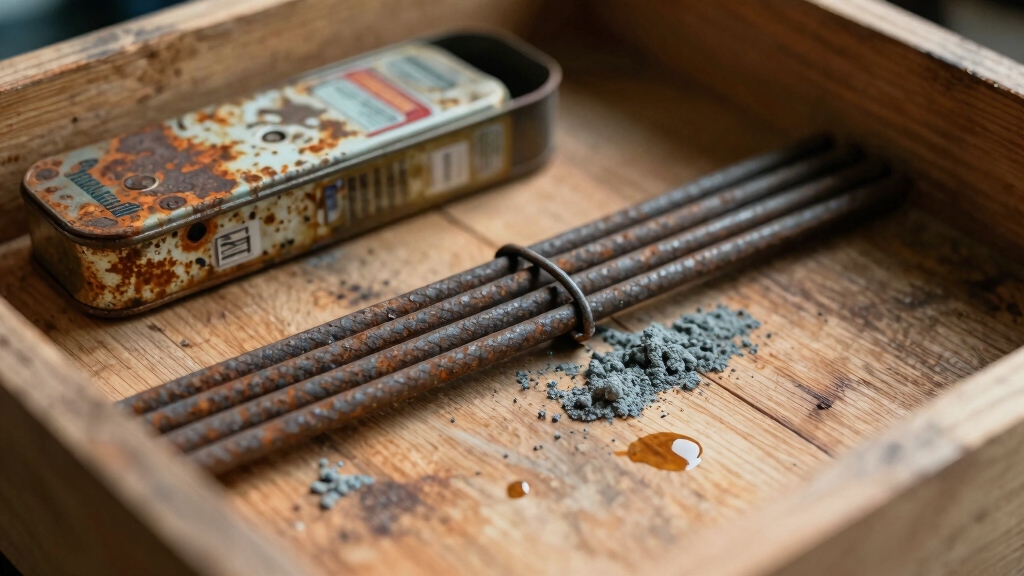
Yes, welding rods can go bad primarily due to moisture absorption, coating damage, and improper storage. These factors increase diffusible hydrogen and the risk of weld defects like cracking and porosity.
Low-hydrogen rods typically last 2–3 years unless sealed, then up to 5 years. You need to store them between 50°F–90°F with less than 50% humidity and follow manufacturer guidelines strictly.
Proper handling and testing guarantee safety and performance. Understanding all factors can help you optimize rod lifespan and weld quality.
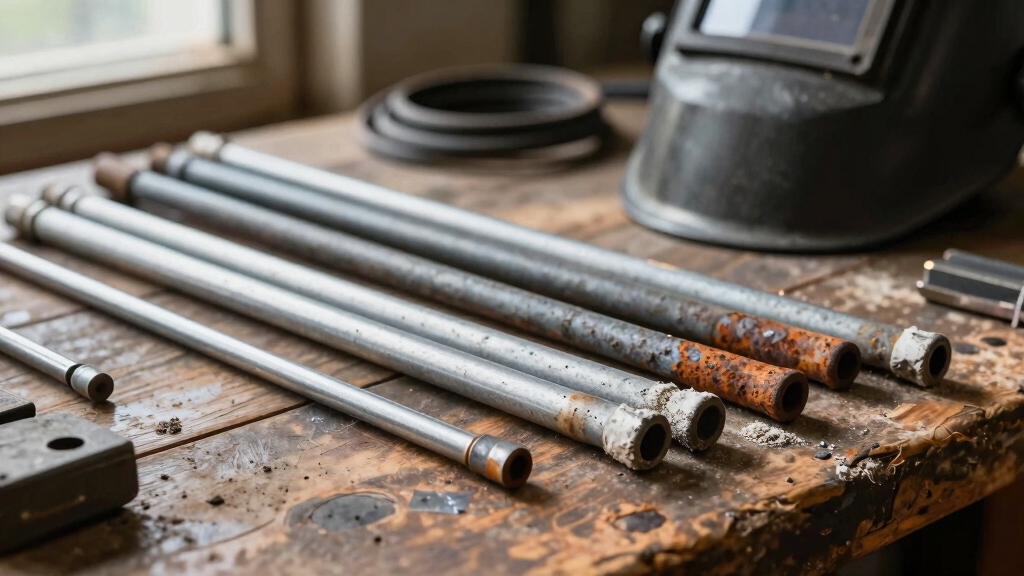
Understanding how long welding rods last depends largely on their type and storage conditions.
The lifespan of welding rods varies significantly with their type and how they are stored.
You should expect solid wires used in GTAW or GMAW processes to have virtually no shelf life constraints.
SMAW electrodes generally maintain usability for 2-3 years if stored properly.
Hermetically sealed low hydrogen electrodes can extend shelf life up to 5 years.
To preserve rod integrity, keep temperature between 50°F and 90°F and humidity below 50%.
Deviations accelerate degradation, especially in coated stick electrodes, which may develop flux loosening or cracks.
Always follow FIFO inventory management to prevent extended aging.
Despite some rods lasting years, manufacturers often recommend discarding electrodes older than 3 years to avoid weld defects linked to moisture absorption and flux deterioration.
Your storage and handling discipline directly influence rod longevity and welding quality.
For low-hydrogen rods like 7018, maintaining storage temperatures between 225–300°F in a dedicated rod oven is crucial to prevent moisture absorption and preserve weld quality.
When it comes to welding rods, it’s interesting to note that their lifespan can really differ depending on the type of electrode. For example, if you’re using solid wires in GTAW or GMAW processes, you’re in luck—these actually have no shelf life at all! So, you can keep them around without worrying too much.
On the other hand, SMAW electrodes are a bit different. They typically last around 2 to 3 years if you store them properly. It’s always a good idea to keep them in a dry place to maximize their usability.
Now, if you’re dealing with low hydrogen electrodes that are sealed hermetically, you can get even longer life out of them—up to five years! Just remember to check the manufacturer’s guidelines for the most accurate information on their shelf life. It’s always better to be safe than sorry!
Proper storage and handling of welding consumables is essential to preserve their quality and ensure consistent welding performance.
Although welding rods vary widely in composition and application, their shelf life depends primarily on electrode type and storage conditions.
You should know that solid wires used in GTAW/GMAW have no defined shelf life.
SMAW electrodes generally last 2-3 years if kept properly.
Hermetically sealed low hydrogen rods can reach up to 5 years.
Storage factors like temperature (50°F–90°F) and humidity (below 50%) critically affect lifespan.
Consider these points for optimal rod lifespan:
Proper handling guarantees welding quality and rod reliability. Additionally, controlling heat input during welding can help reduce coating damage and improve weld quality.
Different electrode types exhibit distinct shelf lives, largely influenced by their composition and packaging. Solid wires used in GTAW and GMAW processes show no practical shelf life.
FCAW cored wires also remain stable indefinitely if stored properly. SMAW electrodes generally last 2-3 years under ideal conditions, with hermetically sealed low hydrogen variants extending up to 5 years.
Standard spool solid wires typically endure about 3 years. Storage conditions such as temperature (50°F–90°F) and humidity (below 50%) critically affect longevity.
Self-shielded cored wires sealed in vacuum bags can reach 5 years, whereas carbon steel electrodes in non-sealed packaging last only about 1 year. Adhering to manufacturer guidelines and FIFO inventory rotation guarantees you maintain electrode performance and avoid weld defects related to electrode degradation.
Proper storage and timely usage are essential because delays can lead to surface oxidation and contamination, which negatively impact weld quality through adhesion failure causes.
When it comes to storing welding rods, you really want to keep them in a temperature range between 50°F and 90°F. Plus, keeping the humidity below 50% is key to maintaining their integrity. If you don’t pay attention to these details, you could be setting yourself up for some serious issues down the line.
Using dry rod ovens is a great practice, and don’t forget about FIFO—first in, first out. Following these protocols can have a huge impact on how well your electrodes perform and how long they’ll last. On the flip side, if you neglect these storage conditions, you’ll likely see the coating degrade faster and absorb moisture. This can really cut down on shelf life! Proper electrode handling and contamination prevention are also essential to extend electrode life and maintain weld quality.
When storing welding rods, maintaining an ideal temperature range of 50°F to 90°F (10°C to 32°C) and keeping humidity below 50% relative humidity markedly preserves their shelf life.
Excessive heat or moisture accelerates coating degradation and flux deterioration, compromising weld quality. You should monitor these conditions rigorously because:
Additionally, higher amperage and voltage settings can accelerate electrode wear, further emphasizing the importance of proper rod storage to ensure optimal welding performance.
Maintaining proper storage conditions directly influences welding rod longevity and performance. You must store rods between 50°F and 90°F (10°C–32°C) and maintain humidity below 50% to prevent moisture absorption.
Moisture degrades flux and causes porosity. For SMAW electrodes, apply the FIFO rule to use older stock first, reducing age-related defects. When storing coils, use dry rod ovens up to 300°F (150°C), removing plastic bags to avoid trapping moisture.
Extended exposure to elevated temperatures requires careful monitoring to prevent coating deterioration or flux loosening. Low hydrogen electrodes sealed hermetically can last up to five years, while standard rods last 2-3 years under ideal conditions.
Neglecting proper storage accelerates degradation, increasing diffusible hydrogen levels and compromising weld quality. Adhere strictly to manufacturer guidelines and environmental controls.
Additionally, surface preparation before welding is critical to reduce defects and ensure safety when using rods on coated metals.
Although welding rods often appear unchanged externally, several specific signs indicate they’ve gone bad and can compromise weld quality. You need to watch for subtle but critical indicators that affect performance.
Identifying these signs helps you avoid substandard welds. This ensures structural safety and compliance with technical standards. Regular inspection and proper storage of welding rods are essential to prevent hydrogen-induced cracking and other related weld defects.
Recognizing signs of deterioration in welding rods is only the first step. Verifying their usability and safety requires specific testing methods.
You’ll want to perform a diffusible hydrogen test to measure moisture-related hydrogen content, critical for low hydrogen rods. Visual inspections for coating integrity and flux bonding are essential.
Mechanical tests, such as bend tests on weld samples, also help confirm electrode performance. Follow manufacturer guidelines and industry standards like ASME Sec-III NB.
Proper welding technique and parameter control are also critical to ensure that welds meet minimum size and strength requirements, as outlined in AWS D1.1 standards.
| Test Type | Purpose |
|---|---|
| Visual Inspection | Detect coating cracks, flaking |
| Diffusible Hydrogen | Measure absorbed moisture level |
| Bend Test | Assess weld ductility |
| Arc Stability Check | Confirm consistent arc behavior |
| Manufacturer Specs | Verify shelf life compliance |
When welding rods show signs of moisture absorption or flux degradation, you can often restore their performance through controlled reconditioning processes.
To extend the life of rods, follow these precise steps:
Proper storage and maintenance are essential because contaminated consumables can destabilize the arc and promote spatter, reducing weld quality.
Since welding rod performance can degrade over time, manufacturers set clear expiry guidelines to guarantee safety and weld quality.
You’ll find that most welding rods, especially SMAW electrodes, are recommended to be discarded after about 3 years.
Hermetically sealed low hydrogen rods can last up to 5 years under ideal conditions.
Standards like ASME Sec-III NB, NC-2440 emphasize handling dependency for shelf life.
Manufacturers such as ESAB specify a 5-year limit for cored wires stored in vacuum bags.
You should always consult the specific electrode’s datasheet for precise expiry details.
Internal shelf life limits often guide obsolescence decisions, balancing rod integrity and diffusible hydrogen content.
Following manufacturer expiry guidelines is only part of ensuring welding rod effectiveness. Proper storage practices play a significant role in maintaining their condition.
To keep your welding rods in peak shape, you must control environmental factors and handling methods precisely. Here are four critical practices:
Adhering to these practices significantly extends welding rod life and weld quality.
Although welding rods may appear unchanged over time, adhering to their specified shelf life limits is crucial to guaranteeing weld integrity and safety.
Overstaying these limits increases moisture absorption in electrodes, especially SMAW types, which causes flux deterioration, hydrogen diffusion, and coating cracks.
These defects lead to weld porosity, worm tracks, and compromised mechanical properties. Ignoring shelf life can result in brittle welds prone to cracking or failure under stress, posing safety hazards.
You must follow manufacturer guidelines and standards like ASME Sec-III NB, which emphasize handling and storage protocols to maintain electrode quality.
While some wires like GTAW/GMAW show no shelf life, most electrodes degrade after 2-5 years, depending on type and packaging.
Strict adherence prevents costly weld defects and ensures structural reliability.
Using expired welding rods exposes you to health risks like inhaling toxic fumes and particulate matter due to compromised flux coatings.
Degraded rods can cause weld defects such as porosity, increasing the risk of structural failure, which may lead to accidents or injuries.
Additionally, moisture absorption raises diffusible hydrogen content, promoting hydrogen-induced cracking.
These hazards compromise both your safety and weld integrity. Always verify rod condition before use and adhere to manufacturer guidelines.
Brands boast broad but bounded benchmarks for welding rod shelf lives.
You’ll find ESAB endorses five years for vacuum-sealed cored wires, while other manufacturers mark two to three years for SMAW electrodes.
You should scrutinize specific specs since storage standards and material makeup sway shelf stability.
Always adhere to manufacturer mandates as they dictate ideal usage windows.
Beyond those windows, performance plummets, risking weld quality and safety.
Yes, environmental factors during transportation can markedly affect welding rod quality.
If rods are exposed to high humidity or temperature fluctuations beyond 50°F–90°F and 50% relative humidity, moisture can permeate coatings or flux. This can cause porosity and weaken weld integrity.
You should make certain rods remain sealed and stored in dry conditions during transit to prevent flux loosening, coating cracks, or diffusible hydrogen absorption. These issues degrade electrode performance and safety.
Using degraded welding rods is like building a bridge with cracked stones. You risk collapse and costly repairs.
You’ll face increased scrap rates, rework expenses, and possible structural failures. Moisture-induced porosity and flux detachment weaken weld integrity, leading to costly downtime and liability risks.
You’ll spend more on quality control tests and replacements, ultimately inflating project costs while compromising safety and compliance with industry standards.
Yes, you’ll need fresher rods for critical welding projects like pressure vessels, nuclear components, or structural steel in seismic zones.
These applications demand minimal hydrogen content and reliable flux integrity, which degrade over time despite shelf life claims.
Using fresh electrodes guarantees weld quality, reduces porosity, and prevents hydrogen-induced cracking.
Always follow manufacturer guidelines and re-test diffusible hydrogen for rods older than two years in such high-stakes projects.
You should know welding rods typically last between 6 months to 1 year, depending on type and storage.
Improper storage can increase moisture absorption by up to 50%, drastically reducing weld quality and safety.
Testing rods before use is vital to avoid defects or weak joints.
Following manufacturer guidelines and maintaining dry, controlled conditions guarantees you maximize rod lifespan and maintain weld integrity.
This prevents costly rework or safety hazards.