Phone:
(701)814-6992
Physical address:
6296 Donnelly Plaza
Ratkeville, Bahamas.

Phone:
(701)814-6992
Physical address:
6296 Donnelly Plaza
Ratkeville, Bahamas.

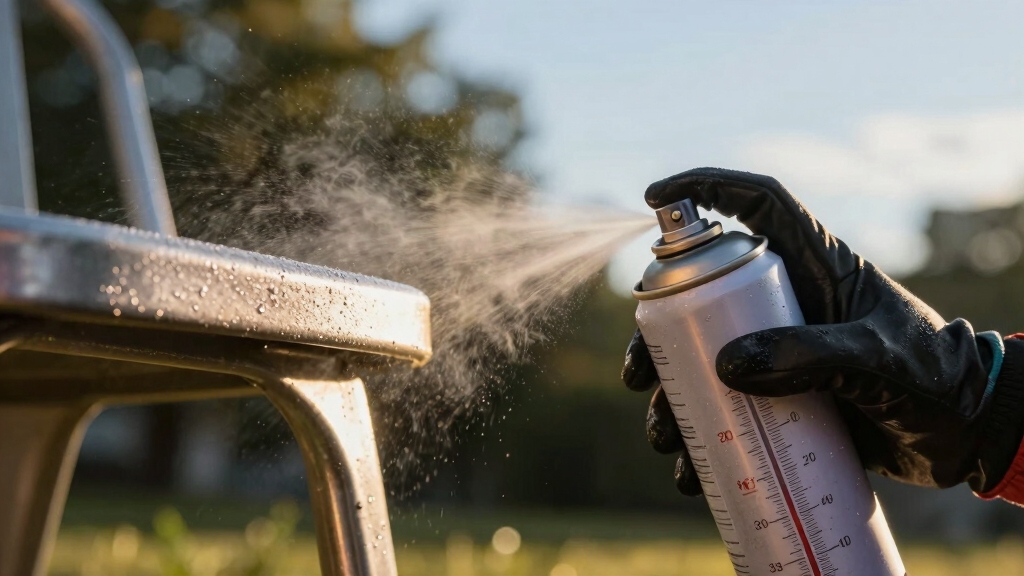
You should spray paint when temperatures are between 50 and 90°F for ideal adhesion and drying. Staying within this range prevents common issues like runs, cracking, and poor curing.
Avoid painting in temperatures below 50°F, as cold slows drying and weakens bonding. Temperatures above 90°F can cause blistering and solvent popping.
Maintaining proper humidity (40–60%) is also vital. Understanding how temperature impacts your surface and paint will help you achieve a smooth, durable finish.
Although spray paint can be applied in various conditions, you should maintain temperatures between 50 and 90 degrees Fahrenheit for best results.
For optimal spray paint results, maintain application temperatures between 50 and 90 degrees Fahrenheit.
Most spray cans specify a minimum threshold near 50°F, with 90°F as the upper limit to prevent issues like blotchiness. It is highly recommended to use a temperature meter to avoid guessing and ensure accurate readings before spraying. Ensuring proper paint viscosity at these temperatures can significantly improve application quality.
Temperatures from 50 to 60°F may produce mixed results outdoors, so confirming surface and ambient temperature is essential.
Use an infrared thermometer to verify readings before beginning. Ideal conditions include steady temperatures for at least 24 hours to guarantee proper drying and adhesion.
Avoid spraying base coats near 90-95°F to prevent defects. Maintain consistent temperature control by storing paint and items indoors until use.
Following these precise guidelines assures peak spray paint application and durability.
When exposed to high temperatures, spray paint undergoes chemical degradation that compromises its structural integrity and appearance. Polymer chains in acrylic and alkyd paints break down above 75°C, leading to discoloration and loss of adhesion.
Visual indicators such as chalking, cracking, and loss of gloss often precede serious performance failures, making regular inspection protocols essential. Proper ventilation and temperature control during application help reduce these thermal effects and maintain coating quality.
Conventional acrylics degrade near 150°C, while enhanced formulations tolerate 200-300°C continuously. Silicone-based paints excel, maintaining performance beyond 650°C due to superior thermal stability. Thermal methods like heat softening demonstrate how coatings respond to elevated temperatures and assist in understanding temperature limits for spray paints.
Elevated heat reduces bond strength between paint and substrate, causing blistering, cracking, and delamination from thermal expansion mismatch. Thermal cycling intensifies damage, inducing micro-cracks and adhesion failure.
Application at high temperatures also accelerates drying, risking runs and solvent pop bubbles, requiring slow reducers and controlled curing—typically 400°F for two hours—for peak durability.
Selecting heat-resistant formulations with adhesion promoters and flexibility modifiers helps mitigate these effects under elevated thermal conditions. Additionally, post-application surface preparation techniques improve adhesion and durability in heat-exposed environments.
When you paint in low temperatures, you might run into some issues. For starters, adhesion can weaken, which means you’re at a higher risk of peeling and chipping. That’s definitely not what you want after putting in all that effort! Improper curing in the cold can also lead to coating brittleness, increasing the chance of cracks and detachment.
Also, you’ll notice that drying times slow down quite a bit. This can really drag out your project and leave those wet surfaces open to all sorts of contaminants. It’s frustrating, right? Additionally, the viscosity of the paint increases as temperature decreases, which can worsen the brushing performance and complicate application paint viscosity.
On top of that, you might see more surface defects like wrinkling and blistering. These happen because of the improper curing conditions caused by the cold. So, it’s definitely something to keep in mind before you start painting in chilly weather!
If you apply paint at temperatures below 60°F, you increase the risk of poor adhesion, causing peeling or bonding failures.
Cold surfaces, especially below 50°F, prevent proper paint bonding regardless of air temperature.
Water-based paints thicken and separate in cold, reducing atomization and adhesion.
Skipping primer or neglecting surface preparation compounds these issues.
Cold-induced chemical disruptions weaken the paint film’s durability.
Surface temperatures under 50°F create major adhesion challenges.
Water-based paints not recommended below 50°F unless specified.
Cold paint viscosity impairs spray atomization and bonding.
Unprepared or glossy surfaces worsen adhesion risks in cold.
Post-application cold exposure prevents proper bonding and curing.
To make certain adhesion, monitor both air and surface temps carefully before spraying.
Low humidity combined with cold can lead to dry spray that creates rough, powdery surfaces, further compromising adhesion.
Additionally, improper surface preparation can damage the protective oxide layer on aluminum, further hindering paint adhesion and durability.
Although low temperatures can seem manageable during spray painting, they markedly slow solvent evaporation, extending drying and curing times beyond standard expectations. Proper ventilation and airflow are critical to minimize airborne contaminants during extended drying periods caused by cold conditions.
At 70°F (21°C) with 50% humidity, drying typically takes 1-2 hours, but colder conditions can prolong this to several days.
Automotive paints slow curing below 12°C (55°F), sometimes halting completely.
Enamel paints, which normally cure within 8-24 hours, also face significant delays. It is important to use spray paints formulated for cold weather to ensure better flow and faster drying.
You’ll notice that slow drying increases the open time, raising contamination risks as airborne dust and debris settle more easily on tacky surfaces.
Additionally, each 10°F drop below 70°F slows drying by approximately 15%, affecting project timelines and requiring careful scheduling to avoid recoating too soon or leaving surfaces vulnerable to defects. Proper use of local exhaust ventilation helps reduce contamination and supports consistent drying in cool environments.
Since low temperatures markedly alter paint behavior, you’ll encounter several surface defects that compromise finish quality. Cold conditions increase surface tension and viscosity, disrupting proper flow and curing. This leads to defects such as cratering, cracking, and orange peel textures. Ensuring surface preparation before painting can help mitigate these defects by removing contaminants that cause paint retraction.
You must also manage solvent evaporation rates and spray gun settings carefully to avoid runs and dry spray. These issues stem from uneven drying, trapped air, and improper atomization caused by cold environments.
Cratering results from paint retracting from contaminants and trapped air bubbles. Cracking occurs due to uneven curing and solvent entrapment beneath the surface. Orange peel forms from thickened paint failing to level smoothly. Cold conditions slow drying and curing, increasing crack risk due to slow drying.
Runs develop from excessive flow or incorrect thinner use. Dry spray causes a matte, granular texture due to premature drying in air.
Several factors influence the success of spray painting, but maintaining ideal humidity levels between 40% and 60% plays a critical role in achieving consistent drying and adhesion.
Relative humidity below 40% causes paint to dry too quickly, resulting in uneven application, cracking, and fragile texture. This is because too hot or dry conditions can cause the paint to dry prematurely, leading to a rough or uneven finish. Proper surface preparation, including cleaning and drying, is essential to ensure optimal paint adherence. Above 60%, drying slows markedly, increasing risks of bubbling, blistering, and poor adhesion due to moisture interaction with surfaces.
Porous materials like wood are especially vulnerable to moisture-induced lifting. Manufacturers such as Krylon recommend spraying below 60% humidity to prevent condensation problems.
To maintain peak levels, use dehumidifiers indoors or schedule painting during stable low-humidity periods outdoors, like early mornings. Avoid painting when humidity exceeds 70%, as excessive moisture compromises finish quality and adhesion, often requiring project postponement. Understanding the importance of protective gear during painting helps maintain safety and paint quality.
When you’re spray painting automotive surfaces, maintaining the proper temperature is essential to guarantee peak paint flow, adhesion, and curing time. Proper ventilation and temperature control help reduce heat stress risks for workers in paint booths.
Maintaining the right temperature is crucial for optimal paint flow, adhesion, and curing when spray painting automotive surfaces.
Ideally, you should work within 50°F to 90°F, with most manufacturers recommending around 70°F.
Waterborne paints require booth temperatures near 75°F or 5°F above ambient, whichever is greater, to ensure proper setting.
Solvent-based paints perform best at about 80°F; exceeding 85°F demands a slow reducer to prevent runs.
Standard curing booths operate between 65°F and 70°F, where every 15°F deviation importantly alters cure speed.
It is also crucial to consider humidity levels below 85% since high humidity can slow drying and affect the final paint quality.
Although temperature variations might seem minor, they critically affect both the drying rate and adhesion quality of spray paint. High temperatures accelerate solvent evaporation and curing, causing wrinkling, blistering, and poor film fusion. Maintaining a consistent temperature within the ideal range is essential to ensure balanced solvent evaporation and prevent defects. Controlling heat input and avoiding rapid temperature changes can minimize thermal distortion in the painted surface.
Conversely, low temperatures slow drying, increasing viscosity and risking runs, sagging, or condensation that impairs adhesion. You must control substrate and ambient temperature to maintain peak paint performance and avoid defects like orange peel, peeling, or cracking. Preparing the surface by removing oxides and contaminants also improves adhesion and finish quality.
| Temperature Range | Drying Effects | Adhesion Effects |
|---|---|---|
| High (>86°F/30°C) | Fast evaporation, wrinkling, bubbles | Poor wetting, curing before penetration |
| Moderate (70-75°F) | Balanced drying, smooth finish | Strong bonding, uniform cure |
| Low (<60°F/15°C) | Slowed drying, sagging, runs | Weakened adhesion, peeling, chipping |
| Critical Dew Point | – | Water condensation reduces adhesion |
| Substrate Temp | Should be within 5-10°F of paint | Prevents thermal mismatch, cracking |
Because temperature directly affects paint flow and bonding, you must prepare surfaces within an ideal range, ideally between 72 and 74°F, to guarantee effective coating application. Using argon gas as a shielding environment can ensure contaminant-free applications when spray painting metallic surfaces.
Make certain the surface temperature stays at least 5°F above the dew point to avoid condensation, which compromises adhesion.
Clean surfaces thoroughly using mechanical or chemical etching to remove contaminants. Utilizing inert gases like argon during surface preparation can prevent oxidation and ensure cleaner bonding.
Manage substrate roughness according to the paint system’s requirements, as improper profiles reduce bonding strength.
Maintain environmental humidity between 40-50% for peak drying and finish quality.
Store spray cans in warm, dry areas and shake vigorously for at least 3 minutes to maintain proper paint viscosity before application.
Ensuring stable environmental conditions throughout the curing process is critical to achieving the intended finish and durability.
When spray painting in cold weather, it’s really important to make sure that your surfaces are cleaned thoroughly and warmed up to at least 70°F before you start painting. This helps the paint adhere properly, especially when it’s chilly outside. Also, surface temperature must be above freezing to avoid issues like poor adhesion or uneven finish.
After you apply each coat, don’t forget to bring your items indoors right away! This helps them dry in a controlled environment and prevents any moisture-related issues from popping up.
Also, using a surface thermometer can be a game-changer. It helps you keep track of the temperature so you can plan your timing just right. This way, you can make the most of the limited daylight hours for drying and curing your paint job. Happy painting!
Proper surface preparation plays a crucial role when spray painting in cold weather, especially at temperatures below 50 degrees Fahrenheit. You must remove all contaminants to guarantee peak paint adhesion. Thorough cleaning compensates for reduced adhesion in low temperatures. To improve paint application, it is helpful to warm spray cans near a heater for several minutes before use.
Match surface and paint temperatures to prevent finish defects. Primer application becomes essential to enhance bonding. Verify surface dryness to avoid adhesion failure.
Clean rigorously; remove dust, grime, and glossy finishes. Dry surface completely; use a hairdryer to evenly warm without overheating. Lightly sand before priming to improve mechanical adhesion.
Store paint and surface indoors to achieve similar temperatures. Avoid environmental conditions like wind or moisture during preparation.
This methodical approach guarantees consistent results despite cold weather challenges.
After preparing surfaces meticulously for cold-weather spray painting, managing indoor drying conditions becomes the next critical step.
Maintain indoor temperatures above 50°F (10°C) to prevent extended drying times and promote adhesion. Use controlled environments like bathrooms, balancing warmth with ventilation via exhaust fans or slightly open windows to avoid fume buildup without dropping temperature. For small parts, transfer them indoors immediately after quick outdoor spraying to allow odor-free, stable drying.
A practical way to speed up drying is to place the painted parts inside a cardboard box with a portable heater blowing warm air, which can make the paint hard in just a few minutes due to rapid heat exposure. Accelerate drying by applying low heat with a hairdryer or placing items in a heated enclosure, ensuring surfaces never overheat.
Warm spray cans in hot water before use to maintain consistent flow and match paint temperature to the surface, preventing wrinkling. Plan ventilation and temperature control carefully to achieve smooth, even finishes despite cold weather challenges.
When working in warm climates, controlling environmental factors such as temperature, humidity, and sunlight exposure becomes critical to preserving paint quality.
You need to manage these elements precisely to avoid adhesion failures, bubbling, or uneven drying. Focus on timing, surface conditions, and application methods to maximize results.
Spray during morning or late afternoon to avoid heat peaks exceeding 90°F. Use shaded areas or chase shade to prevent direct sunlight-induced overheating.
Target relative humidity between 40-50% to guarantee proper drying rates. Apply multiple thin coats with consistent spray distance and overlapping passes.
Always check the can label for specific temperature ranges and application instructions to ensure optimal paint performance.
Keep opened paint containers covered with damp cloth and thin latex paint to maintain workability. Adhering to these practices helps you maintain peak paint performance in warm environments.
When it comes to spray painting, keeping an eye on temperature and humidity is super important. You want to aim for a cozy range of 50-85°F and a relative humidity between 40-50%. This sweet spot really helps with paint adhesion and ensures it dries properly. Avoid painting during rain, direct sunlight, or extreme temperatures to prevent adhesion problems and bubbling weather conditions.
To keep things just right, you might need to adjust the indoor conditions using humidifiers, dehumidifiers, or even some good old ventilation. This is especially crucial if you’re working in an area where the outdoor conditions can change a lot.
Now, when deciding whether to paint indoors or outdoors, think about how well you can control the airflow and moisture levels. That’ll really guide your choice!
Although spray painting can be affected by various environmental factors, closely monitoring temperature and humidity is vital to guarantee peak paint adhesion and finish quality.
Optimal temperatures range from 35°F to 100°F, with 77°F ideal for most paints.
Humidity between 40-50% stabilizes drying; levels below 30% cause rapid drying and rough textures, while above 65% lead to slow curing and uneven surfaces.
You must make certain the surface temperature stays at least 5°F above the dew point to prevent condensation.
Controlling humidity is essential because condensation promotes microbial growth that can contaminate surfaces and affect paint quality.
Use precise instruments like infrared thermometers and humidity monitors to maintain conditions.
Since environmental factors vary markedly between indoor and outdoor settings, monitoring and adjusting conditions becomes essential to achieving consistent spray paint results.
Indoors, you must maintain ventilation with extraction systems or spray booths, continuously monitor airflow, and wear proper respirators. Ensuring adequate airflow is critical to prevent the buildup of toxic fumes and reduce inhalation risks.
Outdoors, you’ll want to check weather forecasts, avoid direct sunlight, and prevent dust contamination by choosing shaded, calm conditions.
Tracking surface temperature separately from air temperature is vital for both environments to guarantee against defects like blistering or pinholing.
| Condition Aspect | Indoor Guidelines |
|---|---|
| Ventilation | Use extraction systems and spray booths |
| Temperature Control | Monitor airflow and surface temperature |
| Safety Precautions | Wear SAR respirators, guarantee airflow |
| Adjustment Tools | Box fans, exhaust fans, humidity control |
Outdoors, plan for mild, stable weather and avoid wind or humidity.
Temperature directly impacts spray paint shelf life before use.
If you store cans below 5°C (41°F), especially water-based or latex types, you risk freezing damage. This can cause irreversible chemical changes.
Above 30°C (86°F), high heat degrades pigments and propellants, drying the paint prematurely.
You’ll preserve spray paint quality best by keeping it within 5-30°C. Avoid temperature extremes and direct sunlight, which accelerate chemical breakdown and reduce unopened shelf life markedly.
Absolutely, abrupt ambient alterations accelerate color aging.
When temperatures rise, UV radiation intensifies photodegradation, breaking down pigment molecules and polymer binders in your paint.
This causes noticeable fading, especially in dark hues that absorb more heat.
Heat also compromises protective clear coats, enabling oxygen penetration that triggers oxidation, leading to dullness and pigment loss.
You rely on outdoor booth environmental controls to manage temperature during spray painting outdoors.
These include heating and cooling systems, humidity controls, double wall insulated panels, and AMCA-certified fans that guarantee uniform airflow.
The equipment meets NFPA-33, OSHA, and ETL standards, providing a safe, controlled environment.
Additionally, Air Make-Up Units regulate air temperature and ventilation, maintaining ideal painting conditions despite external weather fluctuations.
You should never dispose of spray paint cans exposed to extreme temperatures.
First, make certain cans are completely empty at room temperature, then store them in a cool, dry, ventilated area away from heat or cold before disposal.
Avoid puncturing or burning cans directly, especially if cold or hot, to prevent explosions.
Use approved puncturing systems in ventilated, grounded setups for non-empty cans, and take them to hazardous waste collection sites per local regulations.
Yes, temperature impacts spray paint toxicity and fumes markedly. Higher temperatures accelerate VOC evaporation, increasing airborne chemical concentrations and exposure risks.
Elevated heat also speeds chemical reactions, shortening pot life and concentrating fumes over shorter periods. You should avoid painting above manufacturer-recommended temperatures, typically around 48°C (120°F), to reduce inhalation hazards.
Working in moderate temperatures with proper ventilation helps you minimize acute VOC exposure symptoms effectively and maintain safer conditions.
When you spray paint within the ideal temperature range, typically between 50°F and 85°F, you’ll achieve smooth, durable finishes without runs or bubbling.
Just as paint flows seamlessly off the nozzle, your results will mirror controlled precision. Too hot, and solvents evaporate too fast; too cold, and adhesion suffers.
By monitoring temperature and humidity closely, you guarantee every coat bonds perfectly. This maintains quality whether you’re working in a chilly garage or a warm outdoor space.